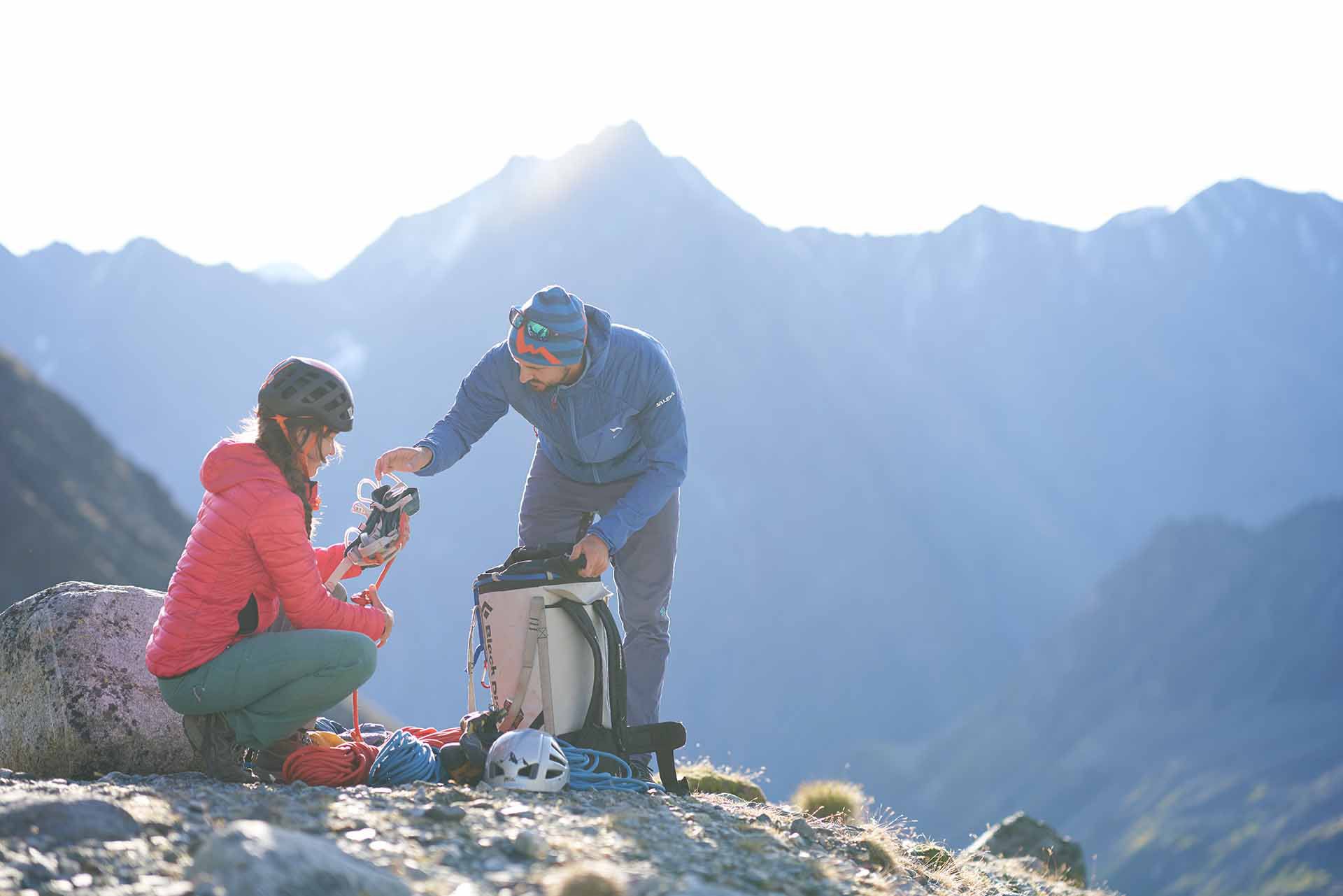
A climbing harness, rope, belay device, slings and carabiners are all part of your personal protective equipment. How long does this equipment last – and when should it be replaced?
First, the basic rule: damaged equipment must be discarded immediately, regardless of its age. For everything else, the condition of the item and the manufacturer’s instructions for use are the deciding factors. The following points will help you carry out regular checks.
Text: Ulrich Huber, updated by the editorial team
An intact, modern climbing rope will not snap under normal use. The danger arises on edges: when the rope runs under load over sharp or rough rock and metal edges – including carabiners with sharp edges – or rubs against them from the side. Chemicals, particularly battery acid, can also severely weaken a rope without this being visible from the outside.
Spotting wear
Wear is far more common than a rope break. Anyone who climbs frequently and falls a lot will first notice it in the first few metres: the sheath becomes frayed. The rope should be discarded – or cut at that point – if
If the damage is at the end of the rope, you can cut off that section and continue using the rope. Please note: Afterwards, the centre mark and rope length will no longer match – be sure to take this into account when lowering and abseiling, and always tie a knot at the end of the rope.
And what about age?
Manufacturers usually specify a maximum service life of around ten to twelve years for unused, well-stored ropes, and significantly less for those in regular use – the instructions for use for the specific rope are binding. Independent tests show that undamaged ropes lose hardly any strength with age. In practice, therefore, the condition of the rope is the deciding factor; the manufacturer’s specification remains the upper limit.
Which rope?
For sport climbing on rock, a single rope of around 70 metres is a common all-rounder. More important than the exact figure: the rope diameter and belay device must be compatible according to the manufacturer’s specifications, and the rope must be long enough for the longest planned route – the length is given in the topo.
Climbing harness
The same principles apply to a harness as to a rope. With frequent use, it wears out particularly at the tie-in points and the belay loop. If these are worn down or frayed, the harness should be discarded. Manufacturers also specify a maximum service life for harnesses – this is stated in the user manual.
There are different models depending on the intended use. All-round harnesses with adjustment buckles on the leg loops cover a wide range of activities, from sport climbing through alpine climbing and via ferratas to glacier tours – usually the best choice for occasional climbers. It is important to try the harness on: you only realise whether a harness fits properly once you are hanging in it.
Belay device
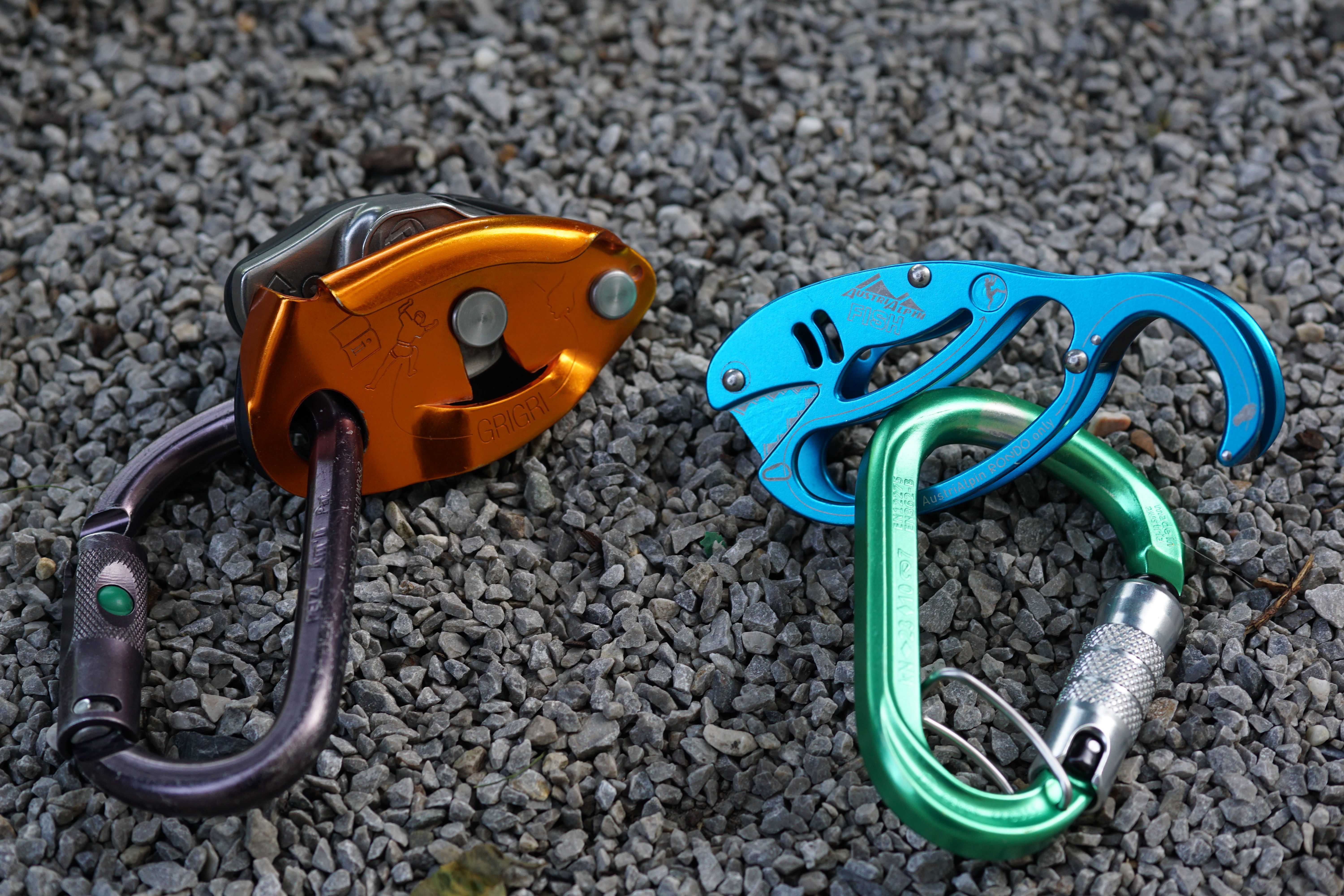
The Austrian Alpine Club recommends semi-automatic belay devices – i.e. devices with assisted braking – or so-called hybrid devices for sport climbing in indoor climbing centres and crags. They compensate for human error more effectively than a classic tube device, which relies entirely on the braking hand. Tube devices and the Munter hitch (HMS) are no longer considered up to date for sport climbing, but they still have their place in multi-pitch climbing and when abseiling. Some indoor climbing centres require the use of semi-automatic belay devices.
Important: the rope, carabiner and belay device must be compatible – which is why many devices are sold with the matching carabiner included. An overview of five popular devices: 5 belay devices for sport climbing.
Climbing shoes
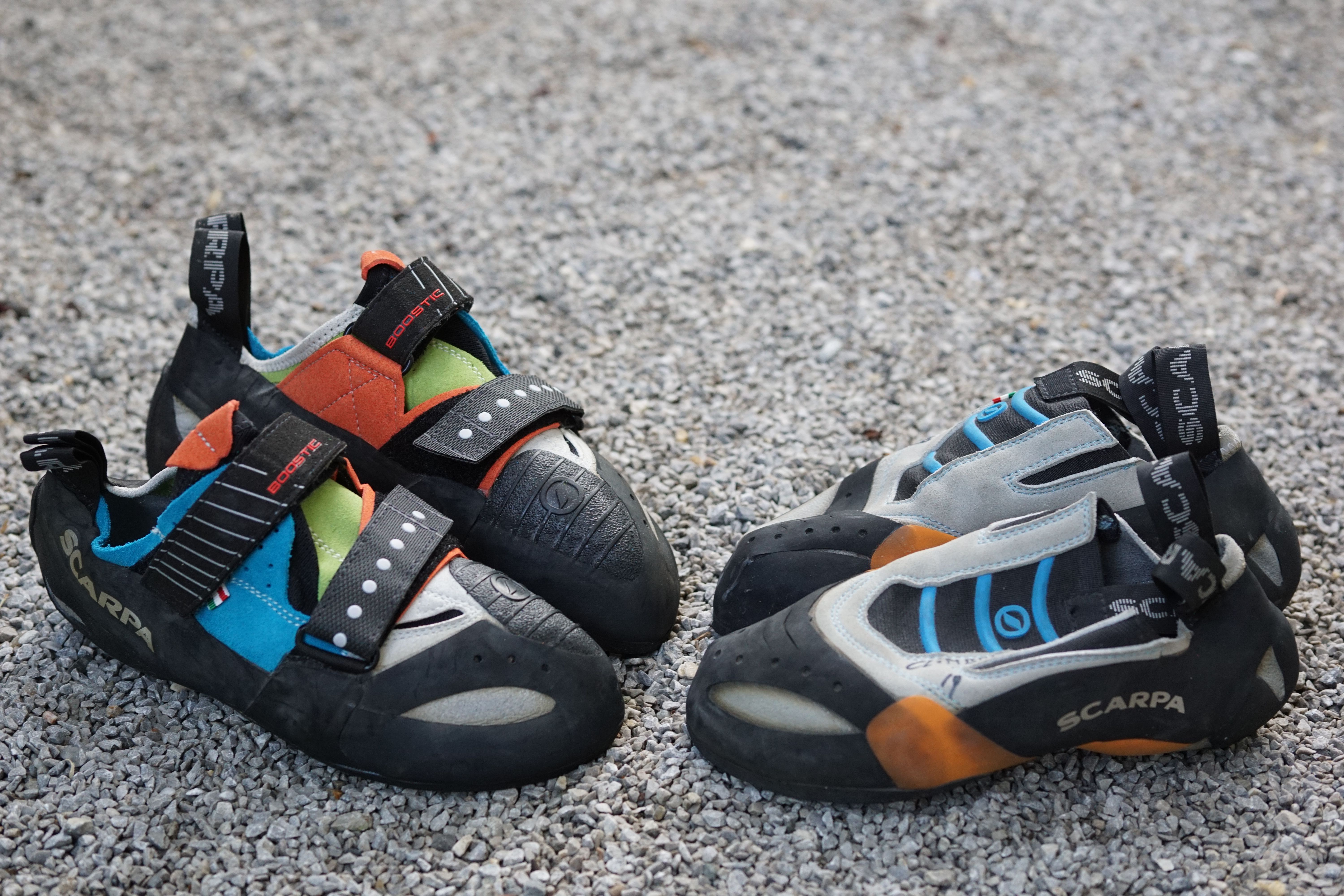
There’s hardly anything discussed as much as the right fit. Climbing shoes should fit snugly so that you can apply precise pressure to your footholds – but they mustn’t hurt. Beginners in particular find it easier to learn how to place their feet properly in more comfortable models, where the toes are kept relatively straight. It’s best to try on several models in the shop and ask for advice on which ones will stretch a bit.
Carabiners and quickdraws
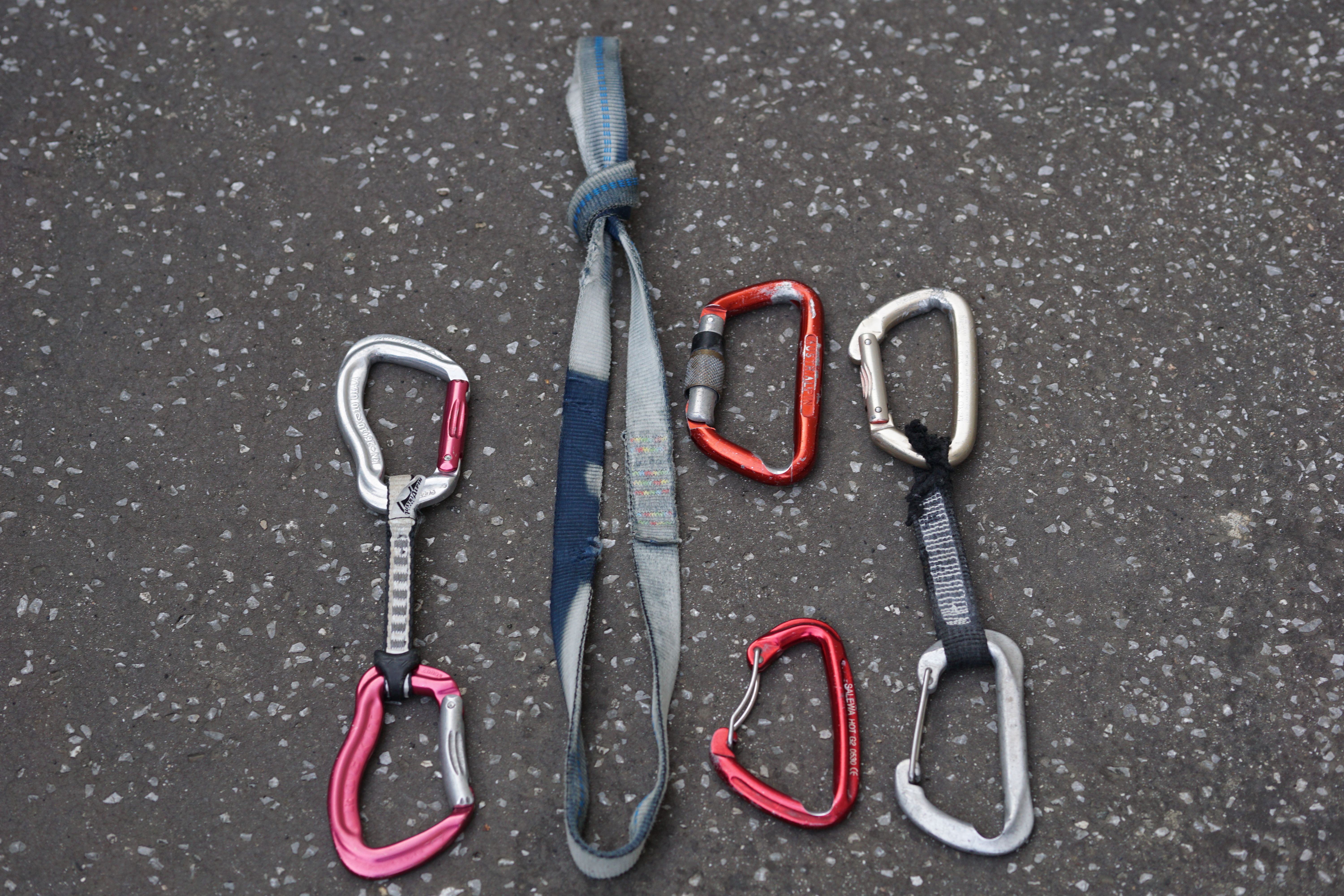
Carabiners do not have an expiry date, but they do wear out. You should discard them if the gate no longer closes properly, if they are deformed or cracked, or if the rope has worn grooves into them. Such grooved edges can become sharp and have already led to rope breaks. Therefore, with quickdraws, never swap the rope-end carabiner with the bolt-end carabiner. The textile components – webbing and slings – also age even when not in use; in this case, the manufacturer’s stated lifespan applies.
Fixed gear at crags
Be cautious with fixed slings and carabiners at crags: their age is often impossible to determine, and they age more quickly due to the weather. Both aluminium and steel carabiners on fixed quickdraws can develop dangerously sharp edges. Take a close look at the equipment and use your common sense to decide whether you trust it. It is best to report any obvious damage to the people who maintain the crag or the tourist board.
Tips & Safety
Would you like to know more about climbing safety? Click here for our safety tips.