
No compromises: climbing equipment for children
When it comes to children’s equipment, there’s no room for compromise. Five items where fit and standards are key to safety.
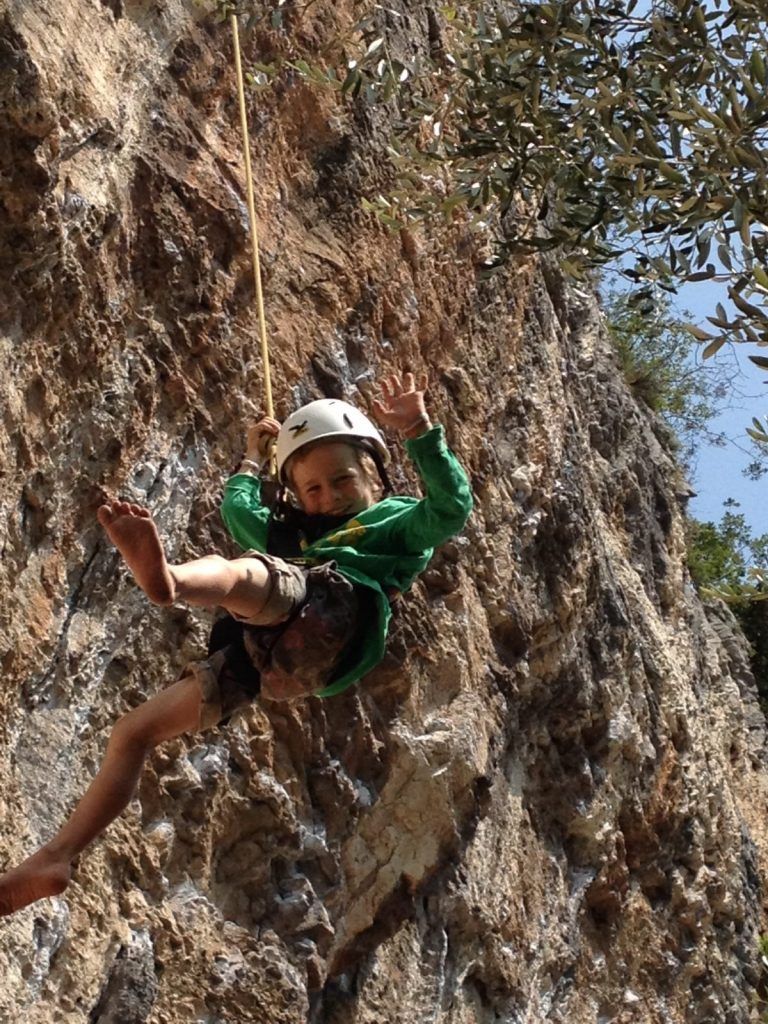

Children grow quickly, and kit is expensive – so there’s a strong temptation to buy items that ‘grow with them’. This is precisely where the problem lies: when it comes to harnesses and helmets, the fit is crucial to safety.
Text: Matthias Bader
To ensure that children’s feet develop properly, shoes must under no circumstances be too small. For approach shoes, a good sole is important, and they should also come up over the ankle. If they’re only going to the Rock Climbing Area, normal trainers will do.
Climbing shoes for children should be relatively soft and have no pre-tension. Many major manufacturers offer their own children’s models – these are highly recommended across the board.
The climbing harness must fit snugly and must be neither too big nor too small. This is the only way to ensure that the child does not slip out of it in the event of a fall or whilst suspended on the rope.
The age guidelines are a rough guide and may vary. If in doubt, seek advice from an expert.
Children can belay each other from a relatively early age. Please note: the climber’s and belayer’s weights must be compatible.
Semi-automatic belay devices such as the Mammut Smart, AustriAlpin Fish or Petzl Grigri have proven their worth.
As with adults – and even more so with children – you must pay full attention to the climber, and you must be fully proficient in using the device. Children should always be supervised whilst belaying.
A helmet is compulsory when climbing outdoors. Many manufacturers offer specialist children’s climbing helmets, which are often adjustable in size and therefore fit for longer.
Wearing a cycling or skiing helmet is strongly discouraged: these helmets are tested to different standards and are not designed for use whilst climbing.
Once you’re properly kitted out, nothing stands in the way of a great climbing experience.
Tips & Safety
Would you like to know more about climbing safety? Click here for our safety tips.

