
Climbing Via Ferrata/Iron Way with children: 4 useful tips
Via Ferrata/Iron Way is an exciting way to discover the world of vertical climbing. It’s even possible to do this with children – provided you bear a few things in mind.
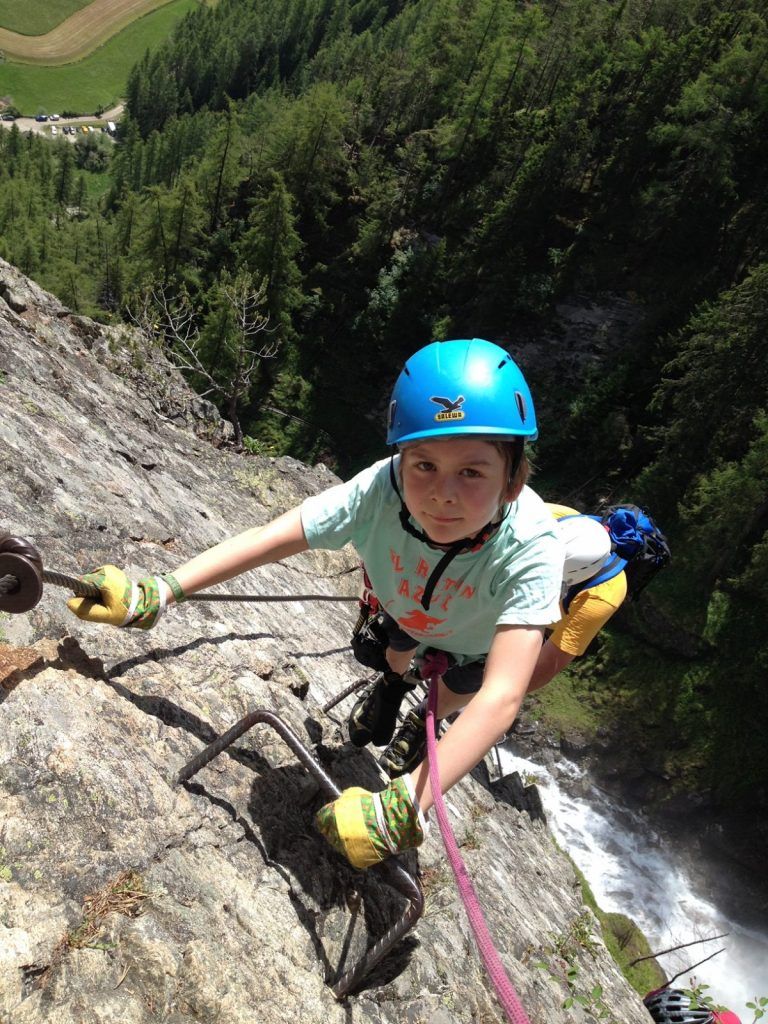

Whilst the steep Rock Faces are primarily reserved for climbers, tackling a Via Ferrata/Iron Way offers an unforgettable experience even for those who prefer less extreme activities.
Via ferrata is often referred to as ‘vertical hiking’ – but it has little in common with Classic Hiking. You need to think very carefully beforehand about whether you are up to the challenge. Stopping halfway or turning back is only possible in the rarest of cases.
If done sensibly, tackling a Via Ferrata/Iron Way is also possible with children – offering adventure and a challenge for the whole Family.
Text: Matthias Bader
As children develop at very different rates, the ideal age depends less on their year of birth than on their motor skills, height and sporting experience.
Experience shows that children are generally ready to tackle a Via Ferrata/Iron Way from around 8 to 10 years of age.
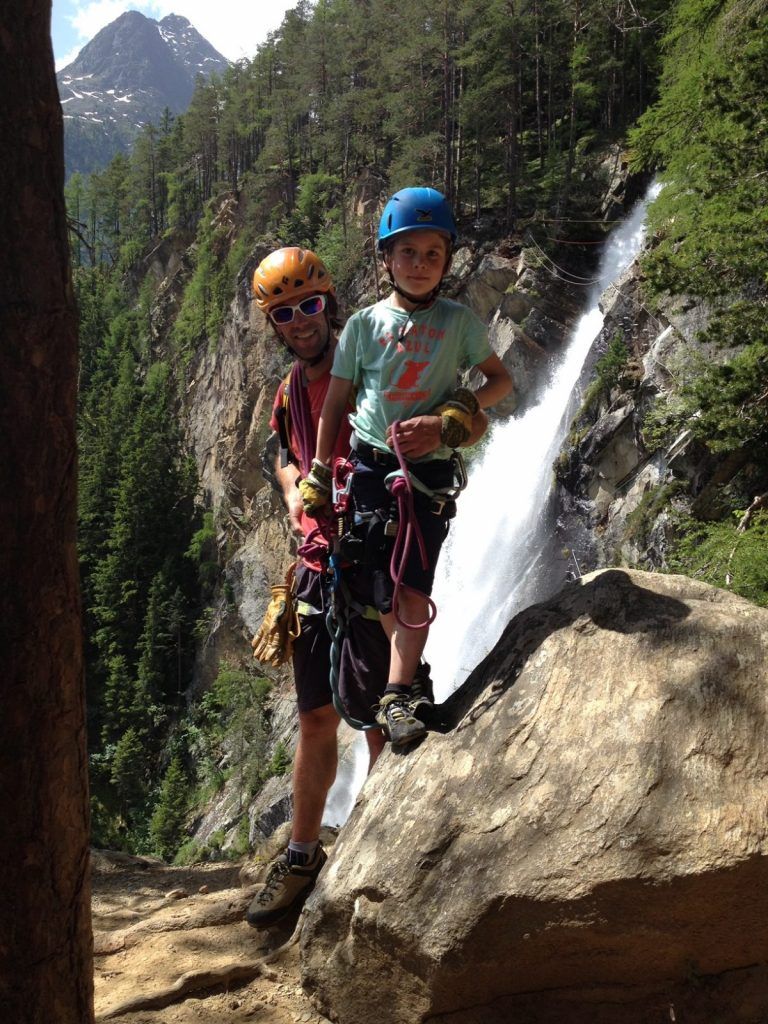
It is generally recommended that children be secured with an additional rope on a Via Ferrata/Iron Way. If parents have no experience of this, it is not feasible in practice – in which case there is no alternative to taking a course with a state-certified mountain and ski guide.
Children absolutely must have equipment suitable for their age:
Only then will the via ferrata set deploy correctly in the event of a fall. If the set is incorrectly sized, there is a risk of serious or even fatal injuries.
The most important factor when choosing a via ferrata set is not the brand, but the child’s weight. Via ferrata sets are tested in accordance with standards and approved for bodyweights ranging from 40 to 120 kilograms.
Order on the via ferrata: It is best for the child to walk in front of the adult, maintaining the mandatory distance of one segment – this is the name given to the section of steel cable between two anchor points. On more difficult sections, the adult can walk directly behind the child to prevent a fall from the outset and to help with re-clipping.
And here’s another point that’s often overlooked: Via Ferrata/Iron Way routes aren’t designed for children. The distance between the handholds and footholds and the wire rope is rarely suitable for children – this means the same via ferrata is often significantly more difficult for children than for adults. In some cases, there are specially designated child-friendly routes with reduced distances.
Whether a child can climb independently and without additional rope safety measures depends on theirphysical development, fitness level, climbing experience and the sense of responsibility of those accompanying them. A mistake in handling the equipment can be fatal.
As a general rule: never push children beyond their limits.
Parents’ ambitions shouldn’t take precedence over the children’s enjoyment. Start very slowly with easy routes with a Level of Difficulty of A and B. Sometimes there are even Via Ferrata/Iron Ways specifically designed for children.
Practice via ferrata routes are also ideal for those first few metres: they’re usually short, often featuring sections of varying Levels of Difficulty. Perfect for testing what you can already do – and what you can’t yet.
And: parents must feel comfortable on the via ferrata too. If you’re pushing yourself to the limit, you won’t be able to look after anyone else. If in doubt, book a state-certified mountain and ski guide.
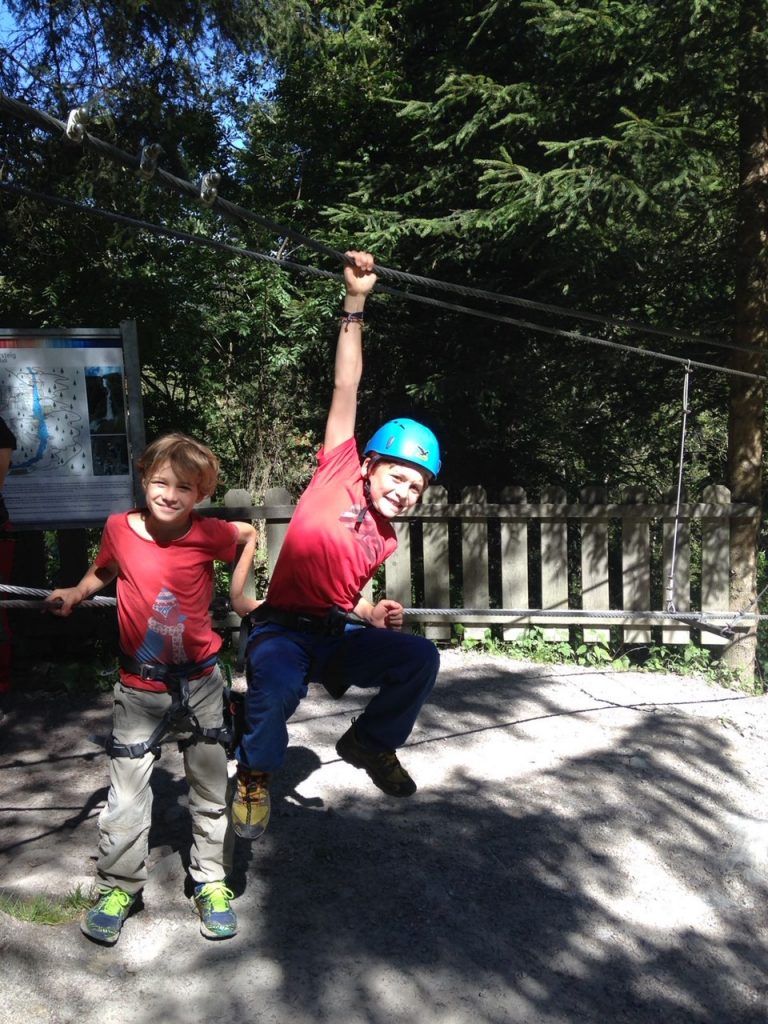
Children are generally very talented at climbing. With the right conditions, suitable equipment and the right via ferrata, nothing stands in the way of an adventure. A selection for experienced Families:
These are suggestions, not endorsements: parents must always decide for themselves whether it is safe to tackle a route with their own children.
Tips & Safety
Would you like to know more about climbing safety? Click here for our safety tips.


