Chinesische Mauer in Leutasch: developers, test pieces and the big restoration

One of northern Tirol’s most famous crags was starting to show its age. Then a local climbing group took on the task of revitalising the wall – with glue-in bolts, new anchors and even new routes.
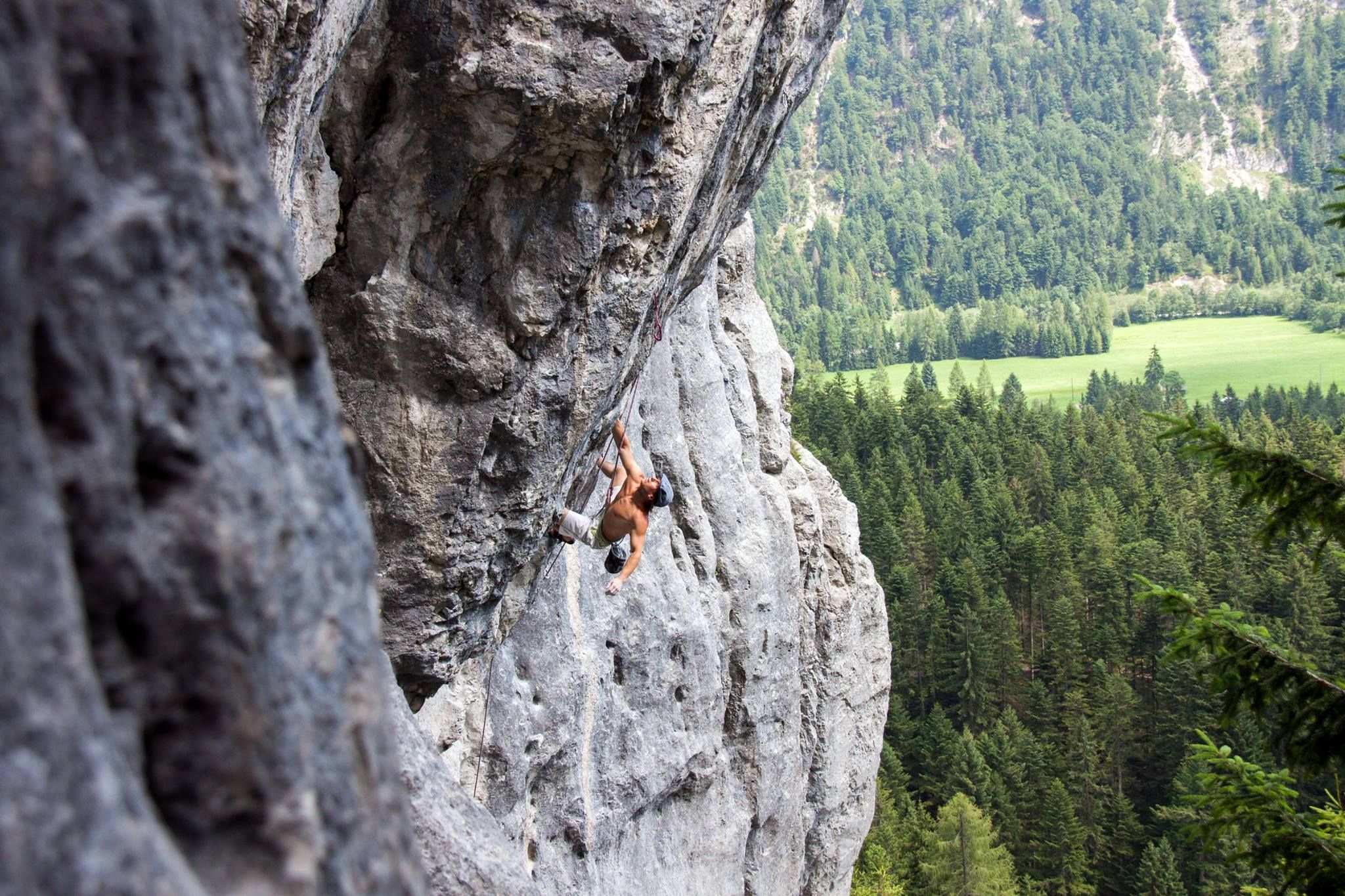
Climber on the Wilde Mändle route in the Hongkong sector of the Chinesische Mauer, with the Leutasch valley behind

One wall, many signatures

Many routes on the Chinesische Mauer were first established in the 1980s and had not been maintained for a long time. For a long time, there was no local community on the Seefeld Plateau to look after the crag.

That all changed with the Mauerfix: this climbing group from the plateau raised the necessary funds and launched a major restoration project – with the full support of the tourism board and in close consultation with the hunting community. The current area description shows what the wall looks like today: Chinesische Mauer & Hongkong.

Text: Thomas Wanner

The developers: from Scherer to Wutscher

The crag is situated in Leutasch in the Seefeld region. Today, the area guide lists 183 routes across eleven sectors, most of which are graded 7 and 8. Many of the older routes were established by Reinhold Scherer, Bernhard Prommer, Bernhard Hangl and Heinz Zak.

One quiet developer who doesn’t make a big fuss about himself is Arthur Wutscher. The tiled-stove builder from Telfs is one of the most active developers on the Mauer and specialises in technically challenging wall climbing – there has been a great deal of activity, particularly in the upper sectors around the ‘Streifen’. Another name you keep coming across is Markus Haid from the Ötztal, known for developing the Piburger See and Niederthai areas. He, too, has left his mark on the wall, in the sectors around the ‘Streifen’ and ‘Dächer’.

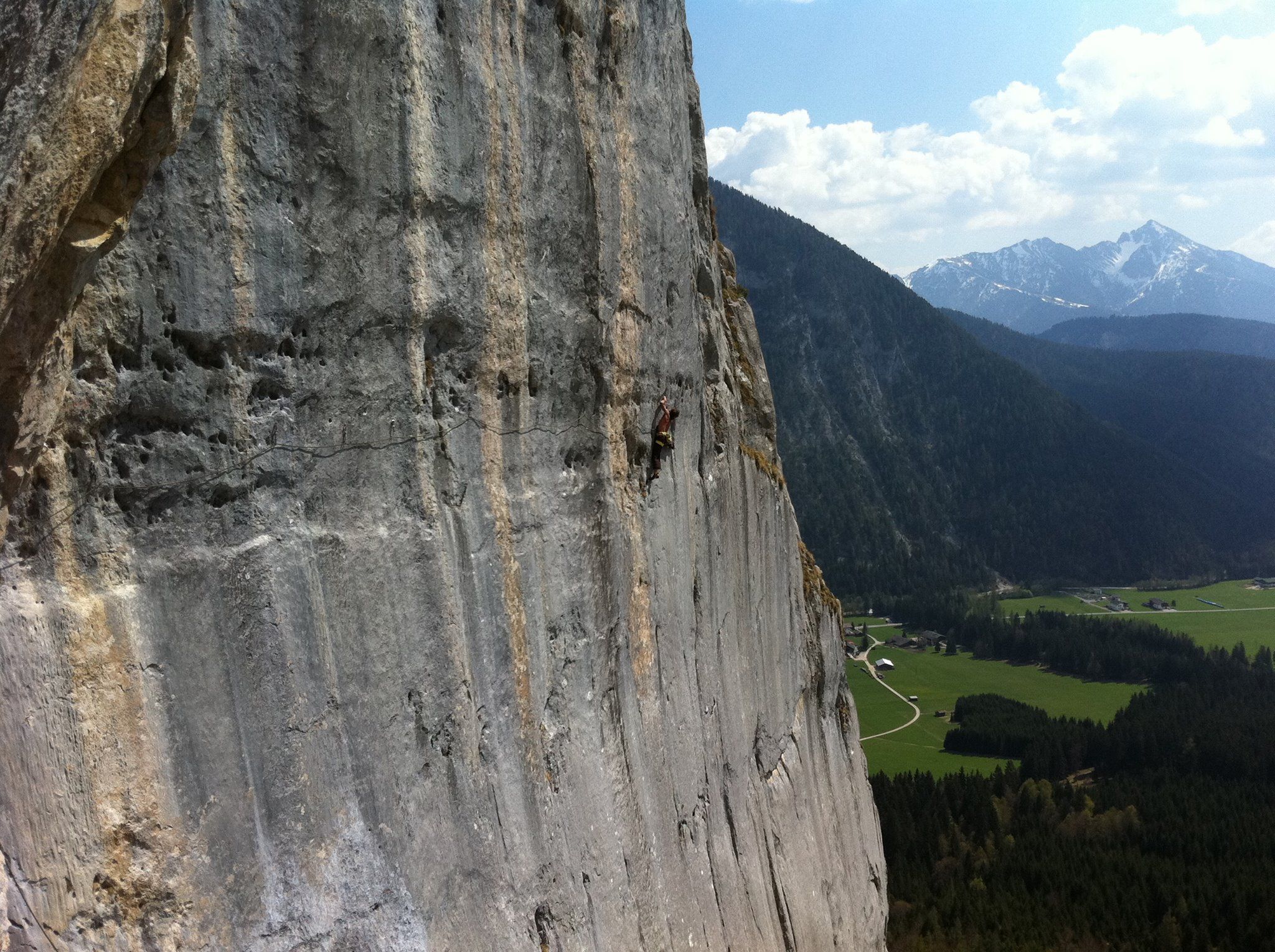
Climber on the Puls 2000 route on the steep face of the Chinesische Mauer above the forest

Test pieces: from the roof to the grey slab

High above the Samurai sector towers a wide, overhanging roof with fixed slings. It is rare to see climbers there tackling the modern test pieces by Much Mayr and Jorg Verhoeven: ‘The Great Gig in the Sky’ (8c) and ‘The Dark Side’ (8c+).

The rigorous grading and the sometimes confusing rock face make the wall something special. Pure strength will only get you up one or two routes in the main sector at most – Benni Hangl Junior proved this when he climbed ‘Shir Khan’ (7c) in trainers. But once you reach the grey, intricate slabs, bicep power alone is no longer enough. We feature the wall’s most famous route, ‘Puls 2000’ (7c+), in Great Lines in Tirol.

The refurbishment: glue-in bolts, new anchors, fixed slings

The Mauerfix team tackled the sectors one by one: first the initial pitches in the main sector, on the Dodlwand and in the Samurai sector, then the Hongkong sector and finally the remaining sectors. The intermediate bolts were mostly still in good condition – it was mainly the anchors that needed replacing. Old, dangerous hardware was removed and replaced with glue-in bolts and fixed slings with steel carabiners. Popular classics such as ‘Caramba’, ‘Shir Khan’ and ‘Pistolero’ were fitted with fixed slings, as clipping in there is often difficult.

New routes
Whilst refurbishing the main sector, the Mauerfix team felled a rotten tree next to the ‘Hanuman’ route before it could topple over uncontrollably. They immediately made use of the space that had become available between ‘Hanuman’ and ‘Link the Butler’ for a new line through the water-eroded holes: ‘Flühlingslolle’ (7c+) by Thomas Wanner. ‘Mister Miyagi’ (8b) could also do with more ascents – this short, crisp route by Patrick Trois in the main sector sets every boulderer’s heart racing and has become even harder since an undercling broke away.

Good to know: Fixed slings and carabiners wear out faster outdoors and can develop sharp edges – check them briefly before clipping in. You can find out what matters in ‘How long does climbing kit last?’. Parking is exclusively at the Puitbach/Ahrn car park (P13); from there, it’s a 20- to 30-minute walk to the wall.

You might also be interested in these articles