Great Lines in Tirol: 5 dream routes, selected by professional climbers

Six professional climbers, a table, one question: Which five routes are the most beautiful in Tirol? The answer is the Great Lines – from the Chinesische Mauer to the gneiss boulders of Niederthai.
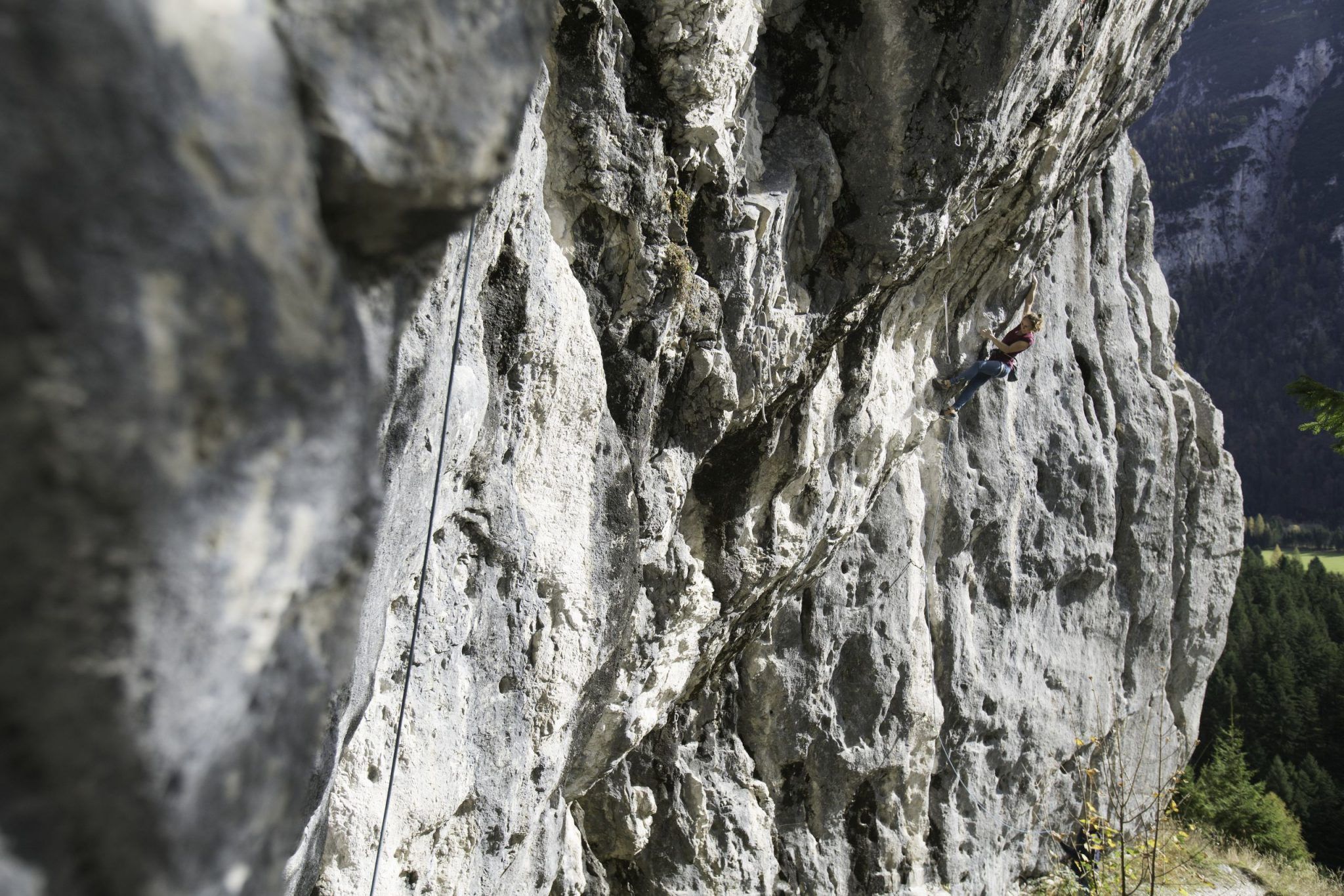
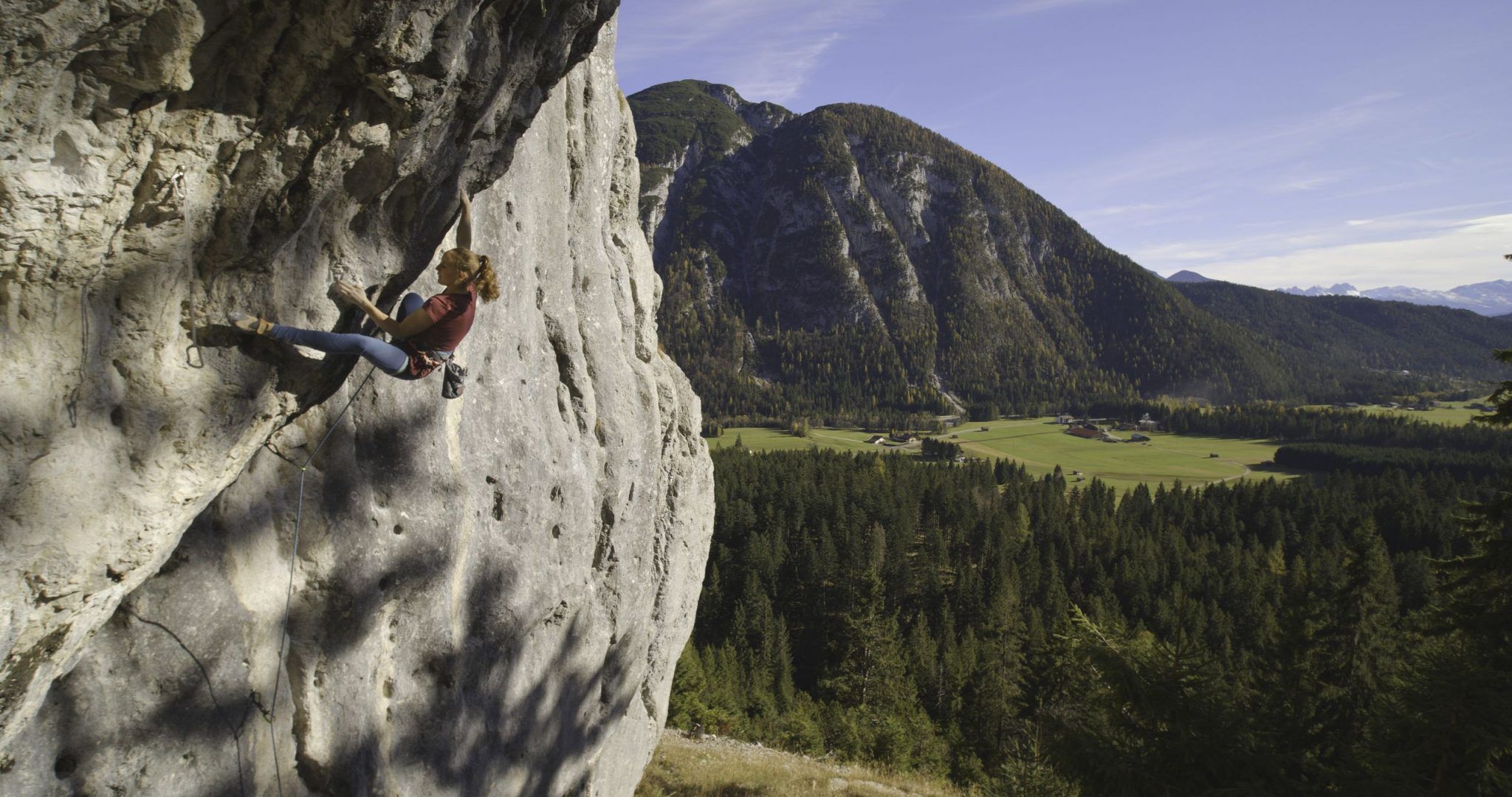
Climber on the steep limestone face of the Chinesische Mauer in Leutasch

This is how the Great Lines came into being

Barbara Bacher, Kilian Fischhuber, Michaela Harnisch, Michael Meisl, Markus Schwaiger and Barbara Zangerl got together, talked shop, shared memories – and eventually agreed on a list of favourites.

The result is five sport climbing routes, ranging from the Nösslach classic to the endurance test on the Chinesische Mauer. There’s a short video for each route, showing you what you’re getting yourself into. We have cross-checked the information on the areas against the latest area descriptions.

Text: Katrin Oblasser

1. Puls 2000 (7c+): Chinesische Mauer, Leutasch

The “Mauer” (the Wall), as the locals call it, is situated in Leutasch in the Seefeld region, near the Bavarian border. The Chinesische Mauer & Hongkong crag now boasts 183 routes on south-facing limestone, the majority graded 7 and 8 – easy routes are rare, and the grading system is considered strict. The approach from the Puitbach/Ahrn car park (P13) takes 20 to 30 minutes; please use only this car park and the marked path. The Mauer is a popular meeting place for climbers, particularly in spring, autumn and on sunny winter days.

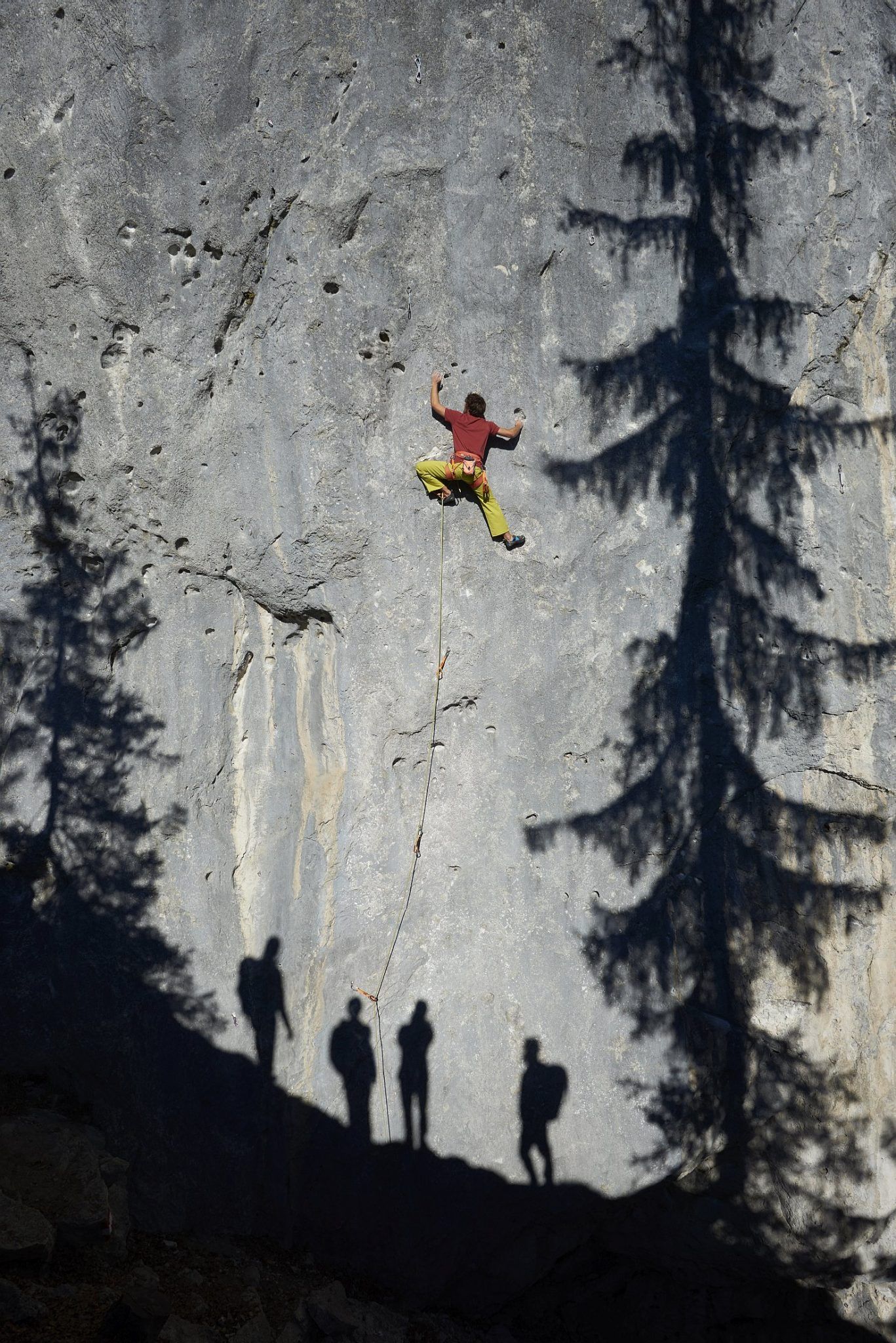
The route: ‘Puls 2000’ in the Dodlwand sector, first climbed by Zak/Walch in 1992, is arguably the most famous line on the wall: very steep, sustained climbing on pockets, small underclings and plenty of edges. The difficult sections continue right up to the end. The protection is perfect, as is the panoramic view over the Leutasch Valley.

What it demands: plenty of muscular endurance – right up to the last bolt.

The Puls 2000 route at the Chinesische Mauer in Leutasch

Puls 2000 at the Chinesische Mauer – Video: Tirol Werbung

„The rock quality is excellent, and the hold patterns are unique and varied.“

2. Another Play in Paradise: Dolomitenhütte, Lienz Dolomites

From one end of Tirol to the other: the Dolomitenhütte crag near Tristach in East Tyrol lies at an altitude of 1,600 metres beneath the rugged limestone peaks of the Lienz Dolomites. Take the toll road to the car park; from there, it’s a 5- to 20-minute walk to the climbing sectors. There are 129 routes here ranging from grade 5 to 9, with most starting at grade 7. Due to the high altitude, some routes do not dry out until late spring – and climbing is prohibited from November to February.

The route:‘Another Play in Paradise’ in Sector A (Paradies) is long, sustained and absolutely stunning. The athletic lower section is followed by a rest point, after which it becomes technically challenging and increasingly exposed as you climb higher. The spacing between bolts is consistently comfortable.

What it requires: athleticism, stamina and a real head for heights.

The Another Play in Paradise route near the Dolomitenhütte in the Lienz Dolomites

Another Play in Paradise at the Dolomitenhütte – Video: Tirol Werbung

„The south-facing section of the wall offers unobstructed views of the imposing Lienz Dolomites.“

3. Number One: Schleierwasserfall, Wilder Kaiser

The Schleierwasserfall crag near Going am Wilden Kaiser is one of Austria’s major sport climbing areas: a south-facing rock dome some 60 metres high at the foot of the Maukspitze, with a stream cascading down into the depths like a veil at its centre. There are 226 routes, almost all graded from grade 7 upwards, some of which are among the hardest in Europe. Climbing takes place here practically all year round, and from the higher routes, views open up across the Kitzbühel Alps. Allow 60 to 75 minutes for access from the Hüttling trailhead.

The route: ‘Number One’ in the Graue Wand sector is an aesthetic line on pockets and edges in one of Tirol’s most compact rock areas. At the bottom, two long moves on big pockets await; right at the top, there’s a difficult passage on small edges to test your tired forearms.

What it requires: maximum strength, endurance and good footwork.

The Number One route on the Graue Wand at the Schleierwasserfall

Number One at the Schleierwasserfall – Video: Tirol Werbung

„A super-compact rock on a striking, slightly overhanging wall. What more could a climber’s heart desire?“

4. Weißer Riese: Nösslach, Ötztal

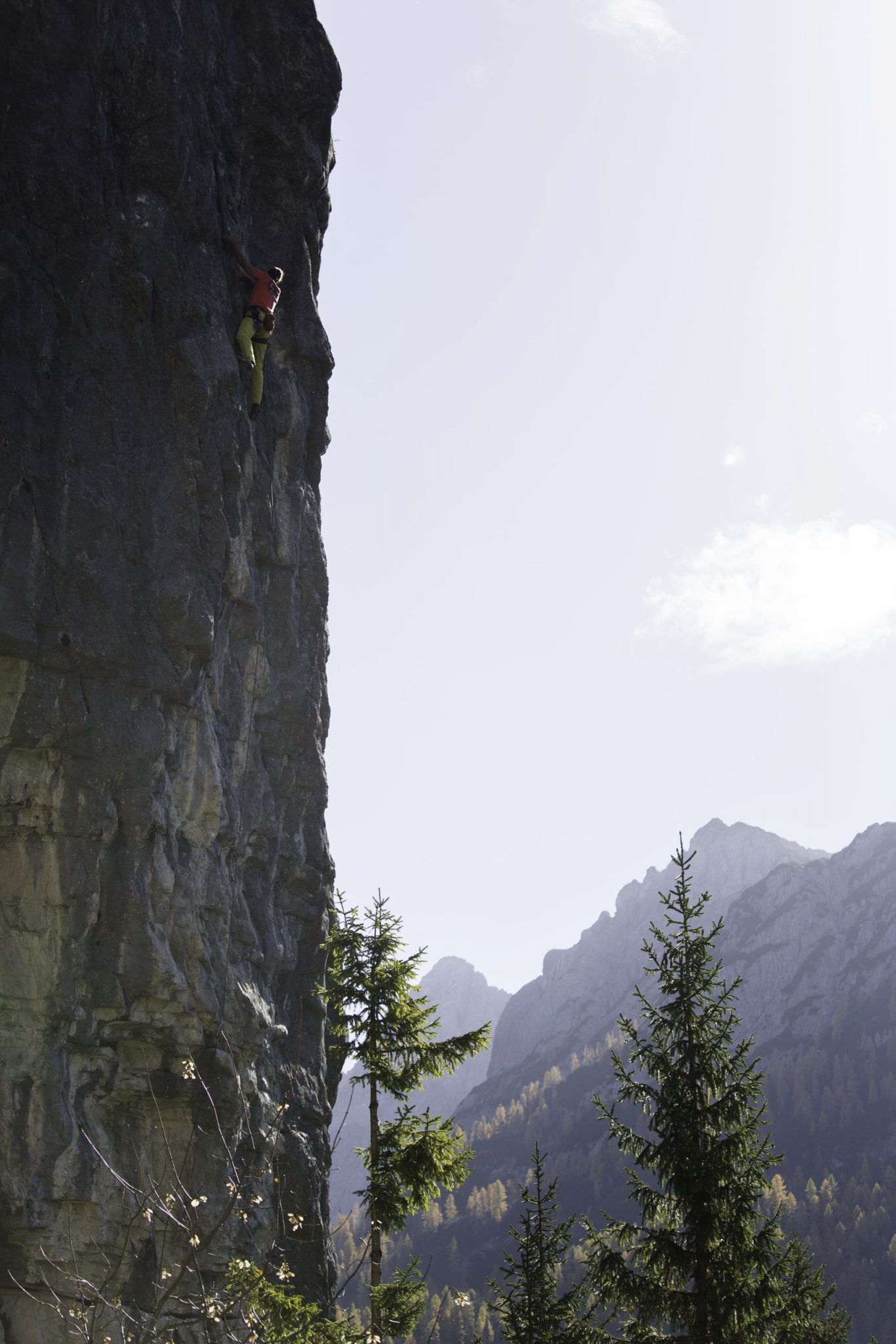
In the Ötztal, the terrain changes from limestone to gneiss: the Nösslach crag near Längenfeld lies at the foot of a massive face, partly in the cool shade of the spruce trees. There are 71 routes ranging from 10 to 45 metres in length, most of them grade 6, plus a few multi-pitch routes. The rock faces west and south-west; the approach takes 10 to 25 minutes. Park at the signposted car park by the Ötztaler Ache – not at the recycling centre and not by the chapel.

The route: ‘Weißer Riese’, first climbed by Christoph Rimml in 1985, is the classic route at Nösslach. You’ll recognise it by the light-coloured rock in the middle of the otherwise dark-grey face, in the sector of the same name in the woods. The route offers a good mix of jugs, slopers, edges and small cracks.

What it demands: “Classic routes are never a walk in the park: technique and (finger) strength are definitely required here,” says Barbara Zangerl.

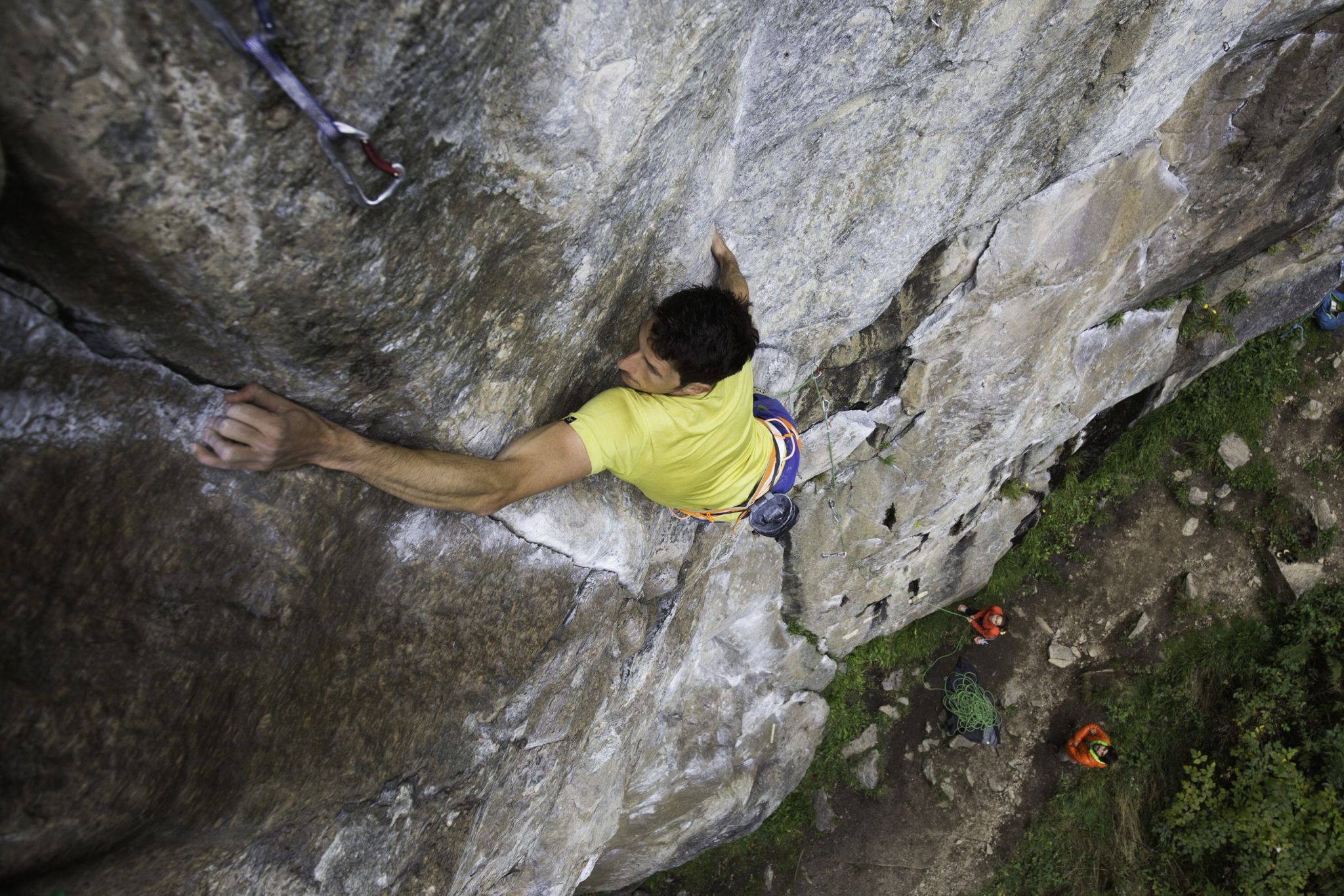
Climber on a crack at the Nösslach crag in the Ötztal

Weißer Riese in Nösslach – Video: Tirol Werbung

„My favourite route in Nösslach. It’s always a pleasure to tie in.“

5. Le Miracle: Niederthai, Ötztal

A little further down the valley, the boulders of Niederthai lie scattered throughout the woodland – remnants of the massive Köfels rockslide. Cracks, dihedrals, steep slabs and overhangs: 140 routes ranging from 4 to 35 metres, predominantly graded between 6 and 8 and tending to be on the stiffer side. Beginners will struggle to find anything suitable here. The approach takes 20 to 45 minutes; parking is available at the hairpin bend by the Wiesle inn above Umhausen.

The route:‘Le Miracle’ in the Minas Tirith and Glatteis sector was first climbed by Matthias Burtscher in 1993 and is almost a must-do when visiting Niederthai. After a mantle start, the climb begins with a few strenuous moves on edges, followed by a good rest. Before the crux, it’s worth planning exactly which hand goes where in the crack. After that comes the wider crack – with stamina and carefully measured strength, it’s pure enjoyment.

What it demands: a deep love of crack climbing, technique and maximum strength.

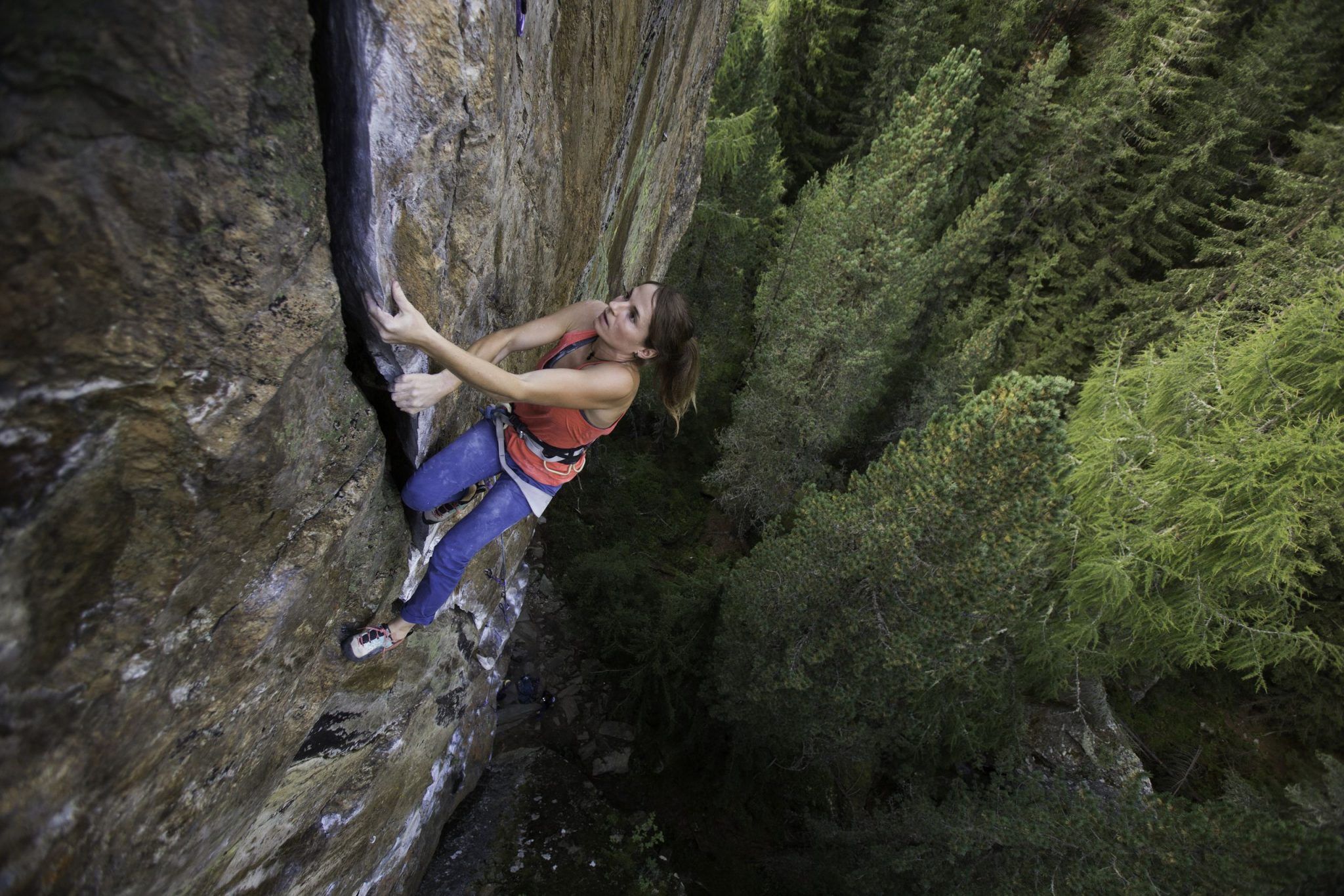
Climber in the crack of Le Miracle in Niederthai

Le Miracle in Niederthai – Video: Tirol Werbung

„When you stand beneath the boulder, the striking crack immediately catches your eye and you just think to yourself: I’ve got to climb that line.“

The Great Lines crags

You might also be interested in these articles