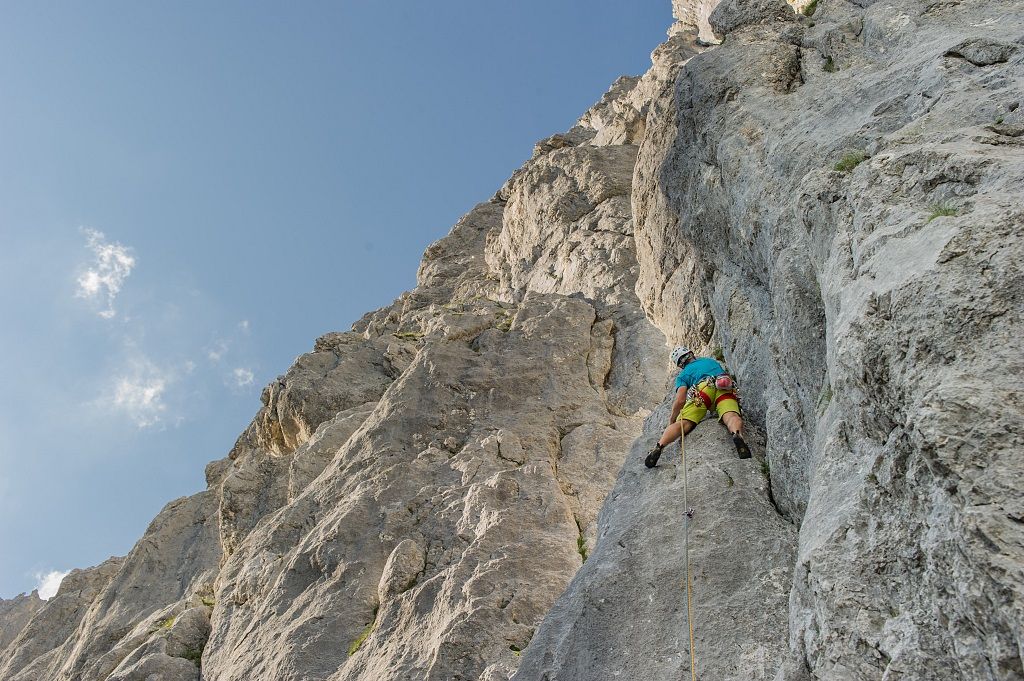
Distinctive peaks, spires and crags, lined up like half a crown: for a good 200 years, the Kaiser Mountains have attracted climbers like few other mountain ranges in Europe.
Pioneers such as Hans Dülfer and Mathias ‘Hias’ Rebitsch have made climbing history here – for example, with the Fleischbank East Face or the Rebitschriss on the Fleischbank Pillar. We recount this history in detail in *Wilder Kaiser – A Commitment to Tradition*.
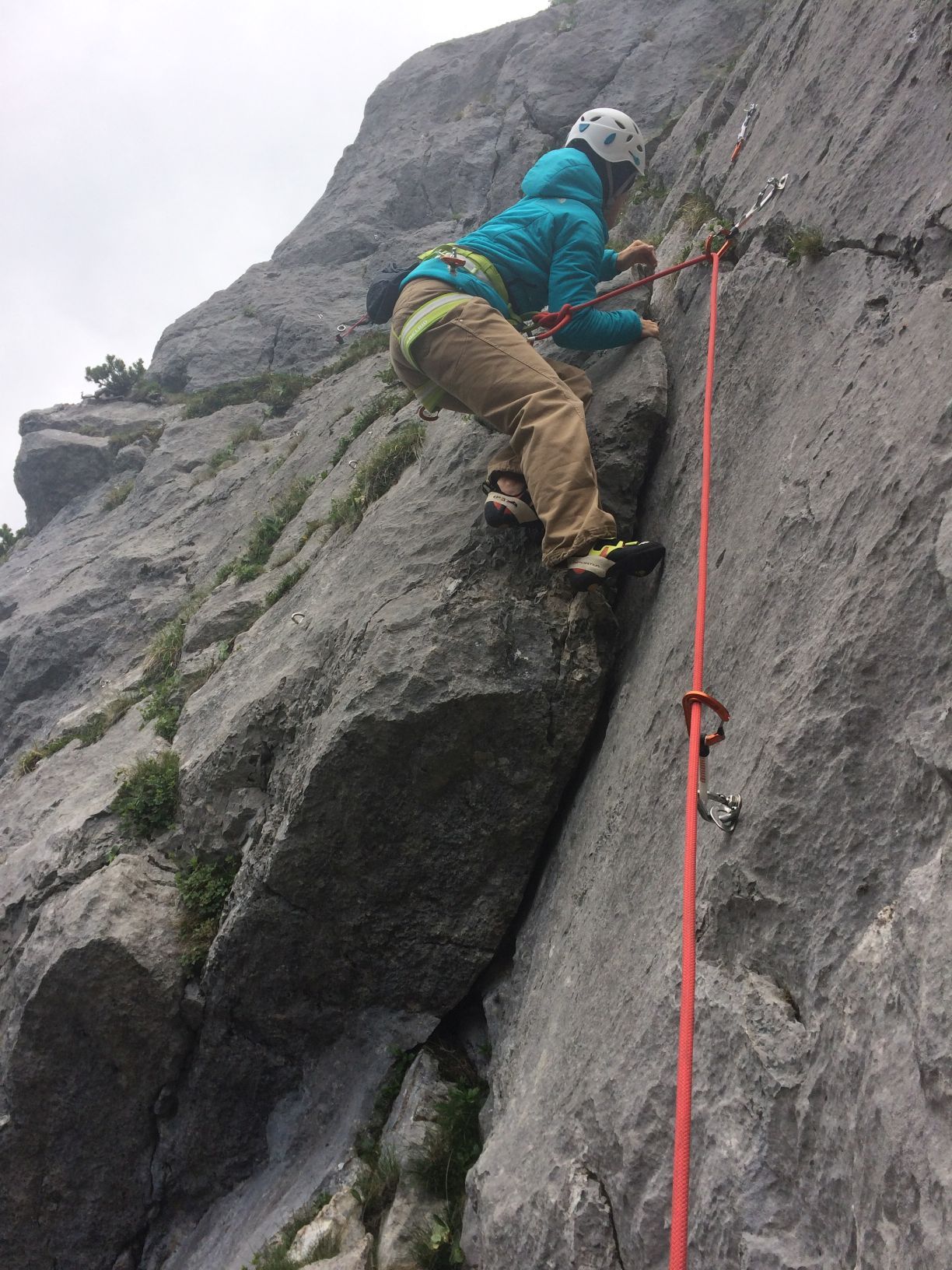
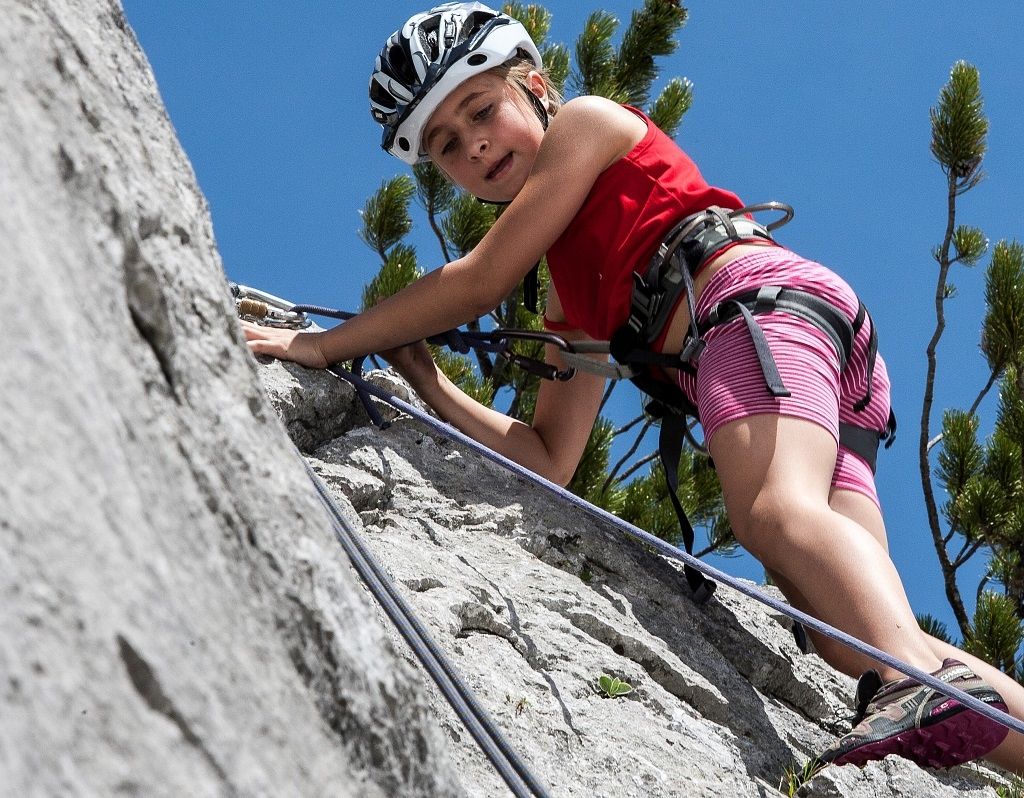
This is about what came next: top-class sport climbing areas, plaisir routes through the great walls and rocks where even children dare to make their first lead climbs.
Text: Susa Schreiner
In the 1990s, Stefan Glowacz ushered in the era of plaisir routes at the Kaiser. He made a big splash with ‘Des Kaisers neue Kleider’ (8b+) on the Fleischbankpfeiler. To this day, local ‘Koasakraxler’ continue to discover new routes.
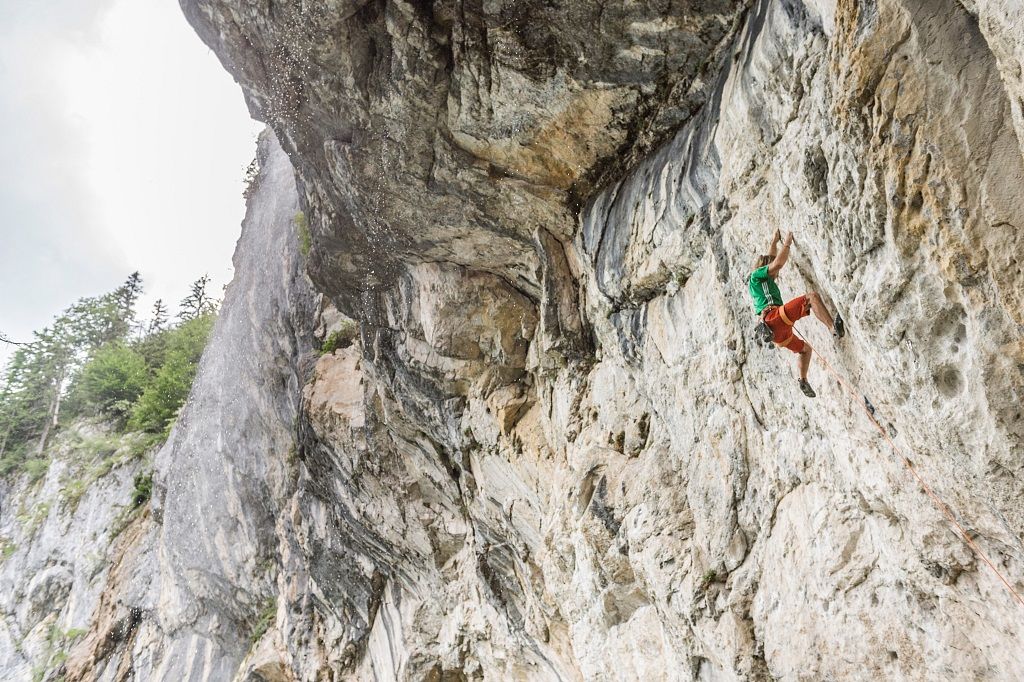
At the same time, the Schleierwasserfall crag near Going developed into a world-class sport climbing destination. At the foot of the Maukspitze, a mountain stream cascades down like a veil from the centre of a rock dome some 60 metres high. The face faces south, and the large overhangs mean the “Schleier” is climbable almost all year round.
Recreational climbers will find a huge selection of moderate ‘plaisir’ routes and alpine sport climbing routes in the Wilder Kaiser – across the legendary walls of Totenkirchl, Fleischbank, Predigtstuhl and many other spires, needles and pillars. ‘Climbers Paradise’ highlights six multi-pitch areas as examples, such as the Multerkarwand. These alpine classics and many other routes are featured in the climbing guide ‘Alpin Wilder Kaiser’ (Panico Alpinverlag).
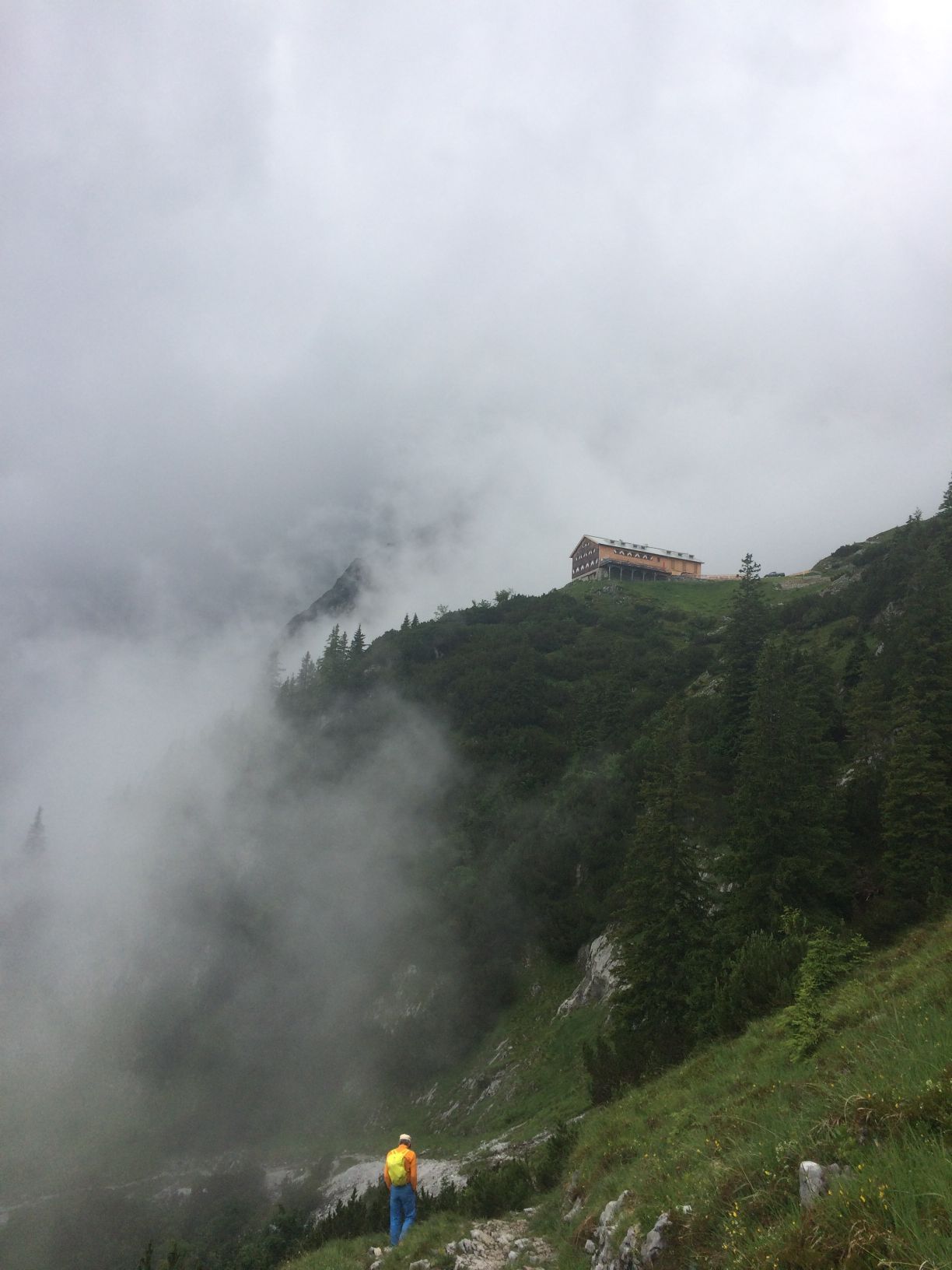
Climbers can recharge their batteries in the ‘hut Bermuda Triangle’ on the southern side of the Kaiser:
Marcus Sappl is a keen climber in the Wilder Kaiser. In 2018, he was a tourism manager in Scheffau and answered three questions for us.
What makes climbing in the Wilder Kaiser unique?
The location: easily accessible by car, train or, as in the old days, by bike. Depending on the weather, you can choose between north-facing and south-facing faces. There’s something for everyone, from grade 3 or 4 right up to grade 10 – and protection ranging from ‘Plaisir’ to almost entirely without bolts.
Why should every climber have climbed in the Wilder Kaiser at least once?
The hard, textured Wetterstein limestone offers an incredible experience if you embrace its unique characteristics. In 1977, the ‘Pumprisse’ here became the first route ever climbed at grade 7, thereby extending the upper limits of the UIAA scale. That’s why every alpine climber should have a classic or a ‘Plaisir’ route from the Kaiser in their logbook.
What does your perfect day’s climbing in the Kaiser look like?
Climbing with a good friend on almost perfect rock, with belays that put no strain on your nerves. Then enjoying a post-climb beer at a hut and philosophising with like-minded people about the metres you’ve just climbed.
„The finest climbers from every era have left their mark on the Koasa.“
Up-to-date information on accommodation, buses and cable cars is available at wilderkaiser.info.
Tips & Safety
Would you like to know more about climbing safety? Click here for our safety tips.