As the temperatures rise, we automatically find ourselves heading for higher ground – to places where the air is fresh and the peaks rise steeply into the sky.
Via Ferratas on theWilder Kaiser carve a path right through magnificent rock faces, a route otherwise reserved for climbers: up iron ladders, over clamps and pitons, across wobbly wire rope bridges – all against a backdrop of scenery that can only be seen from up here. For some, they’re simply iron paths; for us, they’re stairways to heaven. We’re showcasing three of them, ranked by difficulty.
Text: Susa Schreiner
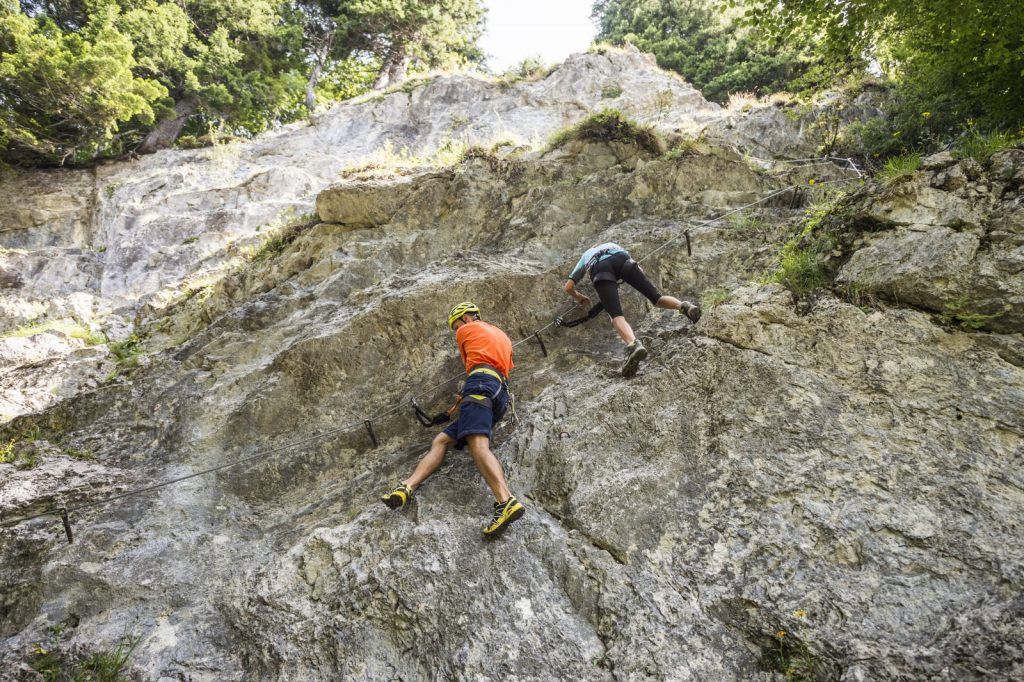
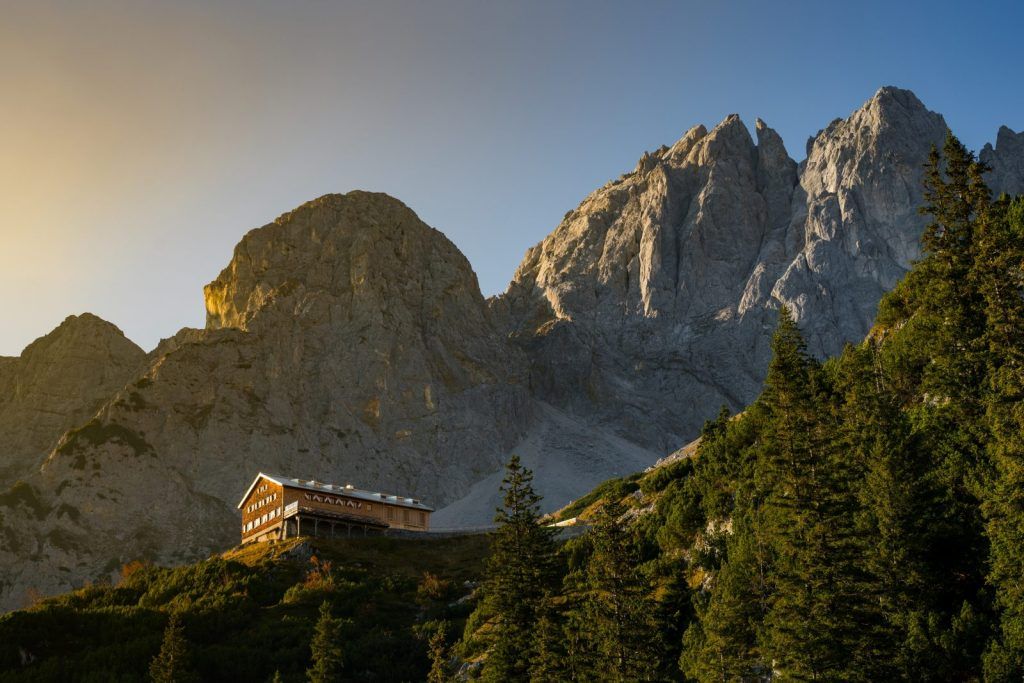
Above the Gaudeamus Hut lies a perfectly secured practice via ferrata – ideal for anyone wanting to get used to walking with plenty of air beneath their feet. Here, you can practise at your own pace what will be important later on the long climb:
At around 50 metres, the via ferrata is short – and that’s precisely why it’s good terrain for your first attempts: you can repeat it as often as you like, or follow it up with a hike. Conveniently, it’s right next to a Hiking Trail. If you’ve no idea how to do it properly, it’s best to hire a Mountain Guide and learn the technique from scratch.
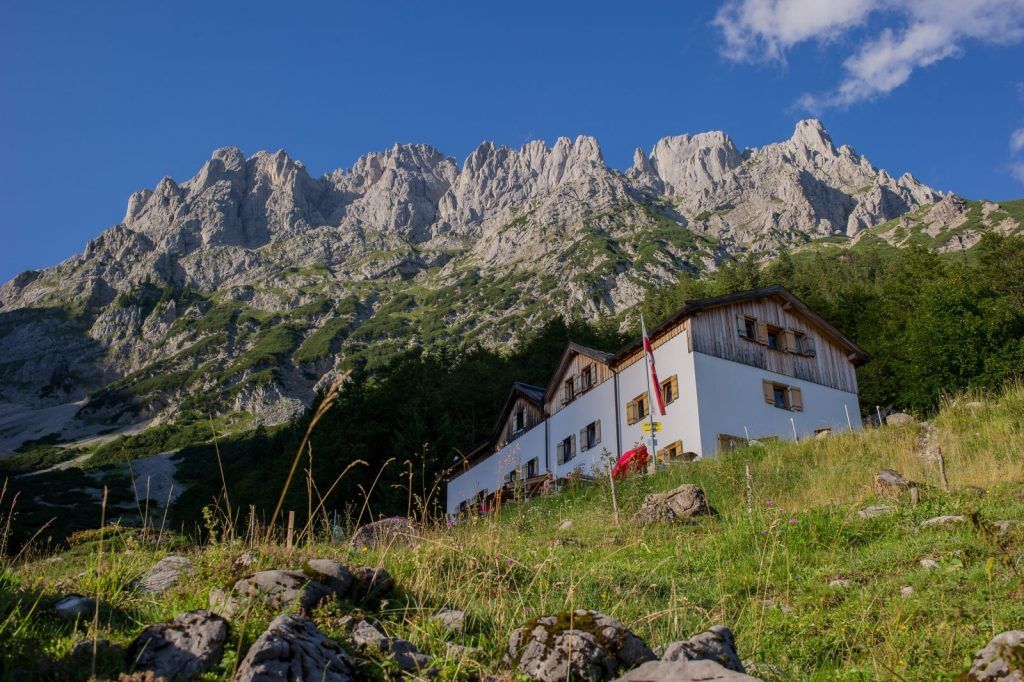
The starting point is the Wochenbrunner Alpine Pasture. And after your practice session, the Gaudeamushütte is just a 20-minute walk away – you can practically smell the Kaiserschmarren on the way there.
A three-quarter-day tour with an adventurous flavour – for anyone who already has via ferrata experience and fancies putting their courage to the test. As with the practice via ferrata, the starting point is the Wochenbrunner Alpine Pasture. From there, the route takes you at a leisurely pace towards the Gaudeamushütte, which you pass on your right: the path leads over the ‘Murmeltierfelsen’ to the start of the climb.
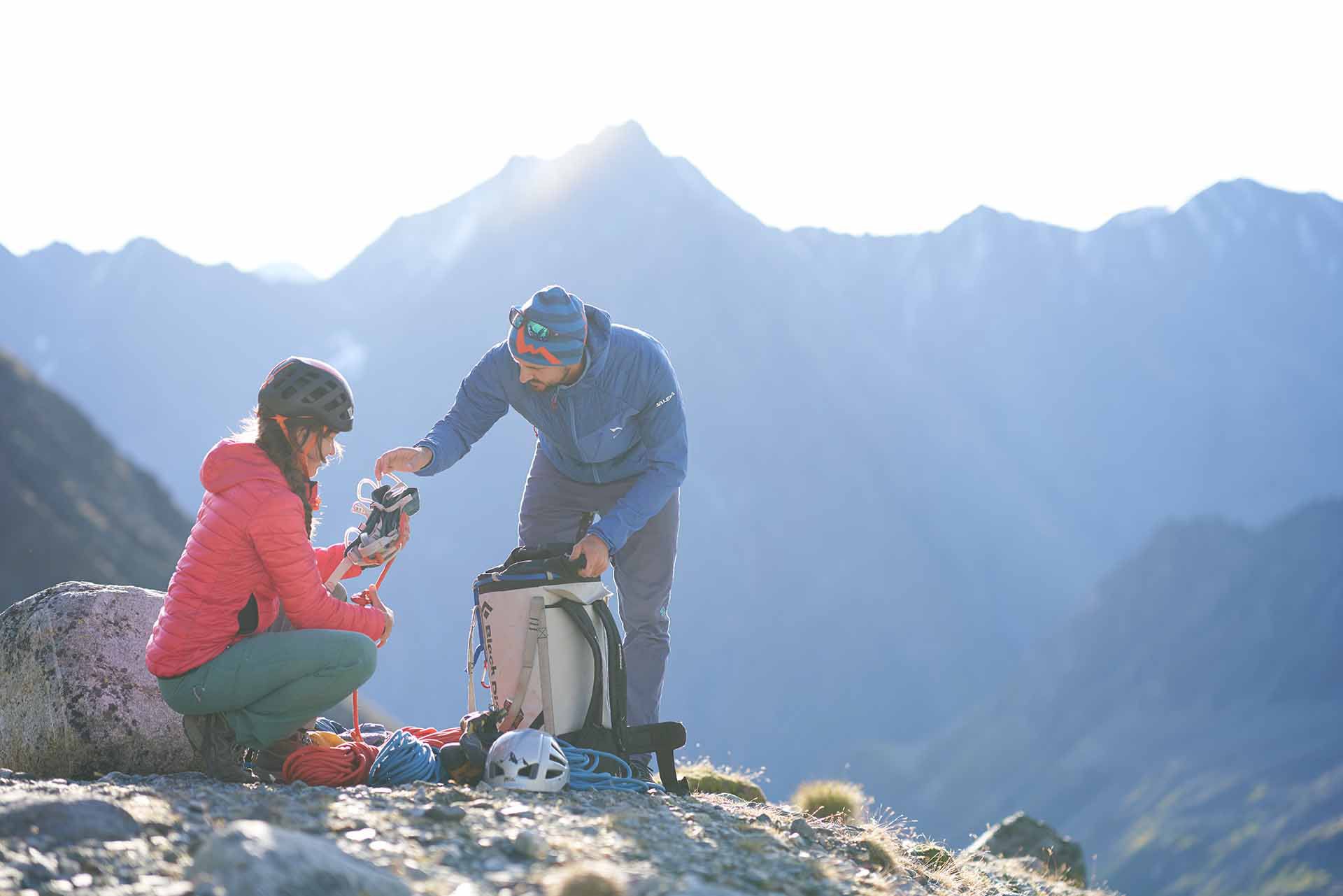
If you’re out and about with children who have via ferrata experience, take a break at the Murmeltierfelsen – with a bit of luck, you might spot some climbers there, and the wooden benches are the perfect spot for a snack anyway. After that, the terrain becomes rougher and more rocky until you reach the start of the via ferrata. By this point at the latest, you’ll need to put on your helmet and fasten your climbing harness.
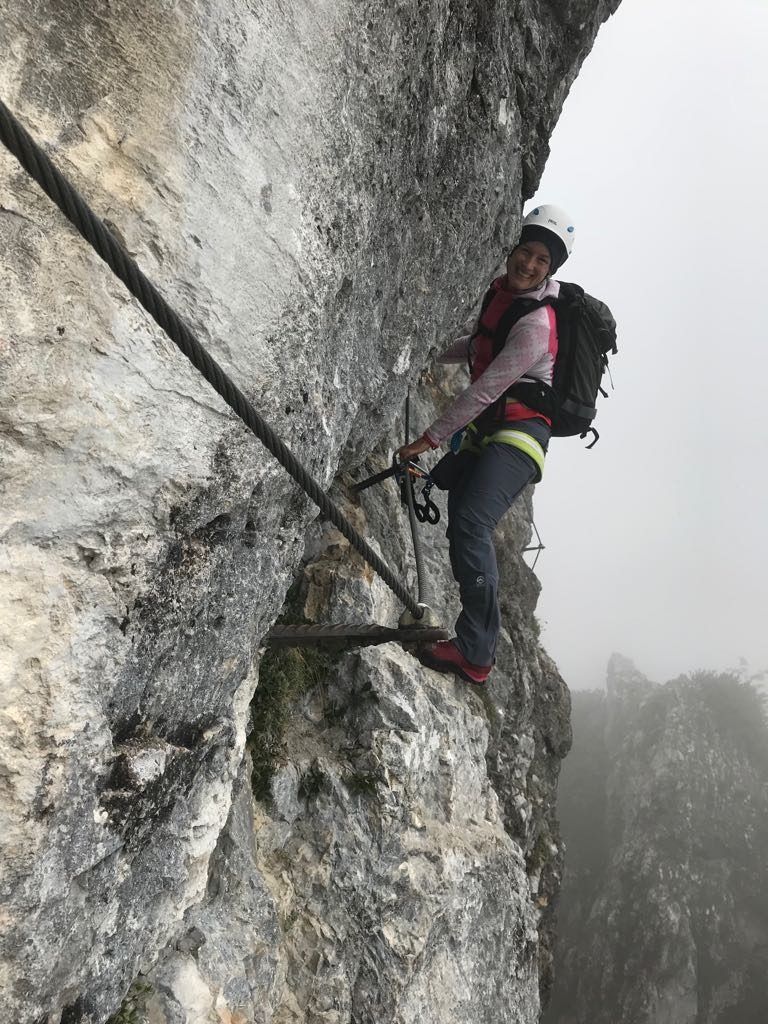
The Klamml isn’t one for holding back and throws you straight into it – take a firm step, push yourself up, and grip the rock firmly with your hands. Then comes the crux: a wire rope bridge spanning a rocky gorge, which is wobbly and can therefore only be crossed one at a time. Via ferrata gloves are useful here to prevent damp hands from slipping off the cable. On the other side, the route leads vertically up the wall via iron rungs and ladders – not for the faint-hearted. Anyone who enjoys this will be thoroughly delighted by the second section.
The final section back to the Wochenbrunner Alpine Pasture leads through dense forest, with countless cairns dotting the clearings. If winter has knocked them over, gather some stones and rebuild them.
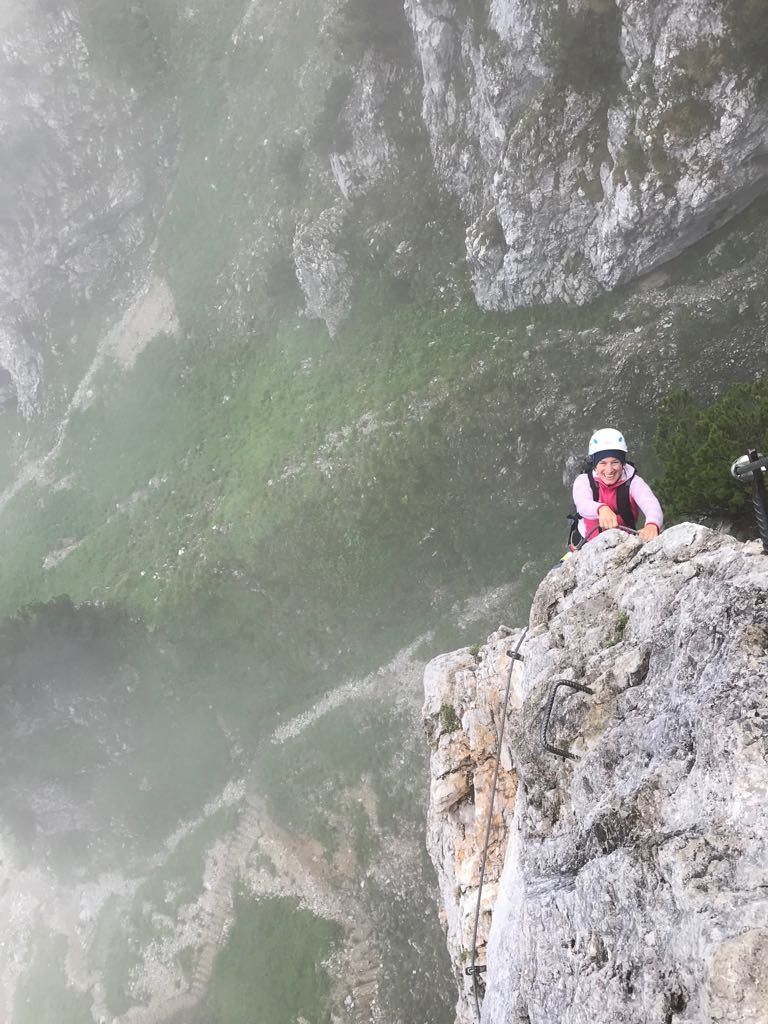
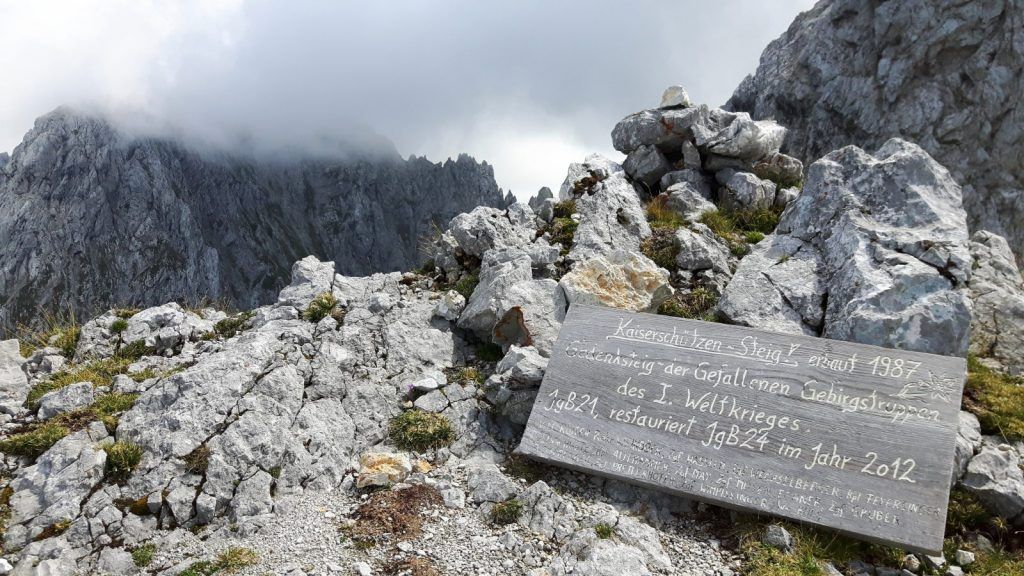
A Via Ferrata covering 1,400 metres of altitude gain is no mean feat – it’s only truly enjoyable if a Hiking Time of ten to eleven hours is part of your usual routine. And as if the sheer number of hours weren’t enough, this gruelling route also involves negotiating a few exposed sections without safety ropes. The Kaiserschützensteig is therefore suited to experienced mountaineers with high-alpine expertise who can keep their nerve when there’s plenty of air beneath their feet.
The via ferrata was built in 1987 – in memory of the victims of the First and Second World Wars.
The Starting Point is the Hans-Berger-Haus in the Kaisertal valley. It’s well worth spending the night there: the hut’s library, a chat with the landlady – also known as the ‘Wild Empress’ – and the Tibetan prayer flags fluttering in the wind. For the day of the via ferrata itself, it’s advisable to book a bunk at the Gruttenhütte. That way, your tired legs won’t have to make the trek all the way to the Wochenbrunner Alpine Pasture or down to the valley; you can enjoy the sunset on the hut’s terrace and tackle the final section the next day with renewed energy.
Please only set out in stable weather – and only if the paths are definitely free of ice and snow. Check the current conditions briefly with the tourist office or at the Mountain Lodge/Hut.
Tips & Safety
Would you like to know more about climbing safety? Click here for our safety tips.