
Sonneck: 500 metres of climbing on the sunny side of the Wilder Kaiser
Water grooves instead of ‘bacon grips’, slab armour instead of ‘pump cracks’: the Westkaiser boasts a gem of Multi-Pitch Climbing that has long been overlooked.
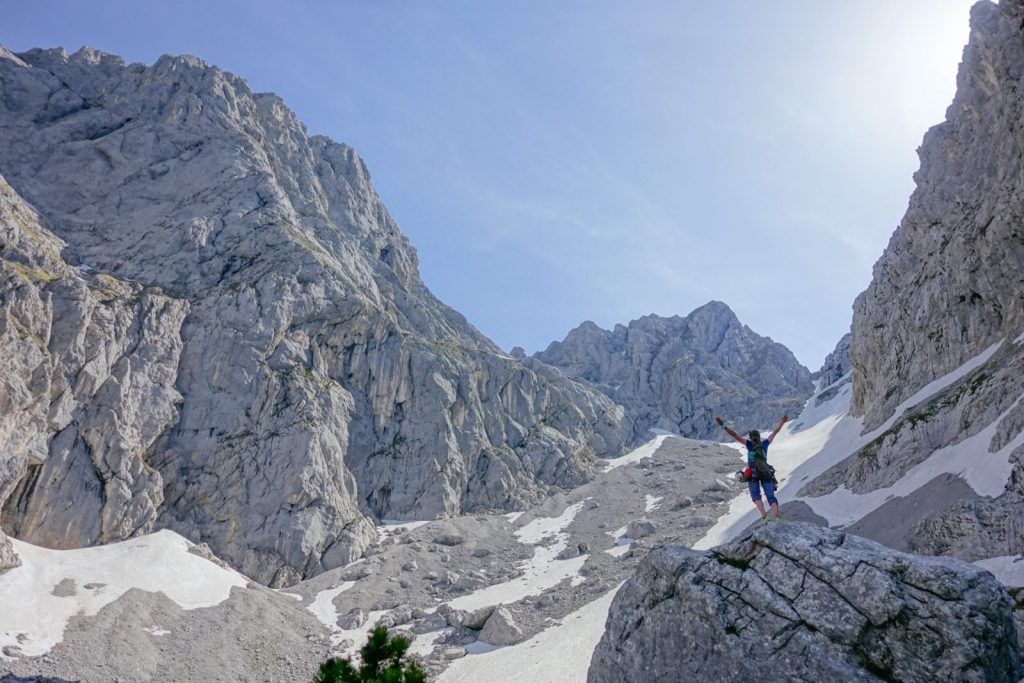

There is probably no other rock face in the world where so much climbing history has been made: the Wilder Kaiser in the Tirolean lowlands has had a decisive influence on the history of modern climbing.
Thanks to its easy accessibility between the climbing strongholds of Munich and Innsbruck – and, of course, thanks to the ideal rock quality with plenty of cracks that can be used for protection – the limits of human capability have frequently and consistently been pushed here. The Fleischbank East Face was long regarded as the most difficult wall in the Alps; the legendary ‘Pumprisse’ officially introduced Grade 7, whilst Stefan Glowacz’s ‘Des Kaisers neue Kleider’ was for a long time the most difficult alpine route in the world.
A wealth of history, few repeats: only a handful of exceptional climbers come close to tackling these routes.
Text and photos: Simon Schöpf
Which is why, whilst these classics are nice to study and worth pondering in the guidebook, in practice they are certainly not suitable for the masses. It’s a good thing that development continued – for example on theSonneck (2,261 m) in the Westkaiser, which climbers had long ignored. That was until Herbert Haselsberger roused the face from its slumber in 1995 and, together with his companions, systematically opened up route after route here.
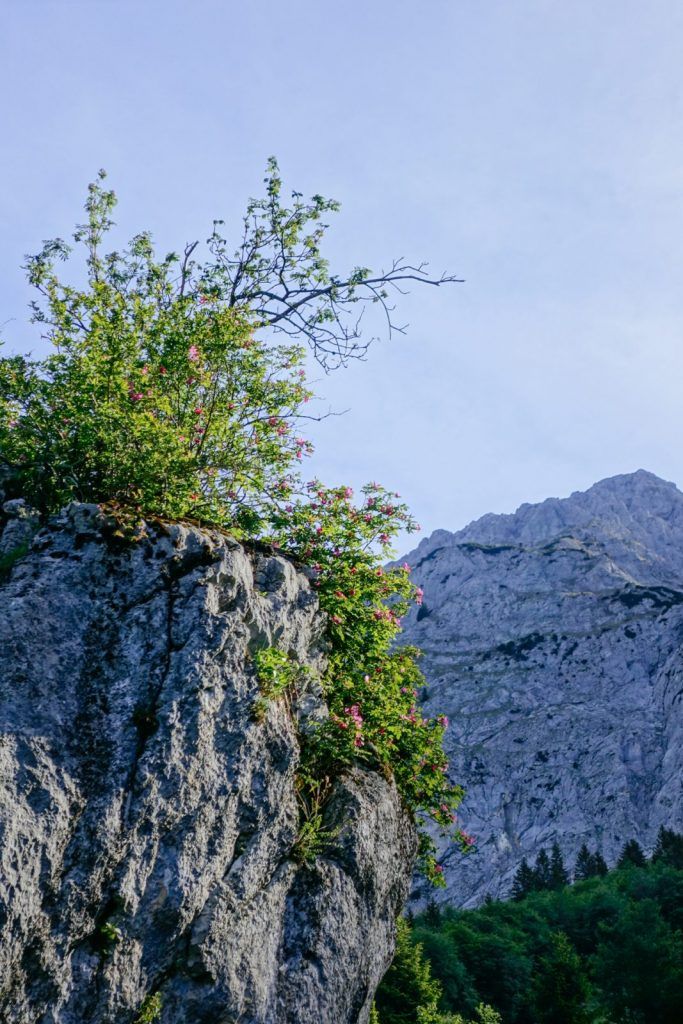
Still, nothing comes for free at the Sonneck: it’s a good two hours’ trudge from the Jägerwirt above Scheffau to the start of the Schneekar, where most of the routes begin. The name is no coincidence – in spring, the firn lingers here for a long time. The name of the first route established here – ‘Schneekaridylle’ (8+) – is very fitting indeed. After all, that’s all you’ll find up here.
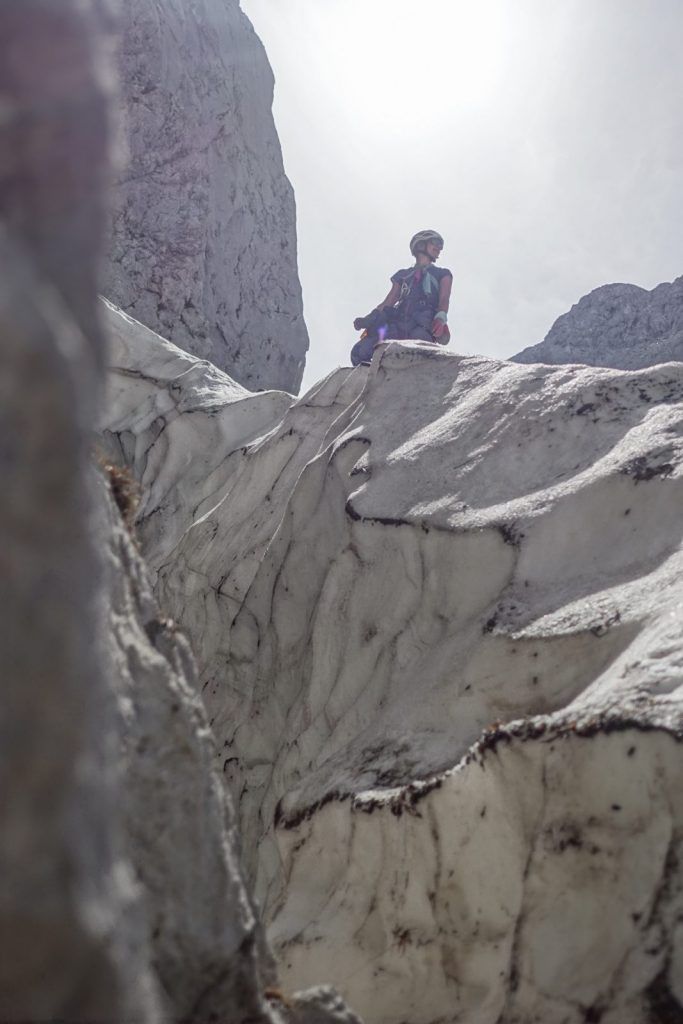
And, of course, excellent rock that completes the idyll: at Sonneck, water grooves and compact slab climbing dominate; you’ll search in vain for thin holds and footholds.
We opted for the route combination of ‘Delicatesse’ (7-) up to the large ledge and the much-praised ‘HaZo Fantastica’ (8-) in the upper section – a good 500 metres of climbing ensures a full day’s climbing. After a steep and gruelling start, the slab section demands tricky footwork. Some of the pitches are among the very best that the Kaiser, which is certainly not short of beautiful pitches, has to offer.
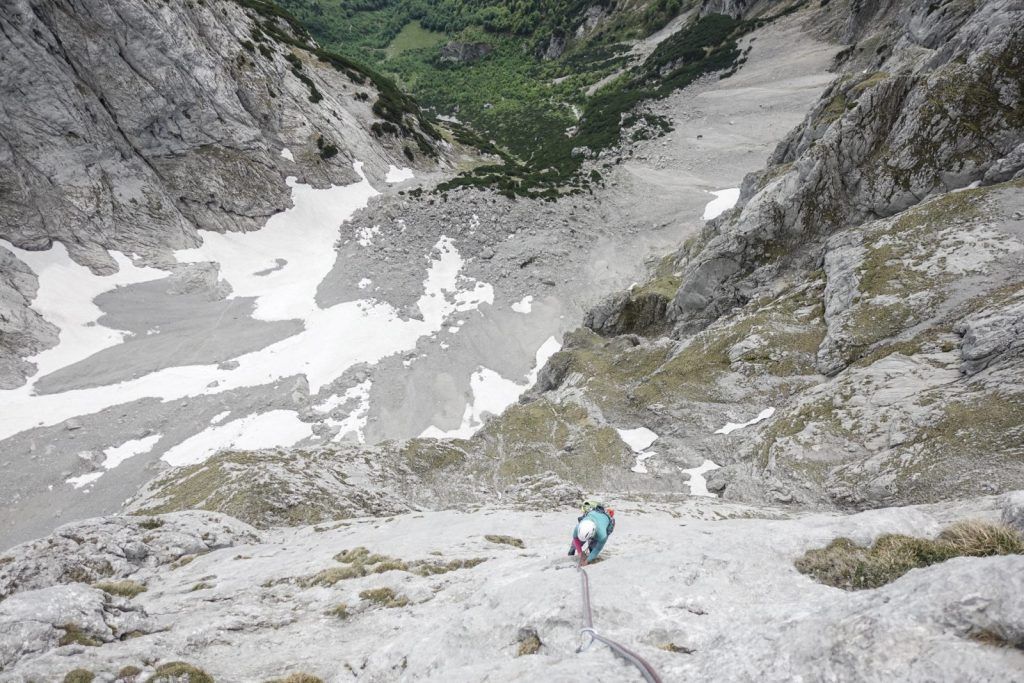
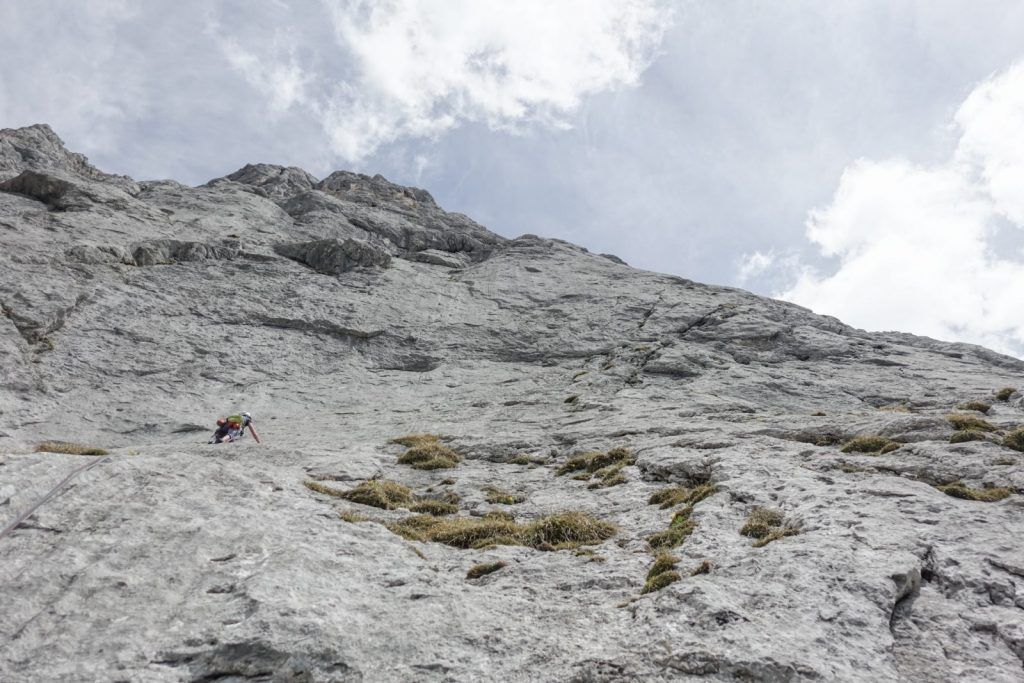
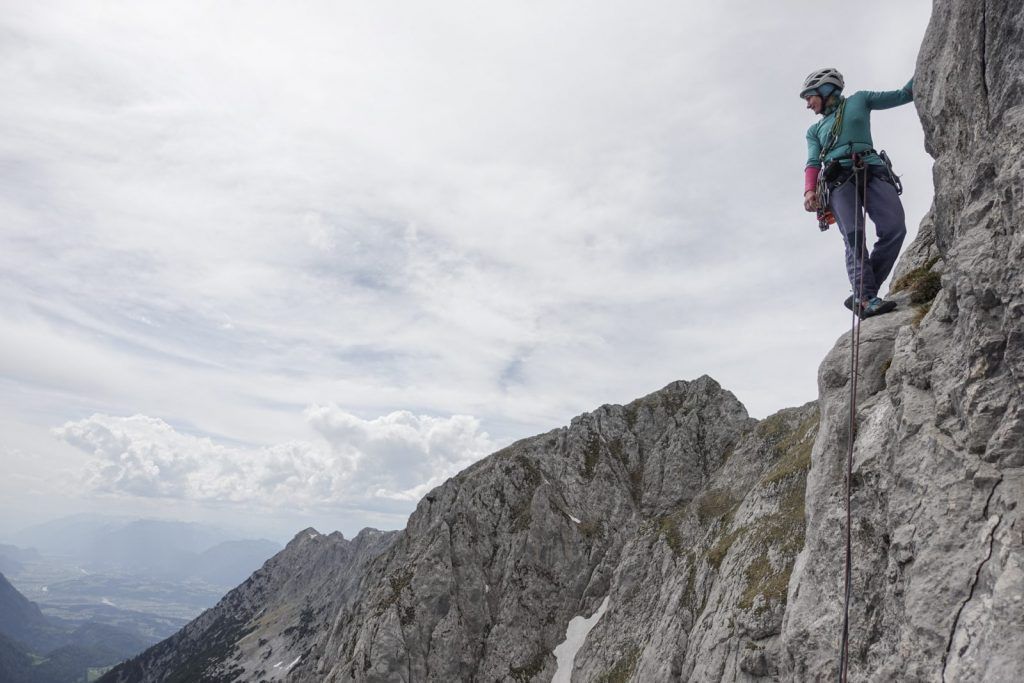
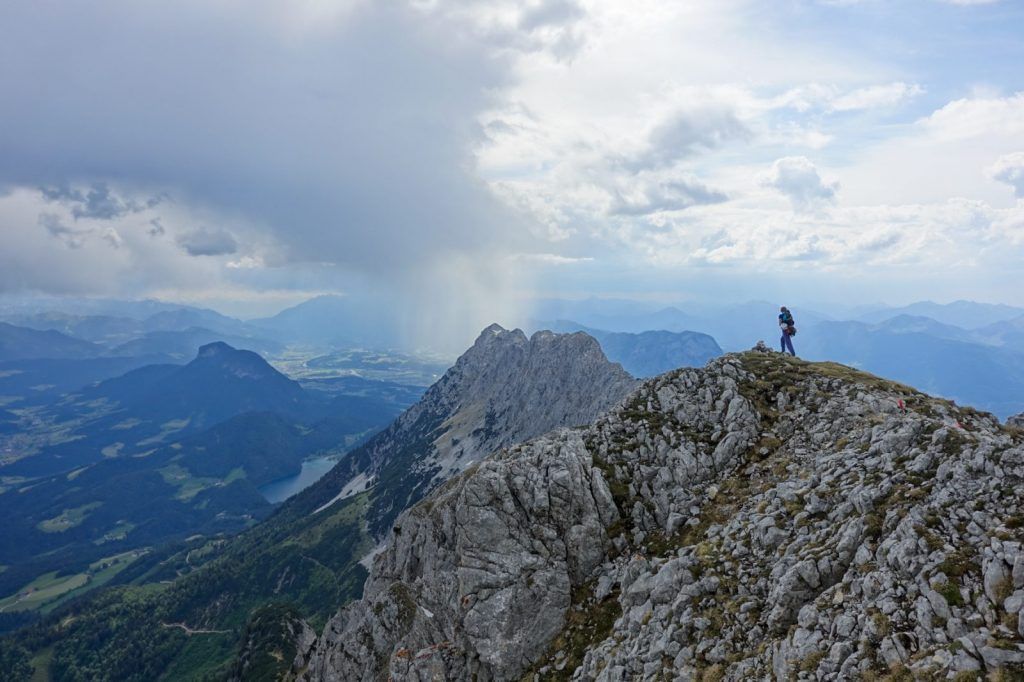
The route is well secured with bolts, but it’s still a good idea to have a few Friends dangling from your harness for the easier distances. At the Sonneck summit, alongside the magnificent panoramic views, a descent of some 1,300 metres in altitude awaits your already weary legs.
It’s a good thing you pass a waterfall on the way down, which provides much-needed refreshment on warm days. And right at the bottom, the Jägerwirt awaits, which is sure to replenish the calories you’ve burnt.
Tips & Safety
Would you like to know more about climbing safety? Click here for our safety tips.


