On the sense and nonsense of combining two sports: in the Wilder Kaiser, you set off on touring skis towards an alpine climbing route, only to be in for a surprise right in the middle of the face.


This high-pressure system is so dominant that it deserves its own name: it’s called Omega, and it has been bringing cloudless skies to Tirol for more than 14 days now. It’s also bringing us the extreme version of what you might call a ‘spring dilemma’: Down in the valley, the temperatures are perfect for climbing in a T-shirt, whilst up on the mountain the firn conditions are still ideal for Alpine Skiing. So every day we’re faced with the paradoxical question: should we go climbing or Alpine Skiing? The elegant solution to this ‘luxury problem’: that’s right, both at the same time!
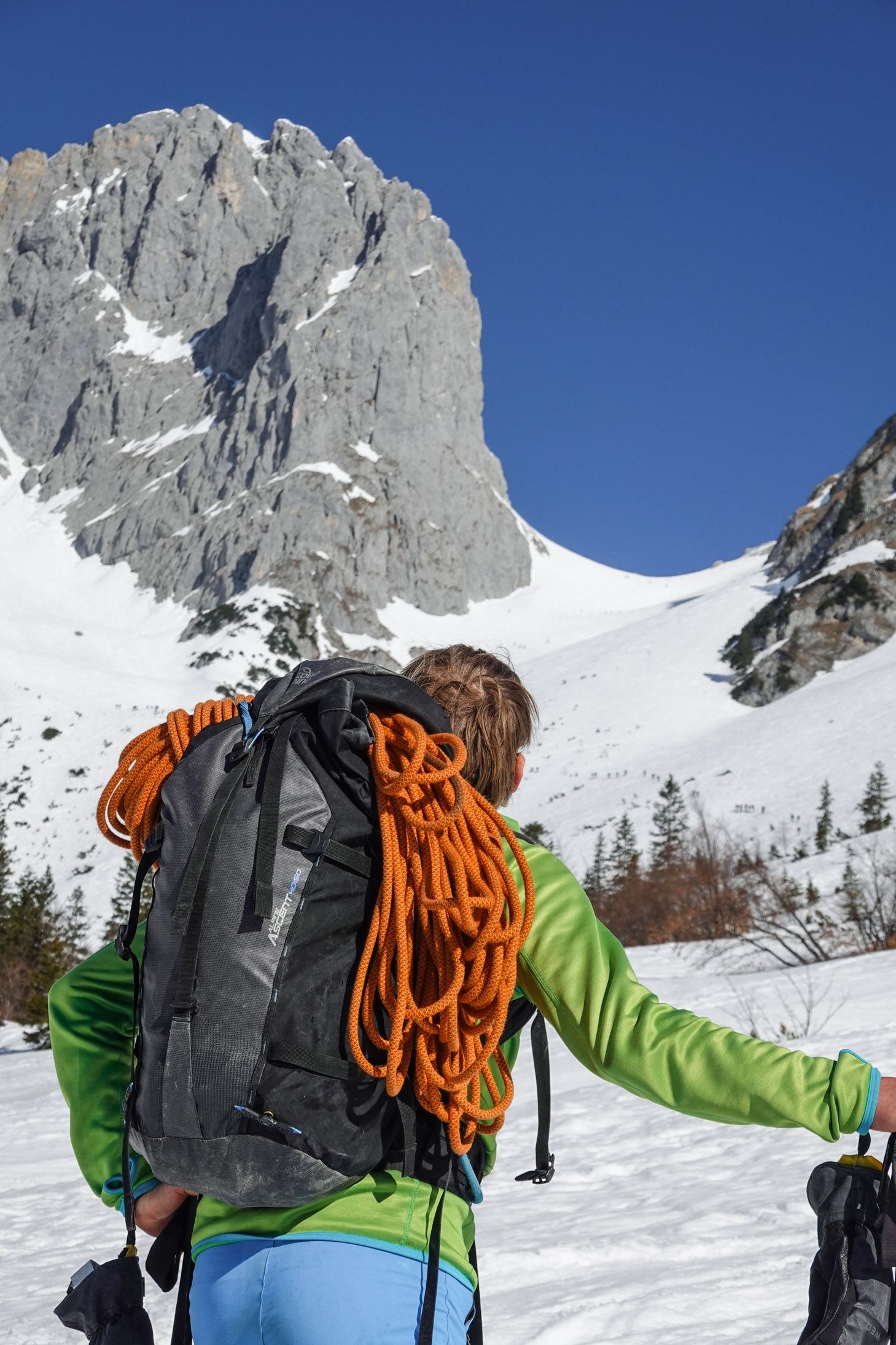
Let’s call it ‘ski & climb’ in modern parlance: heading to the crags on touring skis, enjoying a lovely south-facing climb, abseiling down, then gliding back down towards the valley with sweeping turns. That’s the theory, but the reality is a bit more complicated: Which crags can I reach reasonably easily in spring? Where is it warm enough for climbing, even on short days? What role does the risk of avalanches play as the temperature rises during the day? And above all, who can I persuade to go on a ski tour with a harness, carabiners and a double rope?
Christof’s coming along, as he usually does for these slightly mad adventures. We’re aiming for a Finishing Point in the Tirolean lowlands; after a ‘ski & climb’ near Imst and one in theSchüsselkar, this is the next logical step for this year. Taken together, one could even boldly speak of a ‘Tirolean ski & climb trilogy’ – that sounds rather good, doesn’t it? And what better Finishing Point in the Unterland could there be than the legendary Wilde Kaiser, where so much climbing history has been made?
When blanketed in snow, the Wilder Kaiser looks like a compact version of the Dolomites: jagged rocky outcrops and steep gullies everywhere; Christof, a steep-gullies aficionado, can already spot the next rewarding run wherever he looks. But not today – we’re sticking to easy terrain, and you can tell straight away from the crowds – and that’s putting it mildly – making their way towards the Ellmauer Tor; it’s no exaggeration to say there are hundreds of them. But who’s surprised, given this glorious weather in the Kaiser? The avalanche warning service has been issuing a full-day ‘Level 1’ alert for two weeks now; not even a hint of a cloud in the sky, with visibility limited only by the horizon. In short: the conditions couldn’t be better.
So, with a smile inside, we join the line of ski tourers, knowing full well that we’ll soon be all alone on a sunny south-facing face. Our Finishing Point: the Vordere Karlsspitze, a popular spot amongst climbers thanks to its relatively short Access and an imposing wall height of 400 metres. And here there’s a route whose name couldn’t be more fitting for our endeavour: ABS. In winter sports circles, the acronym stands for ‘Airbag System’ – an avalanche rucksack – but in our case it stands for: ‘Andy Bernhard Schonner/Salvenmoser’, a tribute to the local first ascenders of the beautiful Gaudeamus Pillar.
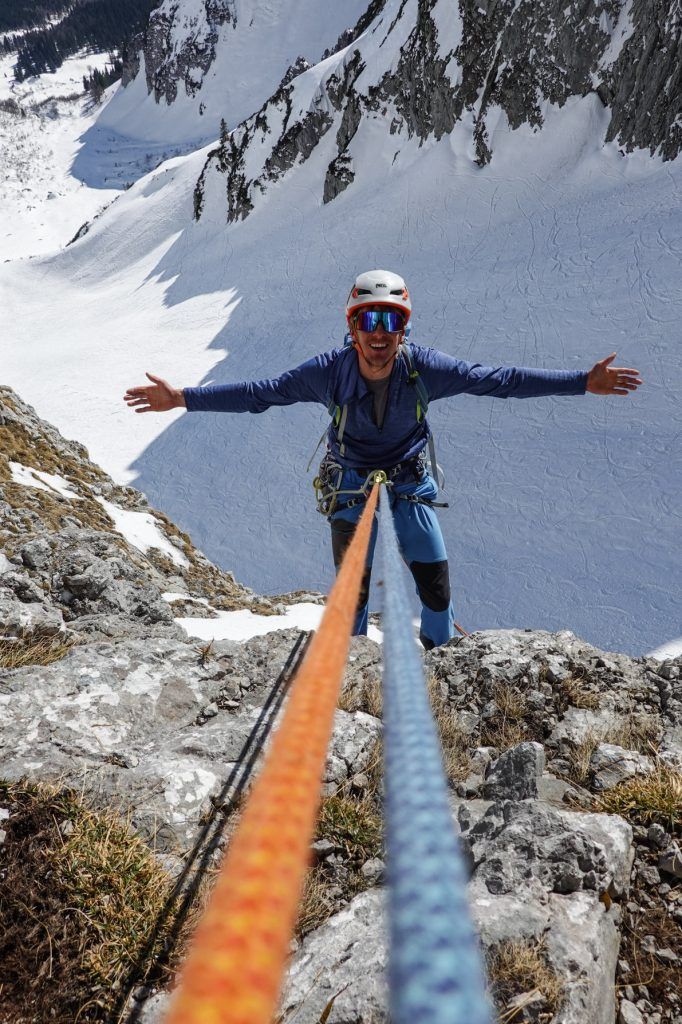
Although the avalanche conditions are favourable and we’re not carrying ABS rucksacks, the kit is still by no means light. The ski tour to the Kübelkar was easy, but it gets steep again over the final few metres. This is where the first challenge presents itself – one you simply don’t face in summer: actually getting onto the rock. With some effort, we kick out a small, level patch and secure our rucksacks to the first bolt so they don’t disappear into the bergschrund.
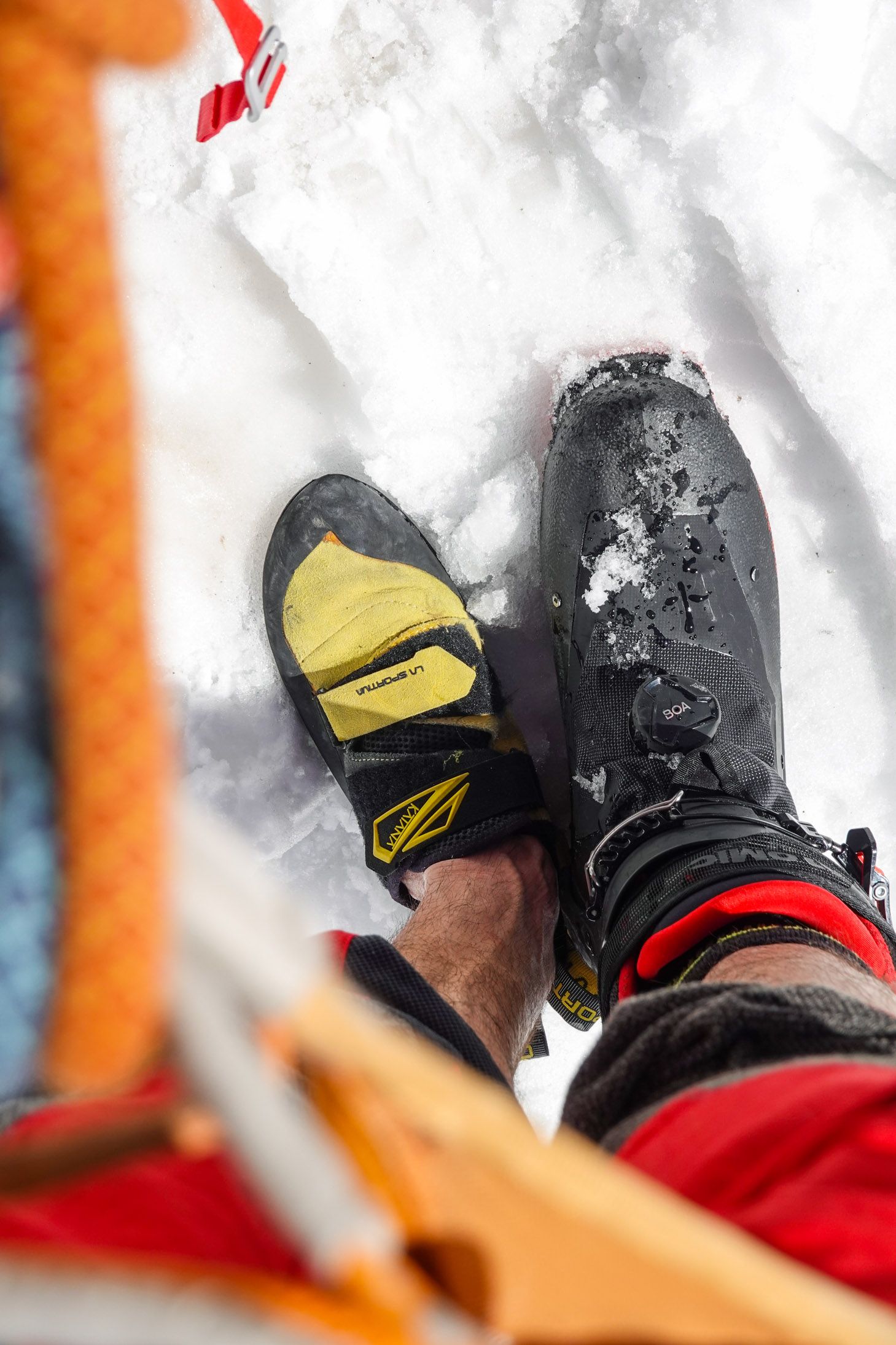
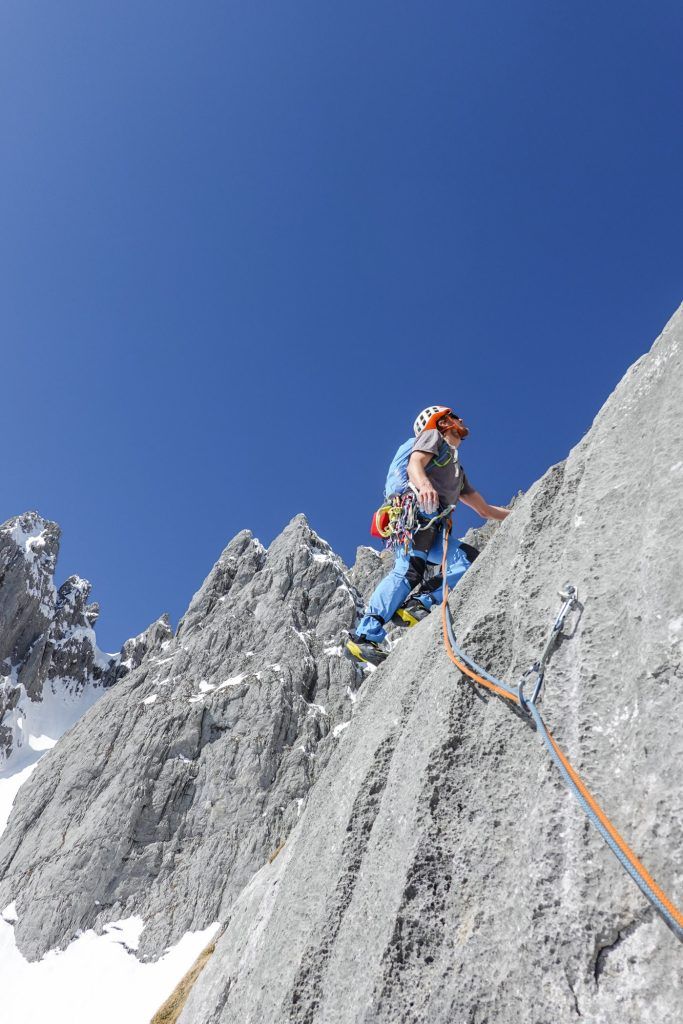
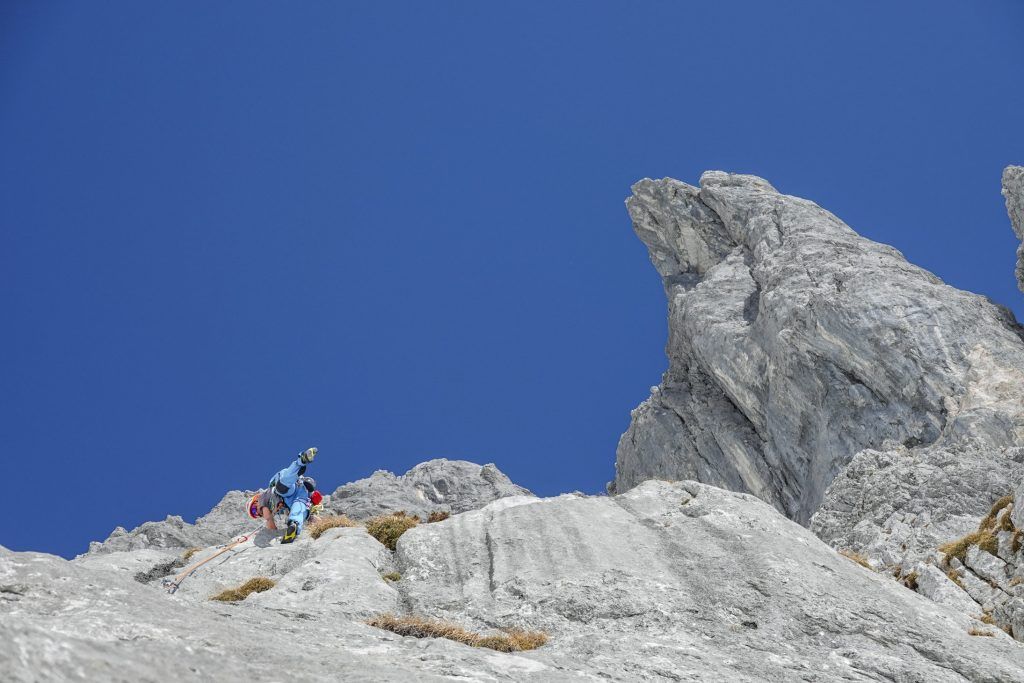
Putting on the climbing harness is a balancing act, whilst changing from ski touring boots into climbing shoes is really only for enthusiasts. But somehow we manage the feat: ropes out, let’s start climbing. A quick glance at the topography reveals: pitch one, VI, 30 metres. Christof swings himself up onto the rock, clips a quickdraw, and then: “Stand!” After a good five metres, he’s already at the first belay station – which means we’re still standing on 25 metres of snow that has accumulated at the foot of the wall throughout the winter. With a good 400 metres of climbing still to go, it doesn’t matter. Or so we tell ourselves, at least for now.
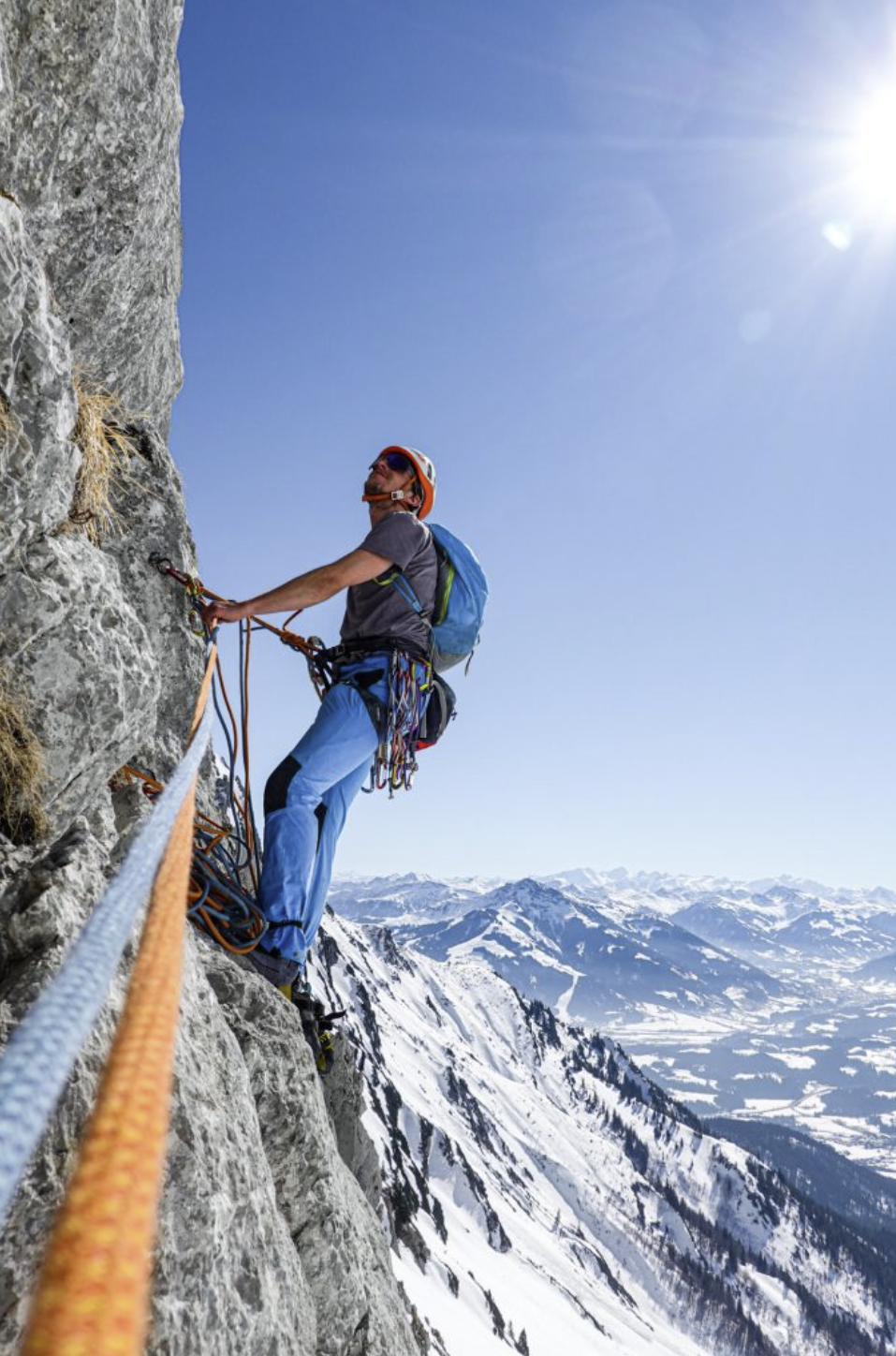
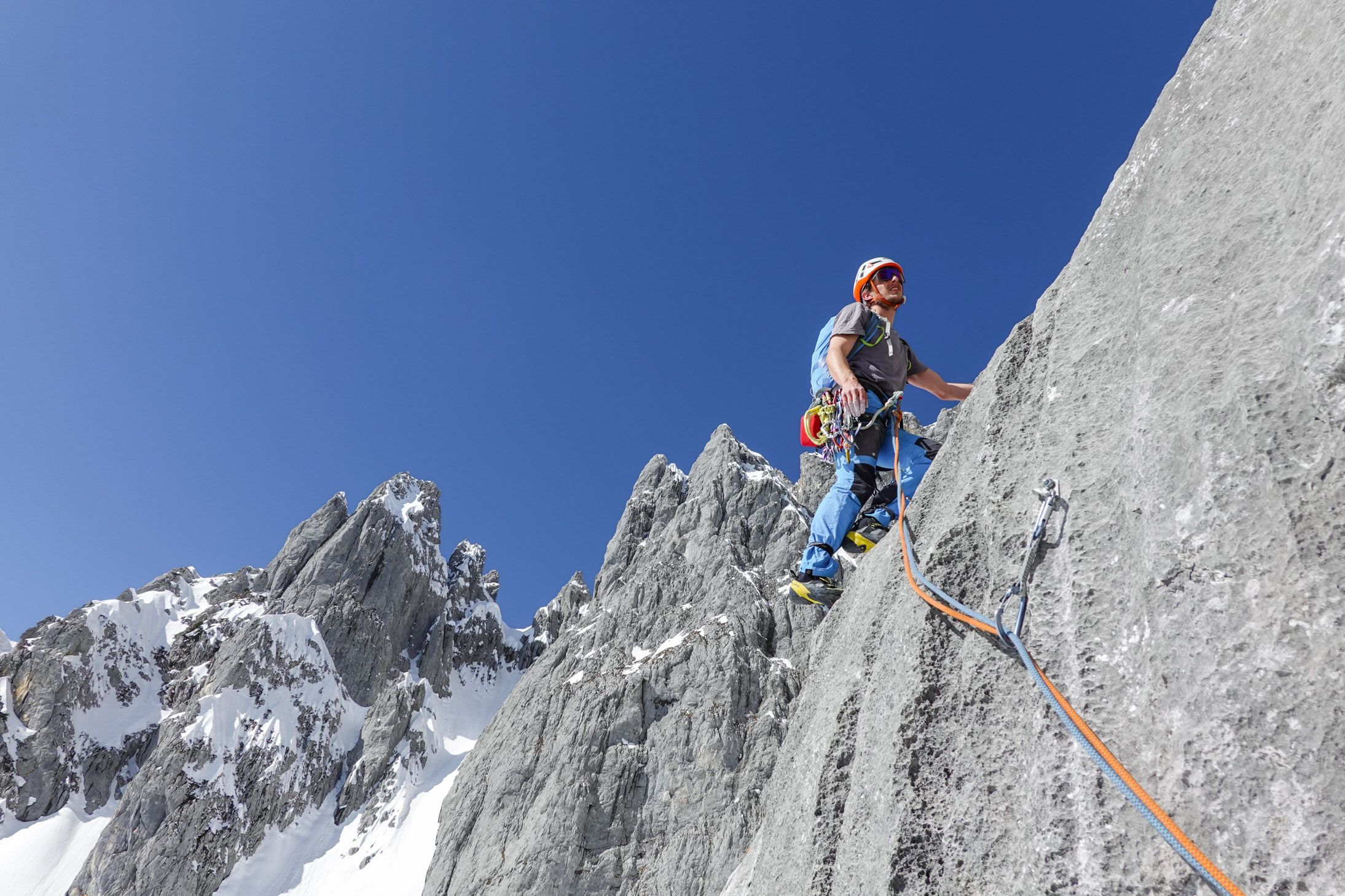
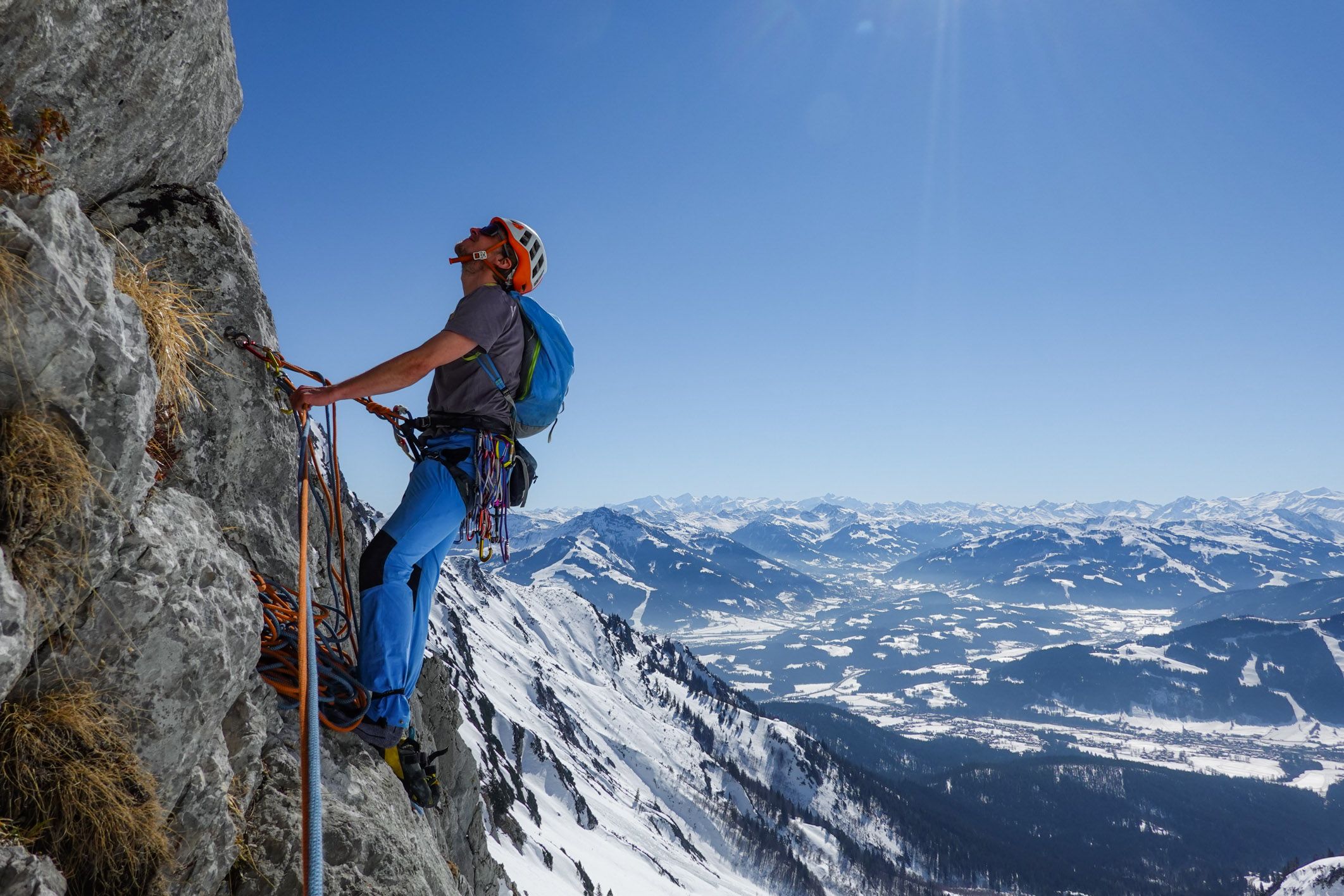
So we’ve got past the first crux; the rope team has moved from snow to rock. Let’s go! The sun is beating down on the rock; “Wearing long johns was definitely a bad idea,” says Christof, sweating at the belay station. Having only just come out of winter, it feels like summer up here; we’re climbing in T-shirts, with no sign of cold hands. In short, the conditions are perfect. In the background, we can hear the first skiers whizzing down the firn slopes with loud cheers of joy; from up here, they look like tiny ants. The distant view stretches from the Großglockner to the Großvenediger – a blue-and-white panorama in a class of its own.
We’ve also chosen the ABS as our Finishing Point because, by Kaiser standards, it has good bolt facilities, and we can abseil back down the route to our ski depot. What’s more, the difficulty – up to VII– – is fairly moderate, which should ensure we make good progress. Or so we think, at least for now.
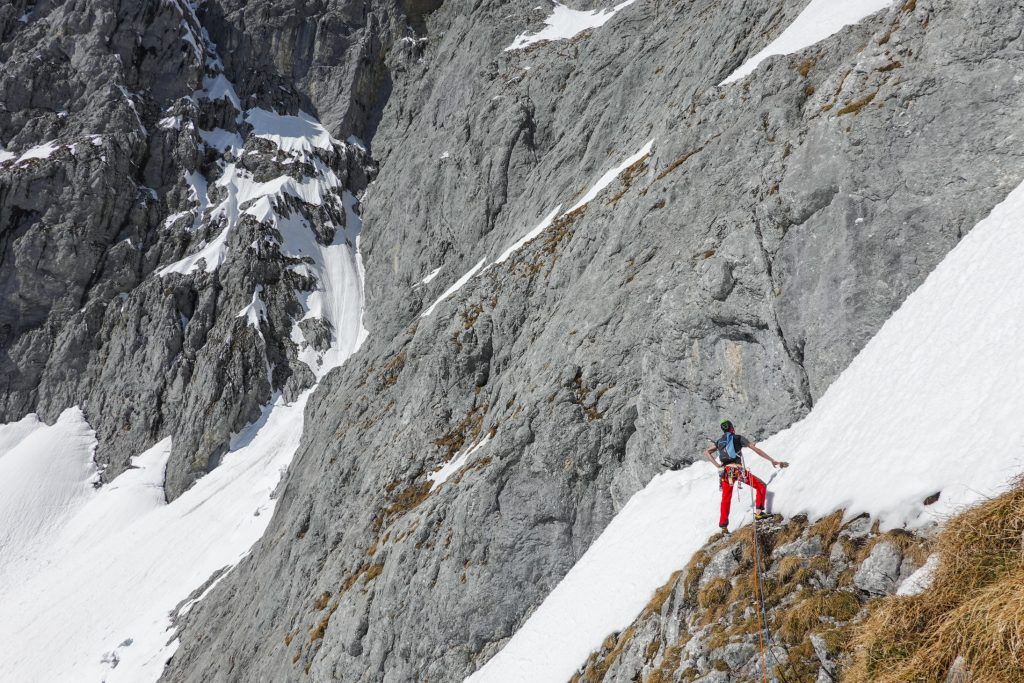
And then came pitch number four: marked as I-II in the Topography, normally straightforward walking terrain. Unfortunately, however, it’s now a rather steep snowfield; winter has left its icy mark here. “Bloody hell,” we think, “normally no problem with stiff ski boots, but with climbing shoes … it feels a bit dodgy!” Of course, there’s no way to secure yourself, and you certainly don’t want to slip on such exposed terrain. “Phew, well, that’s a bit too much for me,” says Christoph, and coming from an experienced mountaineer and mountain rescuer, that’s saying something.
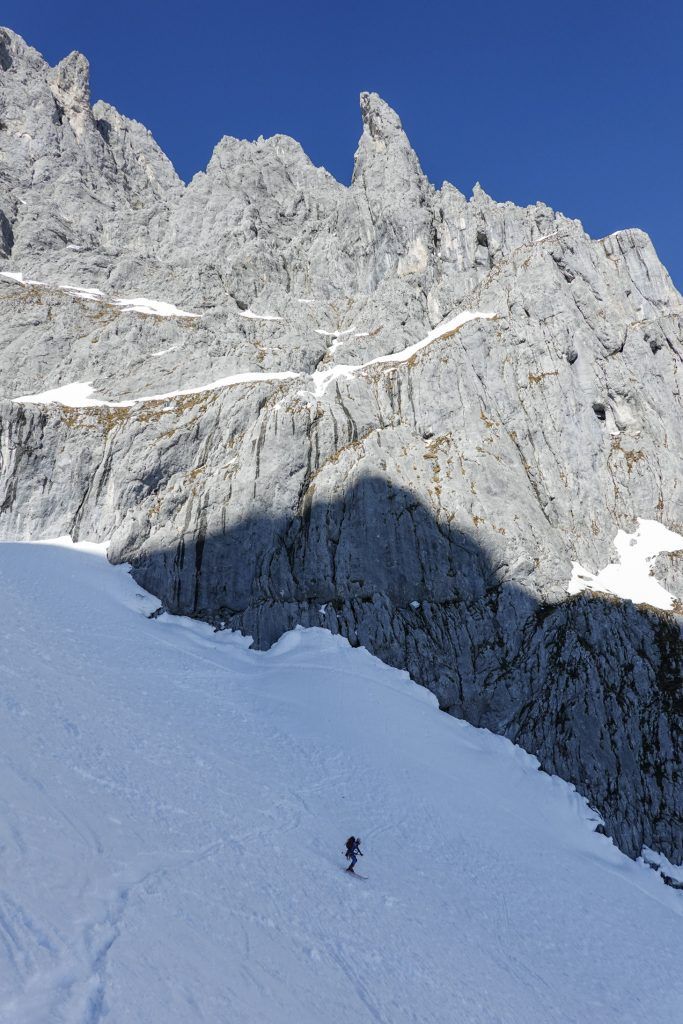
So, in essence, that means: retreat, don’t take any unnecessary risks. ‘That’s what you get for trying to do a summer sport in winter,’ one might say. True, of course. But at least we gave it a go, and knowing when to turn back is the skill that keeps mountaineers going into old age. And that’s exactly what we intend to do. One thing we certainly won’t miss out on, though, is the firn descent back down into the valley – the expansive terrain is a real treat.
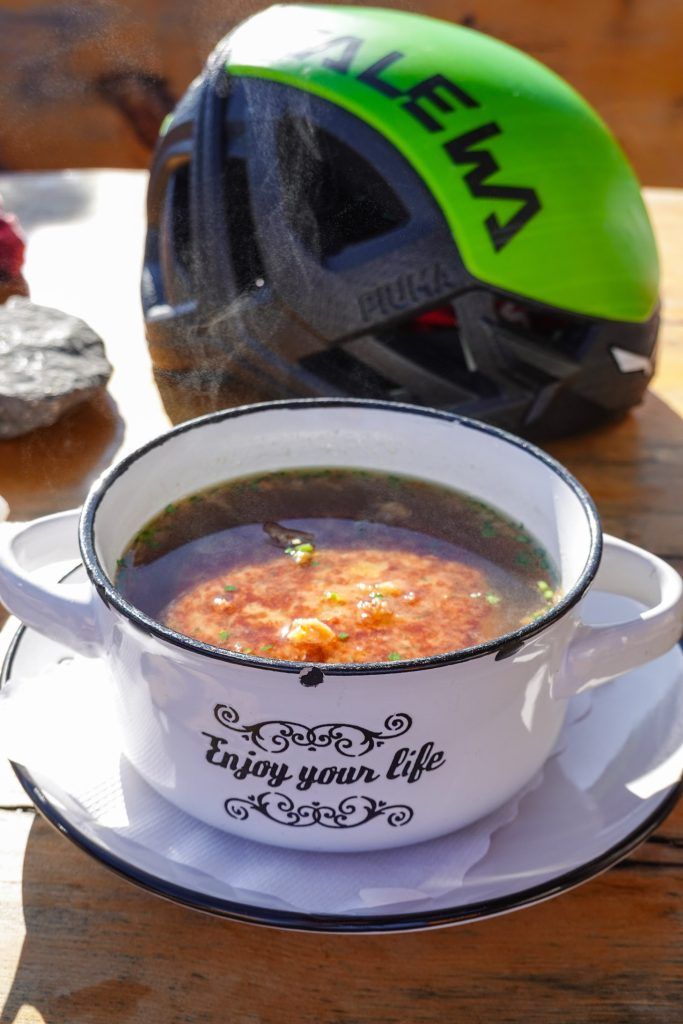
So our failure on the route doesn’t feel like a failure at all, but rather a win: an adventurous day against the magnificent backdrop of the Wilder Kaiser, one of the most beautiful places in the whole of Tirol. And next time we’ll know better: we’ll get up earlier and head for the south-east face of the Karlsspitze. There, where the face is so steep that there’s bound to be no snowfield left. The well-deserved dumpling soup at the Wochenbrunnalm tastes great in any case.