
Skiing & Climbing in the Wetterstein Mountains
Ski touring in the morning, Multi-Pitch Climbing in the afternoon: a day of firn and finger cracks high up in the Schüsselkar, where winter and spring meet within a very small space.
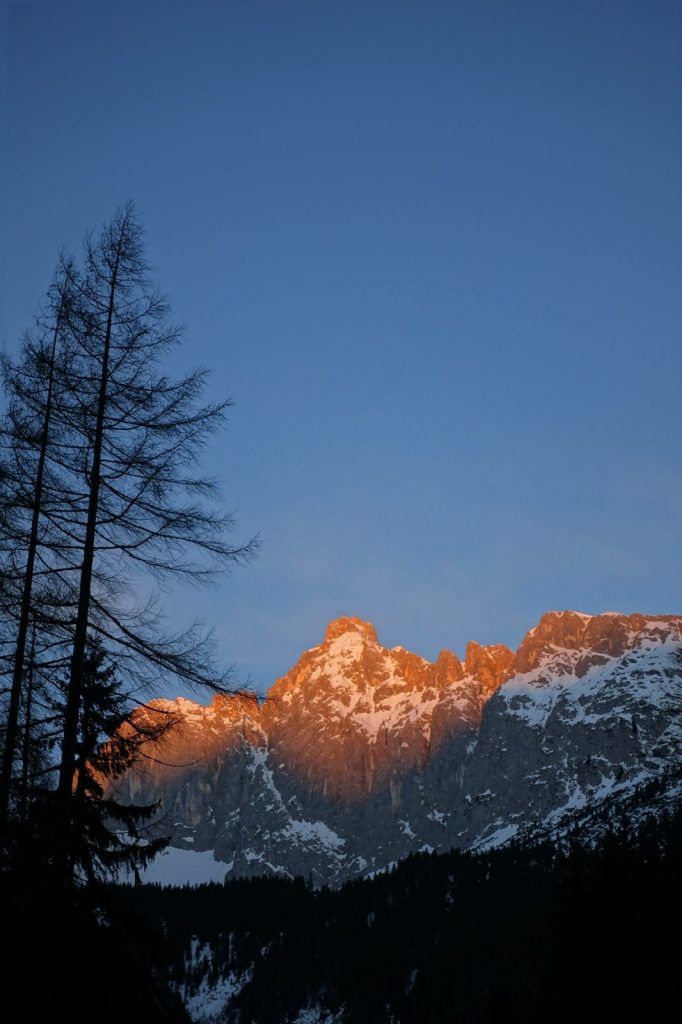

Ski touring and climbing – two sports that go together perfectly in the Wetterstein Mountains on Tirol’s high plateau near Seefeld. A day of firn and finger ledges high up in the Schüsselkar.
Text & photos: Simon Schöpf
Early in the morning in the shady car park: a solid eight degrees below zero on the Celsius scale, with a biting wind to boot. By the time the buckles on our ski boots finally click into place, our fingers feel like lumps of frozen ice. Quickly into the bindings, rucksack on our shoulders, and off we set. Which is a bit harder than usual, as the rucksack seems to weigh twice as much. Alongside the shovel, probe and thermos flask, quickdraws, Camelots and a 60-metre rope have also made themselves at home in there. Because even if it seems completely impossible right now, we want to climb a multi-pitch route today.
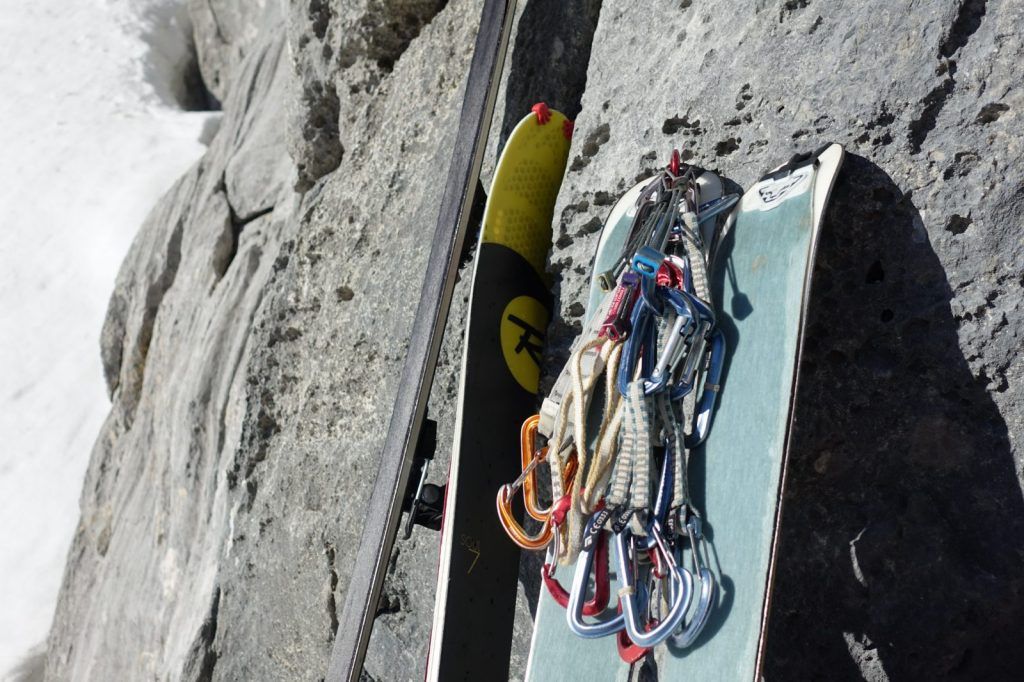
But, as is so often the case, optimism is the most rewarding companion on the journey. “If it doesn’t work out, we’ll just have had a nice ski tour,” we tell ourselves as our hands slowly start to thaw – may the pain subside – and the scenery in Leutasch is beautiful anyway. With every step through the forest, we draw closer to the sun; the south-facing slopes between the Schüsselkarspitze and the Öfelekopf are now beaming down at us promisingly. Please, wind, die down!
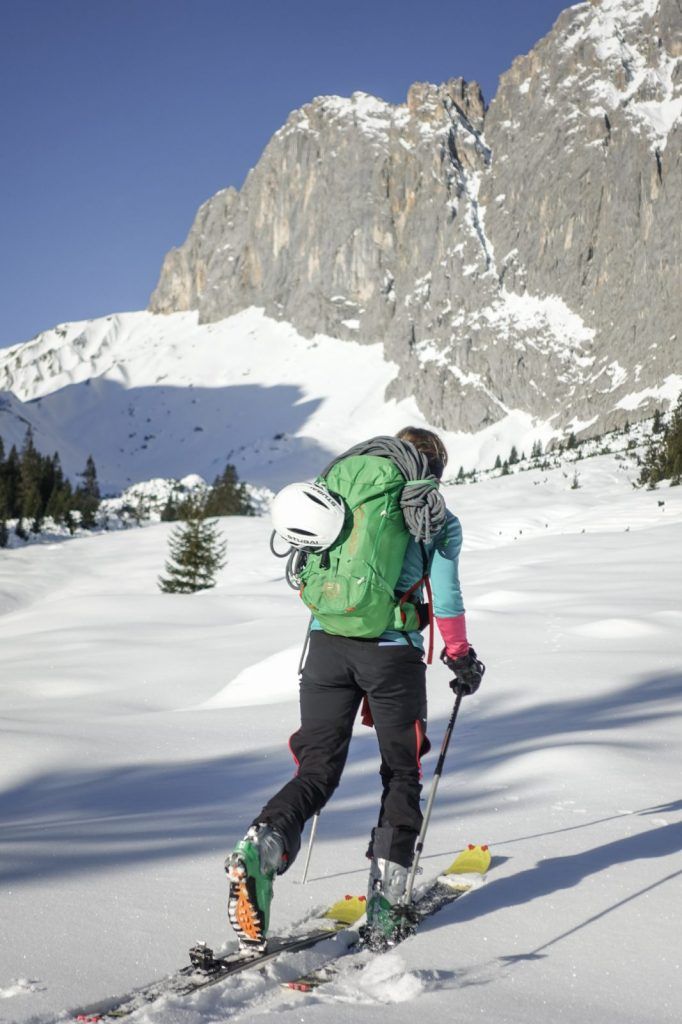
But out of the woods and on the hiking trail – up on the high plateau, a sense of relief; the jackets go into our rucksacks, and without any shade, it suddenly feels like spring. The closer we get to the rock face, the more our mood shifts towards summer; the January sun now stands almost mercilessly at its zenith. Our concern about cold fingers gives way to the fear that we haven’t packed enough to drink; we’ve trudged through three seasons in the space of two hours. But better too warm than too cold – that much is certain. We carry on panting.
Once we reach the start of the route, however, we’re reminded once again that it’s actually the height of winter: the first few metres are buried in snow, and – there’s no getting round it – somehow we now have to squeeze our poor feet out of our sweaty ski boots and into our tight climbing shoes. You could feel sorry for each of the ten toes individually, but that’s the way it is with winter climbing: nothing comes for free.
Yet somehow we manage to overcome these difficulties too; we ration our last bit of water, and the real highlight of the day begins: climbing on what is probably the finest rock Tirol has to offer. Rough water-carved grooves, overhangs with good holds, tricky slabs. The ‘Phyps’ (7a) route on the Pantherkopf may only have six pitches, but every metre is well worth it. And indeed, it’s so warm now that we’d love to be climbing in shorts; our skis at the start of the route are starting to look like little toothpicks in the snow.
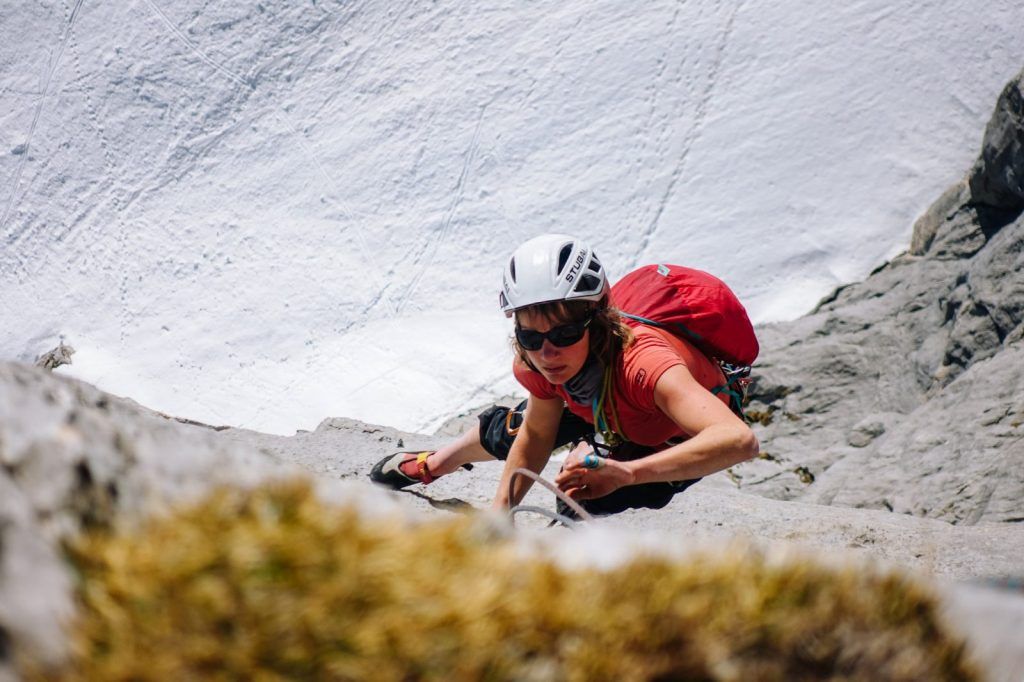
But it is only when we are hanging at the final belay point, hearing nothing but our own breathing, that we truly realise just how awe-inspiring our endeavour really is: the utter tranquillity and solitude in the midst of this dreamlike winter landscape. To the right, the Karwendel Mountains; to the left, the Stubai Alps; and apart from our kick turns, there’s not a trace of another human being to be seen anywhere. Even though the next day our backs will probably ache from lugging our rucksacks, our thighs from Alpine Skiing and our fingertips from the sharp limestone, days like this are never forgotten.
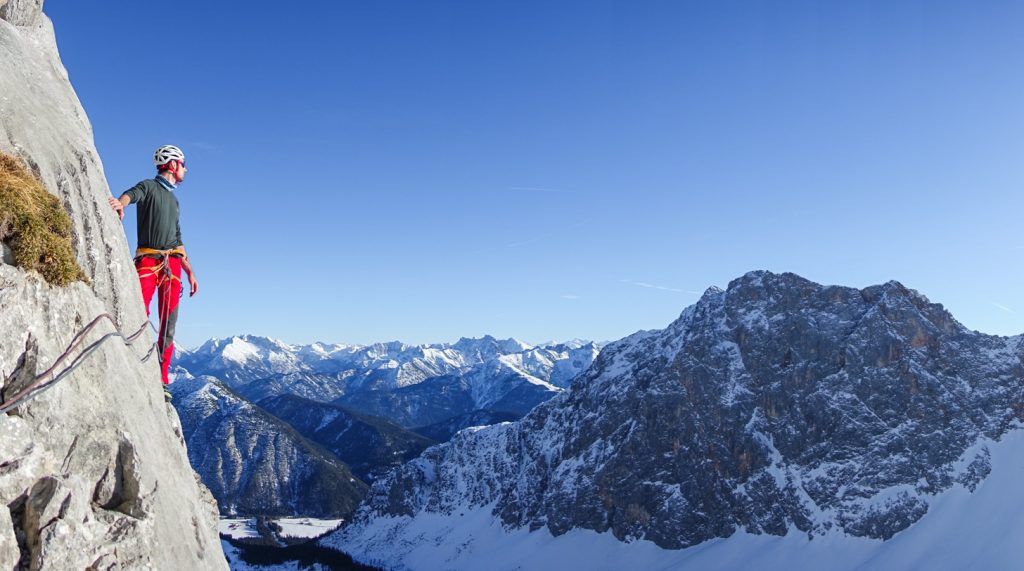
The south-facing slopes of theWetterstein Mountains lie at an altitude of around 2,000 m and are perfect for a combined ski-and-climb tour. However, this is only really enjoyable and safe on sunny, calm days with stable avalanche conditions (‘Level 1’)!
Season: The typical time for a ski&climb adventure is spring, in March and April depending on snow conditions. However, provided the avalanche conditions are stable and the sky is cloudless, the routes can certainly be tackled even in the depths of winter.
Avalanche conditions: The routes on the Schüsselkarspitze in particular feature very steep grassy slopes towards the foot of the mountain, which increases the risk of snow slides. Under typical firn conditions, this means setting off very early and descending very early (roughly by 11 am), as the risk of avalanches increases dramatically from midday onwards due to strong sunshine.
Logistics: There are two ascent options to the faces. Either via the toboggan run (forest road) from the main car park in the Gaistal to theWangalm / Wettersteinhütte and from there across open terrain to the routes at the Hinterreintalschrofen or on the Schüsselkarspitze (approx. 2–3 hours). Or, for the more easterly routes such as here on the Pantherkopf, via the Leutascher Puittal, although this involves negotiating a potentially tricky, steep section through the woods (you may need to carry your skis on your back and trudge through). After the forest, cross flat, open terrain to the start points (often steep towards the foot of the wall). If there is sufficient snow, the descent via the Puitbach gully is possible.
Reference:“Alpine Climbing Guide: Wetterstein South”, Panico Alpinverlag, 3. edition 2016.
More Ski & Climb on Climbers Paradise:
Tips & Safety
Would you like to know more about safety when climbing? Click here for our safety tips.
