4 tips: The best of Seefeld – Tyrol’s high plateau

Wetterstein limestone, short accesses, big names: on the Seefeld Plateau, the spectrum ranges from 150-metre-high climbing walls to family-friendly crags right by the stream. Four Rock Climbing Areas – and a view right to the very top.
Kletterer an der Chinesischen Mauer in Leutasch

Sport climbing between Leutasch and Scharnitz

A ‘best of’ guide to the alpine climbing routes in the Karwendel Mountains and Wetterstein ranges could fill entire books – here, we’re focusing on the easier, smaller walls: sport climbing!

After all, the Seefeld region – Tyrol’s high plateau with its five municipalities of Leutasch, Mösern-Buchen, Reith, Scharnitz and Seefeld – is also at the forefront in this respect. Not least thanks to Heinz Zak, the climbing pioneer and mountain photographer from Scharnitz, who has left his mark on the region not only through his famous photographs but also through the routes he was the first to climb.

We’ll introduce you to the most rewarding areas of the plateau.

Text: Simon Schöpf

1. Chinesische Mauer – the giant wall of Leutasch

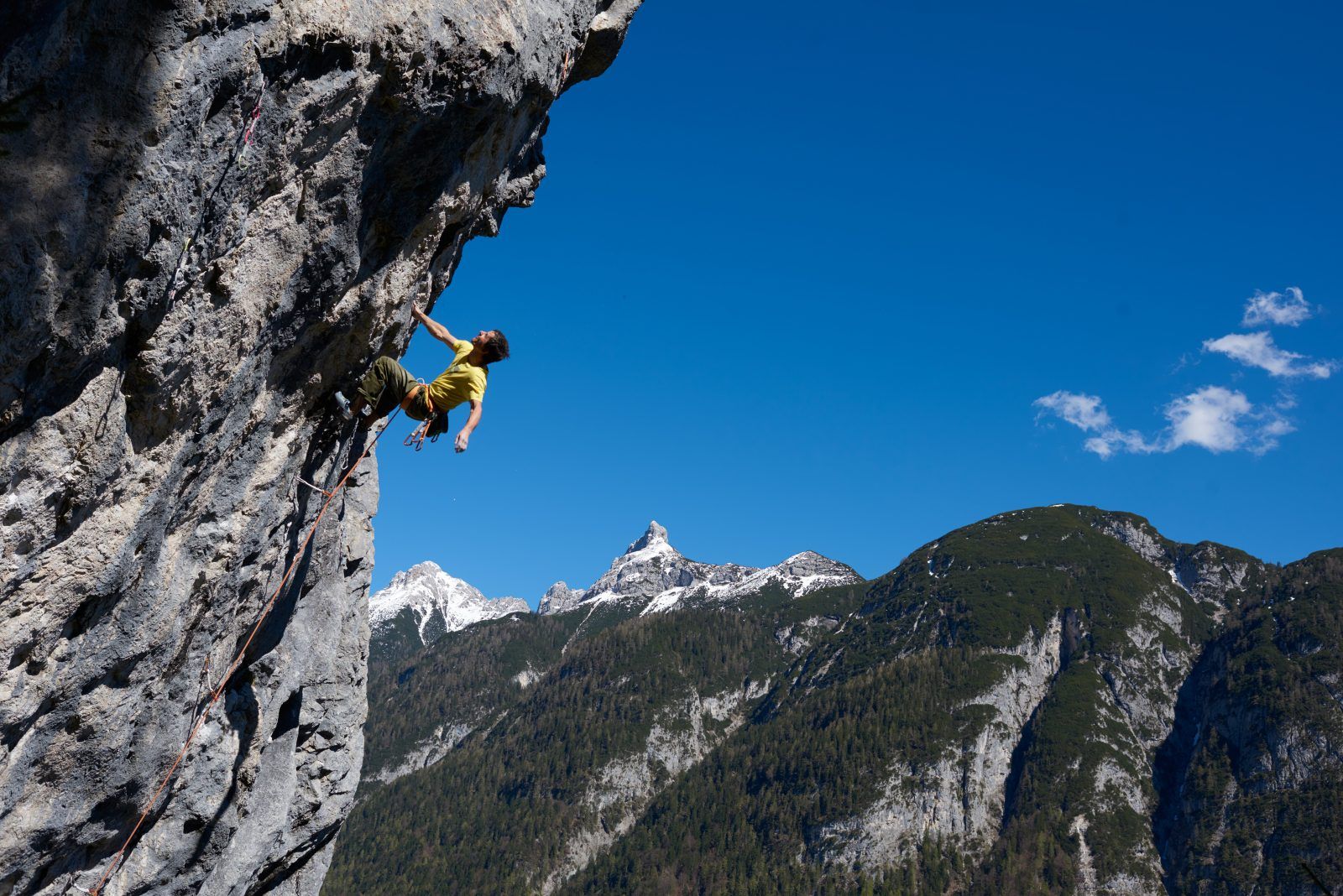
You don’t have to fly all the way to Beijing to make a pilgrimage to theChinesische Mauer: the Tirolean version has a distance of only a few hundred kilometres, but at 150 metres it is considerably higher than its Asian counterpart. And for any climber, it is certainly the more interesting wonder of the world.

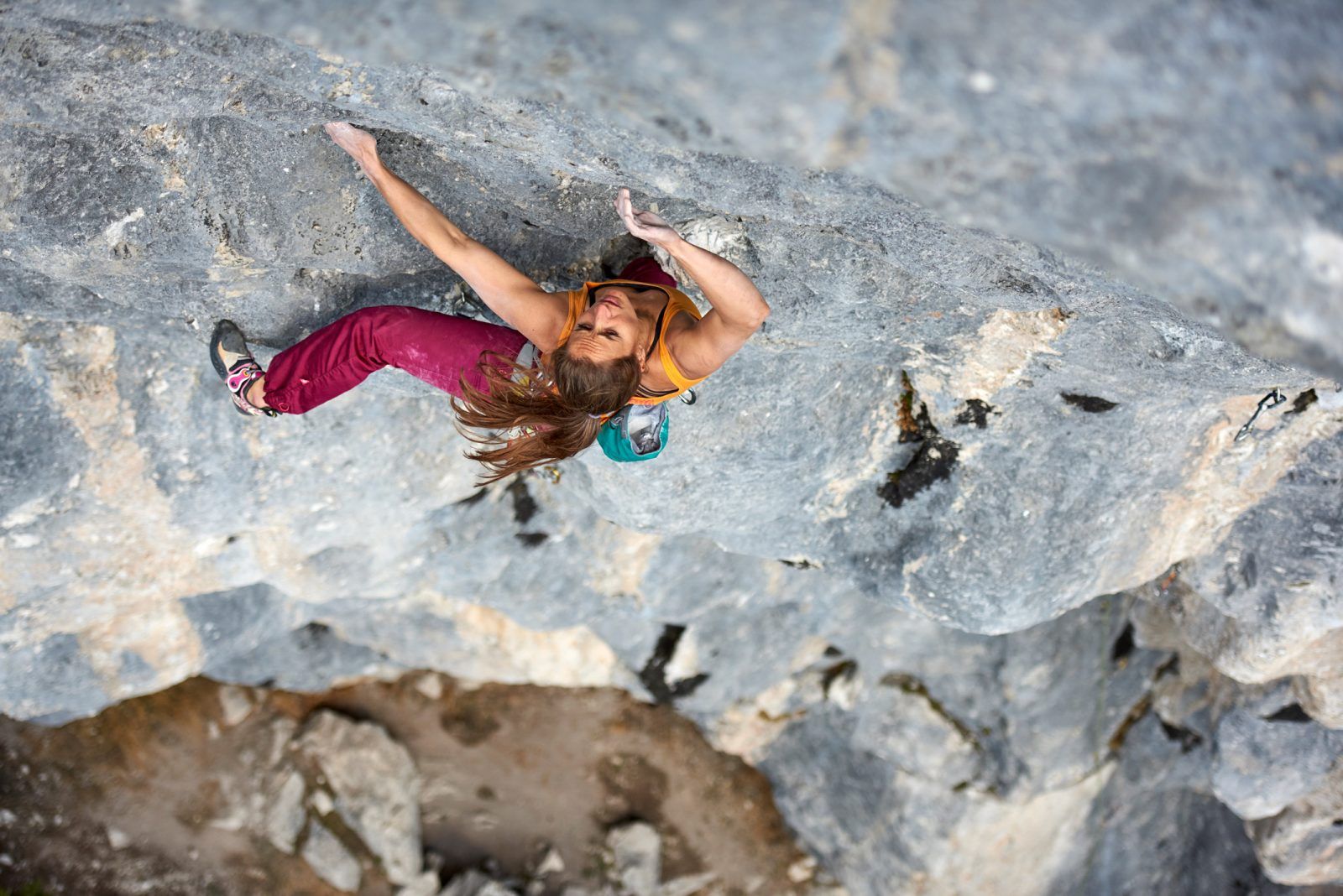
It’s actually surprising that development of the ‘Wall’, as it’s often reverently called, only began relatively late. After all, there’s top-quality Wetterstein limestone right down in the valley here, accessible via comfortable 20-minute access from Leutasch. In any case, you’ll need to be able to grip firmly: there are very few routes here below Level of Difficulty 7. The Wall is therefore largely reserved for hard-core climbers, with routes ranging from technical wall climbing to the heavily overhanging ‘Lochwand’.

Including the neighbouring ‘Sektorenreigen Hongkong’, there are now over 180 routes across eleven sectors – the best known of which is called ‘Puls 2000’ on the Dodlwand. Due to its south-facing aspect, autumn is the ideal time of year; in summer, you’ll get the shade you’re hoping for from late afternoon onwards.

At a glance

  • over 180 routes across 11 sectors, with distances ranging from 8 to 120 metres
  • Difficulty grades 4 to 8 – the focus is on grades 7.0 and above
  • 20-minute access, south-facing, Wetterstein limestone
  • Best time: autumn; in summer, shaded from the afternoon onwards
A female climber on a route on Chinesische Mauer

2. Mauerbogen – the alternative to the Wall

At the Mauerbogen, you’ll find something that’s in short supply on Chinesische Mauer: lovely routes at Levels of Difficulty 1 and 2. The access is similarly leisurely; you’ll reach the wall in about 15 minutes. There are a good 30 south-facing routes here, some of which feature a mid-section; if that’s not enough for you, you can tackle the upper, more challenging section of the wall as well.

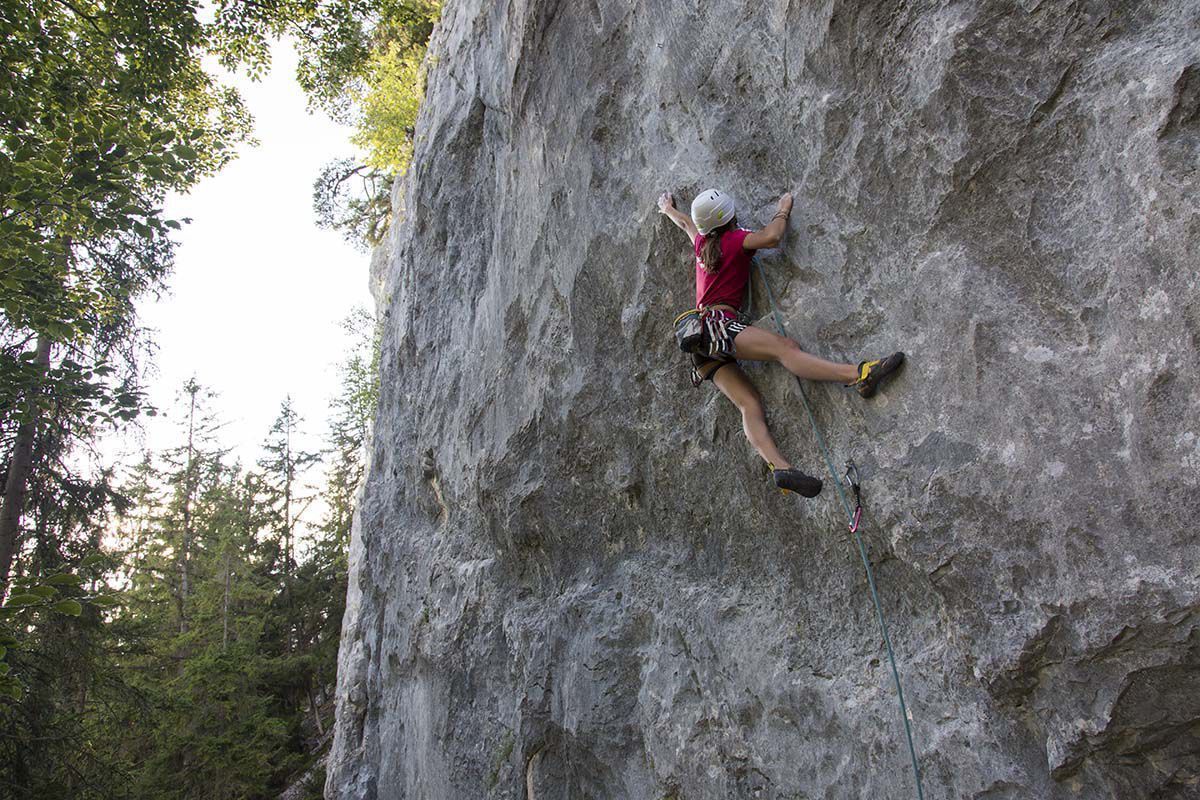
The rock is flat and compact, so good footwork is an advantage. Rumour has it that the routes here are graded on the ‘stiffer’ side. If you’ve just come from the indoor climbing centre, it’s best to start one grade lower and let the character of the rock sink in first. So it’s well worth starting off gently!

At a glance

  • 31 routes, distance 13 to 30 metres
  • Difficulty 3 to 7. – mainly medium grades
  • 15-minute access, south-facing, flat, compact rock
  • Also suitable for family outings
Climber on the flat rock of the Mauerbogen

3. Flämenwandl – a rock face for beginners on the Ache

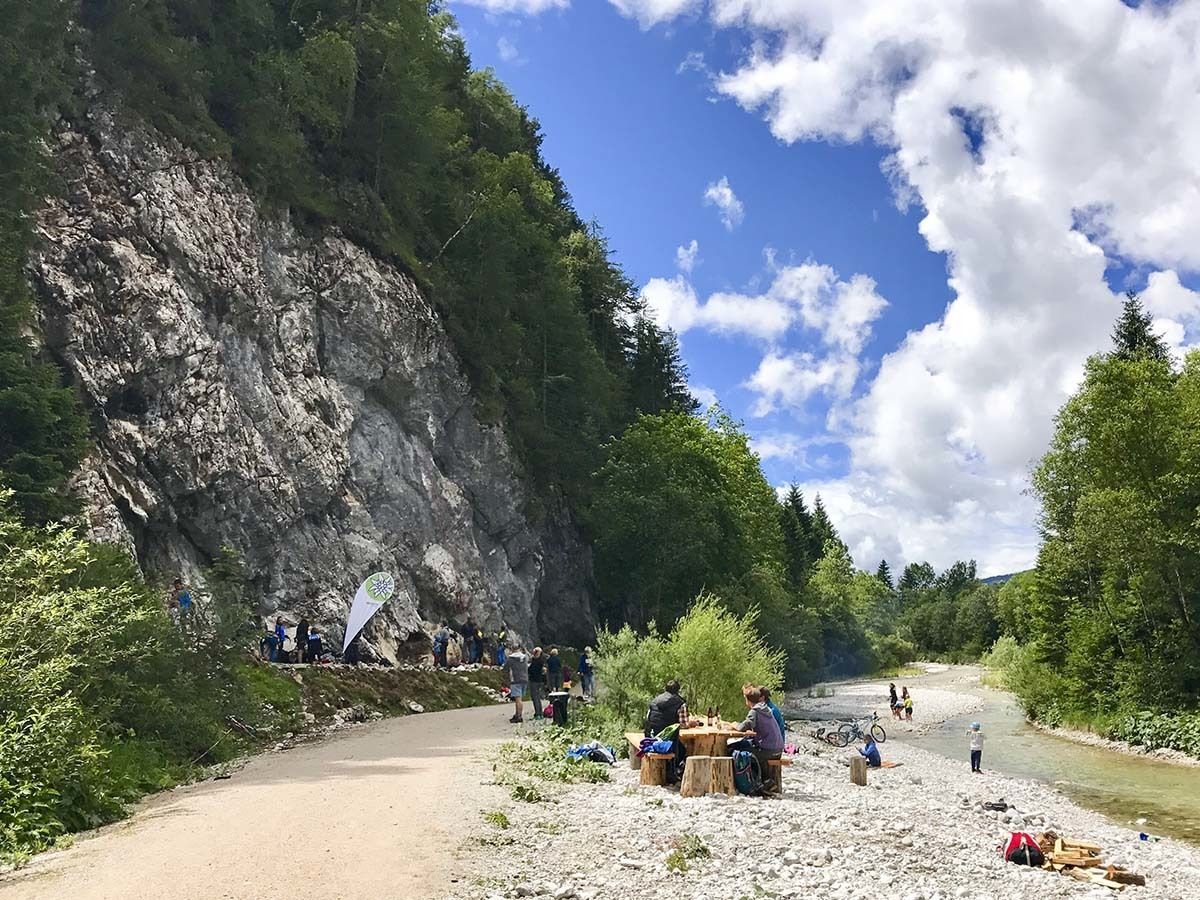
For those looking to take it a notch down a gear, the Flämenwandl really is an ideal area for beginners. Idyllically situated beside the Leutascher Ache, complete with barbecue areas, it was developed by a Belgian bolting team in collaboration with the local climbing club, Mauerfix.

The easy, well-protected routes and the short, flat access make this Rock Climbing Area the perfect family climbing area. The car park is the same as the one for Chinesische Mauer – so if you haven’t had enough after the Flämenwandl, you can easily take it up a notch further up on the Wall.

At a glance

  • 23 routes, distances ranging from 4 to 16 metres
  • Difficulty 3 to 6b+
  • Short, flat access from car park P13 in Puitbach/Ahren
  • Family friendly, with barbecue areas and a stream right next to it
The Flämenwandl family climbing area on the Leutascher Ache

4. Sonnenplatten Scharnitz – Zak’s Living Room

An area that hasn’t needed a ‘best of’ list for a long time is now clearly part of it: the Sonnenplatten in Scharnitz. Situated right at the gateway to the Karwendel Mountains, in the immediate vicinity of the bypass – the access route could scarcely be any shorter.

The project was carried out jointly by Heinz Zak, the municipality of Scharnitz and the tourist board. Zak has refurbished the old routes and brought them up to current safety standards, whilst also adding new routes. All in all, there are now over 60 routes in the grippy Wetterstein limestone, at grades that everyone can actually climb.

The real highlight, however, is the surrounding area: a chill-out zone with tables, benches, slacklines and a fountain. A Rock Climbing Area and an afternoon on the rock, without anyone moaning.

At a glance

  • over 60 routes, distances of 10 to 28 metres
  • Difficulty grades 3 to 7 – ideal for beginners and sport climbers
  • refurbished and extended by Heinz Zak
  • Chill-out area with tables, benches, slacklines and fountains

And if you’d like something bigger

So much for the small walls. Anyone looking up from the plateau will, of course, find climbs of a completely different calibre:

  • Schüsselkar – ‘Locker vom Hocker’, one of the great classics of the Northern Alps, first ascended by Güllich and Albert in 1981. Grade 8, between 2,100 and 2,400 metres, with plenty of opportunities for mobile belays. Not something to tackle unprepared.
  • Seefelder Panoramic Via Ferrata – for when you want to leave the rope in your rucksack.

And what about the chapter on alpine climbing in the Karwendel Mountains and Wetterstein? As mentioned at the start, that alone fills entire books.

The areas covered in this article

You might also be interested in these articles