I regularly find myself letting my mind wander: I’m hopping around the chocolate factory with the Oompa-Loompas or having a coffee with a little pink hare-hippopotamus mouse wearing a red hat – until those three magic words are uttered: ‘Martina, concentrate!’
When I’m climbing, I’d rather comment on my climbing partners’ conversations than focus on my next move. And instead of doing one more pull-up, I let go of one early, with a laugh. You don’t have to be that determined, do you?
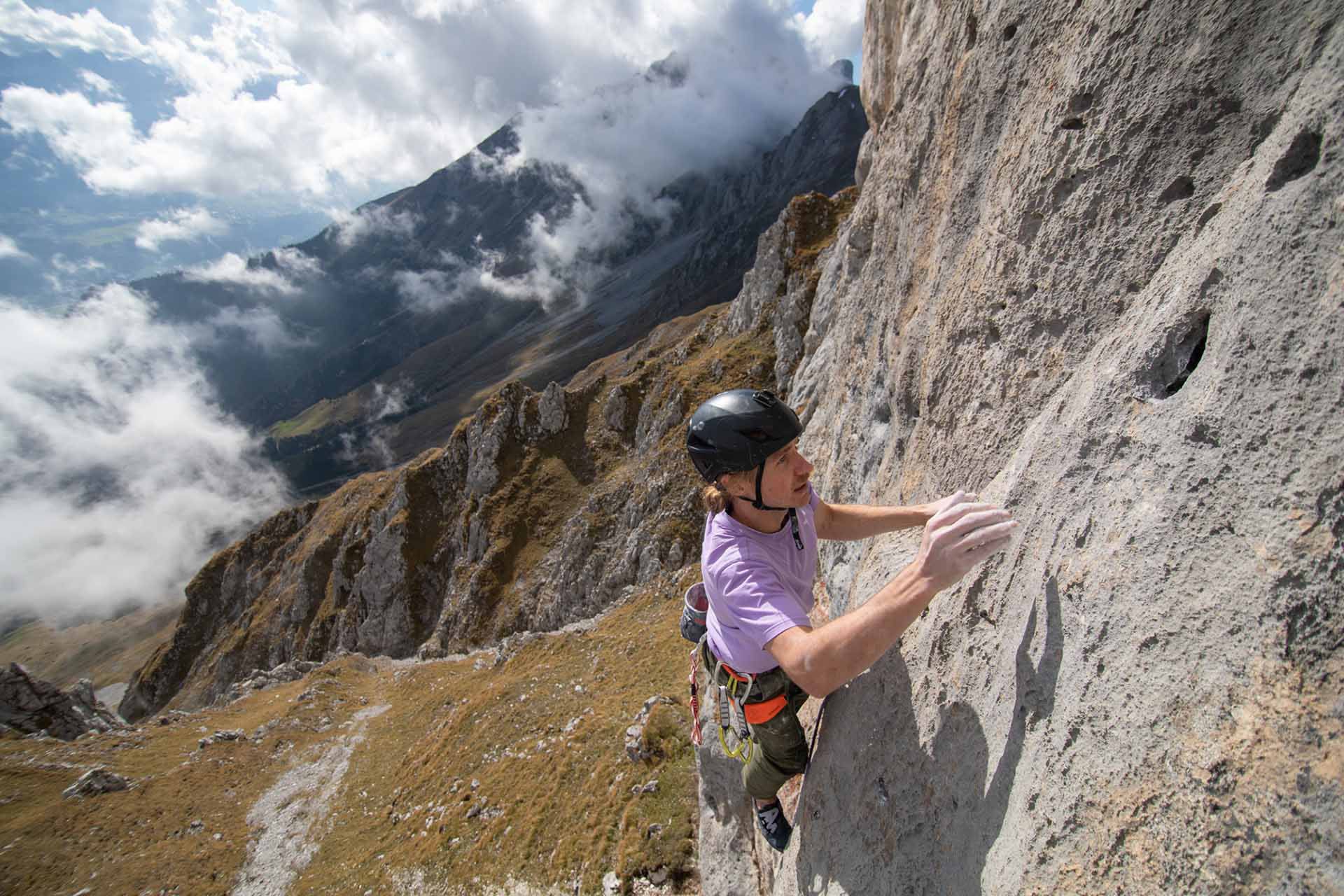
That’s true – determination has little to do with concentration. Nevertheless, if you want to climb a boulder on your first attempt, memorise the beta for a route or conserve energy whilst working out individual moves, you need to be able to focus. For people like me, there are people like Madeleine Eppensteiner. The sports psychologist regularly provides mental training for athletes, particularly those in the climbing world. Her message: focus takes you further – in training, on a project and in competition. But it’s something you have to learn.
Text: Martina Scheichl
Imagine your focus as a spotlight that is directed at one of four levels, depending on the situation:
None is better or worse – most situations are too complex for just one level. What matters is where you direct your attention at any given moment: sometimes a difficult single move requires your full attention; at other times, it’s more important to watch out for hazards such as falling rocks.
The focus usually shifts quickly. When bouldering, your awareness jumps between the next moves, external factors such as the clock in a competition, and the question of whether you’ve recovered enough for the next attempt. All levels are important – the key is to switch between them quickly.
By the way: the phrase ‘Just concentrate!’ – often used by coaches or teachers – isn’t much help because it doesn’t say what you should be concentrating on. And concentration is limited – to roughly the length of a route. After that, your ‘concentration tank’ is empty for the time being – time for a coffee with the hare-hippopotamus-mouse. So don’t be too hard on yourself.
You can learn to concentrate in different ways, develop strategies for doing so and switch between levels more quickly. It’s best to establish routines, practise them in training and apply them when it really matters. That doesn’t mean you have to be focused all the time – just that you can be when it counts.
Thanks to sports psychologist Madeleine Eppensteiner for these tips. You can find out more about sports psychology on her website, climbingpsychology.com.
„You can train your concentration!“
In 2018, two Austrian competitive climbers told us how they prepare immediately before the start.
Hannah Schubert: “I don’t really have any specific rituals. If I’m in the isolation zone for a while, I try to take my mind off things and not think too much about the competition. As my turn gets closer, I focus and let only positive thoughts in. I think about competitions that went well and give myself a pep talk: ‘You know you can do it; you’re in great shape. Just do it like you did in Briançon.’“
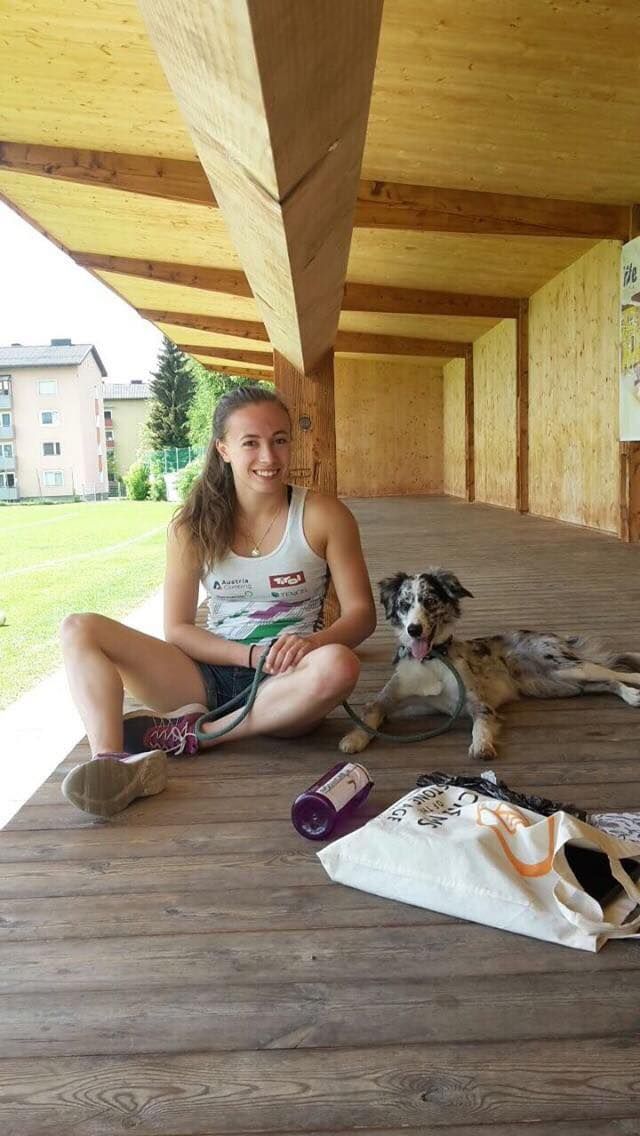
Julia Fiser: “Just before the start, I listen to some motivational music and go through the moves in my head. Most of the time, the routes look really straightforward when I’m checking them out, so I really look forward to them. Just before I start climbing, I smile and tell myself: ‘Do it just like in training – then it’ll work out!’ I don’t get too hung up on rituals. Things can always change during a competition – and if I can’t carry out a ritual then, it stresses me out. So I try to stay as flexible as possible.”
Tips & Safety
Would you like to know more about climbing safety? Click here for our safety tips.