7 tips: How to overcome your fear of falling

Fear is as much a part of climbing as chalk is to your fingers. It sharpens the senses – until it tips over and paralyses you. Climber Martina Scheichl discusses the difference and what helps her overcome her fear of falling.
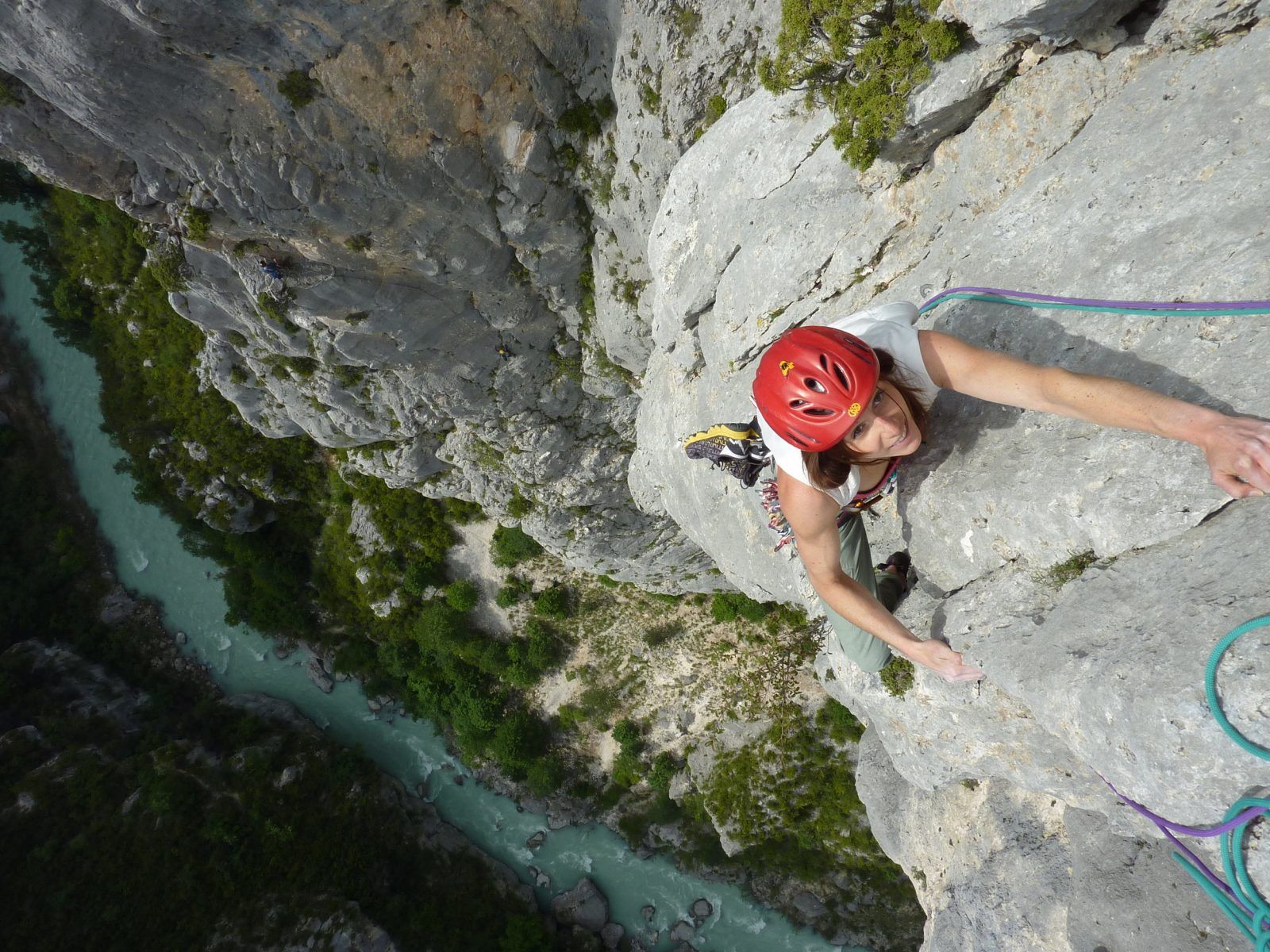
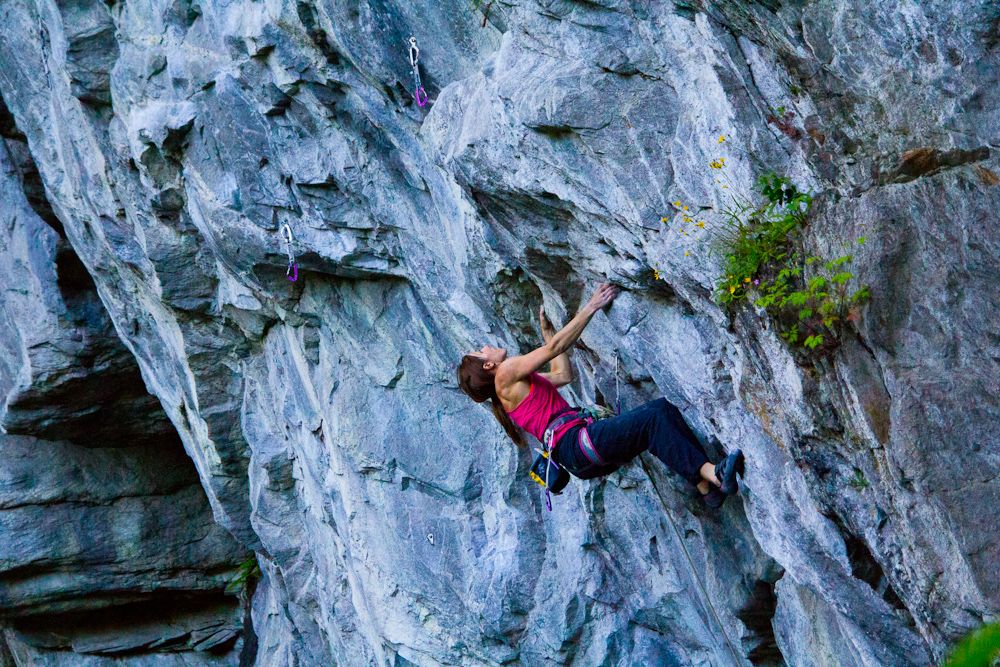
Kletterin in einer steilen Sportkletterroute

The Many Faces of Fear

Fear takes many forms – and very few climbers can claim never to have felt it.

I actually believe that climbers should ‘deliberately’ seek out situations that cause fear, or at least start doing so. Anyone who rarely feels afraid whilst sport climbing can head for the mountains and climb exposed routes with minimal protection. Why should one do that? The answer is clear: by stepping outside your comfort zone, you expand your individual potential and abilities.

Text and photos: Martina Scheichl

What we’re actually afraid of

Fear can manifest itself in a wide variety of ways, for example as:

  • Fear of falling (from a poorly secured position)
  • Fear of heights
  • Fear of wide distances between pitons
  • Fear of poor-quality equipment
  • or a fear of nothing specific, but simply a fear that is just there

The Positive Sides of Fear

Fear is part and parcel of climbing – and it has one major advantage: not only does it sharpen our senses, it also helps us to stay focused and gives us a boost. We concentrate because we don’t want the feared situation to actually happen.

What’s more, once we’ve overcome it, we emerge from the fearful situation feeling stronger and with our heads held high. We grow through fear. This kind of fear is positive; it can be classified as eustress – stress that drives us on.

Climber stuck on the wall

When the fear becomes too much

It’s just a shame when fear gets in the way.

When it comes to climbing in particular, many people experience a paralysing fear. You don’t dare to carry on climbing; you can’t manage to concentrate. These situations usually end with you sitting on the rope or on the mat. This kind of fear falls under the category of distress: the stress level is too high, we can’t cope with it and we become paralysed.

Often, though, the fear experienced in sport climbing or Bouldering is simply irrational. A counter-example: when we’re whizzing down a steep slope on skis at breakneck speed, the fear is often less than when we’re a metre above the last bolt – even though the risk of injury and the severity of any injury are a hundred times greater.

Strange, isn’t it?

What can you do about excessive anxiety? Steps 1 to 4.

I’m not a psychologist. I can only tell you what I do as a climber to cope with fear.

1. I acknowledge my fear.
What exactly am I afraid of? Is it because I’m already so far above the last bolt? Because the landing area isn’t safe? Because I don’t know my belayer or don’t trust them enough? There are countless reasons – to work on this, I first need to be able to pinpoint exactly what’s triggering the fear.

2. I voice my fear out loud.
“You know, I really did feel that the landing area was very poor. Do you think a fall here would be bad?” Together with my climbing partner, I analyse the fear. Most of the time, he reassures me – and if not, simply saying it out loud has helped, because I know: he’s now fully aware of it.

3. I analyse the fear.
Is the terrain really too dangerous to fall from? Has my climbing partner really held me against the wall so many times before? Could a rope snap or a properly tied knot come undone? If I have to admit my fear is justified, I’d better play it safe that day. But if it’s irrational, then …

4. … I face my fear.

  • I try the tricky move.
  • I push myself to the limit.
  • I skip a sling – as long as it doesn’t become dangerous.
  • I don’t clip in until the bolt is at hip height.
  • And ideally: I fall and see that nothing happens. Quite unspectacular, actually.

„Falling is part and parcel of climbing; otherwise, it would be a completely different sport.“

Step 5: Calm down and visualise

Sometimes letting go isn’t an option, such as when you’re trying to top out. If you want to score points but always feel anxious at a particular point, it’s best to use calming strategies early on. My phrases for this are:

  • “Nothing can happen to me whilst sport climbing.”
  • “My belayer is looking out for me.”
  • “I’m only thinking about topping out and focusing solely on the route.”
  • “My gear is top-notch.”
  • “Falling is safe.”
  • “I enjoy falling – it’s the fun part of climbing!”

I don’t want to feel fear breathing down my neck whilst climbing; I want to feel the rock and be aware of my movements on the vertical face. Visualisation helps me to concentrate on the essentials.

Just as I can visualise the individual moves of my project, I can also replay the frightening situation in my mind’s eye and change it mentally: I imagine the fear overwhelming me, I take deep breaths in and out, and I calm myself mentally with positive self-talk. Replaying the scenario in my mind helps me the next time, because then I know exactly what to do: breathe – calm down – carry on climbing!

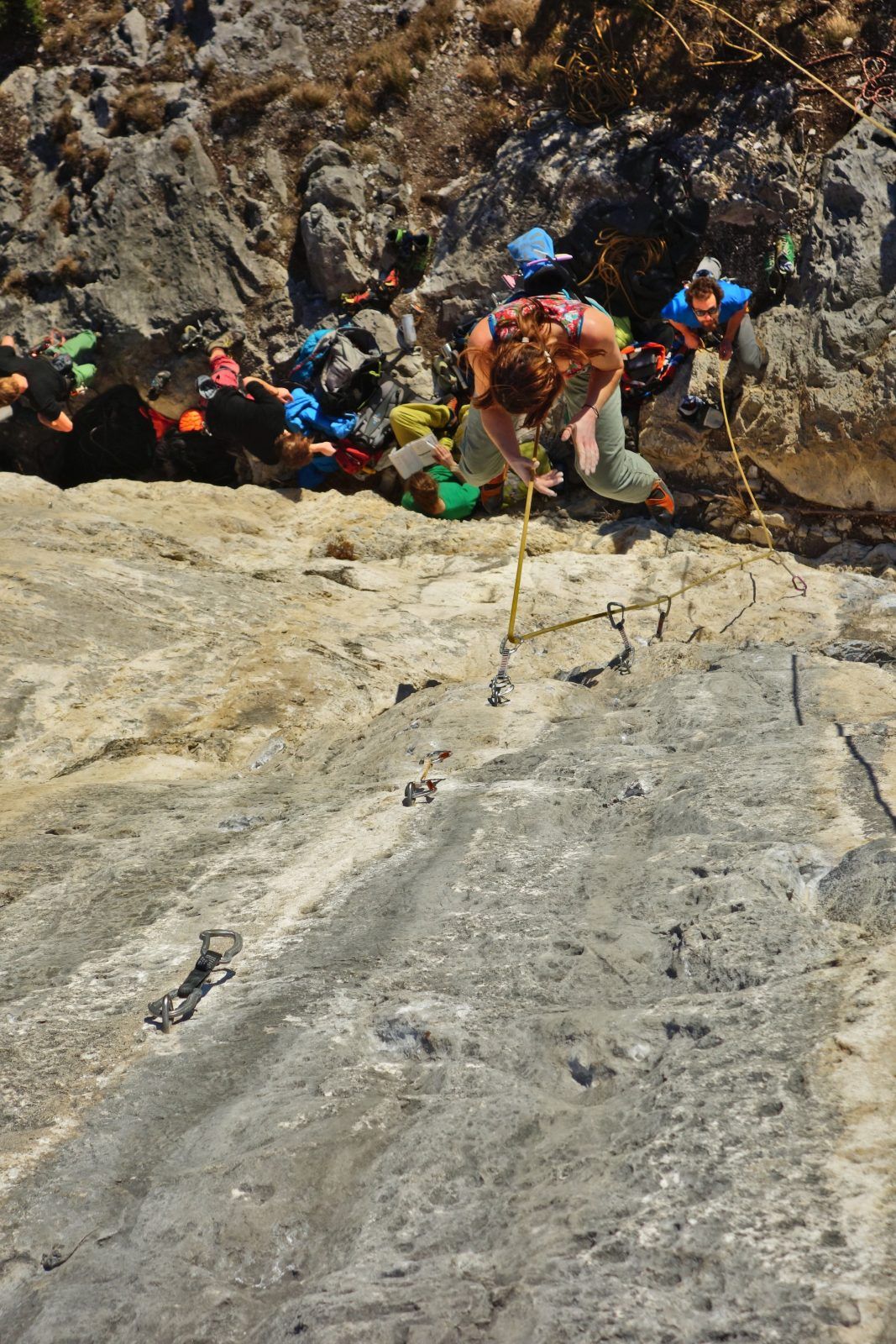
Climber falling on the rope

Steps 6. and 7. : Practise and make your progress visible

6. Practise.
Of course, none of this happens overnight. It takes time, and I have to accept that. Once I’ve reached a milestone – such as not being afraid of clipping a dodgy bolt whilst lead climbing indoors – I set myself the next challenge: falling on a multi-pitch route, skipping a bolt on safe terrain, and so on.

The important thing is always to ensure that everything is safe – the terrain, the belaying, the equipment, and my climbing partner.

7. Celebrate your successes.
Part of the goal of overcoming fear is also to recognise and celebrate your small successes. Recognising, controlling and overcoming fear should be celebrated just as much as completing a route. Anyone who overcomes their fear achieves a huge success – and that deserves to be celebrated!

Falling over 200 times

These are just a few strategies that have helped me to curb my fear of climbing a little.

They say that if you really want to learn something, you have to repeat it up to 200 times. So if you’re really afraid of falling, you have to fall up to 200 times before you can climb and fall without fear.

As I’m not familiar with that intense feeling of fear, my anxiety issues are certainly easier to deal with – and I can take more risks than others. But as I said: everyone has their own level of fear. And I, too, want to explore mine, so that fear doesn’t hold me back in what I do.

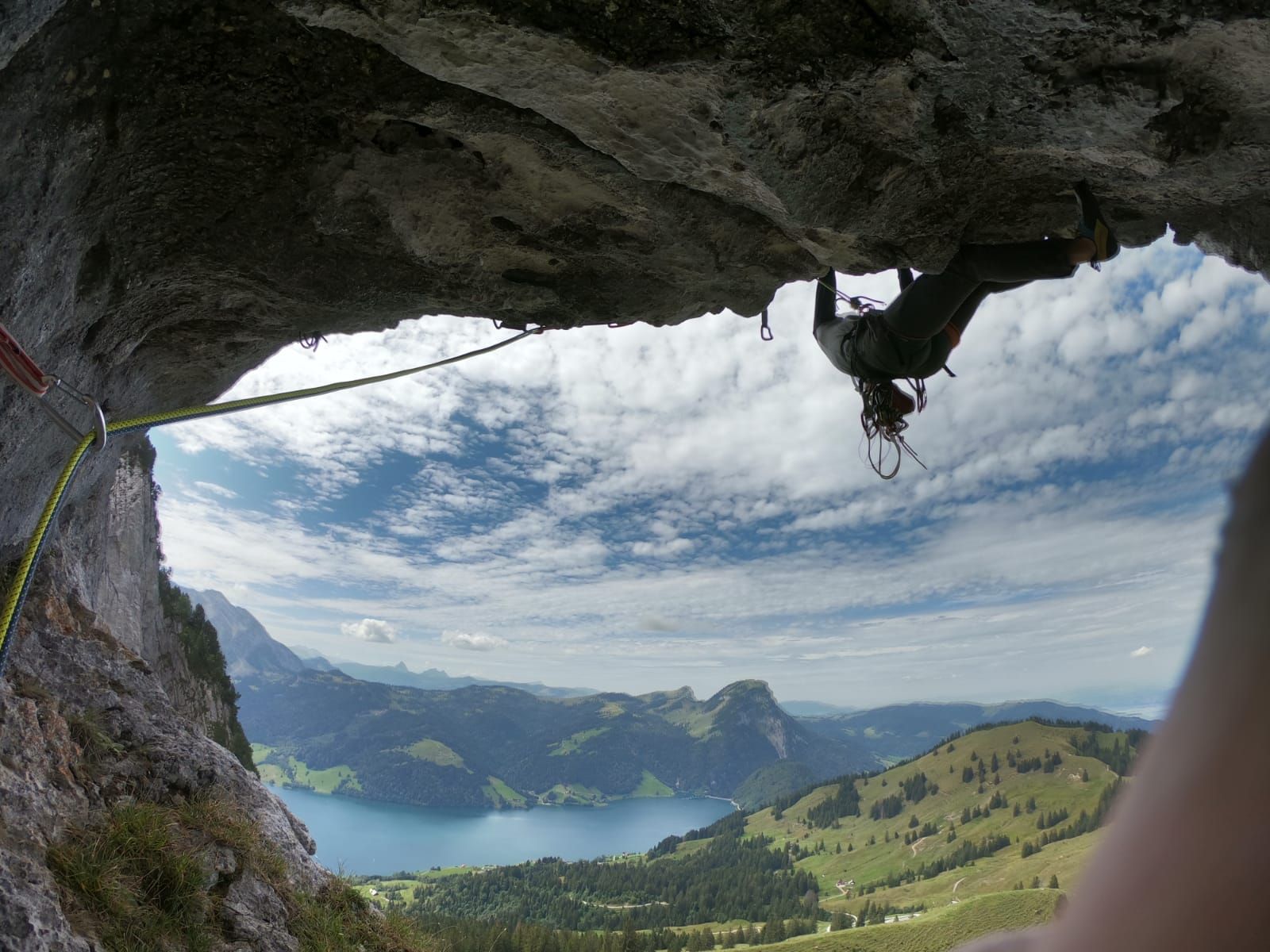
Climber on an overhang

You might also be interested in these articles