The 7 best bouldering areas in Tirol

Tirol has long been regarded as a paradise for climbers – and even more so for bouldering. From high-alpine granite formations in Silvapark to family friendly limestone boulders in Hoch-Imst: hardly any other region combines such a diverse bouldering landscape within such a small area. In this article, we present the seven most exciting bouldering areas in Tirol.

Outdoor bouldering in Tirol – tips for beginners

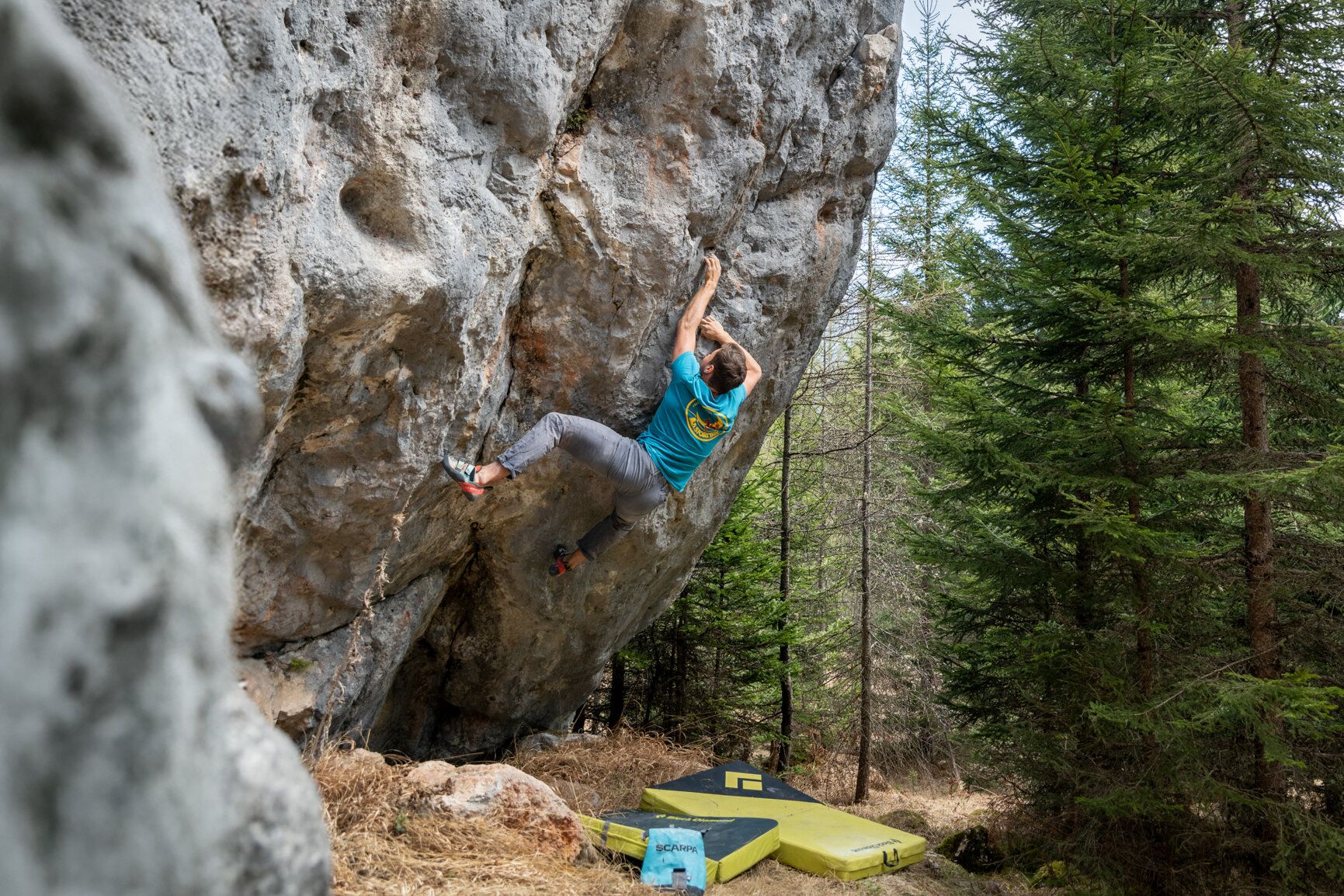
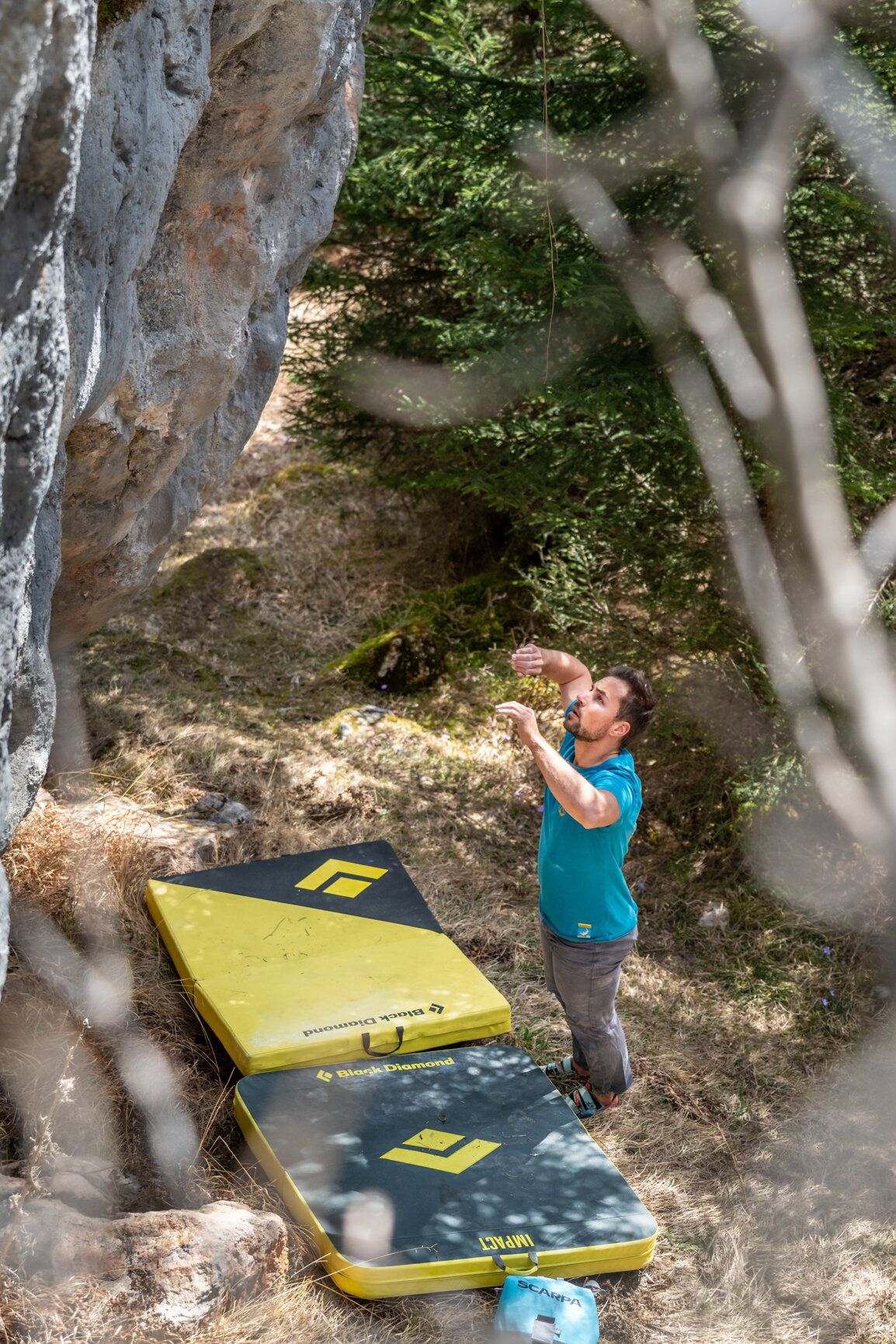
Bouldering means climbing at jumping height – without a rope or harness, but using a soft, portable mat (crash pad). Whilst indoor bouldering is becoming increasingly popular, many climbing enthusiasts head for the rocks in summer. Bouldering outdoors means: being right in the heart of nature, real rock, fresh air – but it also means taking responsibility for the environment.

An overview of the 7 best bouldering areas in Tirol

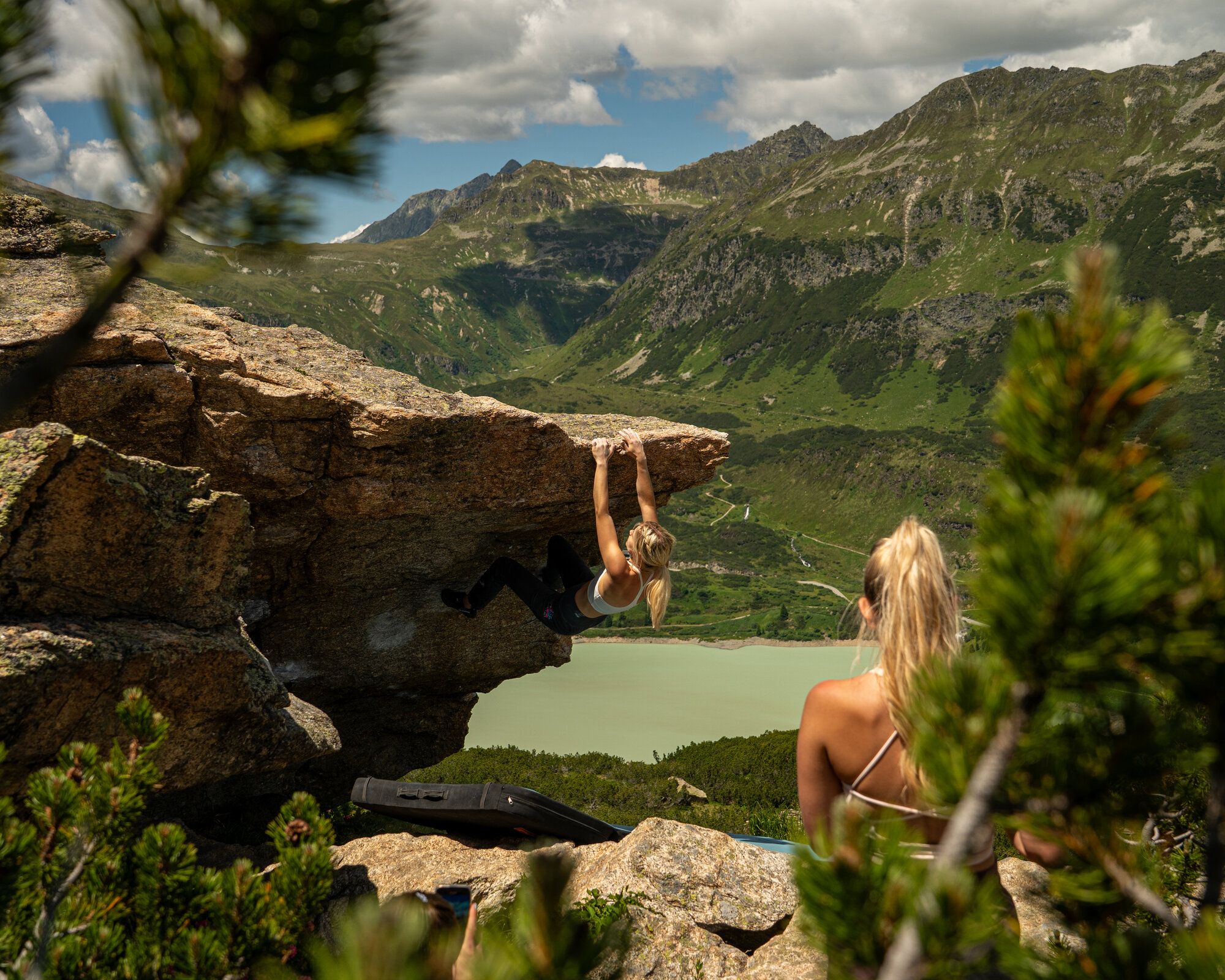
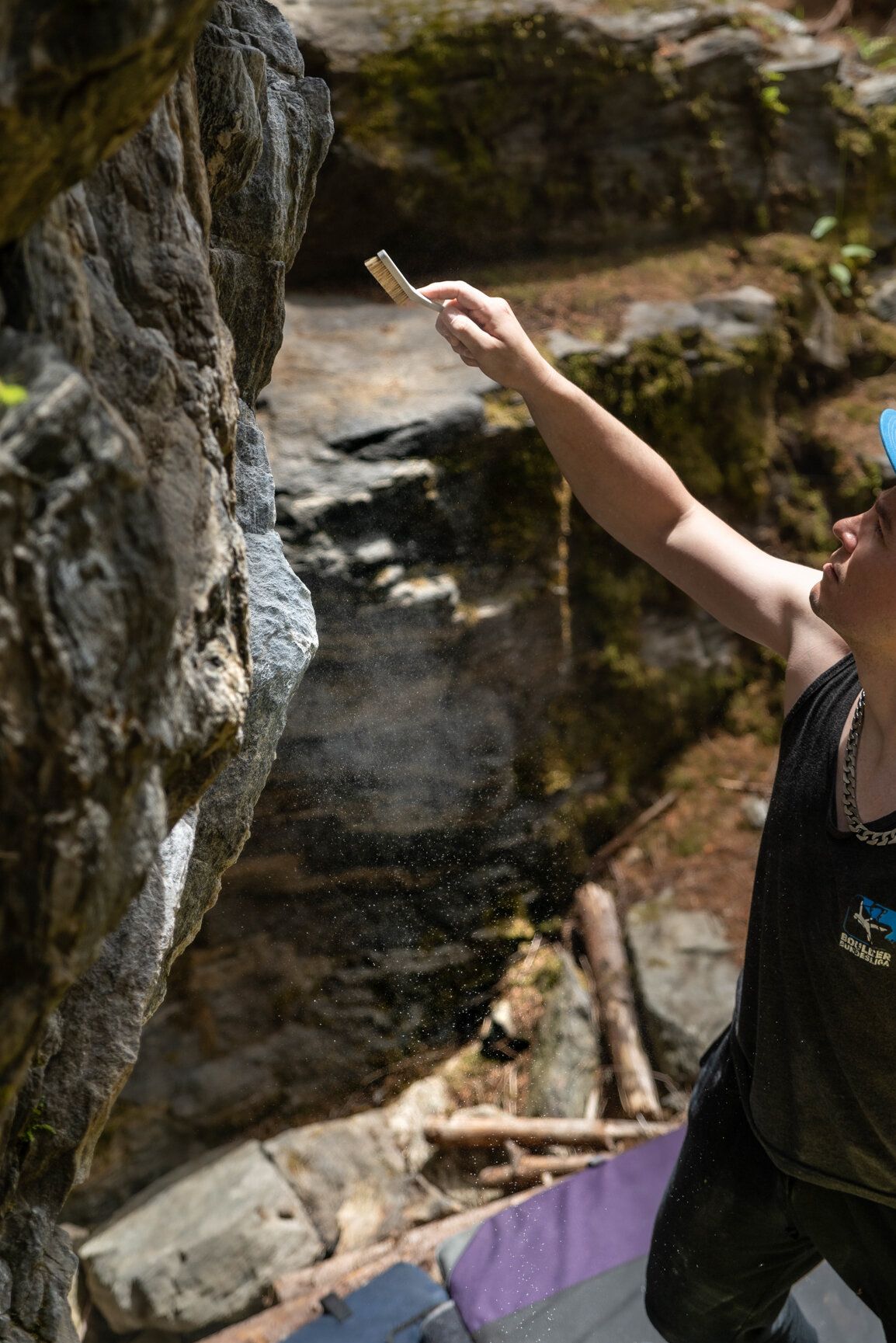
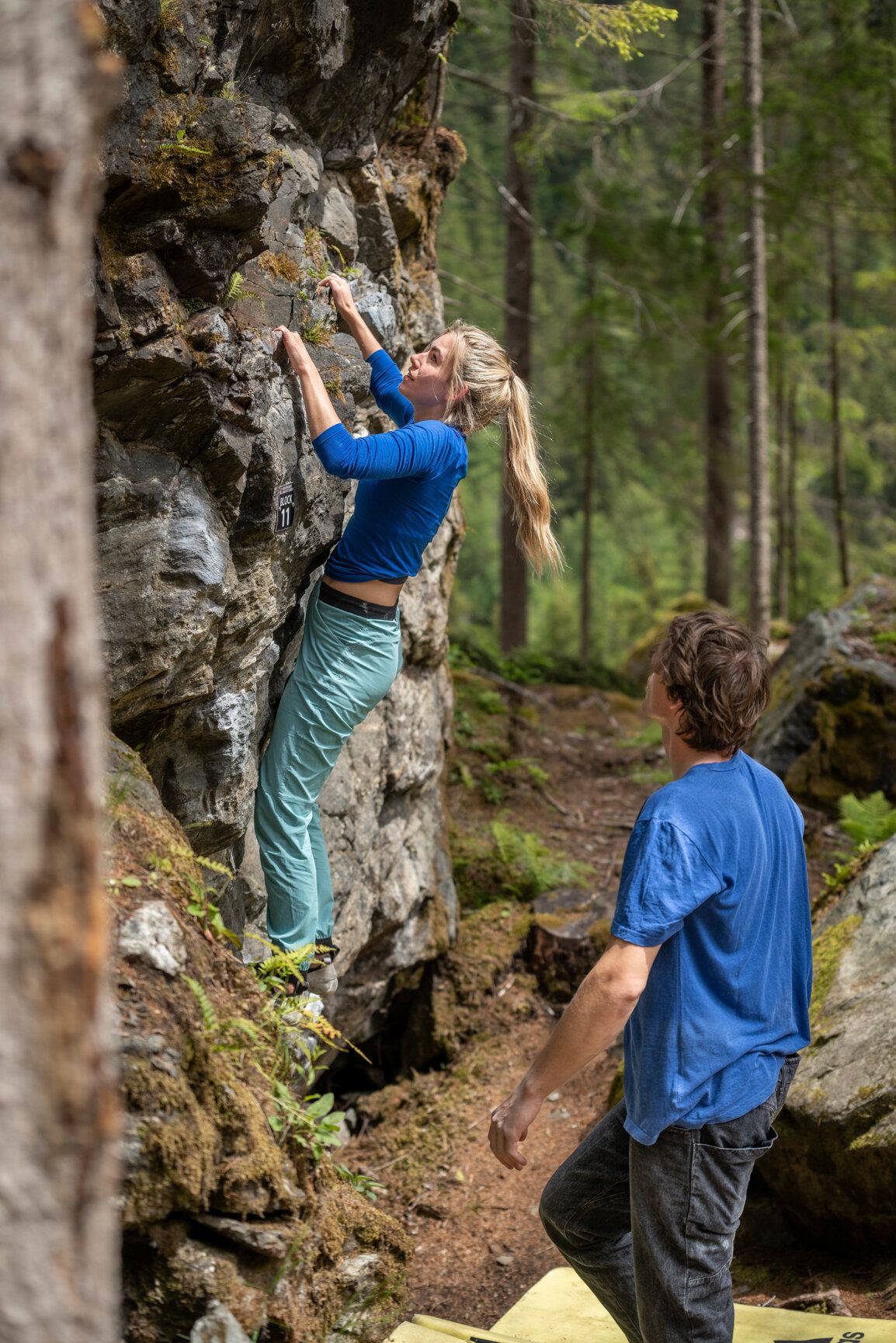
Two women doing Bouldering at Silvapark

1. Galtür – Silvapark (Paznaun)

At the end of thePaznaun Valley lies one of Tirol’s highest bouldering areas: the Silvapark in Galtür, at an altitude of 1,800 metres. Developed by Tirolean bouldering legend Bernd Zangerl, it is regarded as Austria’s premier summer bouldering area. Countless routes of all Levels of Difficulty await on rugged, high-alpine gneiss.

More about Silvapark

The bouldering season at Silvapark usually begins in spring, as soon as the snow has melted at higher altitudes, the skiing season has ended and the boulders are easily accessible. On particularly hot summer days, many bouldering enthusiasts head for the heights, as the high altitude means conditions here remain favourable even during extreme heatwaves in the valley. The high altitude and the wind at this height also mean that some boulders dry out quite quickly, even after rainy days. Over 445 routes, spread across 195 boulders and 14 sectors ranging in difficulty from 4c to 8c – all set amongst green alpine meadows – a playground for bouldering enthusiasts! Everyone here – whether Beginner or expert, tall or short, highball fanatic, overhang junkie or slab specialist – should find something to enjoy and discover the perfect project for themselves. 

The “Sekten” sector is the quickest to reach; the main Level of Difficulty here is around 7a+. In the “Super-Crack” sector, there’s a wide variety of routes of medium Level of Difficulty. This is where you’ll find what’s probably the most photogenic boulder of them all. ‘Fotoblock, 6a’ is sure to have caught the eye of a few people on social media. The ‘Palm Beach’ sector – set amidst a sea of rocks – is home to, amongst other things, one of the world’s hardest bouldering problems. ‘Momentum, 8c’ is sure to make some bouldering enthusiasts believe in their dreams. But don’t worry – there are also plenty of much easier, yet equally beautiful routes. And those were just three of the 14 sectors in total. 

Anyone who wants to marvel at the mountain panorama not only during the day but also at the starry sky from their camper van can stay overnight at the Ballunspitzbahn Valley station for a small fee, provided they comply with the rules in force there, and have another go at their unfinished bouldering projects the following day. The number of campervan spaces is limited; you can check availability online in advance and reserve your own space if necessary.

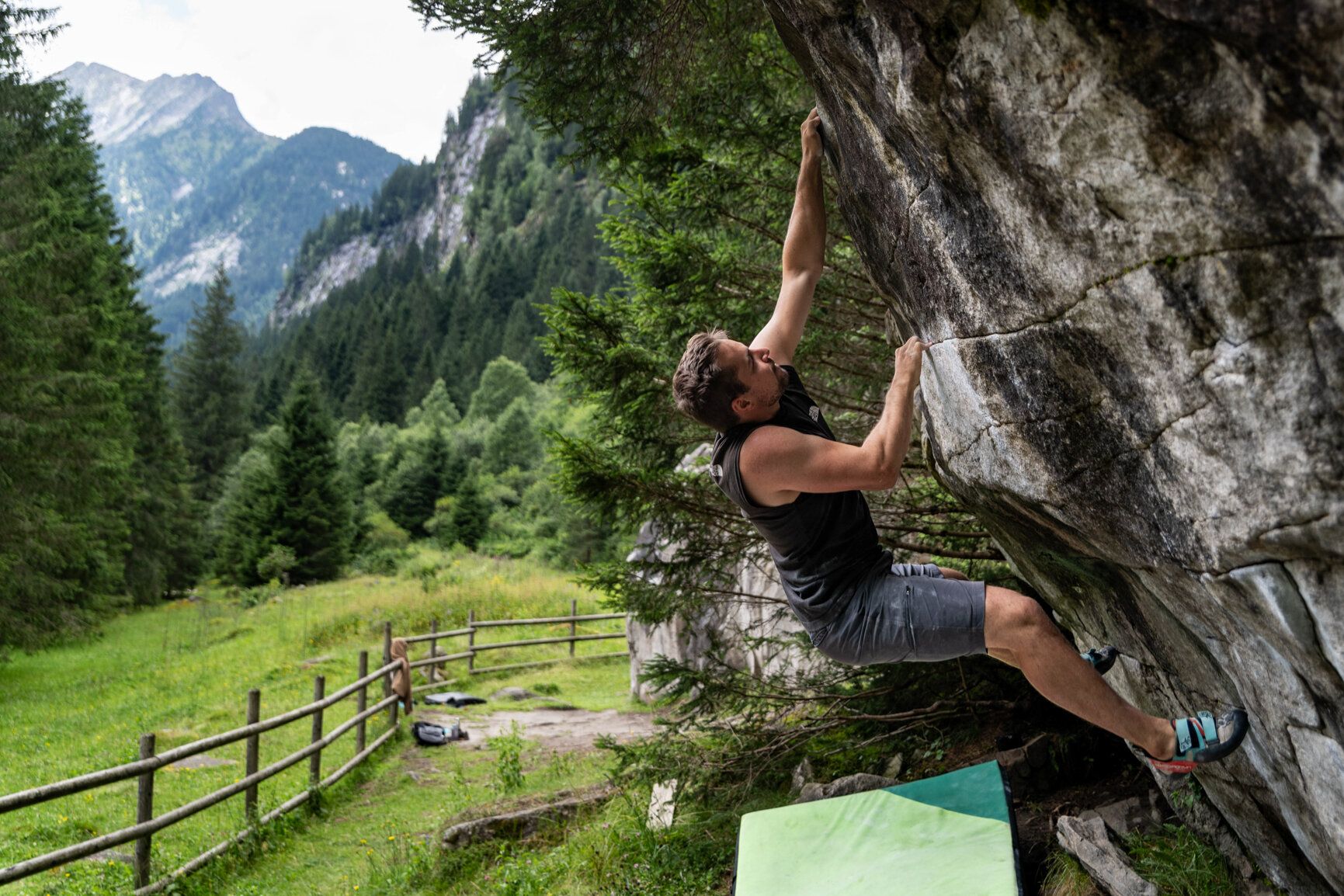
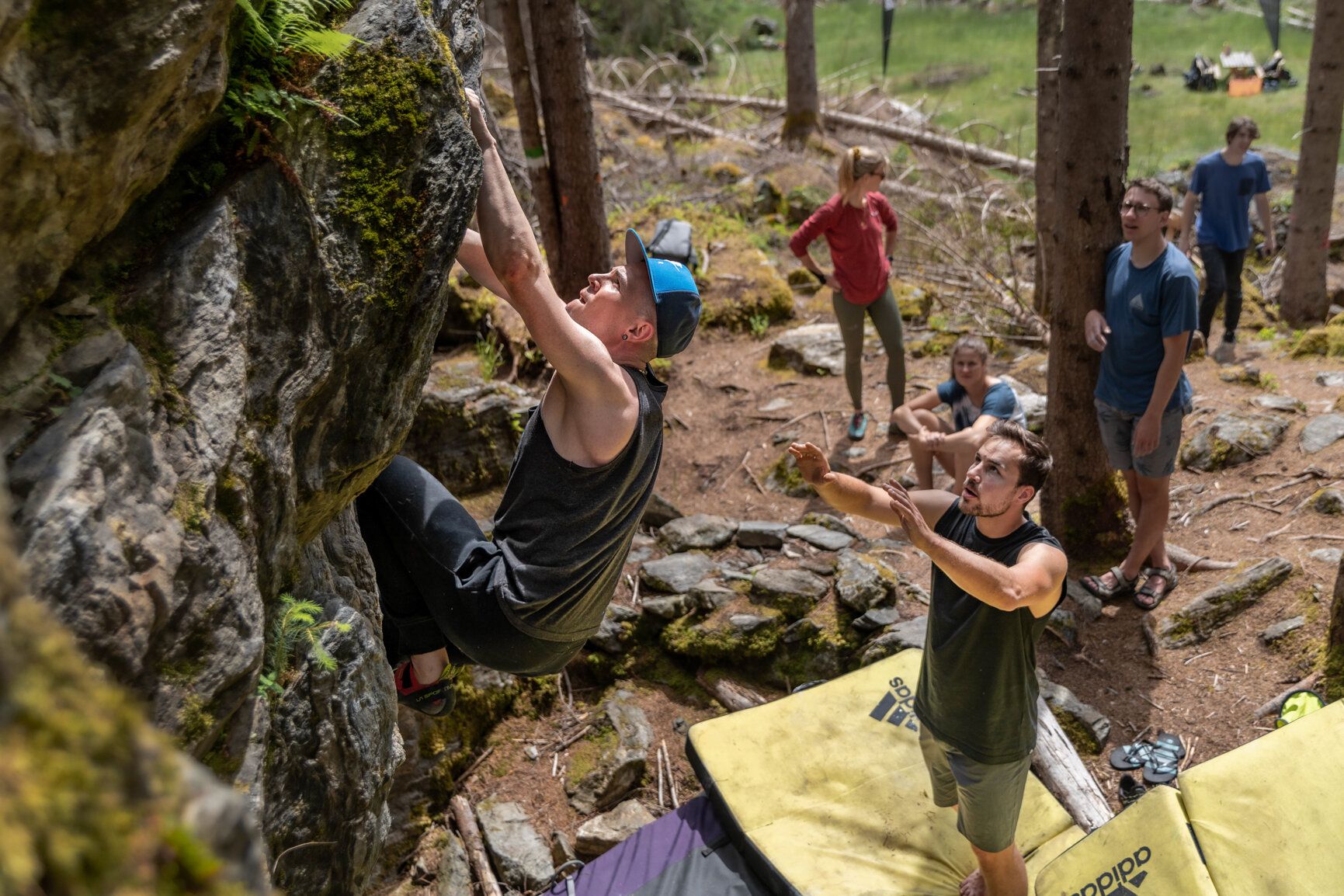
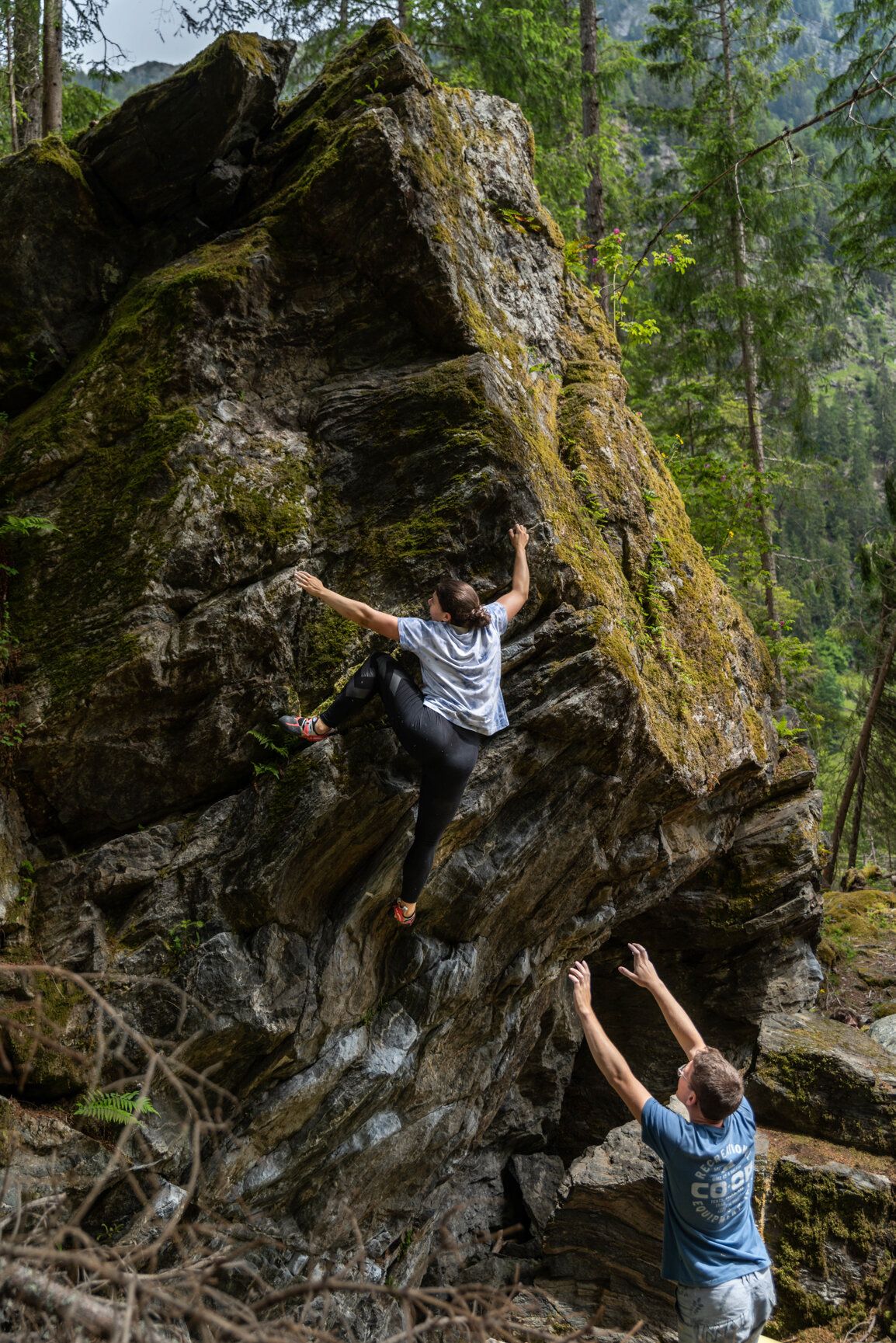
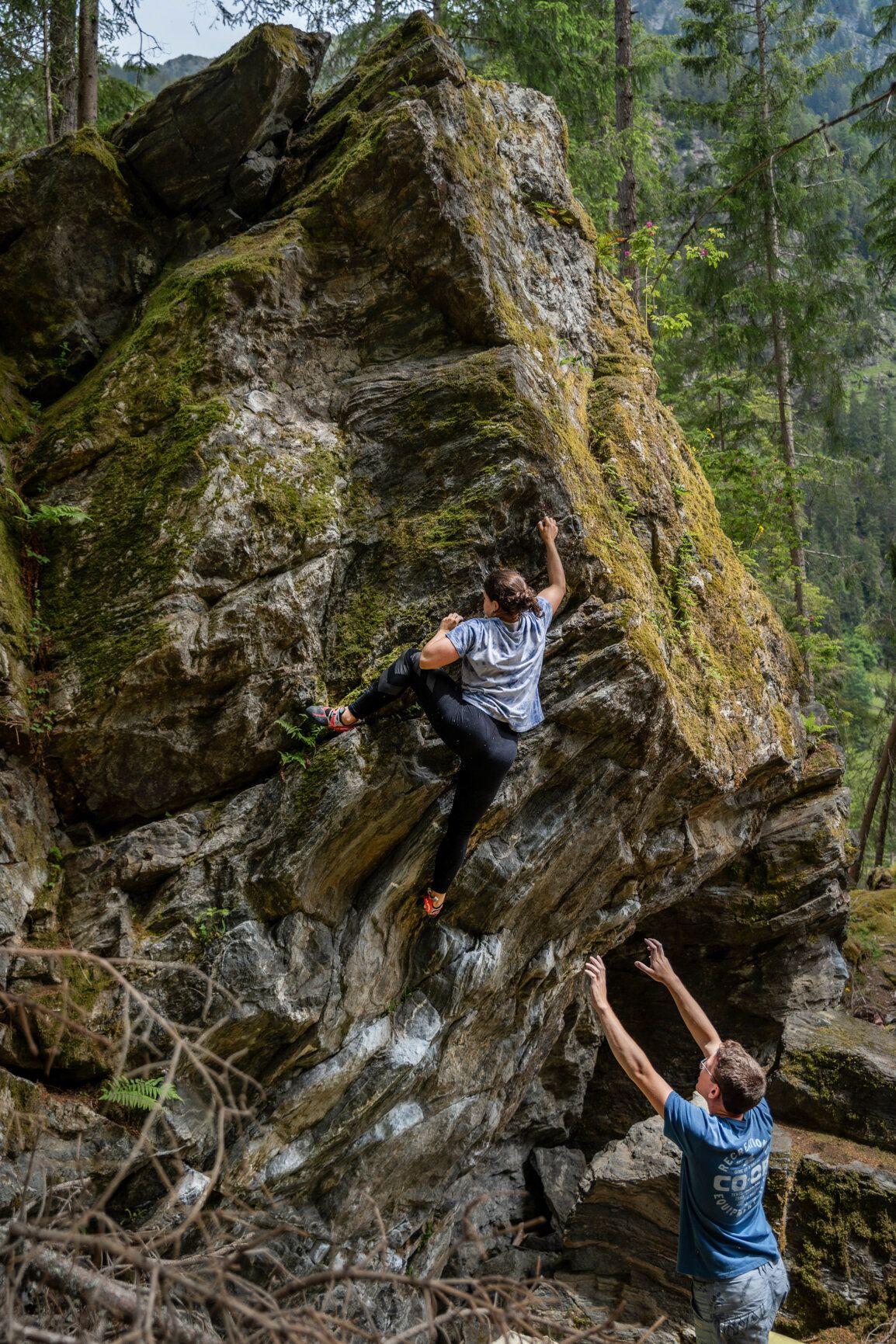
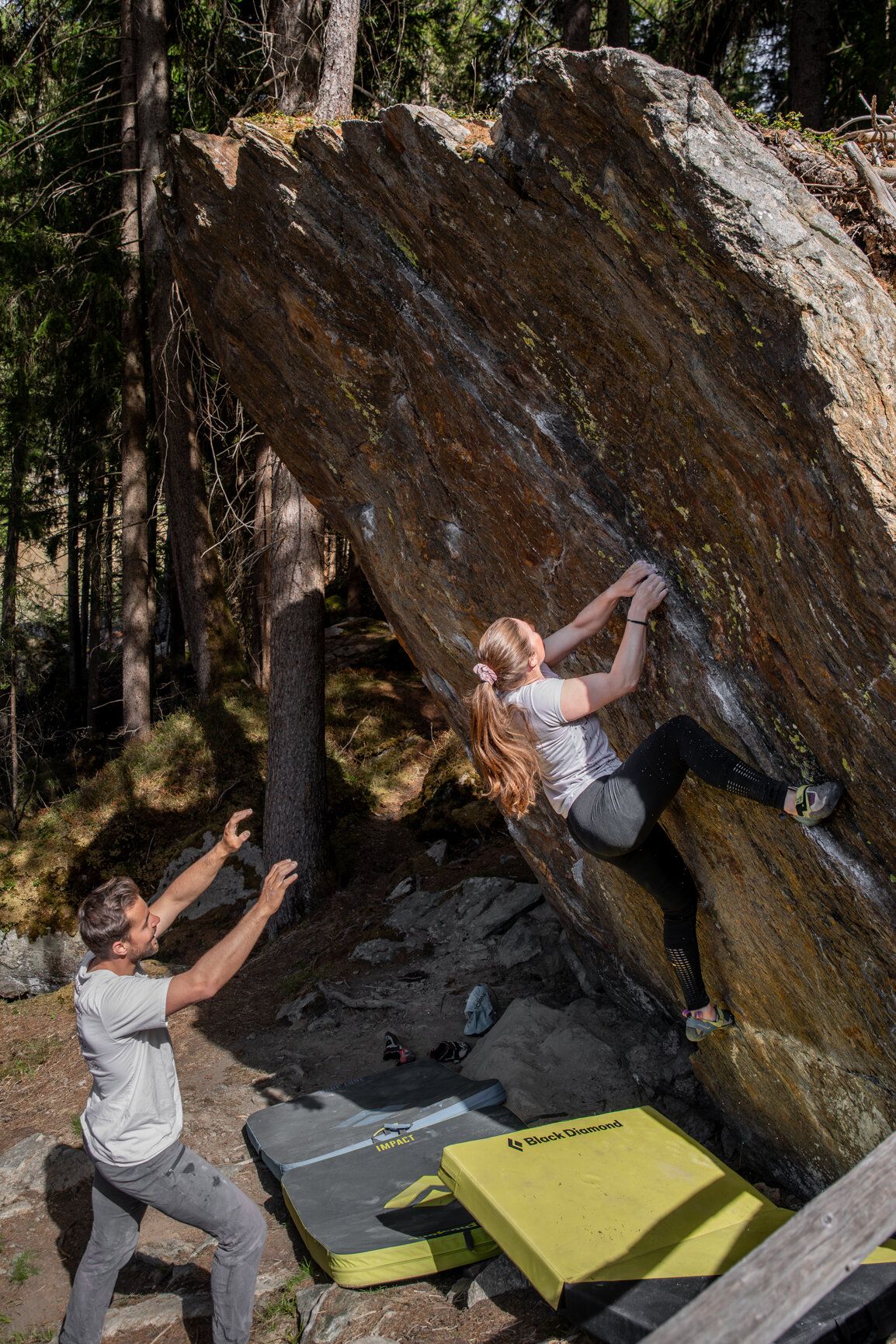
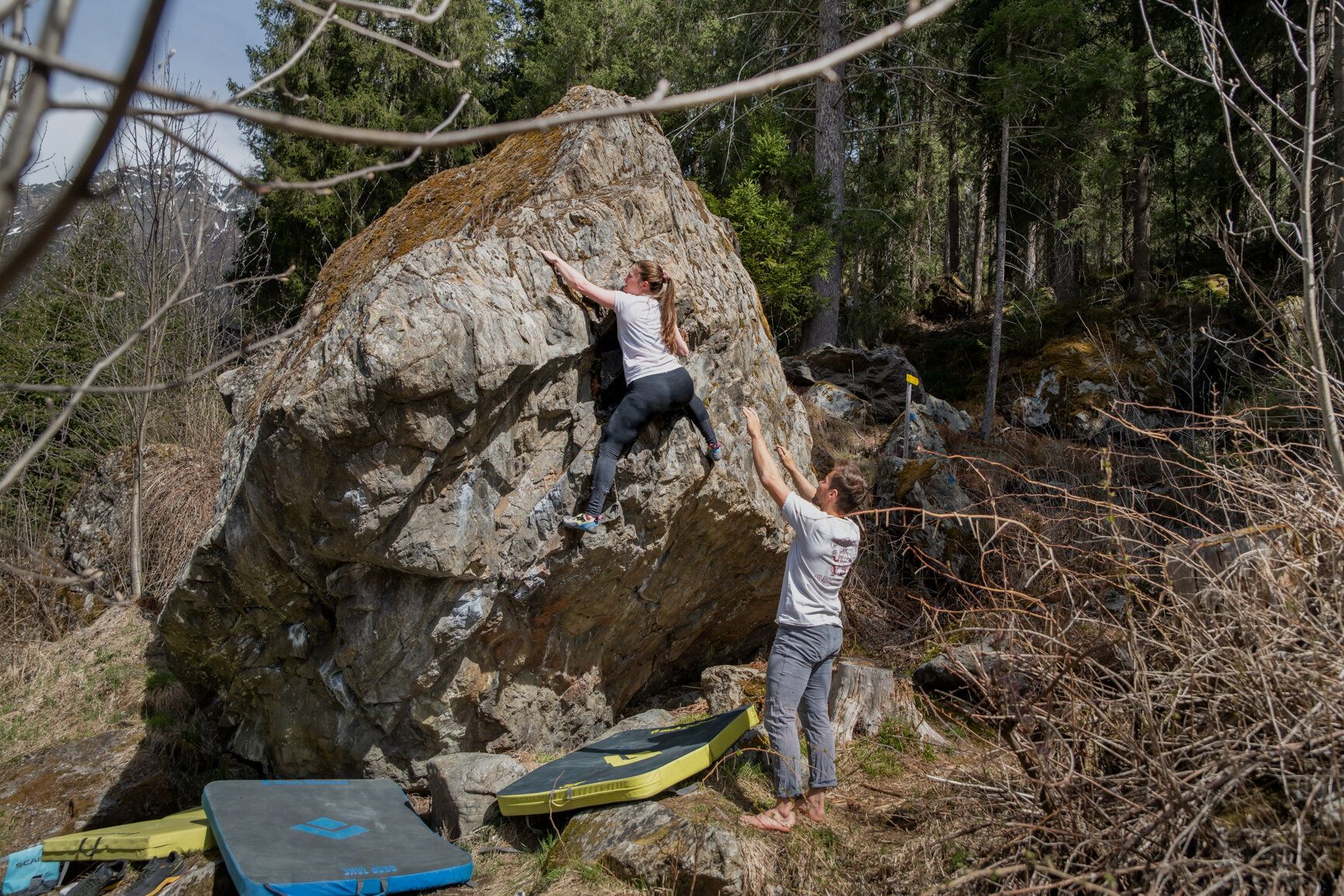
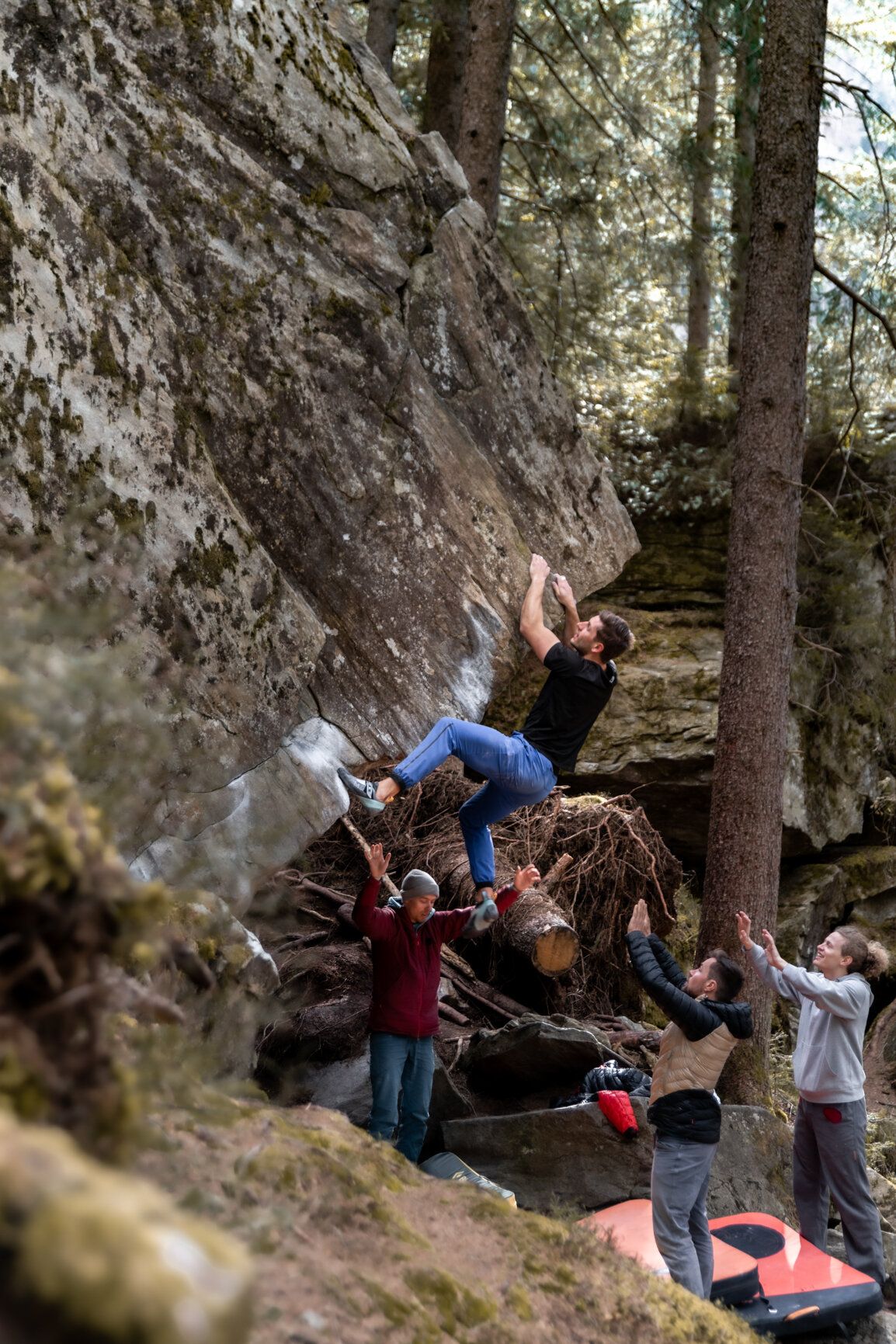
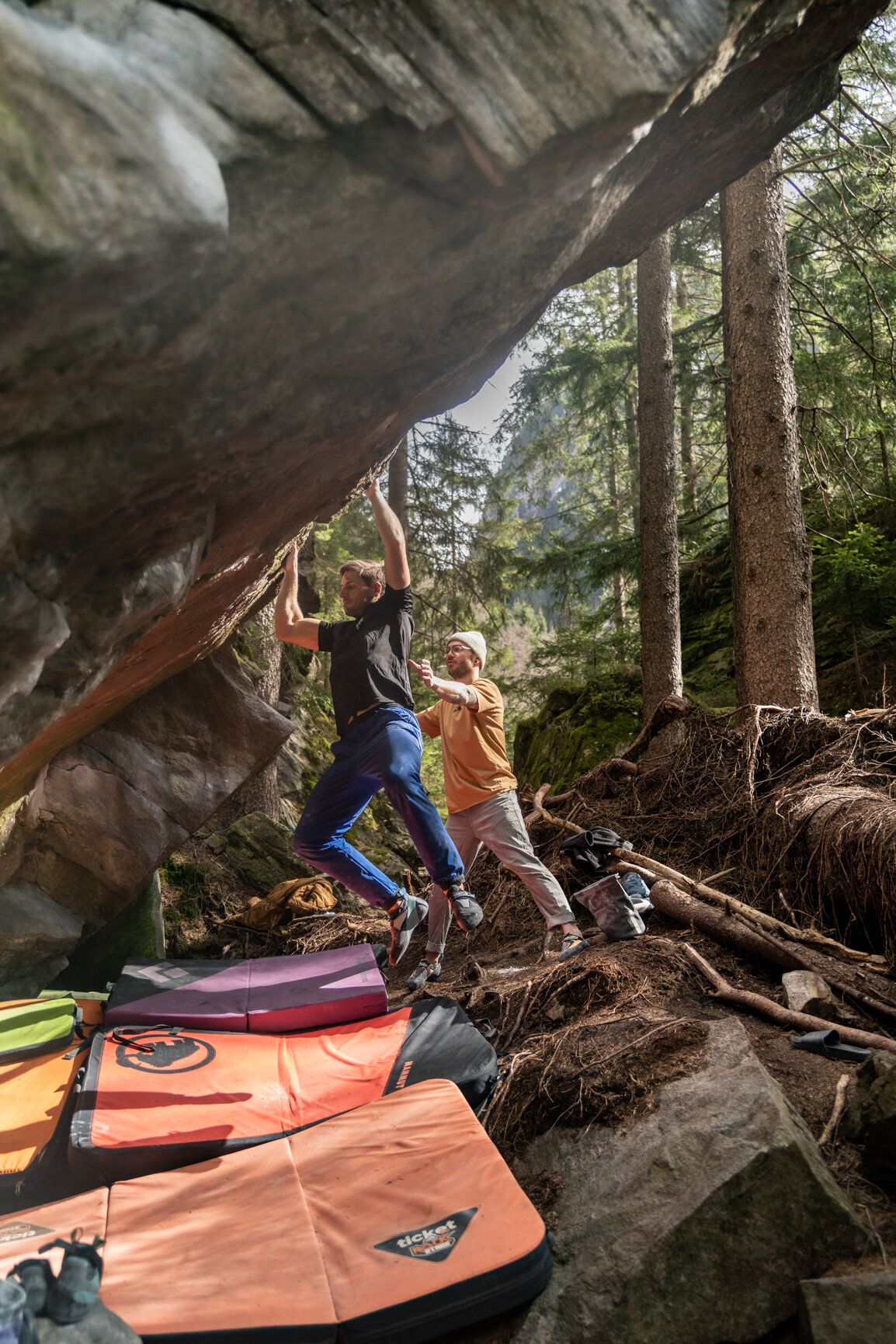
Mandlersboden: Bouldering and Spotting

2. Mandler’s Glacier (Pitztal)

Nestled in a small woodland near Ritzenried lies an open meadow with around 55 compact blocks and approximately 180 Bouldering routes ranging from 3a to 8a. Ideal for beginners and families with children – but also featuring challenging routes such as ‘Joker, 8a’ for advanced climbers. Particularly relaxing: a wooden bench and table in the middle of the meadow invite you to linger.

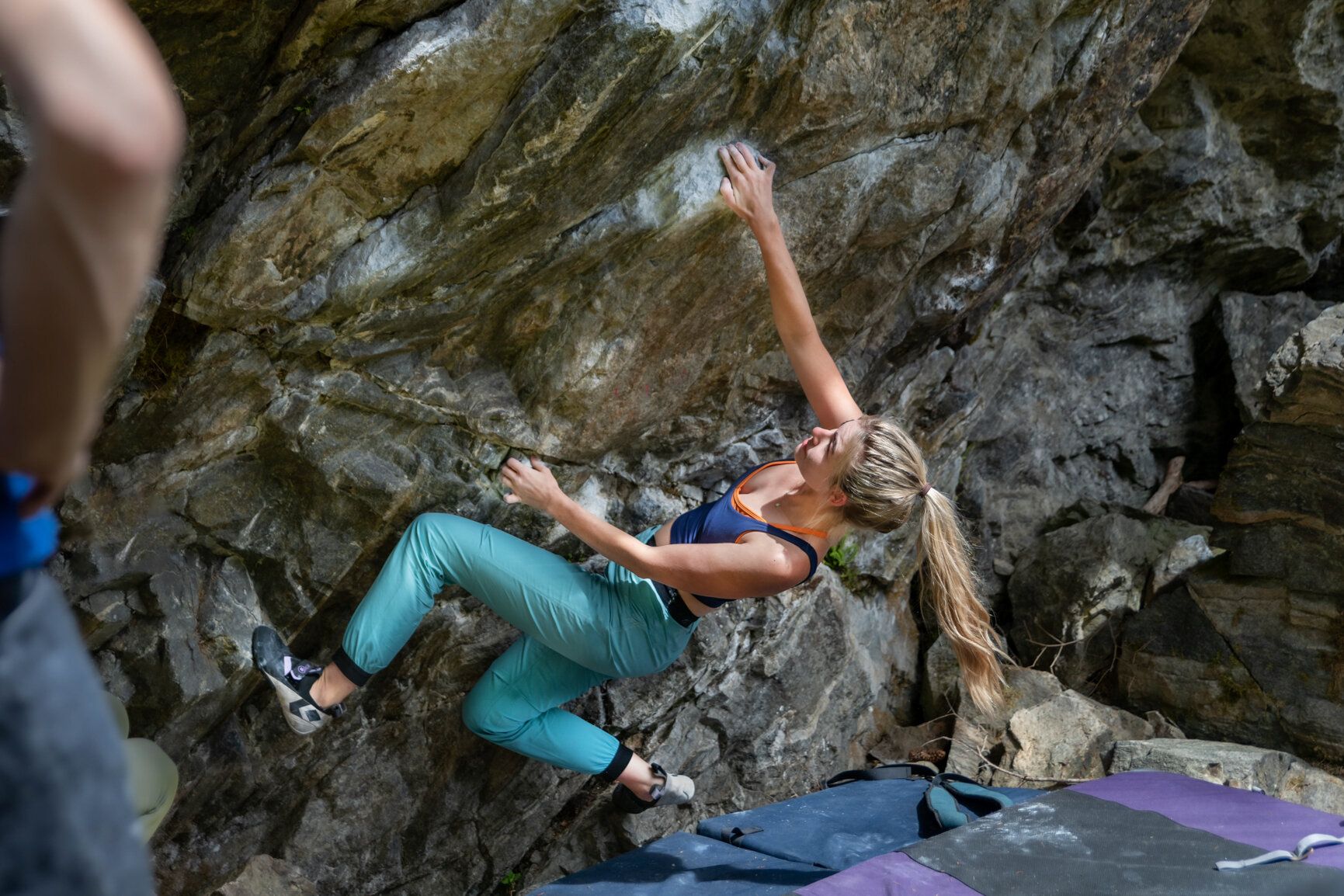
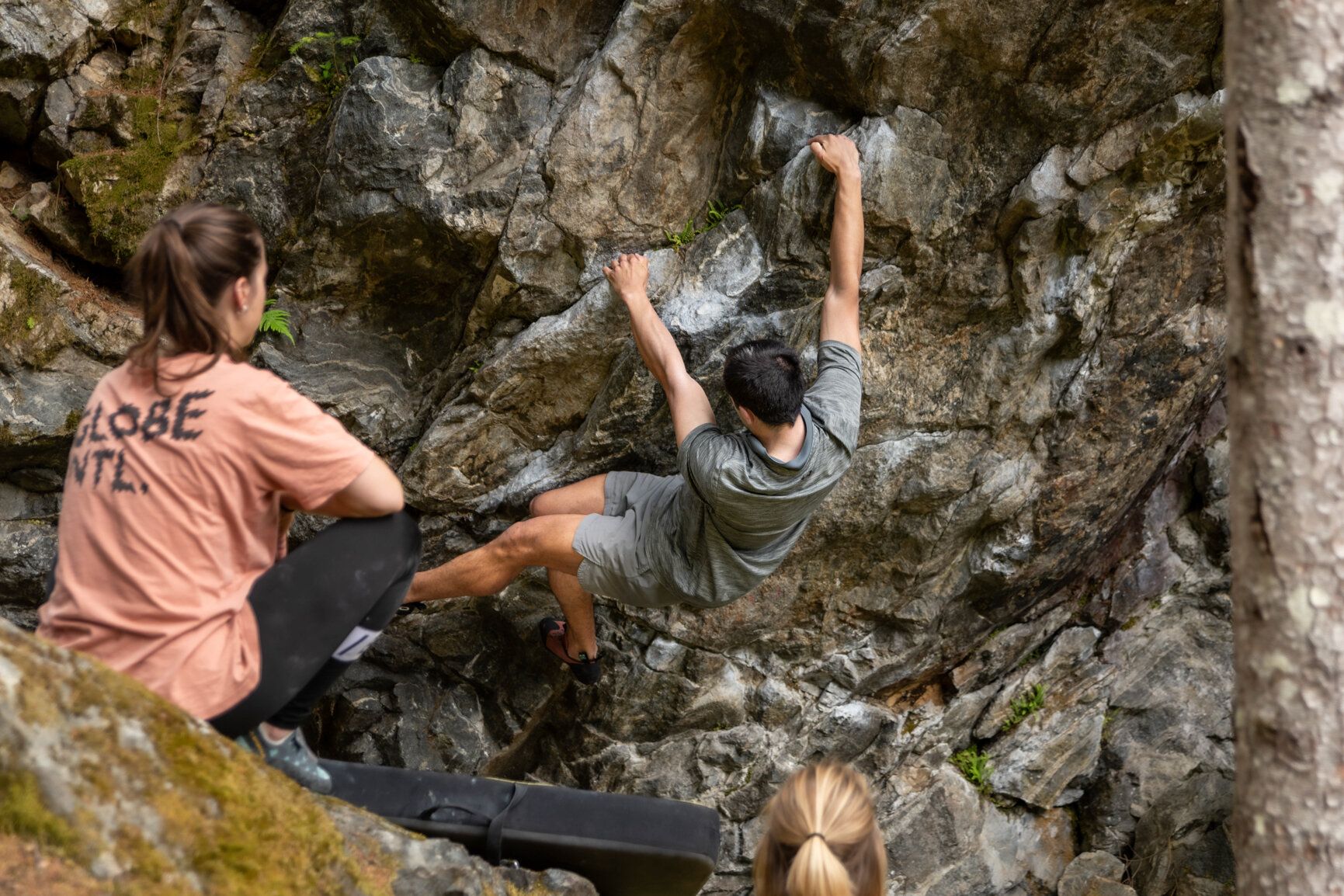
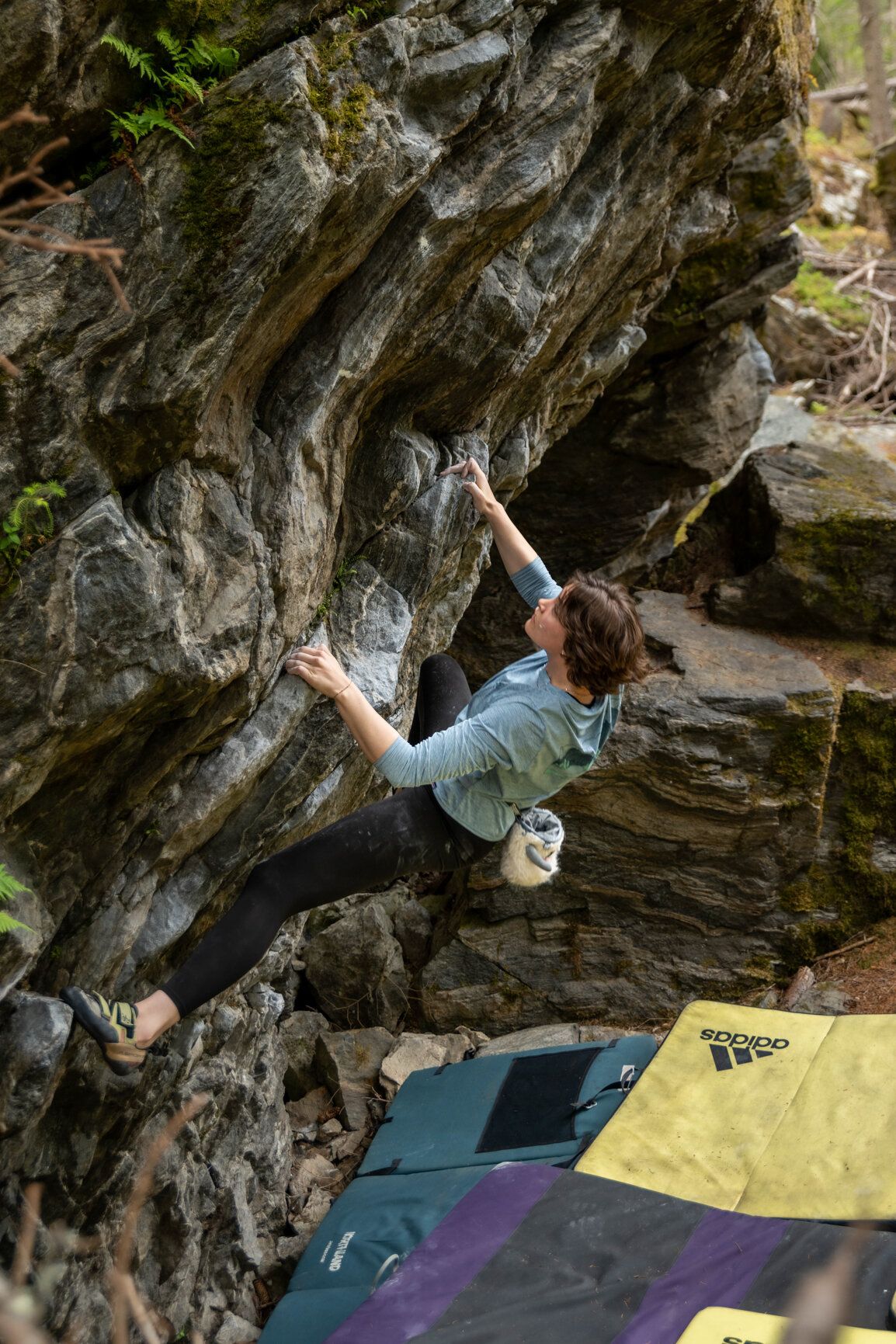
A female climber doing Bouldering in the Höll

3. Höll bouldering area (Kaunertal)

It sounds like hell – but it’s absolutely lovely! The “Höll” is situated right on the banks of the Fagge, is very family friendly and offers Bouldering routes of all Levels of Difficulty. Partly in the shade, partly in the sun – ideal for all weather conditions and temperatures.

The “Höll” is situated right on the banks of the Fagge, behind the municipal works yard, and offers numerous boulders of all Levels of Difficulty. The area is very family friendly; the boulders are spread out with plenty of space for spotting, picnicking and playing in the woods. Some of the boulders are nestled amongst trees, whilst others are in fairly open, sunny spots, meaning you can find the right boulder for any weather or temperature. Due to its high altitude, the Höll is particularly recommended during the warmer months. A hammock should now be part of your standard Bouldering kit – there are plenty of suitable spots to hang it up.

A final tip: on the way back, it’s worth making a quick stop at the Sauerbrunn spring behind the centre of Prutz. Natural, slightly fizzy water bubbles up there – just the thing to refresh you after an active day on the rock. And if you fancy something sweet, Dave’s Café & Bar is the place to go: coffee and cake make for a cosy way to round off the day.

Bouldering on the rock face at U-Alpine Pasture

4. Reithle & U-Alpine Pasture (Hoch-Imst)

Two bouldering areas that combine beautifully: the Reithle, with around 30 boulders on high-quality limestone, and the U-Alpine Pasture (Hualigeck) a little further up – 15 bouldering problems in a stunning setting. The Imster Uphill Facilities are the recommended way to get there.

The Reithle bouldering area

Around 30 exciting boulder problems on low walls ranging from 5a to 8a boast high-quality limestone, a peaceful atmosphere in the light mountain forest and are significantly older than the neighbouring site. Due to its high altitude, the area is best suited to the warmer months. The warmer months in spring and autumn are perfect. Good conditions for sending routes, yet with pleasant temperatures for relaxing between attempts. If you don’t want to go home empty-handed, keep an eye out for the small, bright yellow-orange mushrooms – also known as chanterelles or, as we call them here, ‘Eierschwammle’ – as you make your way up to the boulders via Access, because the area surrounding the boulders certainly lives up to the name ‘Schwammlewald’. Don’t forget your hammock – you’re sure to find the perfect spot to chill out in it here in Reithle too.

The ‘U-Alpine Pasture’ bouldering area

or known as “Hualigeck”, is situated just above Reithle, only a few minutes’ walk below the Untermarkter Alpine Pasture. A small but excellent area for Bouldering with a few boulders, which are nonetheless varied, in a stunning setting. The 15 boulder problems are spread across 6 boulders and range in difficulty from 5a to 8a. Ideal for a quick session after hiking, as a climbing add-on to a family day out, or in combination with the Reithle area. Ledges, holes, small cracks or even water channels – whatever you prefer, you’ll find it all here! Just don’t be afraid of spectators, as there’s a good chance you’ll have cows standing by your side whilst you’re doing Bouldering.

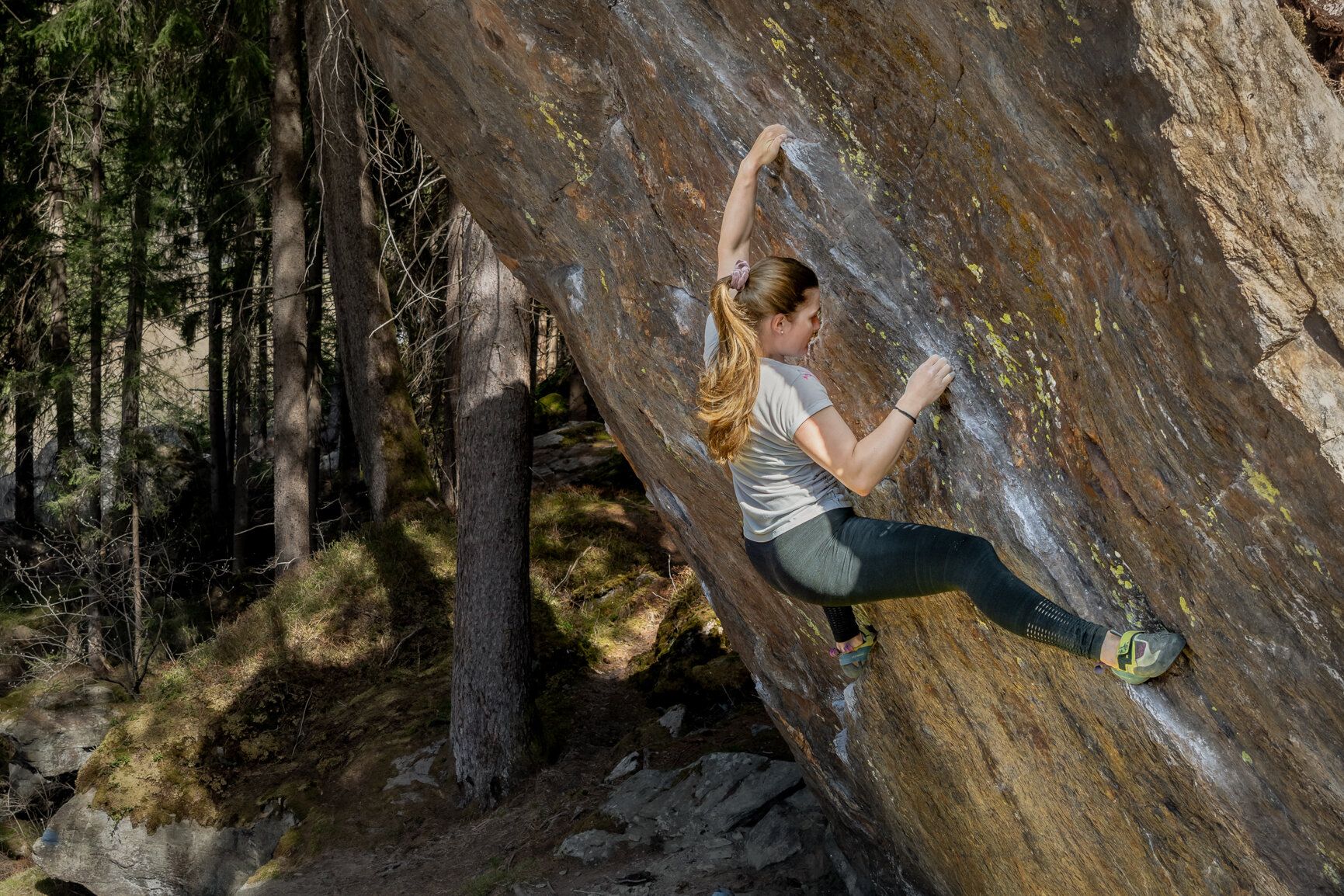
Bouldering on the rock face at Ginzling Forest

5. Ginzling Forest (Zillertal)

The oldest climbing area in theZillertal, with around 100 routes ranging from 3c to 8b+. Short access just behind the village, a pleasant setting – and the Zillertal itself as a playground for further climbing adventures. Prime conditions in spring and autumn.

It is not without reason that the Zillertal is often described as a ‘Mecca’ for bouldering enthusiasts. The valley is now known far beyond the country’s borders as a climber’s paradise. Not only sport and alpine climbers, but also boulderers from all over the world travel to Tirol every year to feel the granite of the ‘Chillertal’ beneath their fingers.

The Ginzling Wald bouldering area is the oldest in the valley. The short access, the pleasant location just behind the village and around 100 routes covering all Levels of Difficulty make the Wald a real bouldering highlight in the area. Everything from 3c to 8b+ is represented, and every route is well worth trying, as even the lower levels of difficulty require some lovely moves. Spring and the slowly melting snow mark the start of the season here – though a down jacket, hat and gloves should still be part of your standard kit in spring, as it can get quite chilly in the morning or as soon as the sun goes down in the afternoon. Prime conditions are usually found in spring and autumn. The hot summer months are too hot for most forms of Bouldering, as it can get quite warm despite the shaded location in the forest. Those wishing to travel in a more environmentally friendly way can take the ‘Zilli’ (the Zillertalbahn) from Jenbach to Mayrhofen, and from there continue by bus towards Schlegeisspeicher. From the Ginzling Dorf bus stop, the bouldering area is just a 5-minute walk away. If travelling by public transport, however, you should allow a little extra time – though you’ll be rewarded with beautiful views as you travel down into the valley. Alternatively, there are paid car parks right in the village. 

Fancy a relaxing week of climbing in the Zillertal? As there are countless other climbing options in the immediate vicinity, a day’s bouldering in Ginzling Wald can be easily combined with visits to other areas. You can spend the night, for a fee, at the campsite a little way into the valley between Ginzling and the Gasthof Breitlahner. 

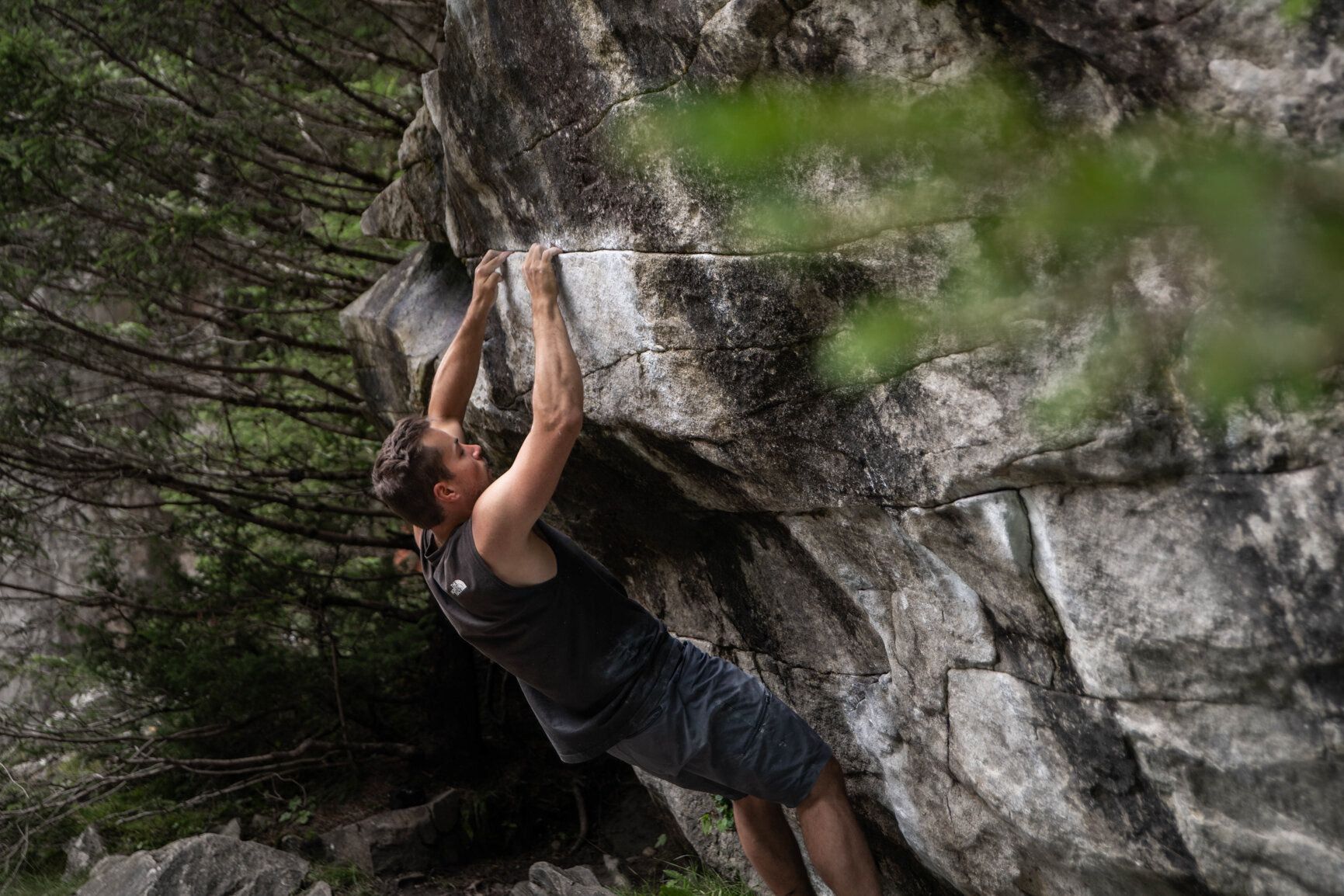
Bouldering in Ginzling Forest. Photos: Lara Novak

The Ginzling Forest bouldering area in the Zillertal
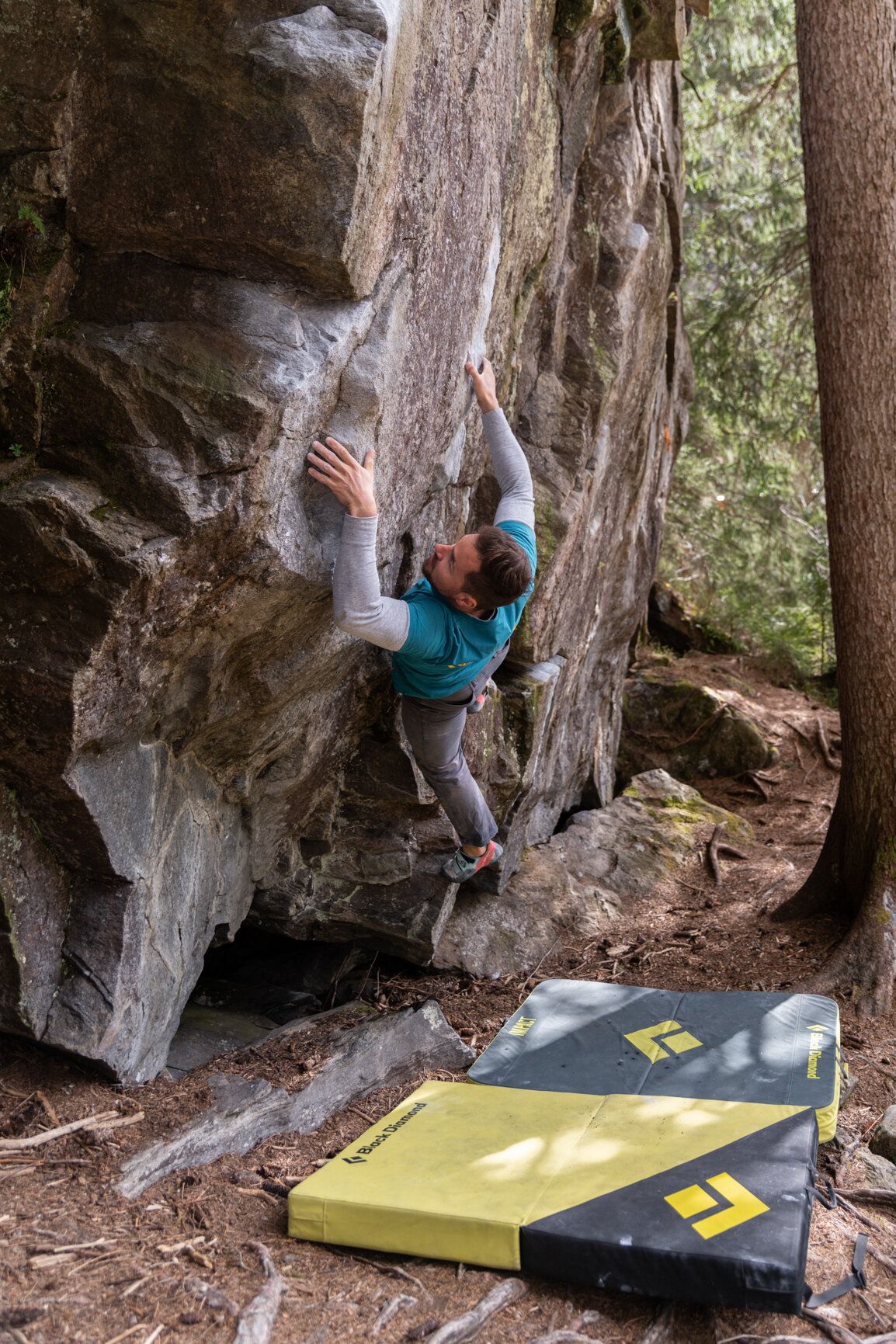
Bouldering on the rock face

6. Kaseler Alpine Pasture (Zillertal)

About 5 km past Ginzling: 20 bouldering fields with over 100 boulders clustered closely together. Particularly popular during the summer months. A highlight after Bouldering: a dip in the Zemmbach stream right next door.

If you’re staying at the Kaseler campsite, the Kasseler Alpine Pasture bouldering area is almost within sight when you wake up. Particularly in the summer months, this area is one of the most popular in the valley – even though it can get quite warm quite quickly on some routes during the day. Located about 5 km past Ginzling, short access across flat terrain leads to a cluster of 20 boulders, offering over 100 bouldering problems of varying difficulty. 

If there’s been a light summer shower the day before, it’s quite likely that some boulders will remain wet due to being in the shade all day. However, if you’re not set on tackling any specific boulder problems, you’re sure to find something to your liking, even after a light summer shower the day before. ‘Distance, 7a’, ‘Entfernt, 7a’, ‘Country Dump, 6b+’ and ‘Außa fun Loch, 6c+’ are highly recommended. Pack a towel and your swimming trunks – you’ll get the added bonus of a quick dip to cool off after a successful day’s bouldering in the Zemmbach river right next door. Anyone looking for a bit more comfort can treat themselves to a refreshing shower at the campsite.

7. Breitlahner Forest (Zillertal)

Another classic in the Zillertal – the Breitlahner Wald bouldering area at Zemmgrund, at an altitude of around 1,300 metres. Between the Breitlahner and the Berliner Hut, spread over 1,300 metres of elevation gain, there are over 90 boulder problems – a real bouldering paradise for anyone who feels at home in the 6b to 7b range. But there are also easier and more challenging routes – everything from 5c to 8a+ is represented. 

Depending on which boulder you’re heading for, the Breitlahner Wald bouldering area can be reached in about 10–20 minutes. The access from the car park at the Breitlahner inn follows the forest track uphill towards the Berliner Hut. After a few bends near the bridge, turn right and follow the well-trodden paths to the boulders. Once you reach ‘Adonis’, you’ll find the remaining boulders on the right-hand side of the path, following the footpaths. 

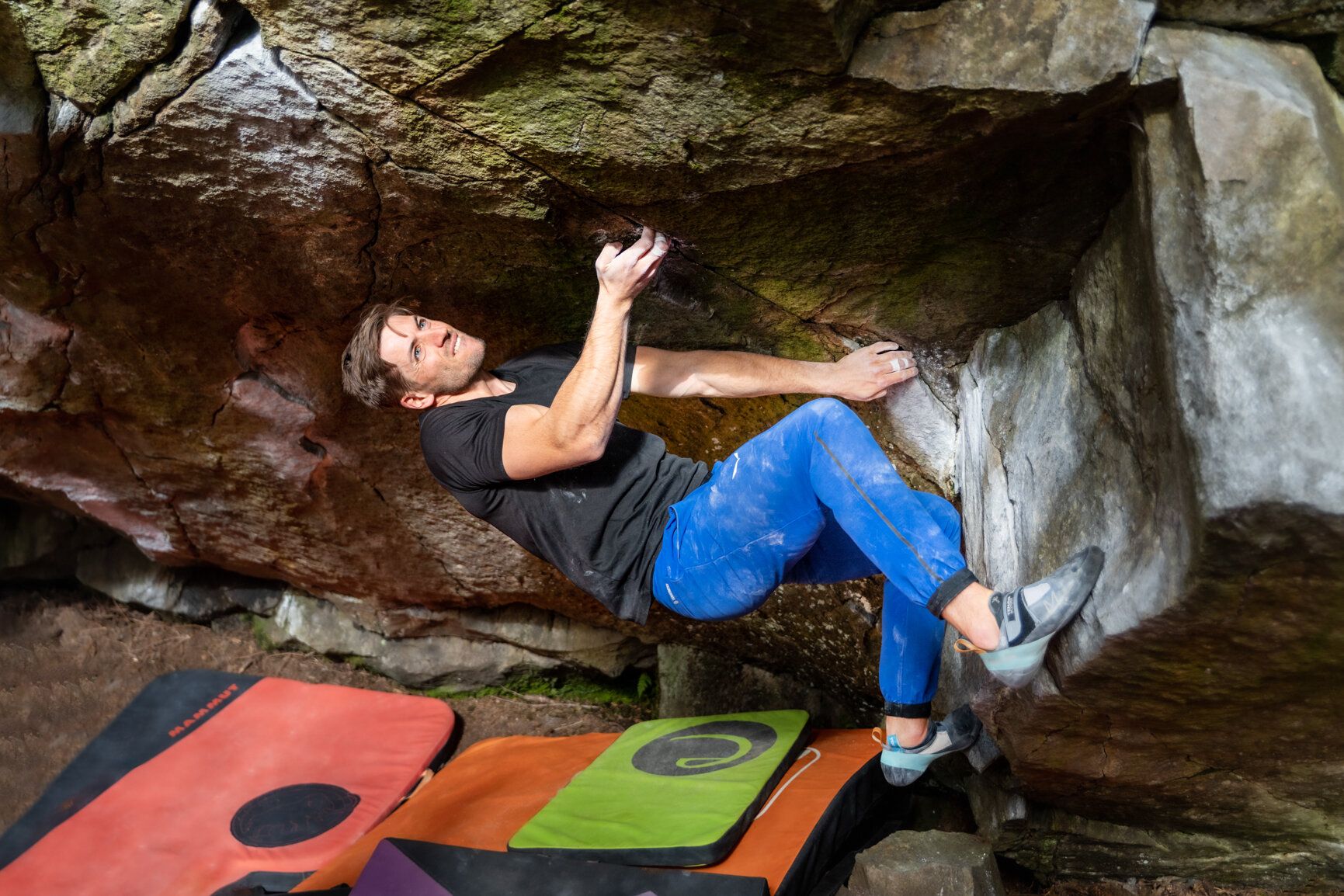
The landing area for most of the boulders is fairly flat and easy to secure, although the boulders are scattered quite densely throughout the woodland and are therefore less suitable for families and children. The real classics in the area are ‘Das Auge des Waldes, 6b+’, ‘Noice code, 7a’, ‘Adonis, 7c+’ and ‘El Gauhara, 8a’. The latter boulder in particular is renowned far beyond the valley. No wonder, as the majestic boulder is a real eye-catcher that many would love to tick off their ‘to-Bouldering list’. Despite the felled trees and the now somewhat bare woodland all around, it’s still magical! 

The Breitlahner Forest is a great spot, especially in summer, as its fairly high altitude means there’s usually a pleasant breeze and you’ll almost always find suitable conditions. However, the transitional season is recommended for the best grip. Over the last few years, the area has increasingly merged with the neighbouring ‘Klausenalm’ bouldering area. If the 90 routes aren’t enough for you, the Klausenalm – just a few minutes’ walk away – offers a fantastic extension with equally exciting routes. 

Are you planning your next day of bouldering in Tirol?

All areas can be found on the map at Climbers Paradise. There you’ll also find up-to-date topos, approach descriptions and information on current conditions.

Tip: When bouldering outdoors, please always follow the guidelines set out by Climbing with Respect and check in advance for any access restrictions. By doing so, we can work together to ensure that our bouldering areas remain accessible in the future.

Climb with respect!

  • Respect nature: Don’t leave any rubbish behind, stick to the existing paths and only climb in authorised areas.

  • Use bouldering guides and topos: So you know where you’re going – and don’t accidentally end up on private land.

  • Don’t forget to have a spotter: Safety first! Always do Bouldering with one or more spotters, especially on higher boulders.

The bouldering areas featured in this article

You might also be interested in these articles