
Made in Tirol: How a carabiner is made at AustriAlpin
From aluminium rod to finished carabiner: we took a look behind the scenes at AustriAlpin in Fulpmes in the Stubai Valley – where carabiners are forged, hardened and assembled by hand.
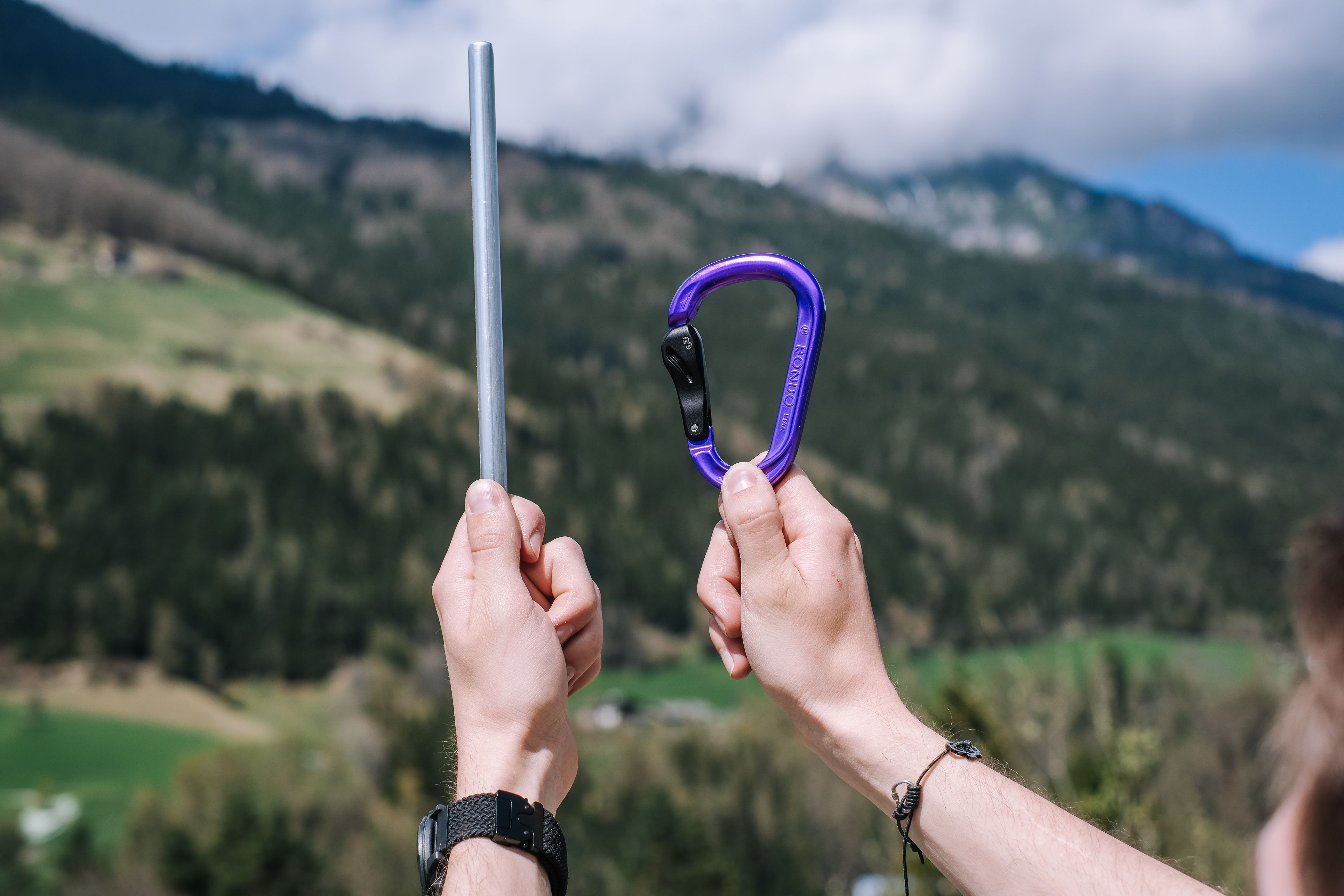

It hangs on your harness, in every quickdraw, at every belay – and we trust it without giving it a second thought. But how exactly is a piece of aluminium turned into a carabiner that can withstand a fall?
We wanted to find out exactly how it was done, so we visited AustriAlpin in Fulpmes. The Stubai Valley has a long tradition of metalworking: according to AustriAlpin, the first smithy in Fulpmes is documented as far back as the 15th century. The company itself was formed in 1996 following the merger of several craft businesses.
Production still takes place locally today: according to AustriAlpin, around 98 per cent of its products are manufactured in its own workshops in Fulpmes – from development right through to dispatch. In the case of the carabiner, this means that, apart from the colouring process, the entire production takes place in the Stubai Valley. ‘Made in Tirol’, as they say. Here, we’ll show you how the process works, step by step.
Text: Thomas Lackner, Photos: Simon Schöpf
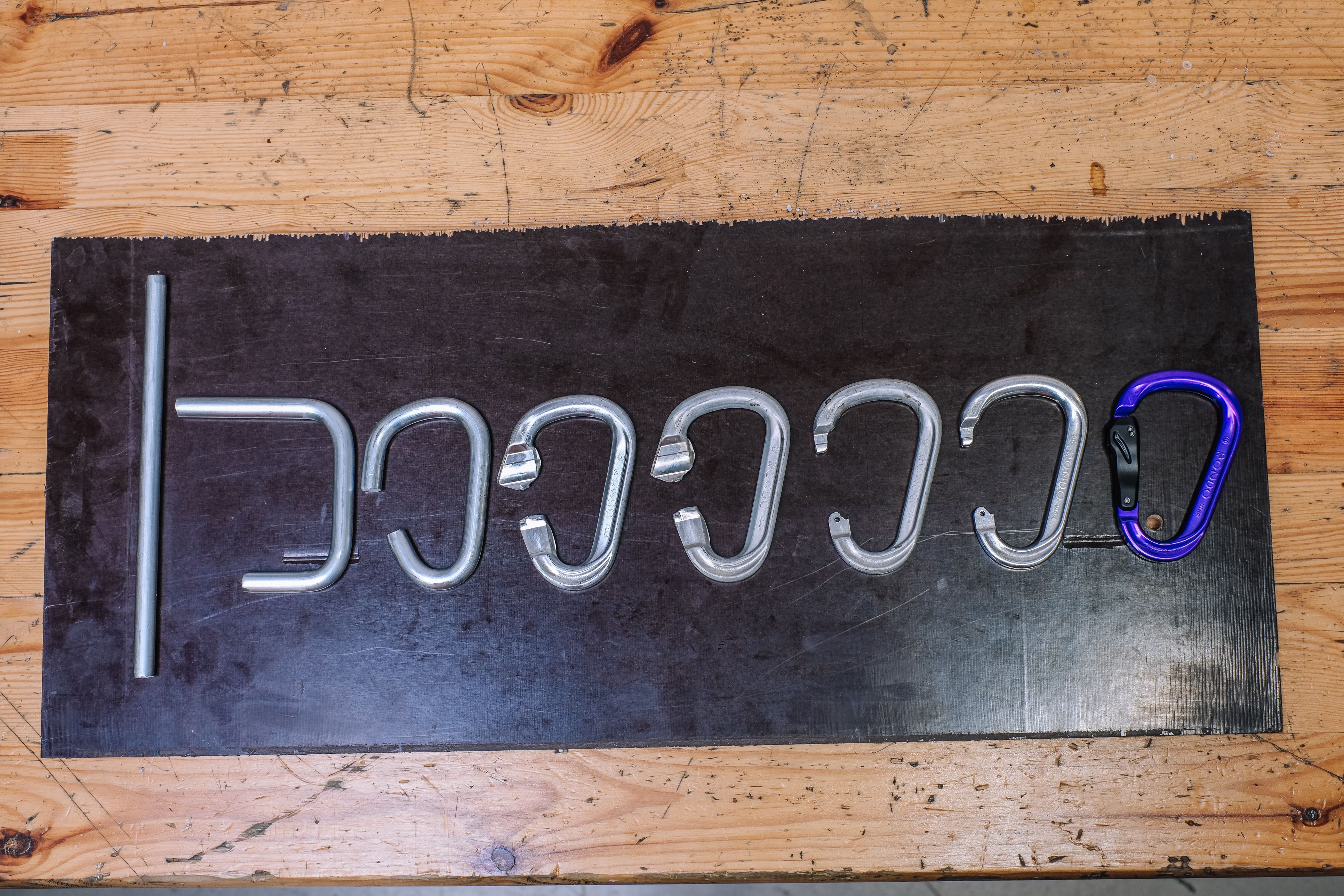
Eight steps before a carabiner is makes it onto your quickdraw:
In between: spot checks, spot checks, spot checks. More on this below.
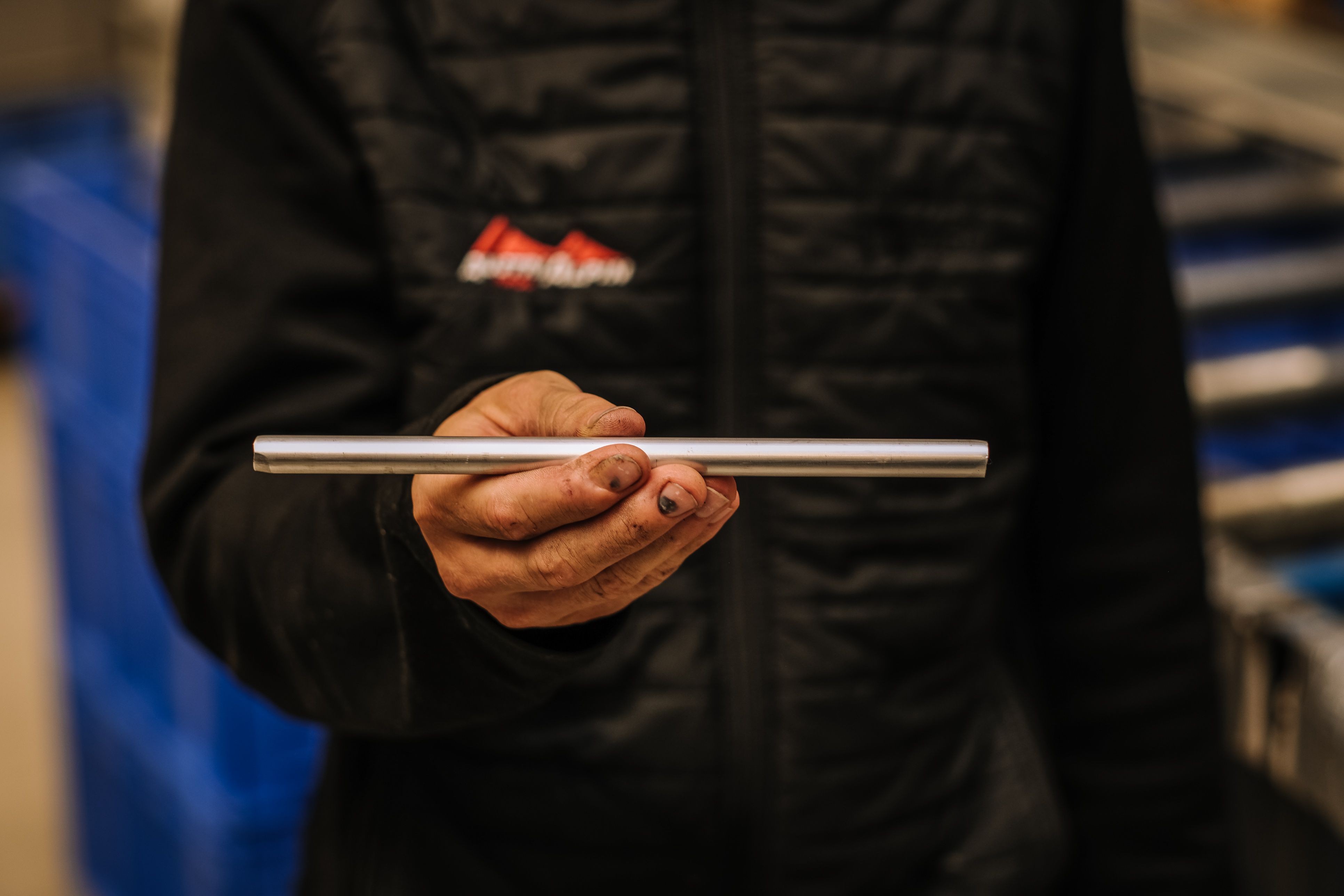
The raw material marks the start of the production process. AustriAlpin sources its aluminium exclusively from European suppliers.
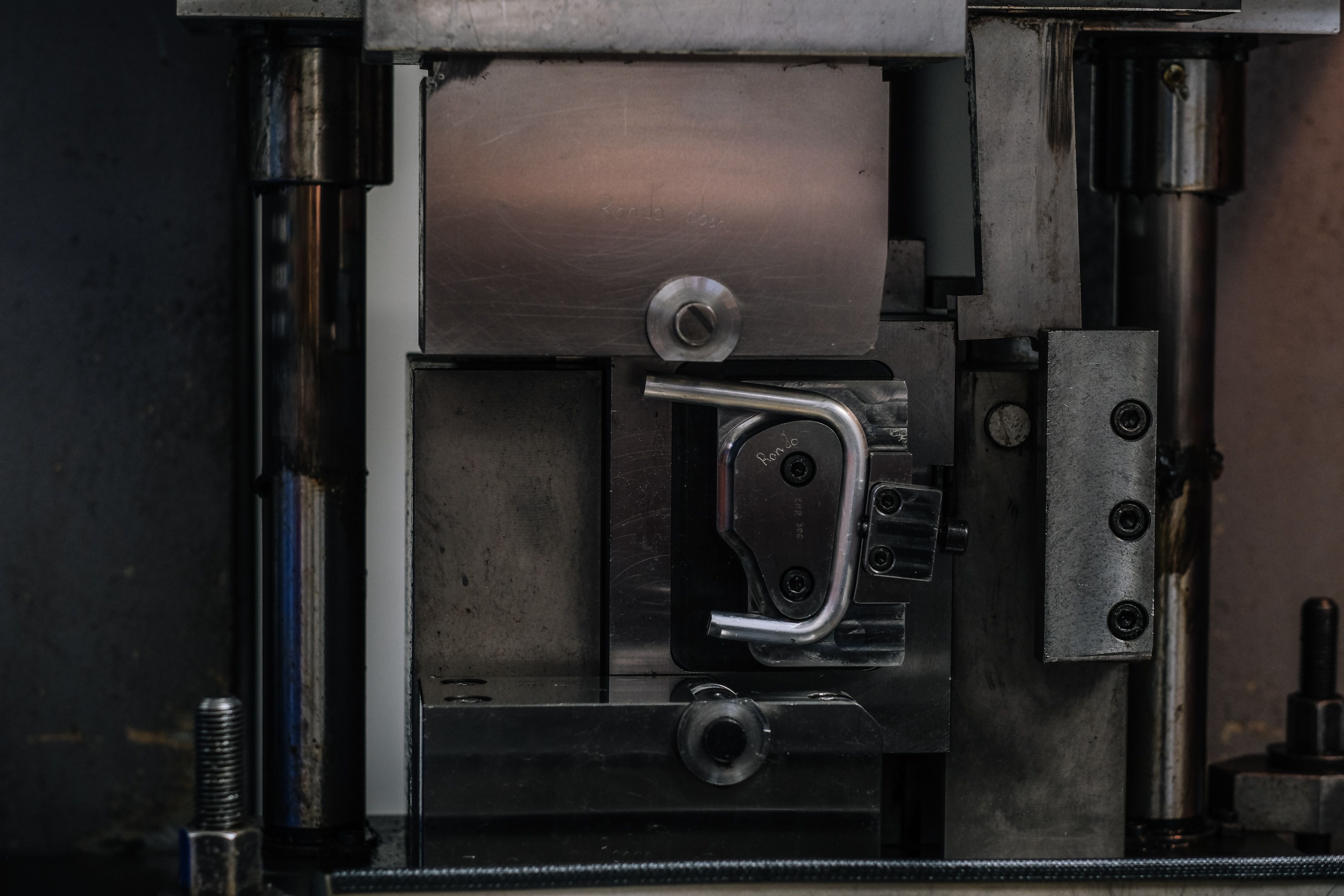
Once the rough shape is in place, the blank is stamped – or, in technical terms, die-forged. This process shapes the originally round rod into exactly the shape the carabiner is ultimately intended to have. Three things happen during this step:
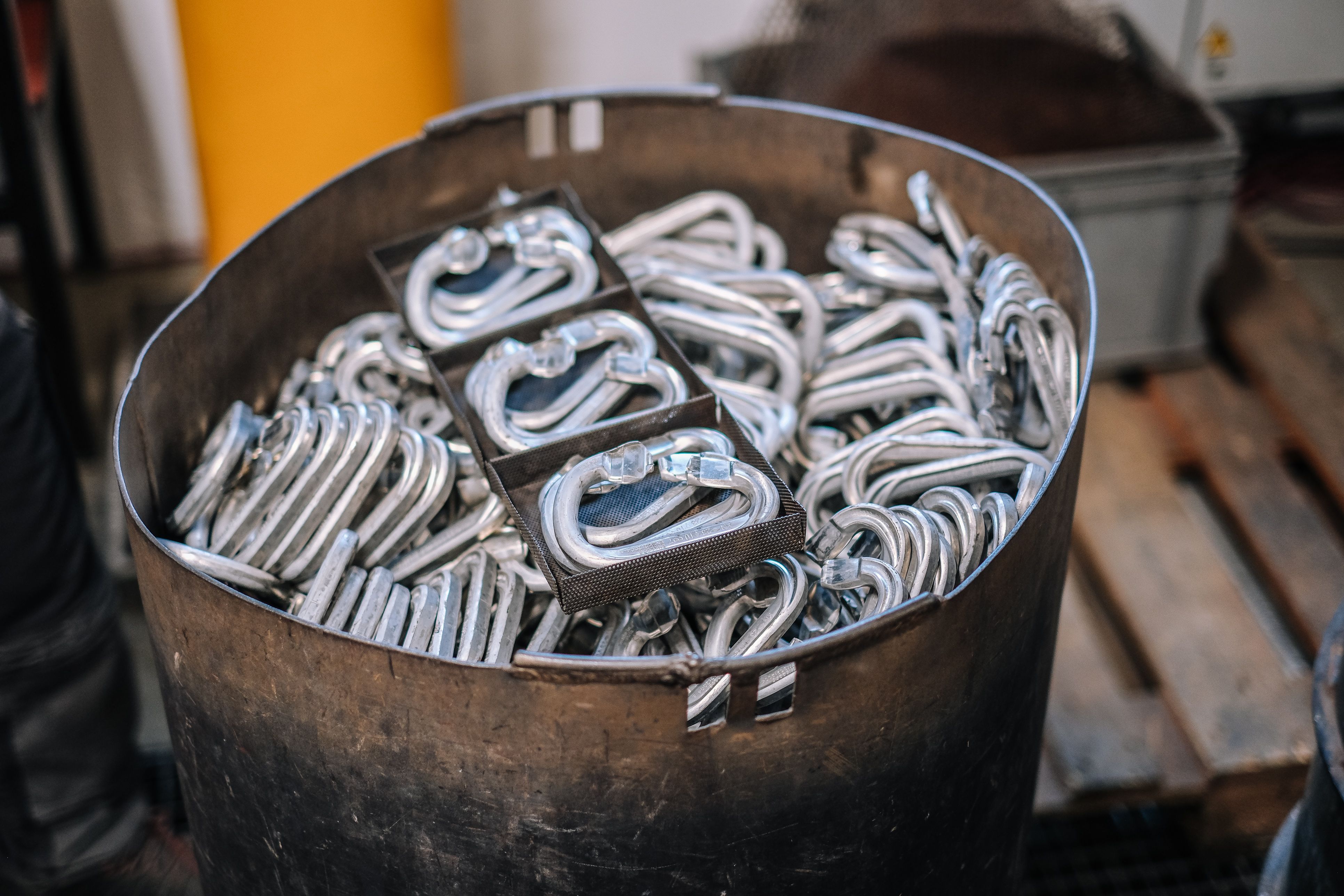
Once the forming process is complete, the material moves on to heat treatment. In a series of steps, the crystal lattice of the aluminium is altered: the previously soft, easily mouldable material becomes significantly harder and tougher. This is precisely where the high breaking strength comes from – the very strength you can rely on when climbing.
Zero tolerance: This stage, too, is closely monitored and checked using random samples. If even a single sample fails the test, the entire batch is rejected.
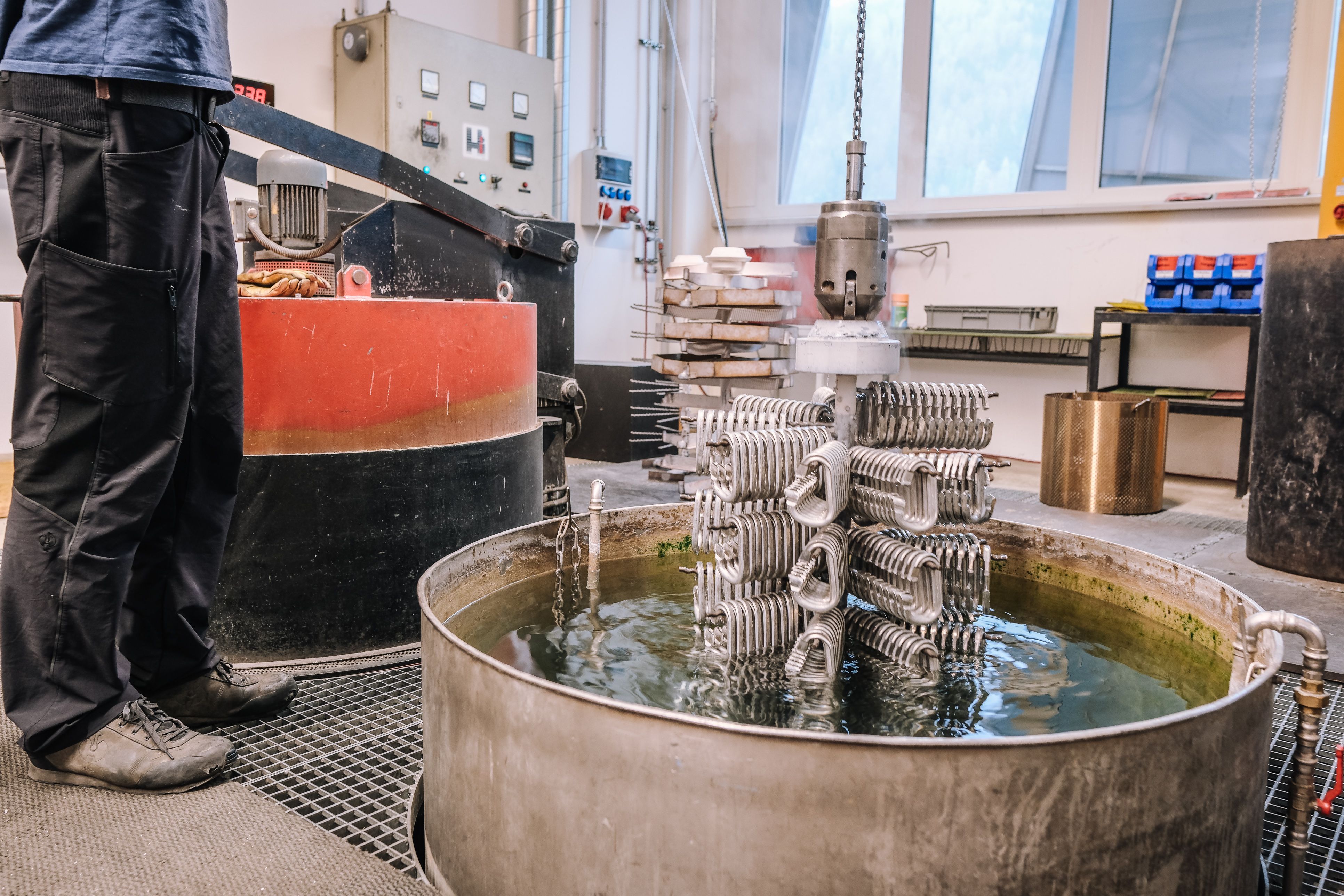
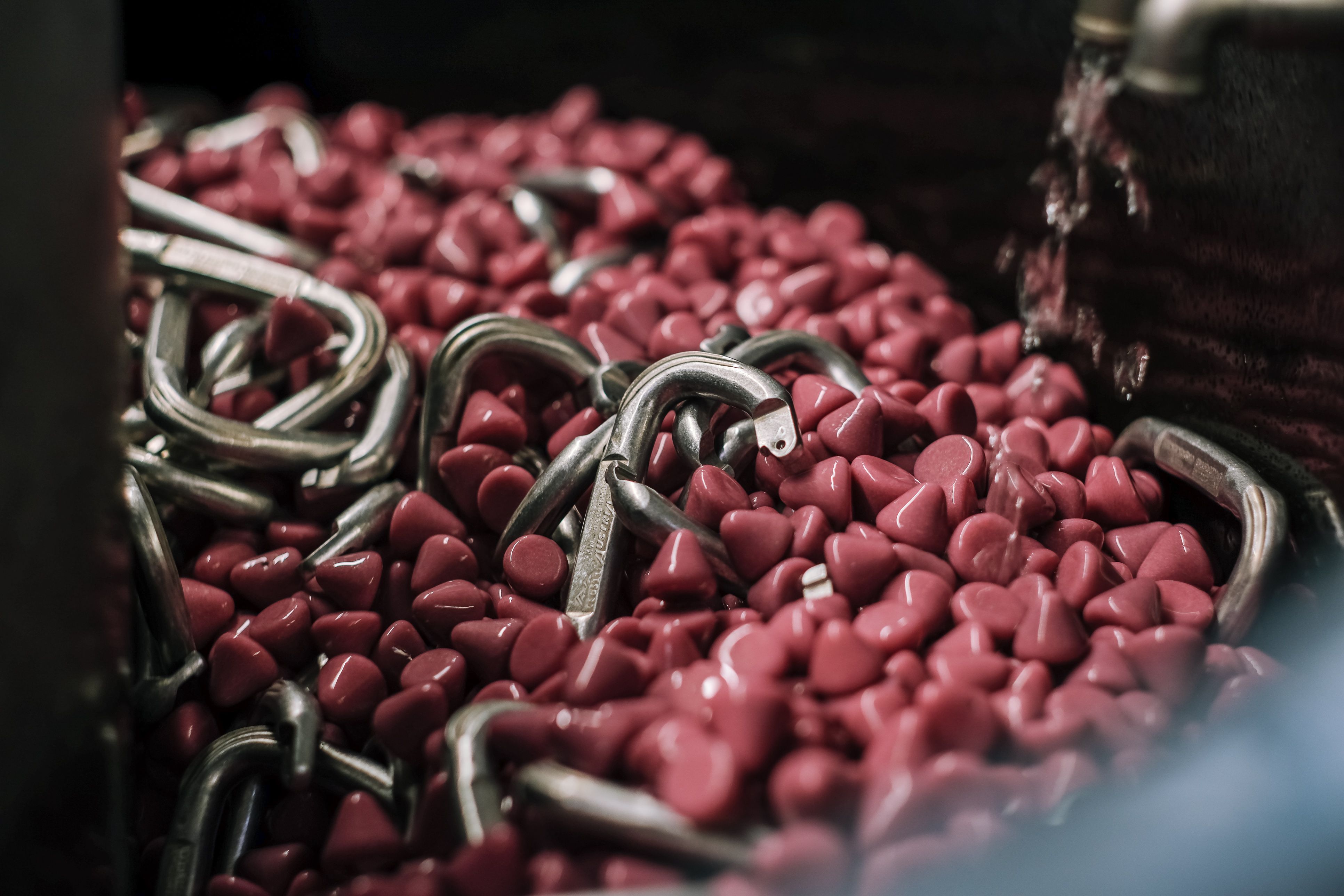
If the blanks pass the tests, they move on to the finishing stage:
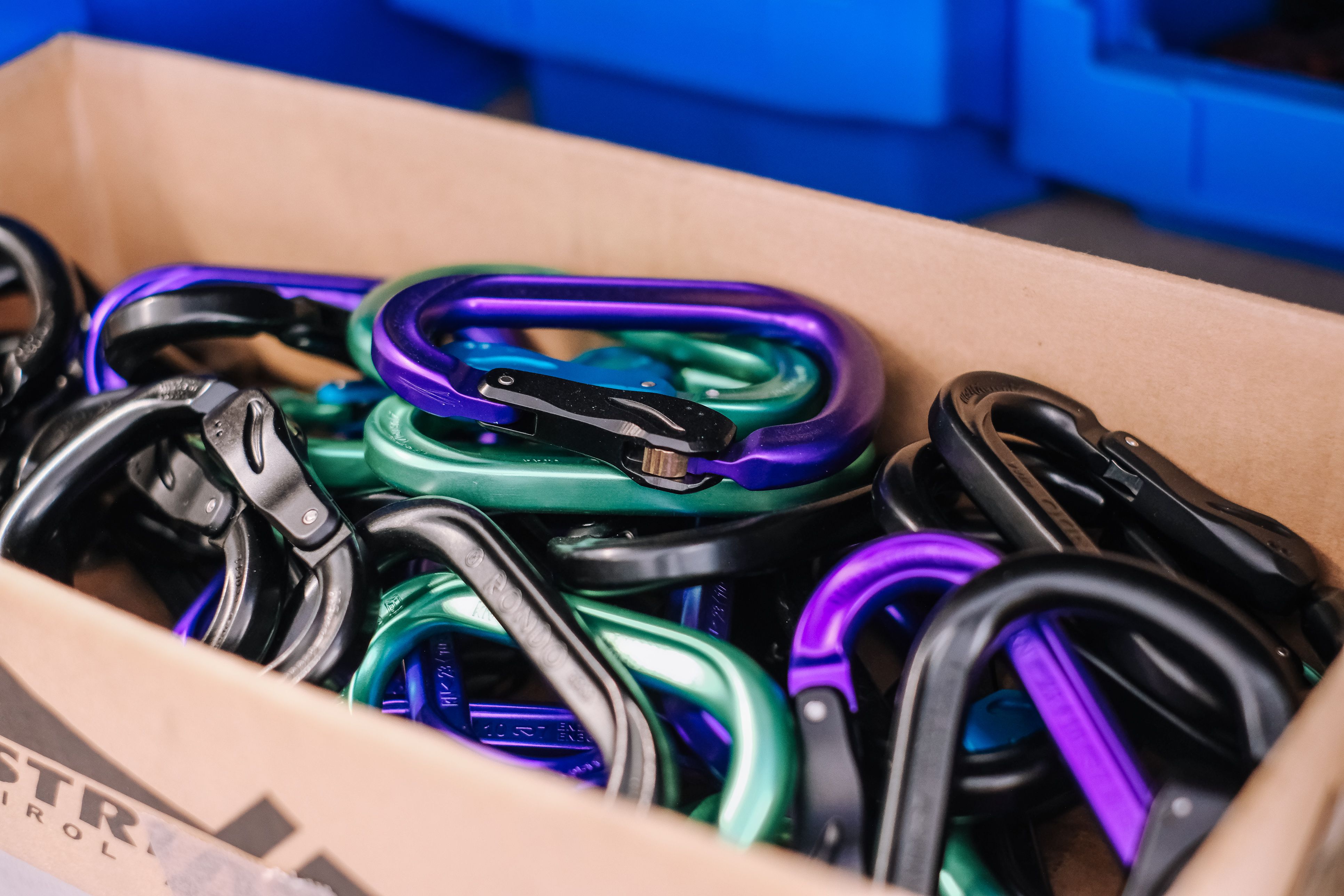
Once all these steps have been completed, the carabiner leaves the factory for the first time: the anodising is carried out by an external contractor. It is there that the aluminium parts, which up to that point have been grey, are given their final colour. Back in Fulpmes, they are ready for assembly.
Alongside the carabiner bodies, the small parts are also being produced in-house:
They are usually machined directly from the bar and come out of the machine virtually ready for use.
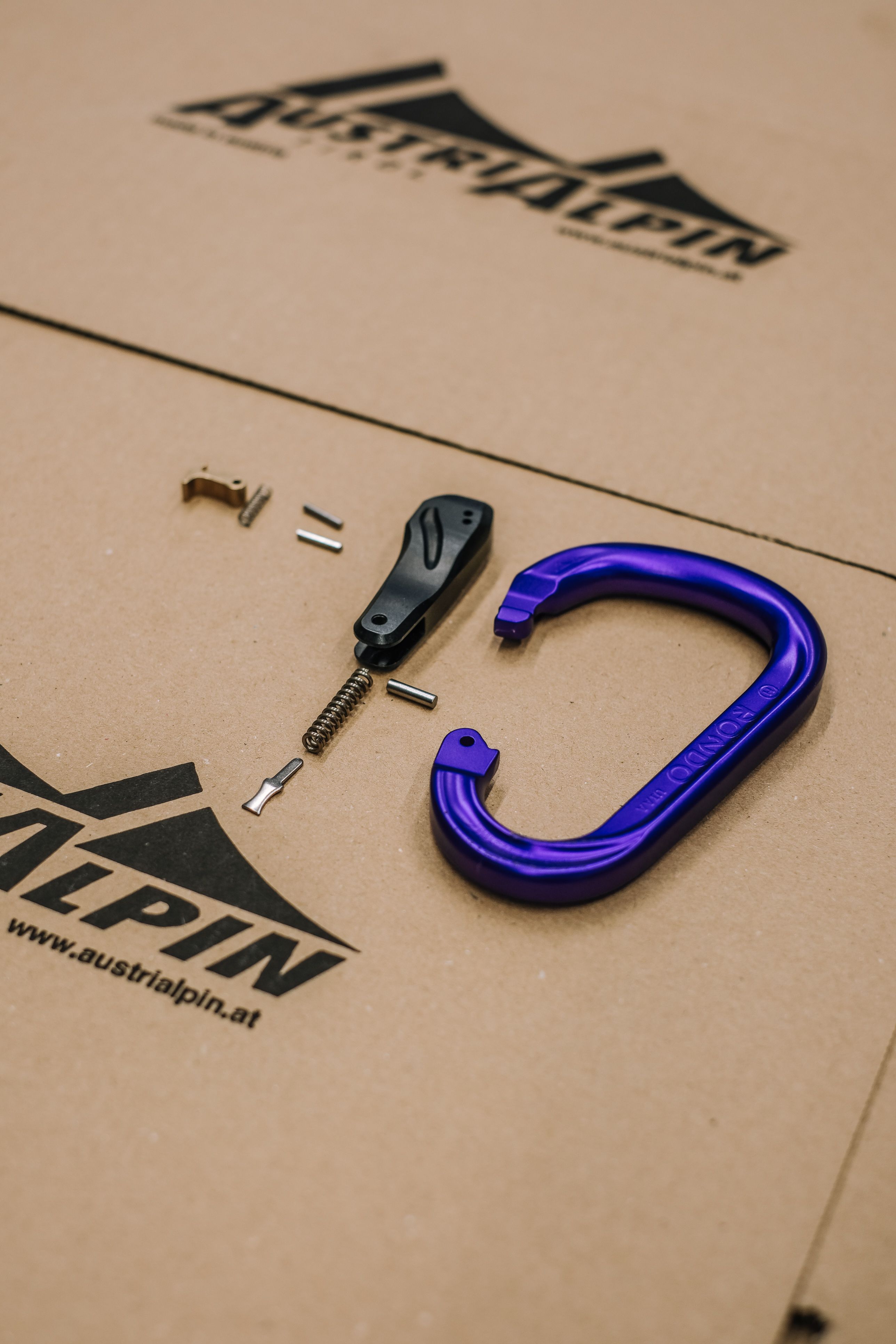
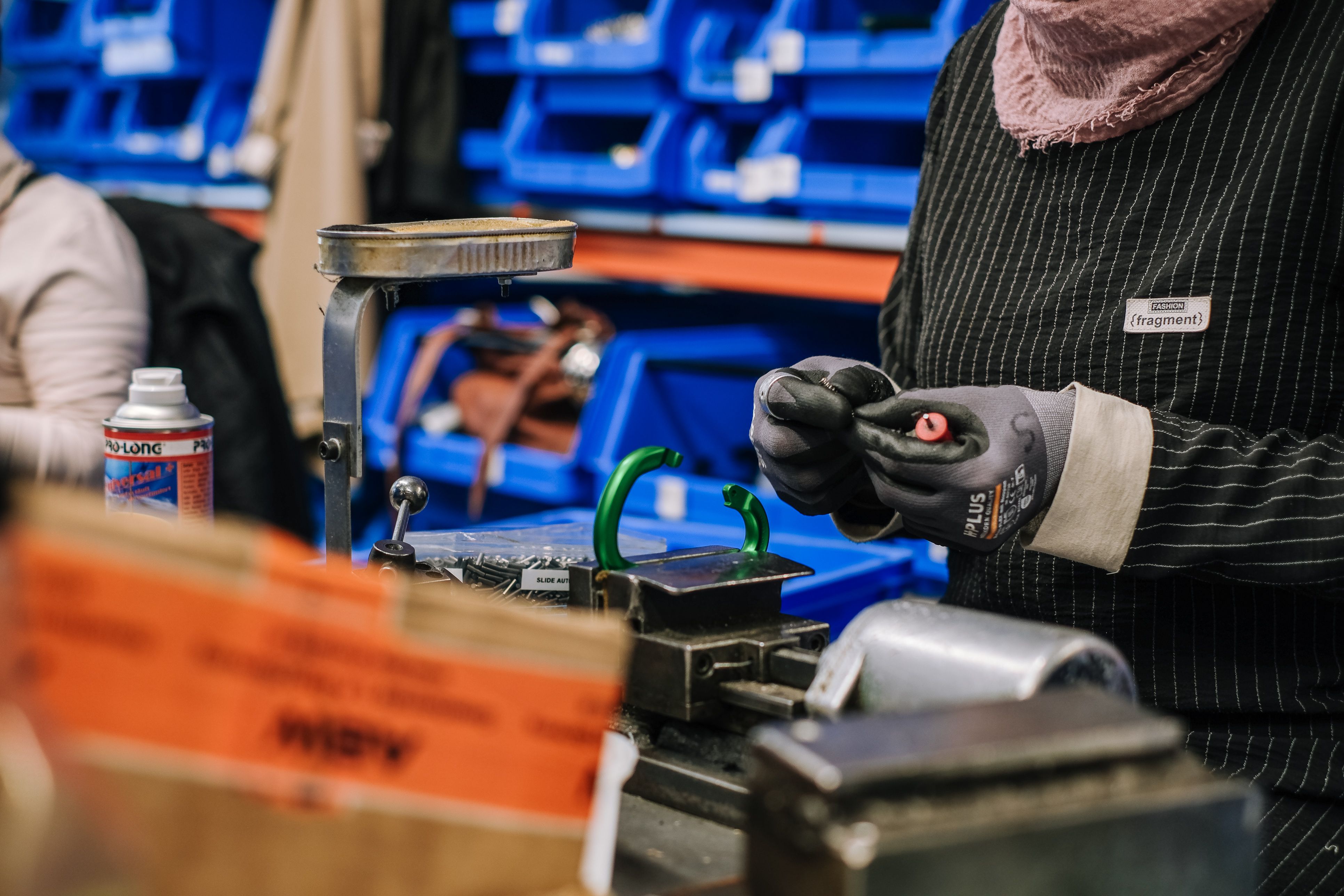
That leaves the final step: bodies, gates and pins are assembled. This is also done at AustriAlpin in the Stubai Valley – by hand.
And who would have thought it: here, too, random samples are taken and tested.
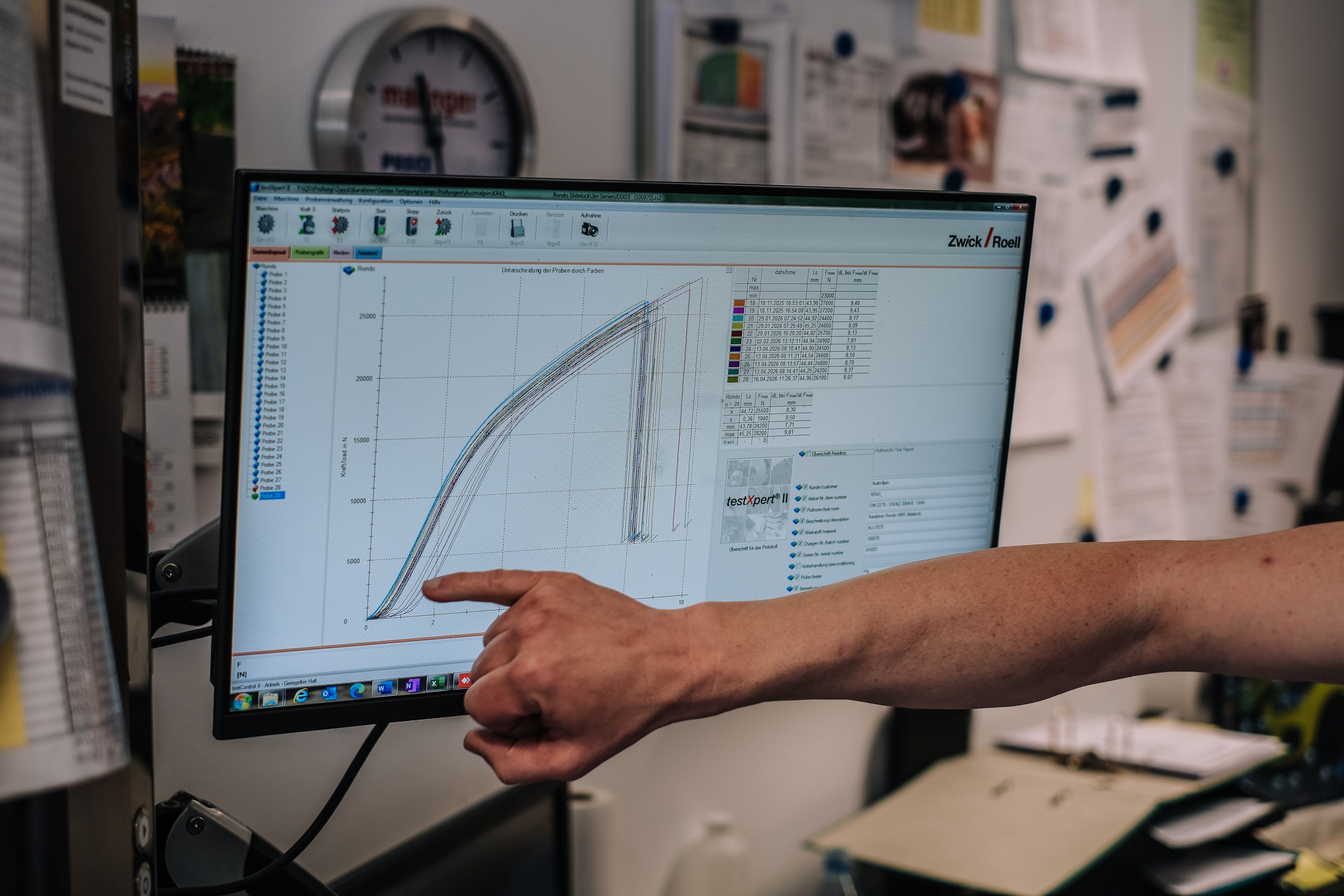
If you add up all the checks, the result is a pretty tight safety net:
According to AustriAlpin, the products are tested in-house and under real-world conditions before being further assessed by independent testing laboratories.
Next time you clip in a carabiner: behind that little piece of aluminium lie eight production stages, several quality control checks and a great deal of handcrafted work from the Stubai Valley. You can find out more about carabiners and the rest of the range directly from AustriAlpin.
AustriAlpin is a business partner of Climbers Paradise.
Tips & Safety
Would you like to know more about climbing safety? Click here for our safety tips.

