
12 effective climbing balance exercises
Prevent injuries, correct imbalances and climb more effectively in the long term

Poor posture, sore elbows or tingling fingers – many climbers are familiar with these warning signs. Often, these are not caused by an acute injury, but by a creeping problem: muscular imbalances resulting from one-sided training.
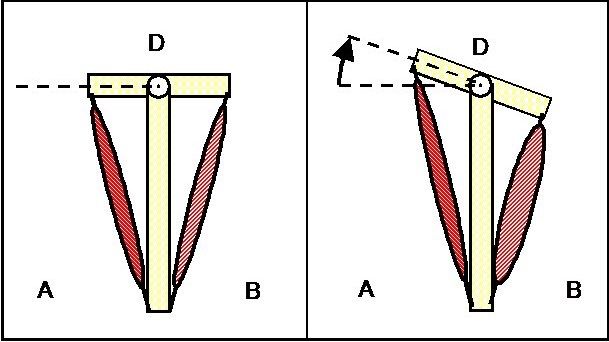
Climbing primarily strengthens the pulling muscles, finger flexors and core stability. What is often neglected, however, are the antagonist muscles – that is, the muscles that ensure stability, joint health and long-term resilience.
This is precisely where compensatory training comes in: it is not an ‘extra’, but a central component of a sustainable climbing training programme.
Ideally, the opposing muscle groups should be trained at least once a week. If you experience initial symptoms or notice clear weaknesses, two to three sessions a week are advisable.
The exercises can be incorporated flexibly:
Above all, consistency is key – not maximum intensity.
Muscular imbalances always arise when individual muscle groups are subjected to greater strain over time than their opposing muscles. Furthermore, repetitive everyday movements (e.g. working at a computer) exacerbate these effects.
The result:
Stretching alone is not enough. The key is to actively strengthen the antagonist muscles.
A simple but effective exercise for the finger extensors.
How to do it:
Take a Theraband or another tautly stretched elastic band and push it outwards with your fingers.
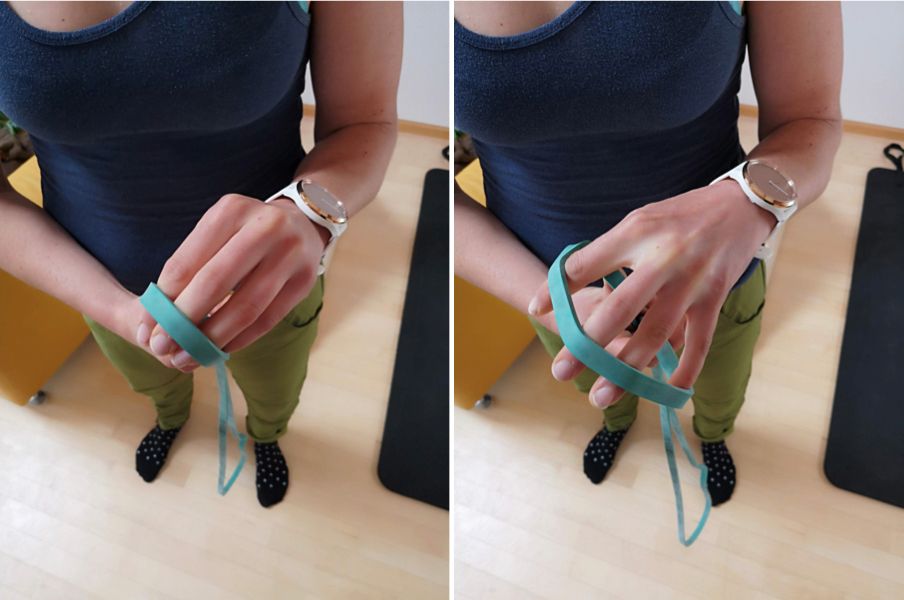
Specifically strengthens the extensor muscles of the fingers.
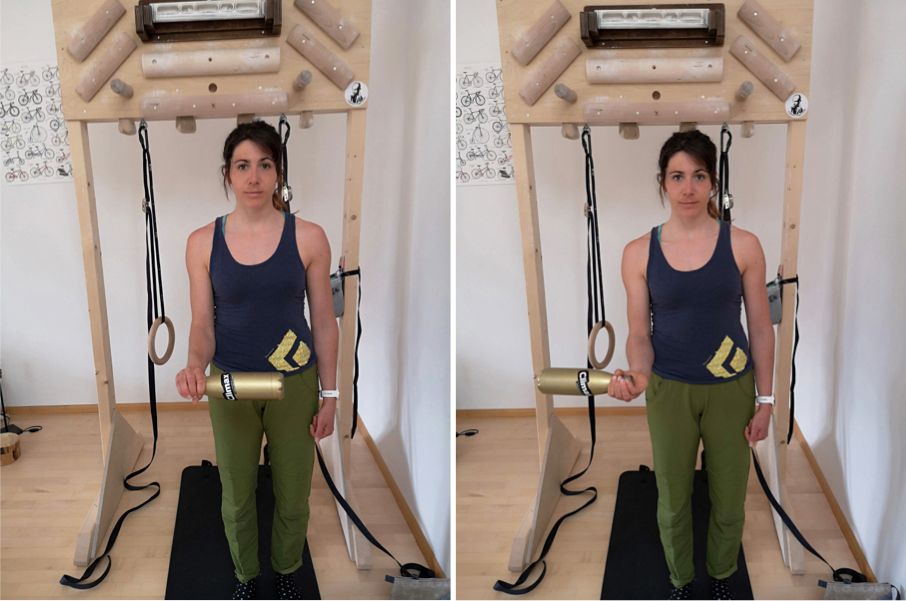
How to do it: Hold your arm at your side and bend it at the elbow to a 90-degree angle. Now stabilise the weight. Then slowly lower your wrist and extend it straight back up again.
If it’s too difficult to keep it straight, rest your forearm on a table or, whilst seated, on your thigh. Make sure the weight isn’t too heavy.
Note: Strictly speaking, the downward movement is not a balancing exercise, but rather an additional strengthening of the antagonist muscle. The pure balancing exercise begins in the neutral wrist position (wrist pointing straight forwards) and the movement is directed upwards only. Return to the starting position until the wrist is back in a neutral position.
Guideline: 10–15 repetitions, 3 sets
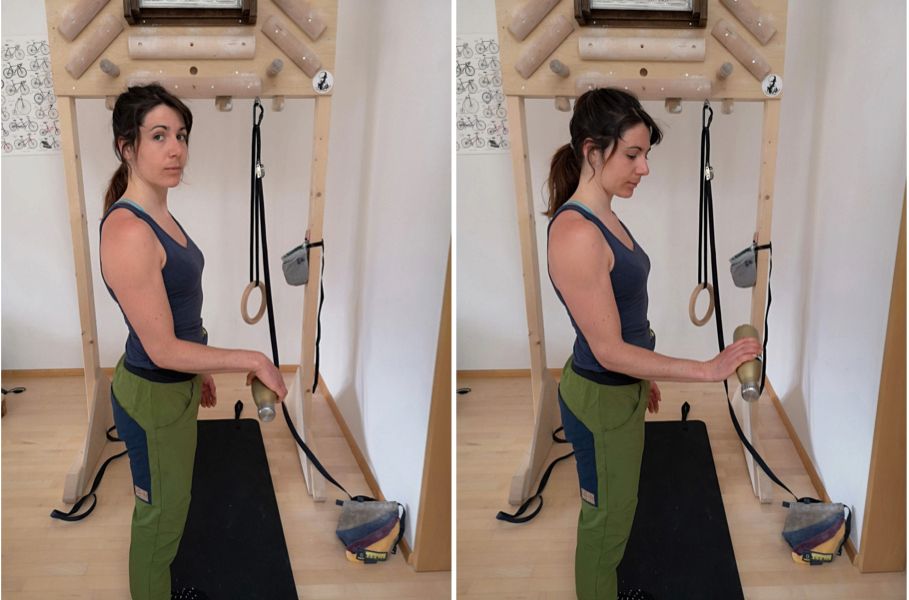
Promotes stability and controlled rotational strength in the forearm.
How to do it: Hold your arm at your side and bend it at the elbow to a 90-degree angle. Now slowly rotate the weight to the right and then through the centre to the left.
If it’s too difficult to keep your body straight, rest your forearm on a table or, whilst seated, on your thigh. Make sure the weight isn’t too heavy.
Guideline: 10–15 repetitions, 3 sets
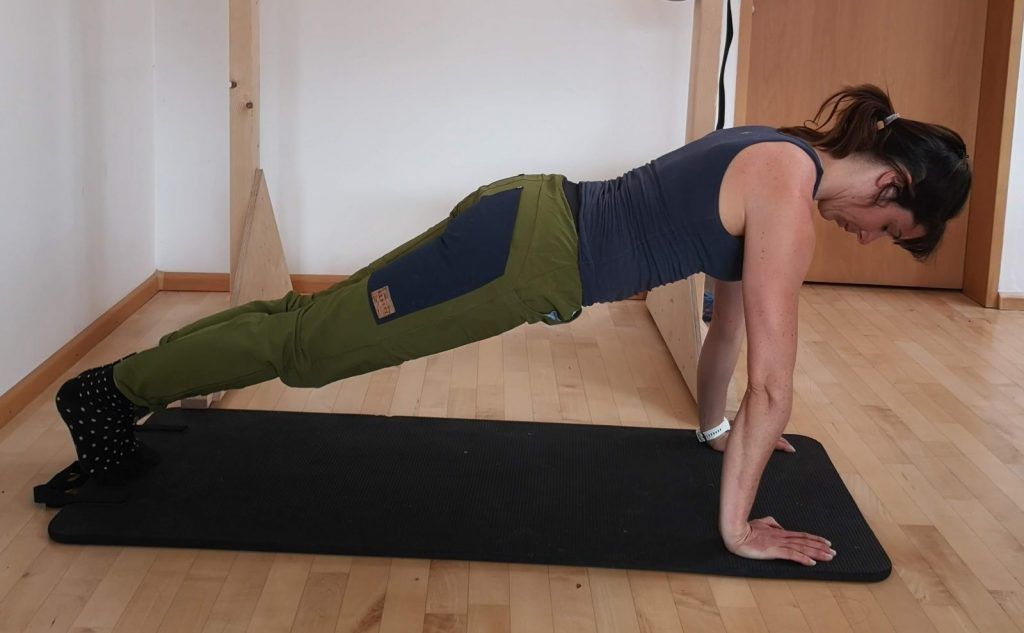
The classic exercise for the chest, shoulders and core stability.
Technique: Maintain a straight body line, lower and push up in a controlled manner. Variations are possible depending on your fitness level. Push-ups train all the major climbing-specific antagonist muscles (chest, arm and shoulder muscles, as well as overall body tension). There are countless variations of this exercise, which can be adapted perfectly to different strength levels.
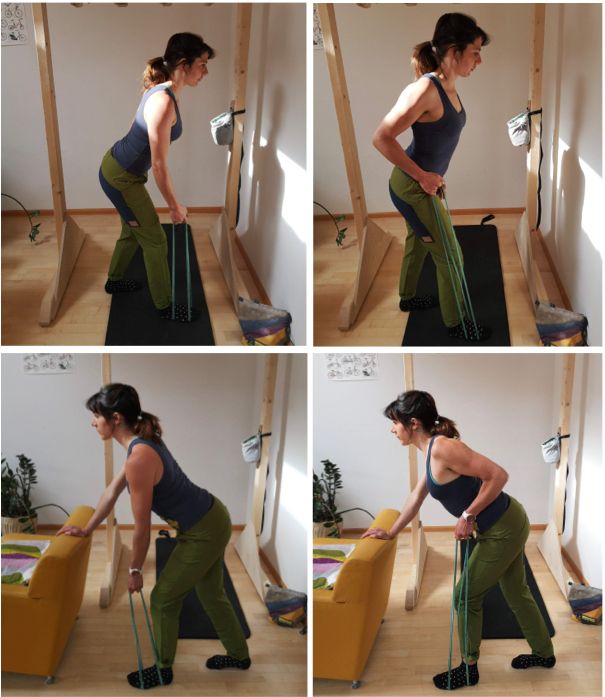
Strengthens the upper back muscles, including many important antagonists, particularly the trapezius and rhomboid muscles, and improves posture. Helps prevent a hunched back
How to do it: Start with your arm straight and then move it backwards and upwards. Your shoulder should remain stable in the starting position. It is easier to stay stable if you hold onto a chair for support.
Guideline: 10–12 repetitions, 3 sets
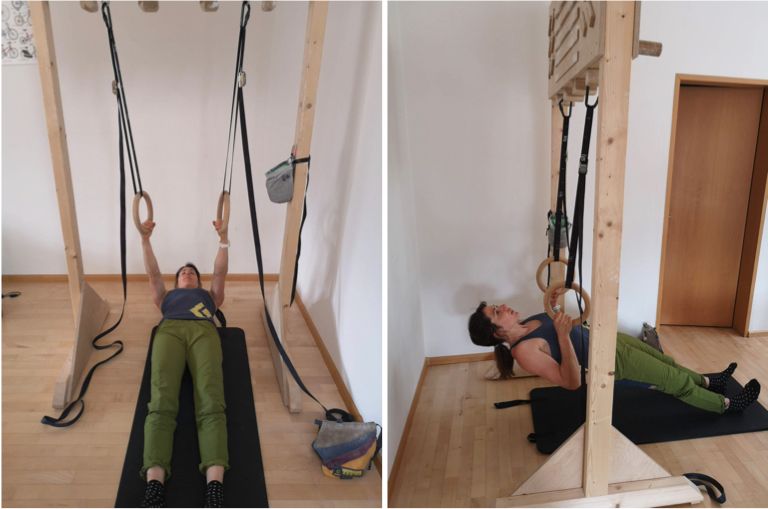
Strengthens the core and back muscles through instability.
How to do it: Start with your arms straight on the floor. Engage your core and lift your back and legs off the floor, then pull yourself up using both arms. Keep your elbows close to your body throughout the movement. Hold briefly in the top position, then slowly lower yourself back to the starting position.
Guideline: 10–15 repetitions, 3 sets
Trains shoulder stability and rotator cuff control.
These exercises work in exactly the opposite direction to the stresses of climbing, creating a balanced relationship between the shoulder and back muscles.
How to perform the lateral raise: Stand upright and engaged; now move your straight arm upwards and backwards in a slight elliptical motion, at least as high as your head. The further you can move your arm backwards without changing the position of your shoulder, the greater the strengthening effect. However, make sure you do not rotate your body along with the movement.
Guideline: 10–15 repetitions, 3 sets
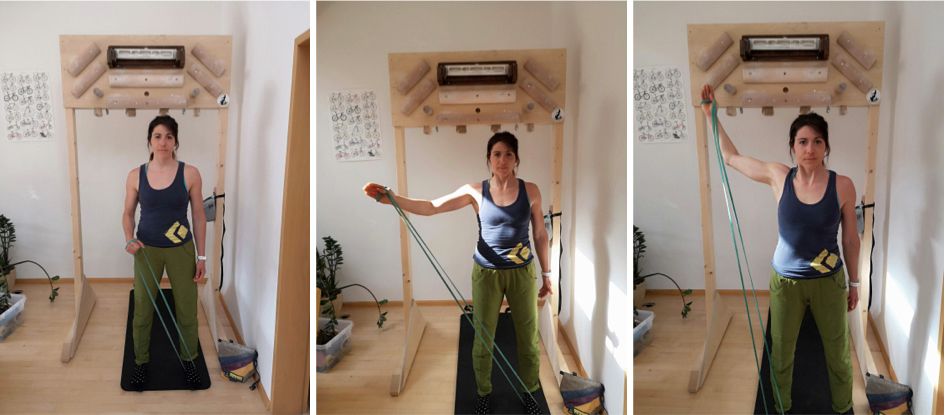
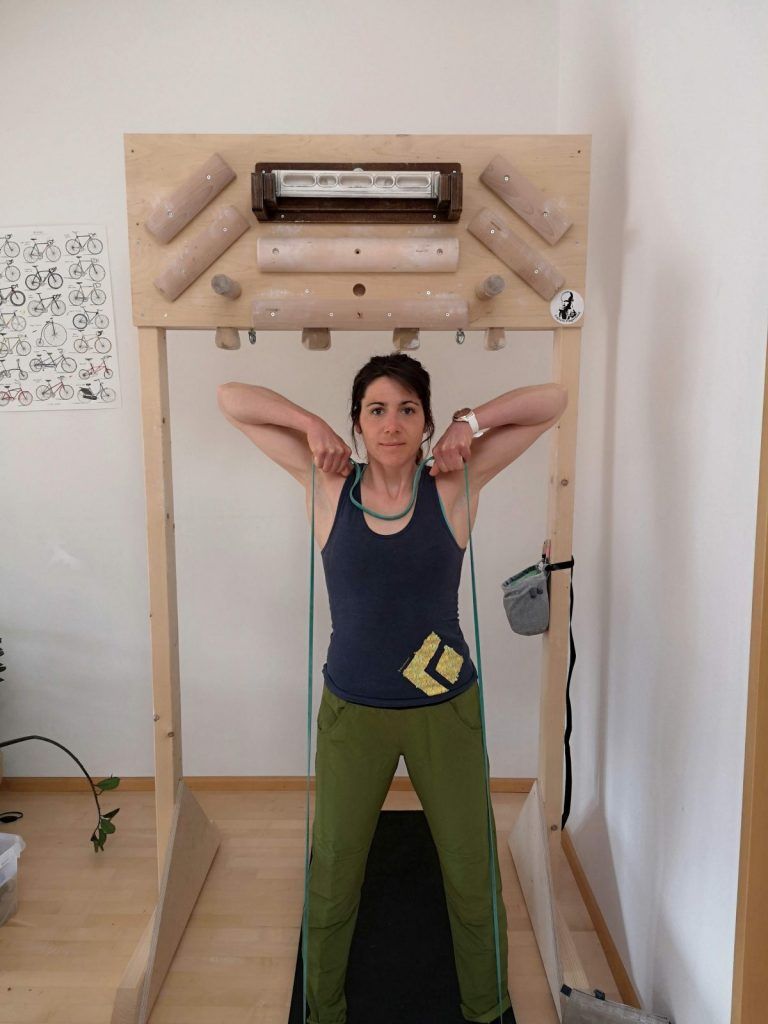
How to perform the front raise: Stand upright and engaged, holding the TheraBand with your arms stretched downwards. Lift the TheraBand upwards in front of your body, bringing your fists towards your chin; your elbows should lead the movement.
Guideline: 10–15 repetitions, 3 sets
Essential for shoulder health when climbing.
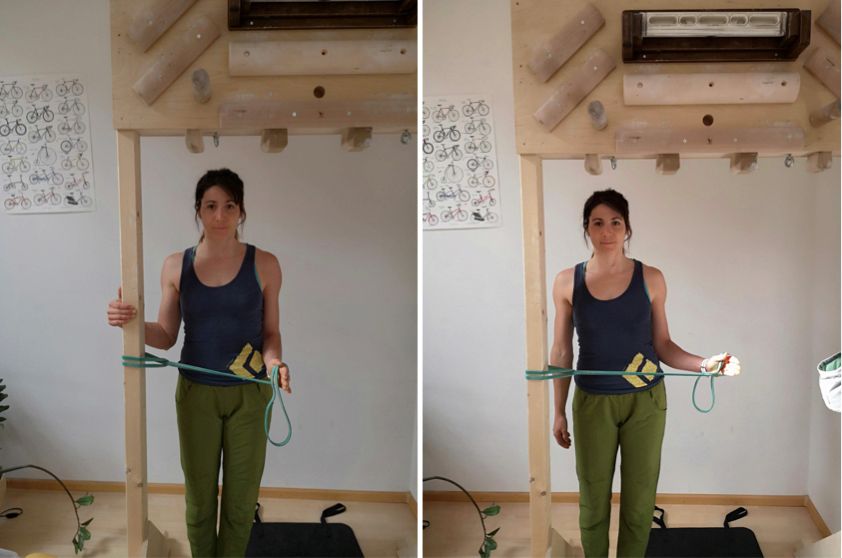
How to do it: Hold the Theraband relatively taut, straight in front of your body, and rotate your arm outwards and back again. Keep your elbow close to your body throughout the entire rotation.
Guideline: 10–15 repetitions, 3 sets
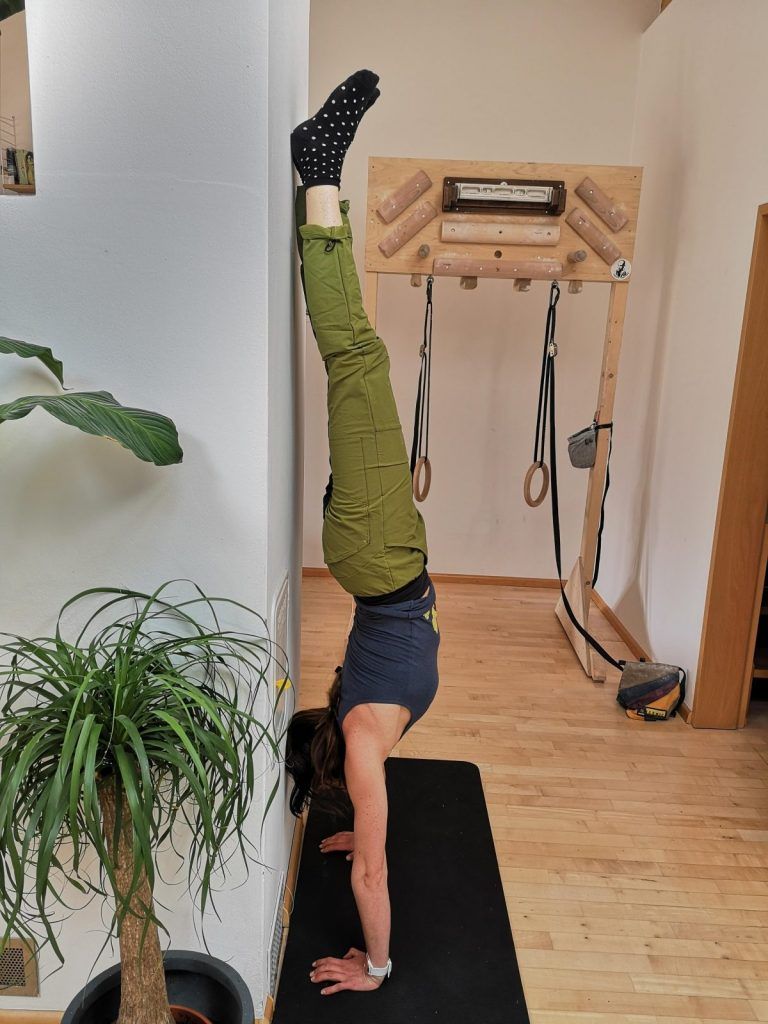
A full-body exercise for the shoulders, balance and coordination. Primarily works the antagonists of the shoulders and triceps.
How to do it: Place your hands on the floor about 30 cm apart, then push firmly off the floor so that your feet fall against the wall; tighten your core and pull your pelvis inwards and upwards – this will prevent you from arching your back. Push yourself upwards with all your strength from your shoulders. Keep your gaze directed towards the floor.
Hold for: 20–30 seconds, 3 sets
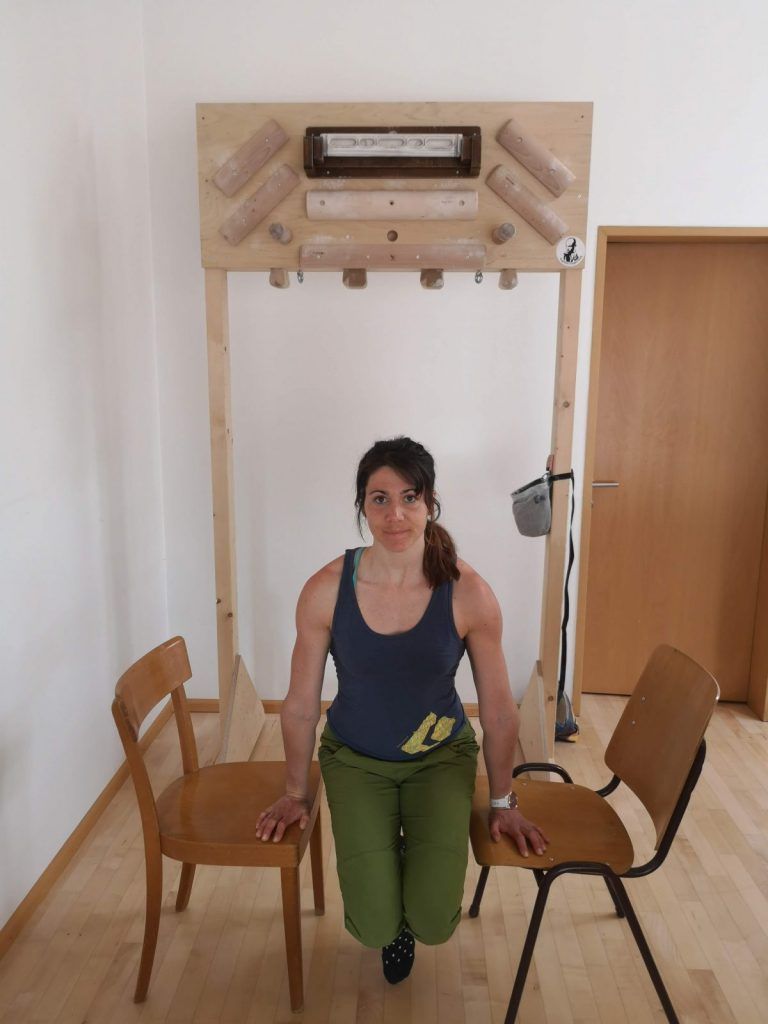
Strengthens the shoulder girdle and core.
How to do it: Support yourself on two chairs or rings. Now push yourself firmly upwards from your shoulders and hold the tension for about 60 seconds, using the strength of your shoulder and scapular stabilisers. Alternatively, this exercise can be performed on rings, as the instability involved provides additional training for core stability and the back.
Hold: approx. 60 seconds, 3 sets
Targeted activation of the shoulder blade muscles.
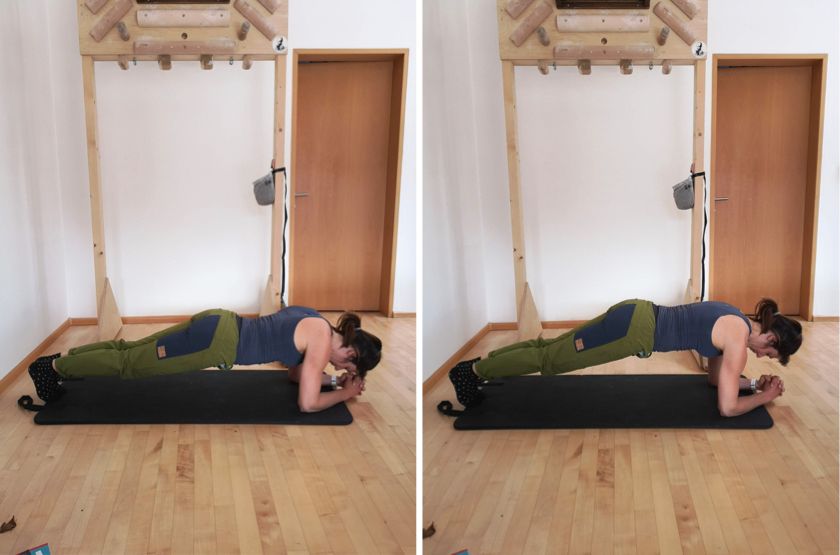
How to do it: Get into the plank position, making sure to maintain body tension throughout the exercise. Now pull your shoulder blades inwards and downwards – hold briefly – and push yourself back out again.
Guideline: 15 repetitions or 60 seconds
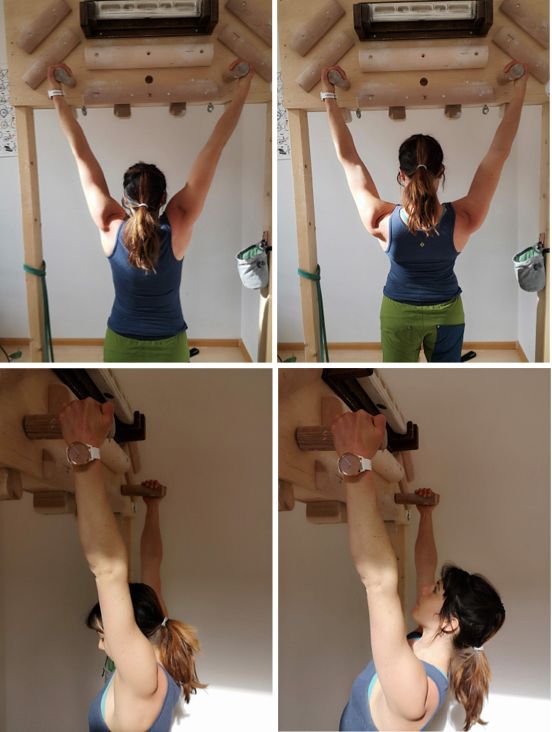
An important basic exercise for active shoulder control on the hangboard.
How to do it: Same as above, but this time hanging with your arms fully extended. Pull your shoulder blades inwards and downwards – hold the position briefly – then slowly slide back out.
Guideline: 10–15 repetitions, 3 sets
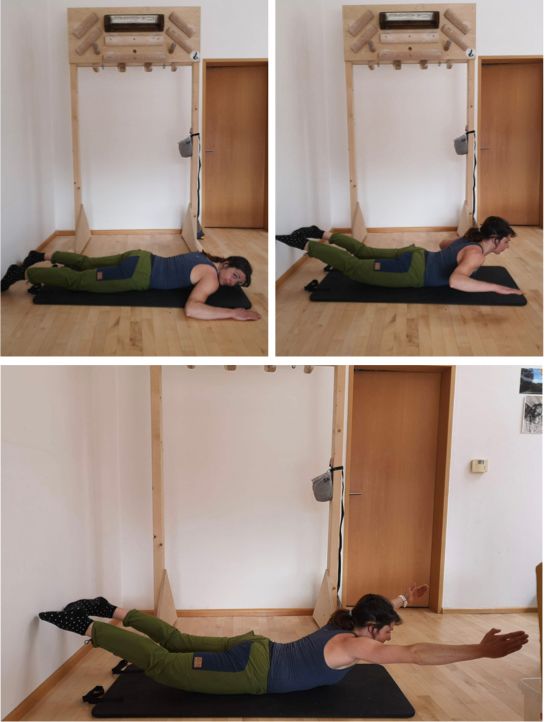
Strengthens the lower back and posterior muscle chain.
How to do it: Lie flat on your stomach, then lift your arms and legs and tense your whole body. The intensity of the exercise increases if you extend your arms or, alternatively, hold a weight in your hands.
Alternately rocking your legs back and forth also makes the exercise more challenging.
Hold: 40–60 seconds, 3 sets
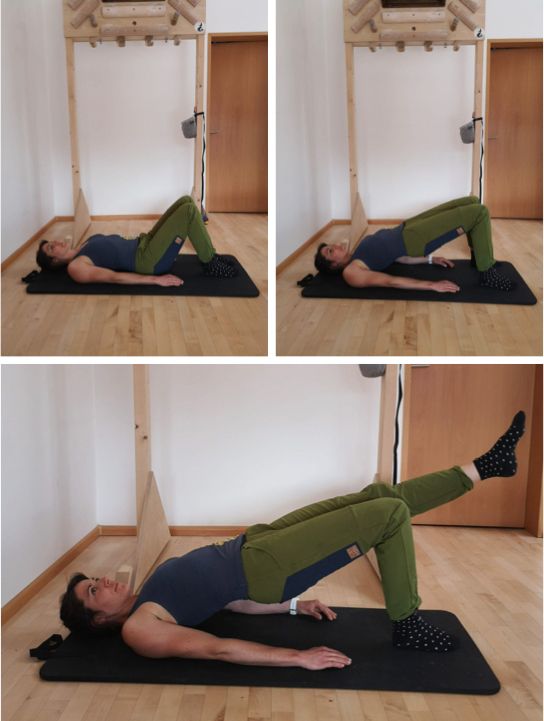
Strengthens the lower back muscles and core.
How to do it: Lie on your back and bend your knees. Now lift your pelvis upwards, keeping your muscles engaged. Alternatively, you can extend one leg upwards or stand with your feet on a wobble board.
Hold: 40–60 seconds, 3 sets
Balance training is not a supplementary programme, but the foundation for long-term performance in climbing. By regularly strengthening your opposing muscle groups, you significantly reduce the risk of injury whilst improving stability, control and body awareness on the wall.
In short:
climbing stronger starts with better balance.
Tips & Safety
Would you like to know more about climbing safety? Click here for our safety tips.

