Rock’n’Roll Mountain Store – passion and that extra bit of bite

Markus Bendler, a professional climber and two-time Ice Climbing world champion, runs the Rock’n’Roll Mountain Store, a mountaineering shop, in Kirchdorf in Tirol. In an interview, Stephan Mitter discovered the secret to his success, how priorities shift, and that there are certainly parallels between sport and business.
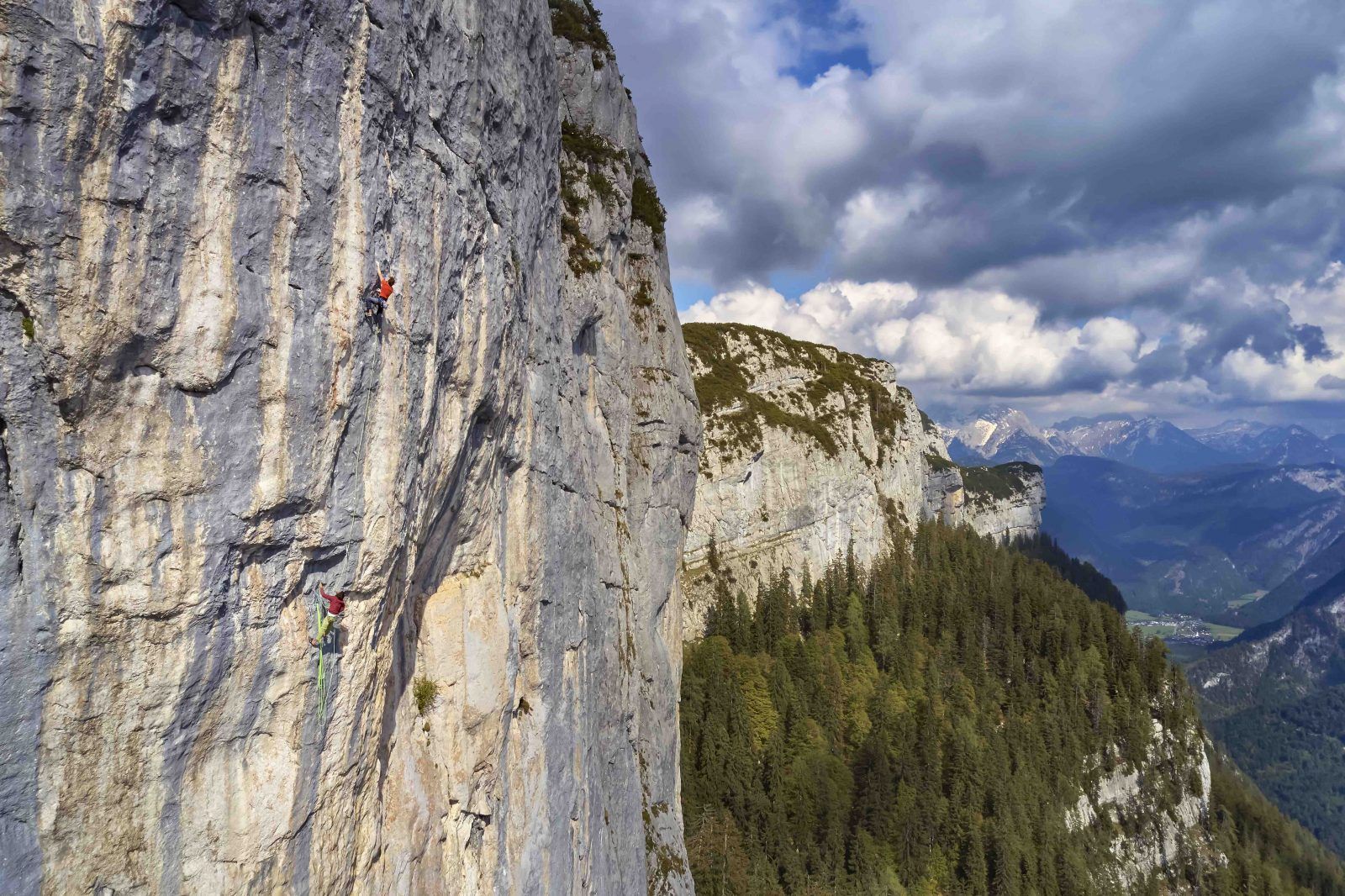
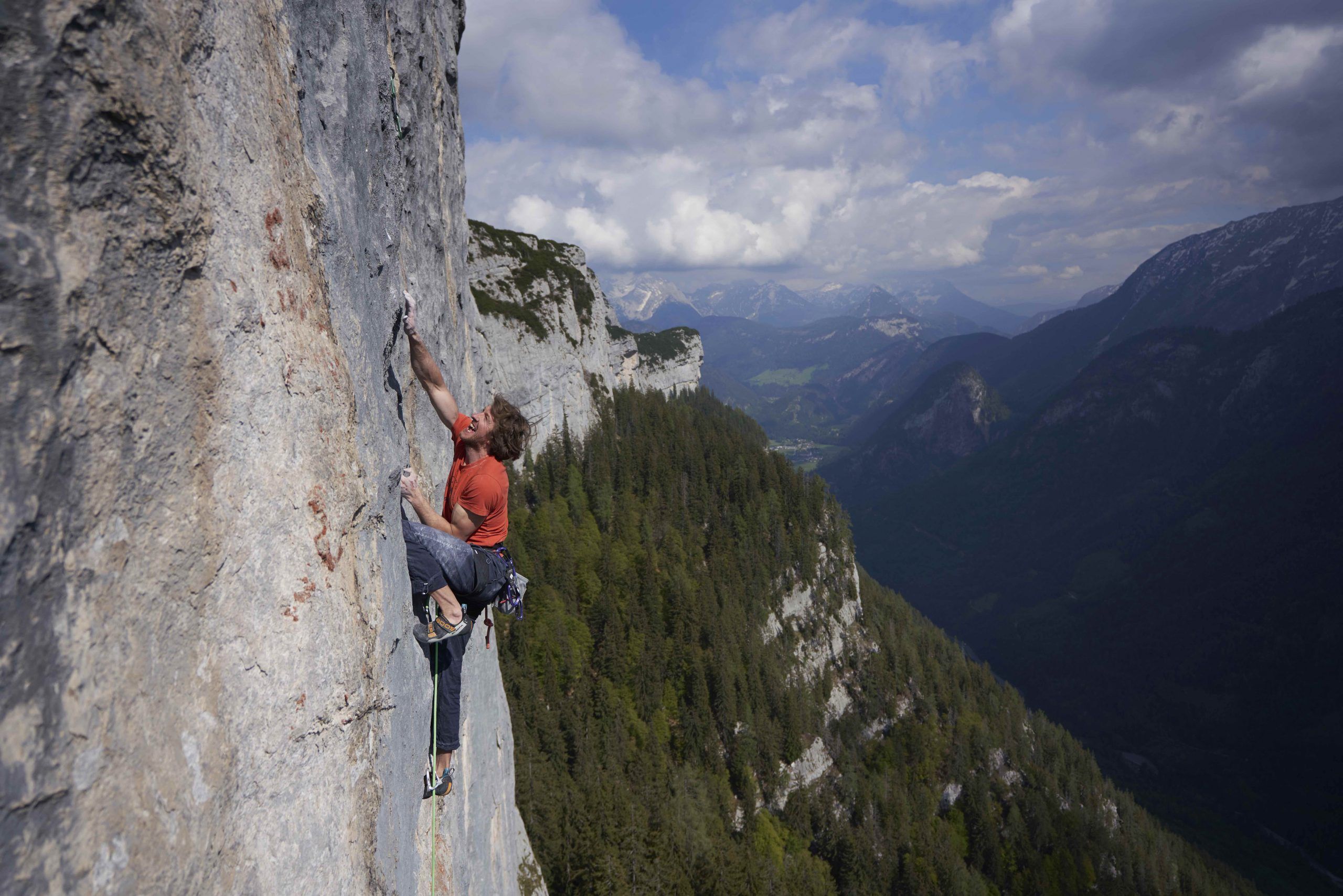
Markus Bendler klettert die Route A Hoibe an der Sommerin auf der Loferer Alm

From the view of the Wilder Kaiser to the Ice Climbing World Championships

Markus Bendler, born in 1984, grew up in Schwendt in the Tirolean Unterland, where he still lives today – with a daily view of the north face of the Wilder Kaiser.

Interview: Stephan Mitter, Text: Christina Schwann

It came as no great surprise that he took up climbing around 25 years ago: his father’s brothers were all passionate mountaineers or climbers, and he and his brother went on Hiking Tours in the Kaiser Mountains with their father from a very early age. The trips towards Stripsenjoch in particular are likely to have sparked his fascination.

Markus Bendler at a glance

  • Born in 1984, lives in Schwendt in the Tirolean Unterland
  • Started climbing at the age of eleven in the St. Johann Alpine Club’s climbing training group
  • At the age of 15, became the youngest climber at the time to complete ‘Big Foot Man’ (8b+/c) at the Schleierwasserfall
  • Ice & Mixed: First ascent of ‘Eisbär GI 13’ on the Pitztal Glacier – considered the most difficult ice climb in the world
  • Competition: several World Cup victories in Ice Climbing; World Champion in 2007 and 2009
  • Trained as: a baker – “in winter I was a professional; in summer I worked to earn my living as a professional”
  • Today: Rock’n’Roll Mountain Store in Kirchdorf in Tirol
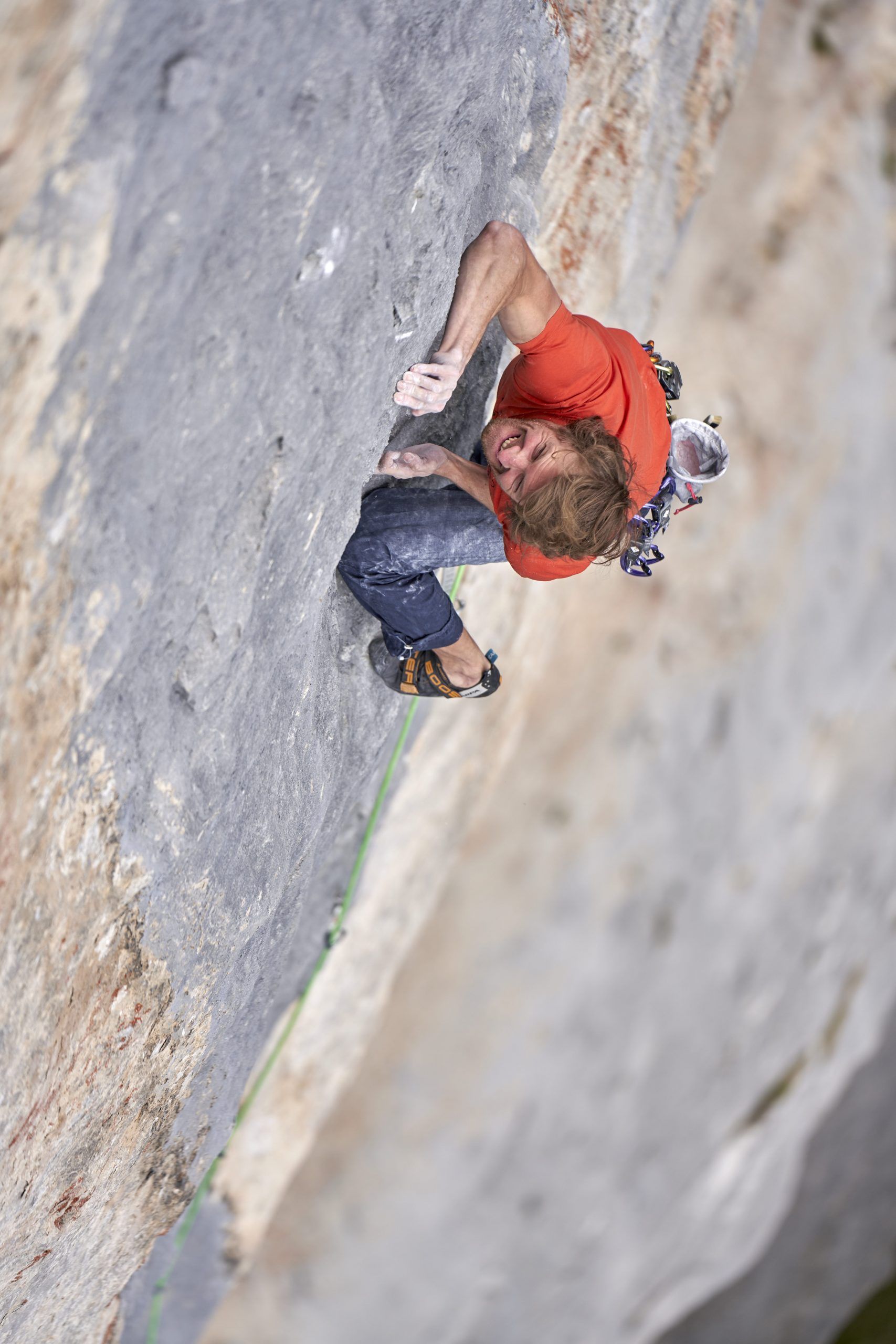
Markus Bendler on the overhang of the ‘A Hoibe’ route on the Sommerin

‘You’re in it together’ – the path to the ice

You started competing in Ice Climbing quite early on. How did that come about?

It was the trend back then. When I was about 15, that was exactly the time when competitive Ice Climbing really took off. We were all quite keen rock climbers back then. Even back then, our approach was to move away from competitive climbing towards rock climbing – and the next challenge in winter was simply Ice Climbing. Hias Schiestl and Guido Unterwurzacher also had connections to the competitive Ice Climbing scene – that is, to the first events on the Pitztal Glacier Ski Resort or the Salomon event, which were emerging at that time. And we – well, we were ‘caught up in it all’.

Weren’t rock climbing or indoor wall competitions on the agenda back then?

Yes, they were too. In bouldering, for example, I took part in the World Championships in Chamonix, though I was already 18. Sport climbing competitions and Ice Climbing always ran in parallel. When it came to endurance, I wasn’t as good at sport climbing – Bouldering suited me better. It has to be said, though, that our training opportunities were limited. The Tivoli in Innsbruck did exist, mind you, but at that time I was starting my bakery apprenticeship, so it was difficult to keep up. It was different with Ice Climbing: I was able to create my own training opportunities, and the situation was pretty much the same internationally. Ice Climbing simply suited me better, and the competition was less intense – compared to the huge numbers involved in sport climbing.

Did you turn professional after your bakery apprenticeship?

Well, actually, I was always more of a semi-professional. After my apprenticeship, I joined the Austrian Armed Forces and then worked in a bakery for a year. But eventually, I decided to give a professional career a go. After just a year, however, I realised that it wasn’t financially viable. So I started working part-time for a climbing wall company as a self-employed contractor – on a monthly basis: in winter I was a professional, and in summer I worked to earn my living as a professional.

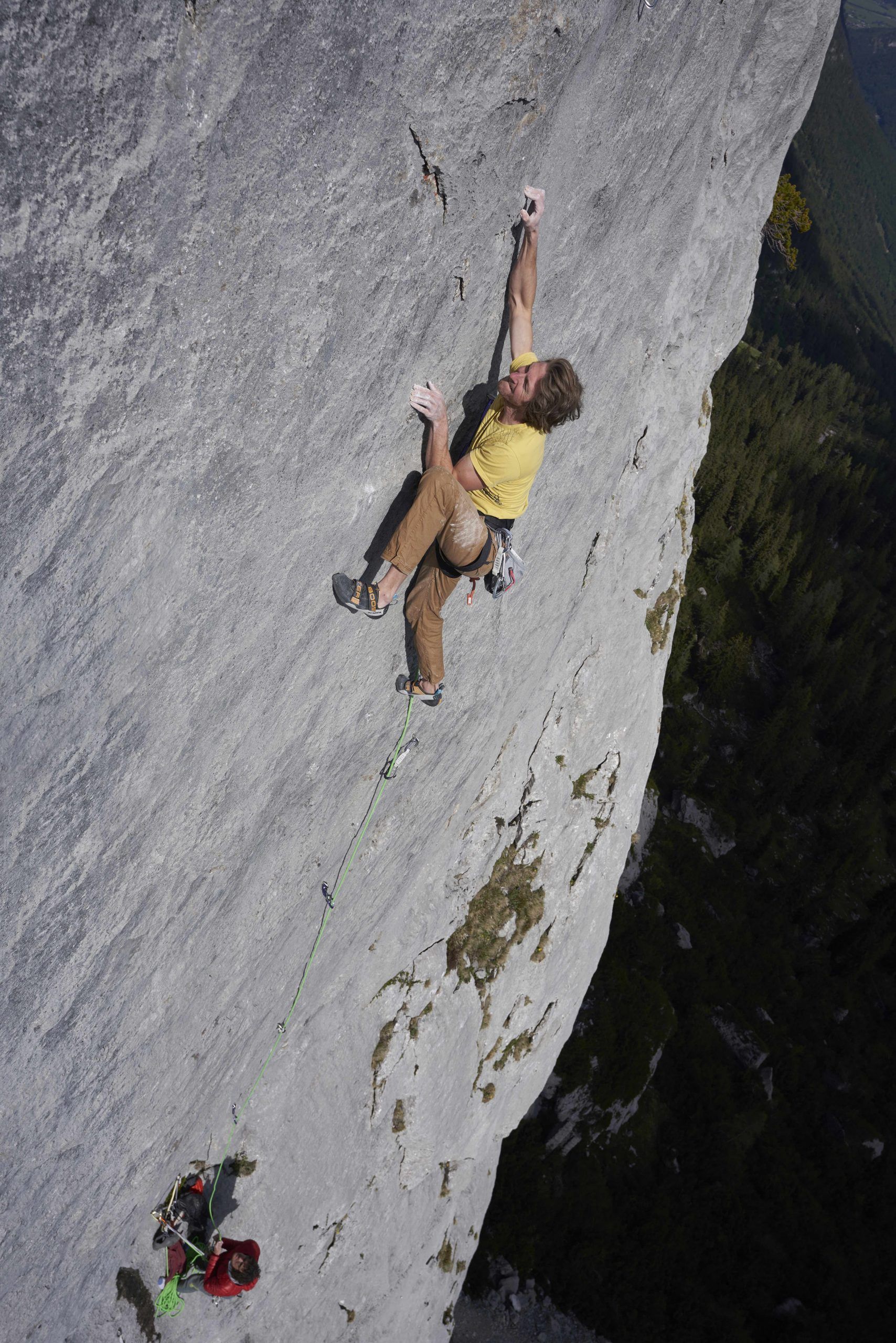
Markus Bendler on the fifth pitch of ‘Woher Kompass’ on the Wieslochpfeiler
Climbers on the Wieslochpfeiler on the Waidringer Steinplatte

Tirol’s best climbing areas on your doorstep

From where you live, you have a direct view of the Kaiser. Did you also find the Wilde Kaiser and the Steinberge interesting in the summer?

Yes, they certainly were. We’re lucky enough to have what I consider to be Tirol’s best climbing areas right on our doorstep – whether it’s sport climbing or alpine climbing: starting with the Waidringer Steinplatte, with eight kilometres of top-quality Verdon rock. Historically, the Wilde Kaiser is probably Tirol’s best-known climbing area, and with the sport-climbing areas all around it, such as the Schleierwasserfall and the Kufstein climbing areas, we’ve got some really good options.

What do you think of Climbers Paradise? When did you first become aware of the initiative locally?

To be honest, I hardly noticed the platform at first. It’s only recently that I’ve really taken notice of the projects that Climbers Paradise helps fund. The collaboration with the tourism associations is a huge boon for climbing in Tirol. The more people there are out and about, the more problems crop up. What’s needed here is a mediator or a lobby group. This is much more likely to be found behind the tourism associations and the Climbers Paradise alliance than behind individual climbers or groups. Seen in this light, Climbers Paradise offers good backing.

Furthermore, we business owners benefit from the effective application and marketing. The areas promoted through Climbers Paradise are more popular, receive more visitors and are also more easily accessible thanks to the topos. At the same time, conflicts are resolved – for example, through the provision of car parks, Signposting or rubbish bins. In the past, we were the headstrong climbers who illegally drilled bolts into rock faces. It has now been recognised that climbing has great potential for tourism and is valuable.

All in all, I’d say: as with everything, there are pros and cons, though the benefits clearly outweigh the drawbacks here. Developments cannot be stopped anyway. It therefore makes sense and is important to steer them in the right direction. As a climber who quite likes a bit of peace and quiet, you naturally have to look for other destinations from time to time – ones that aren’t so heavily promoted or are simply inaccessible and challenging.

In the meantime, you’ve also started a family and built a house, but you haven’t put on weight. How do you manage that?

Because I work a lot and have little time to eat. I’m still out and about a lot, though, and I climb in ‘waves’, so to speak. I used to climb five days a week and hardly did anything else. Things have shifted since then: now I go through phases where I’m almost exclusively on my bike – that’s my second summer passion.

In winter, when the snow’s good, I’d rather go on a ski tour than stand in the shade looking for ice. When the conditions are right, I naturally enjoy Ice Climbing too. But I’m particularly busy at work in winter, as that’s now our Peak Season. I simply have far less time for Ice Climbing these days.

“We can deliver” – the secret to success

What makes your business special? What is the secret to your success?

I believe the secret to success is – just as it was with climbing – a bit of fanaticism and a touch of tenacity in consistently pursuing your goals. I’ve taken from sport the attitude of not being satisfied with the status quo, but always looking ahead and trying to improve things. When I walk through the shop today, I find things every day that I could do better.

In terms of square metres, we’re in a very successful position, but we’re bursting at the seams. We don’t just stick to the traditional range of climbing, hiking and ski touring gear; we also look a bit left and right. We’re very successful with cycling clothing – we sell exactly what the cycle shops around us don’t offer.

What makes the shop special:

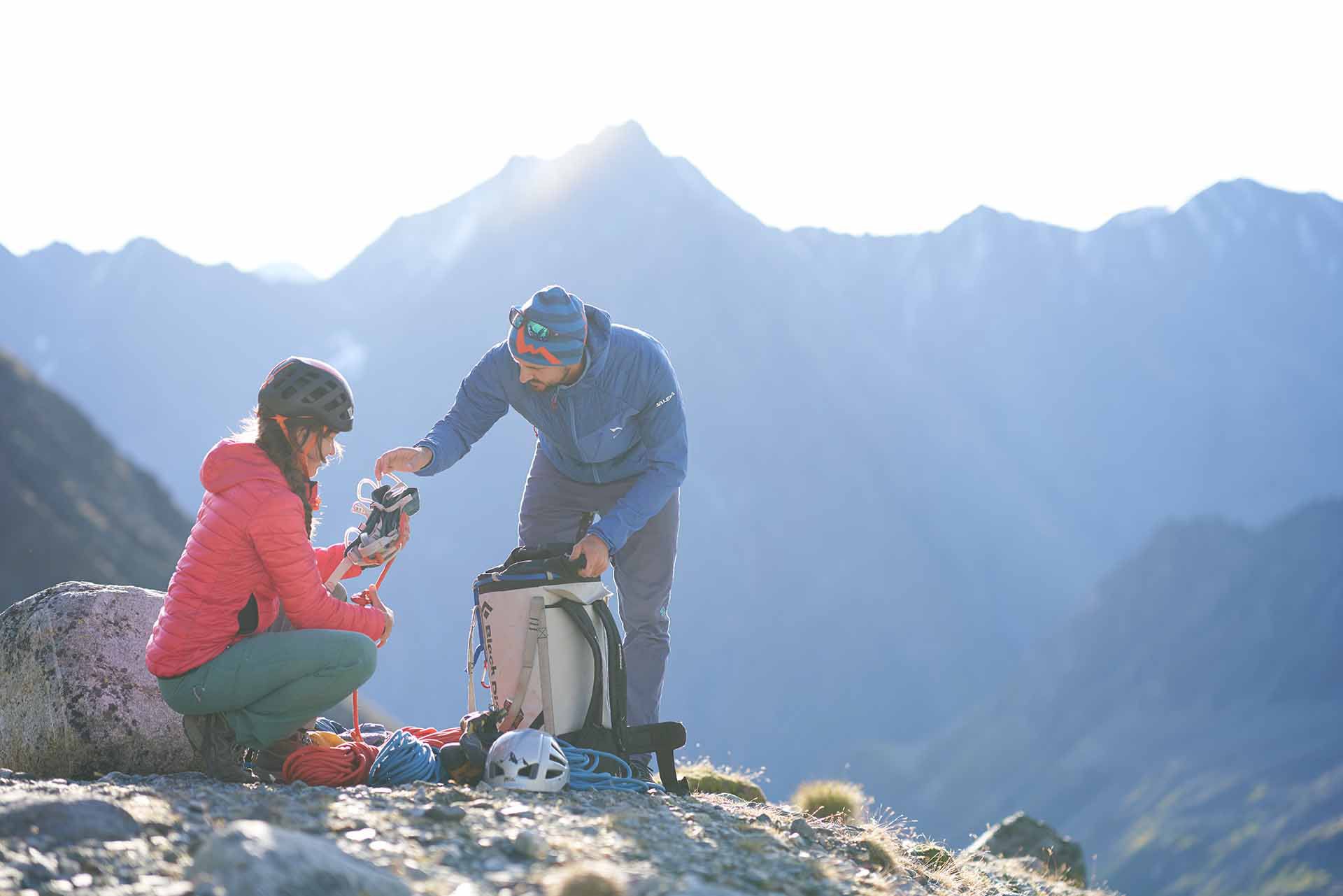
  • Tyrol’s largest selection of climbing gear, apart from the really big chains
  • Stock of over 700 pairs of climbing shoes
  • In winter, every ski touring binding available on the market, from 14 to 15 ski brands
  • Optimisation of the fit in our footwear range
  • “95 per cent of the items are in stock and ready to hand”

So the challenge is knowing what’s coming onto the market in the next few months?

Yes, it’s practically a passion of mine. Whenever something new comes onto the market, I want to try it out. If someone asks me, “How does that ski perform?”, I can tell them because I’ve skied it myself – not because I’ve read a review. The same goes for safety equipment. That’s what customers really appreciate, alongside the wide choice.

But this also results in a complex mix that isn’t as easy to manage as it sounds. In business life – just as it was back in my sporting career – there are nights when I don’t sleep very well and all sorts of thoughts go through my mind.”

„All in all, you could say the two worlds are quite similar – both require passion and the right bit of drive.“

Bendler’s local areas

You might also be interested in these articles