Nordwandgully on the Lüsener Fernerkogel: a mixed adventure in the Sellraintal

Ice, mixed terrain and a long day: the Nordwandgully on the Lüsener Fernerkogel in the Sellraintal requires good physical fitness, mountaineering skills and safe conditions – and is the perfect preparation for longer tours.
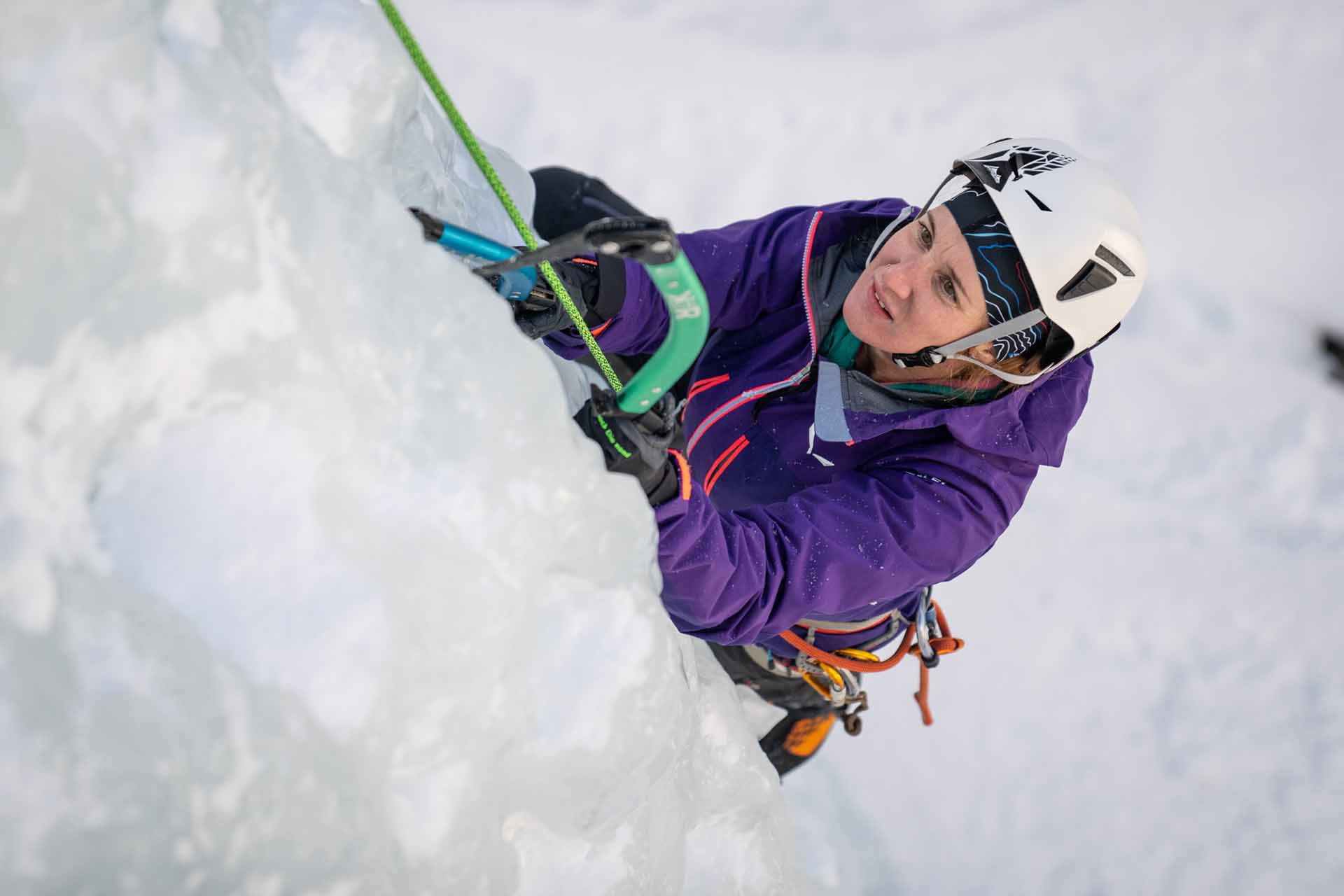
A climber on a steep ice face

From the ski-touring summit to the north face

The Lüsener Fernerkogel is known to many as a long ski tour to one of the finest peaks in the Sellrain mountains. Its north face is a different story altogether: the Nordwandgully offers ice and mixed climbing.

The route was first ascended in November 2016 by Simon Messner and Philipp Brugger and is graded WI4+ and M7. The altitude gain from the Lüsens car park to the 3,298-metre summit is around 1,650 metres; depending on conditions, you should allow around twelve hours – the cold nights are not conducive to an emergency bivouac. More ice-climbing areas nearby: 5 ice falls in the Sellrain Valley and the Ötztal.

Text: Thomas Wanner

Setting off at 4 a.m.: the approach

We set off early from Lüsens. Even the flat, often completely icy path up to the junction requires careful attention – crampons would sometimes be an advantage here. After the alm, we head towards the Westfalenhaus and then turn left across awkward boulder terrain to the start of the climb. It takes just under three hours before you’re ready for the more challenging section.

Important: The approach leads over steep, north-facing slopes. The route is only advisable when avalanche conditions are safe – checking the avalanche report and conditions is essential for planning, as is carrying a full set of emergency equipment. The best time to go is from December to March.

The key pitch: traverse across a smooth slab

In the ice gully, we make rapid progress pitch by pitch until we reach the crux: just under 30 metres, with two fixed anchor points – the rest must be placed on lead. After the first few metres of mixed terrain comes a traverse, on whose smooth slab the crampons find hardly any grip. Here, you need to anchor the ice axes precisely and aim exactly for the next hooks; between the hooks there are places for Friends.

Caution: a fall on the traverse before the next belay is tricky – and the second climber must also be confident on this terrain, otherwise the rope will swing in the opposite direction. After another pitch, the rope can be stowed away; the route leads across steep snowfields to the north ridge and on to the summit.

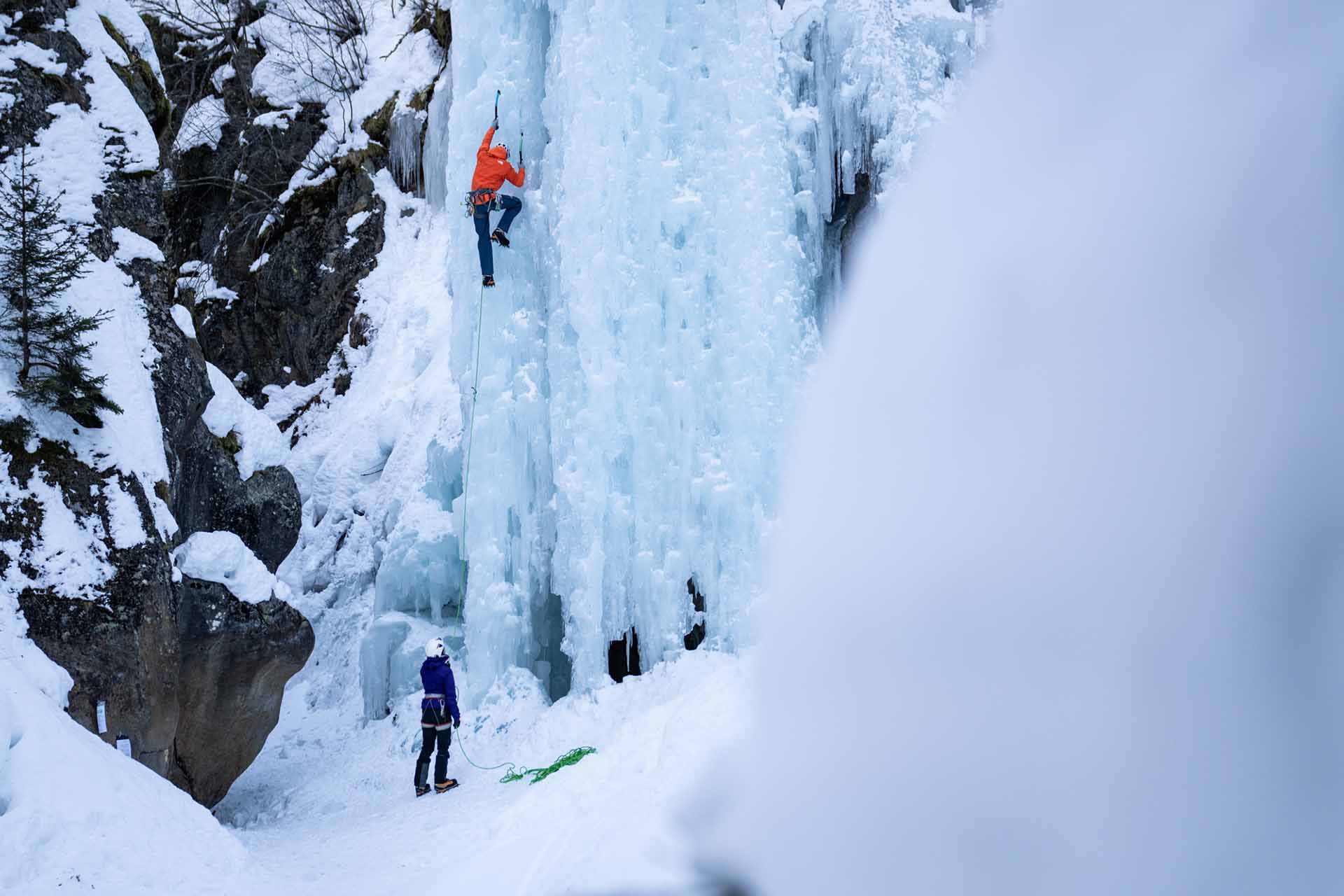
Climber with an ice axe on a steep ice face

Descent, gear and verdict

A cold wind usually blows at the summit; nobody stays long. The descent is via the ski route, which takes a further three hours or so. Don’t underestimate this section: time and again, you’ll have to negotiate steep ice fields and awkward blocky terrain with little snow cover. Many rope teams abseil down once the main difficulties have been overcome – an option that is particularly advisable if time is running short. Those who carry on to the top are rewarded with the full experience in one of the most beautiful corners of Tirol.

The route in figures (based on the route description on alpenvereinaktiv.com):

  • Difficulty: WI4+ and M7
  • Climbing length: around 280 metres, approximately 6 pitches
  • Elevation gain: around 1,650 metres, summit 3,298 metres
  • Duration: around 12 hours, including 3 hours of approach and 3 hours of descent
  • Equipment: two 60-metre ropes, ice screws, Friends and pitons, around 8 quickdraws
  • Best time of year: December to March

All in all, a great route to prepare for more challenging ventures in the Western Alps. In suitable conditions, it’s even possible to complete the climb with skis on your rucksack. For information on what to bear in mind when there is a risk of avalanches, see Ice Climbing: Avalanches as a Source of Danger.

You might also be interested in these articles