Ice Climbing for beginners – How to get started

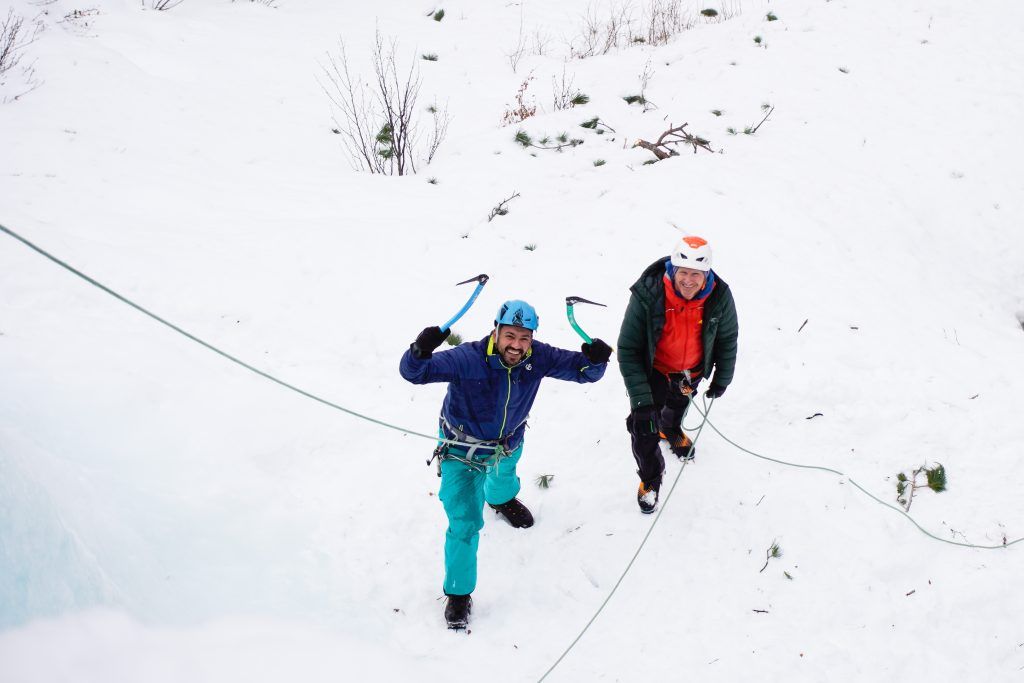
Temperatures are dropping, water is changing from a liquid to a solid – Ice Climbing season is here! What do you need for Ice Climbing? How does this sport on frozen terrain work? Our editor Benjamin Zörer spent a day in the Kaunertal ice fields with the winner of our competition – organised in partnership with Austrialpin – and Mountain Guide Michael Veit.Today we headed to the beautiful Kaunertal. As soon as you drive in, it becomes clear why the Kaunertal is no stranger to Ice Climbing – ice falls line both sides of the road, each one more stunning than the last!Our Finishing Point: the Fernergrieß at the end of the Gepatschdamm. After 15 minutes of snowshoe access, Mountain Guide Michael Veit said: “Have a look, this is our playground for today.” Serdar, the winner of the competition, looks a bit daunted – the ice all around us is quite steep. There’s even a 10-metre-high pillar there!Although it was Serdar’s first time Ice Climbing, he did incredibly well. Despite his fear of heights, he climbed more than halfway up the pitch on his very first attempt – and on his second go, he even made it to the top. His verdict: “An experience in a class of its own!”
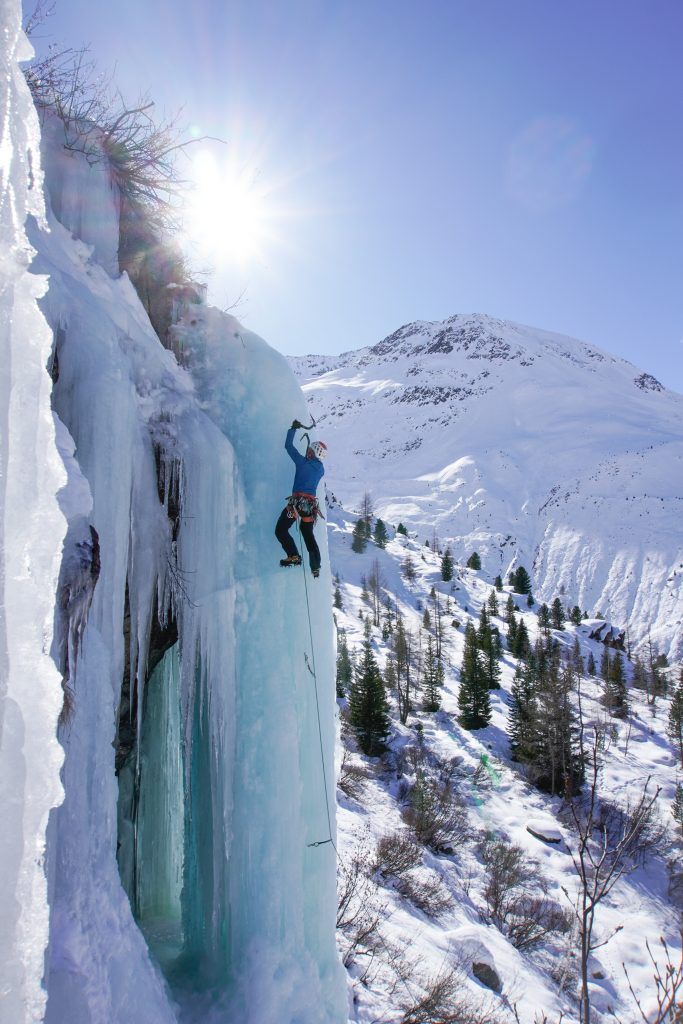
Eisklettern für Anfänger in Tirol

How-to: Basic Ice Climbing techniques

Anyone wishing to take up Ice Climbing should already be familiar with climbing on rock or in a climbing centre and should be able to belay and tie standard knots. Here are the most important basic techniques.

Climbing

Just as with rock climbing, climbing technique is the be-all and end-all. In Ice Climbing, your feet should ideally always be at the same height. You kick into the ice so that, ideally, the crampon penetrates the surface at a 90° angle – this ensures that not only the main points but also the secondary points grip the ice. Special tip: If you find this difficult, it helps to remember to lift your toes slightly as you plant your foot, so that you feel a pull on your shin.

Striking

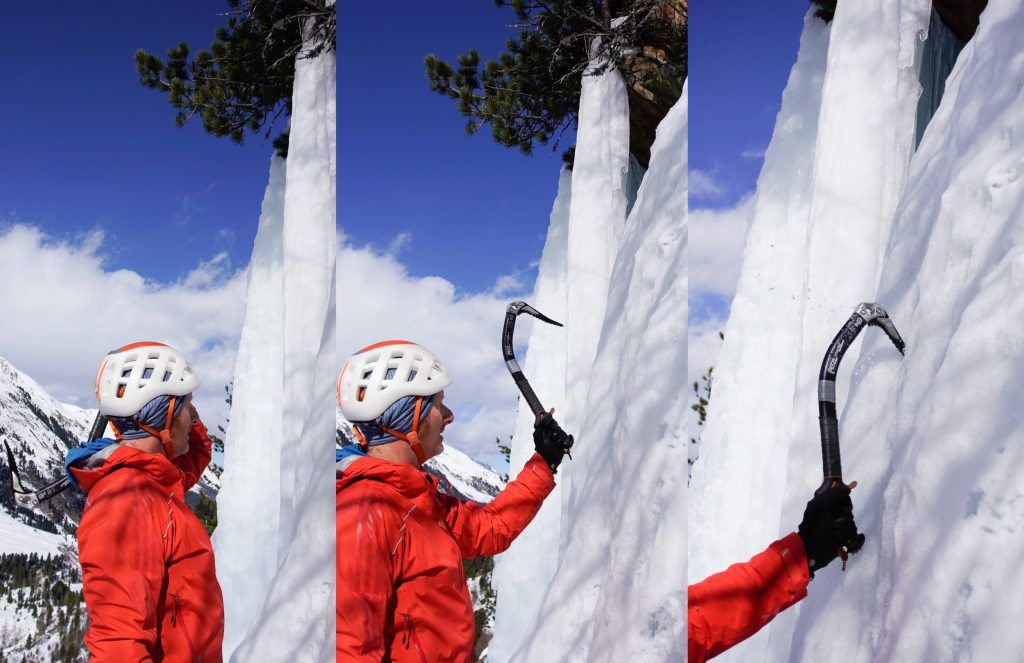
The more efficiently we use our ice axes, the less effort is required and the more fun it is. Basically, you let the ice axe do the work for you with a whipping motion. Modern ice axes are perfectly balanced – most of the weight is at the head for optimal penetration. It’s best to start with dry training: Arms bent above your head, with shoulder, elbow and hand in a straight line; swing the ice axes forwards and give them a downward pull from the wrist. Special tip: Favour concave structures in the ice – convex areas create more tension and cause more ice to break away.

Movement sequence (caterpillar technique)

Starting position: ice axes well-placed, shoulder-width apart and at the same height, arms extended, crampons in the correct position, slight arch in the back. Now push your bottom outwards, legs straight, looking down at your feet. Take small steps left and right until your knees are bent at approximately 90°. Push through your legs, building up bow tension. Then release one ice axe and place it higher up – position the second axe at the same height. Assume a stable position. Repeat.

Ice Climbing for beginners in Tirol

What equipment do we need?

Clothing

As with ski touring, the ‘layering’ principle is recommended: functional base layers and warm socks as a base, then a thin fleece, followed by a thin insulated jacket (Primaloft or down) depending on the temperature, and a water-repellent jacket and trousers as the outer layer. When securing yourself or standing around, be sure to wear a warm down jacket over the top – if you like to be cosy and warm, invest in a pair of down trousers as well. A helmet hat worn under your helmet keeps your ears warm.

Footwear

You must wear Category D boots that are fully crampon-compatible. Whether synthetic or leather is a matter of personal preference. Synthetic boots are usually lighter, whilst leather boots are more durable.

Gloves

Distinguish between belay/standing gloves (warm, mittens or thick gloves) and climbing gloves (as much sensitivity as possible, e.g. ice-climbing-specific gloves or cross-country skiing gloves). As an affordable alternative: winter work gloves from a DIY store – many Ice Climbing enthusiasts swear by them.

Ice Climbing for beginners in Tirol

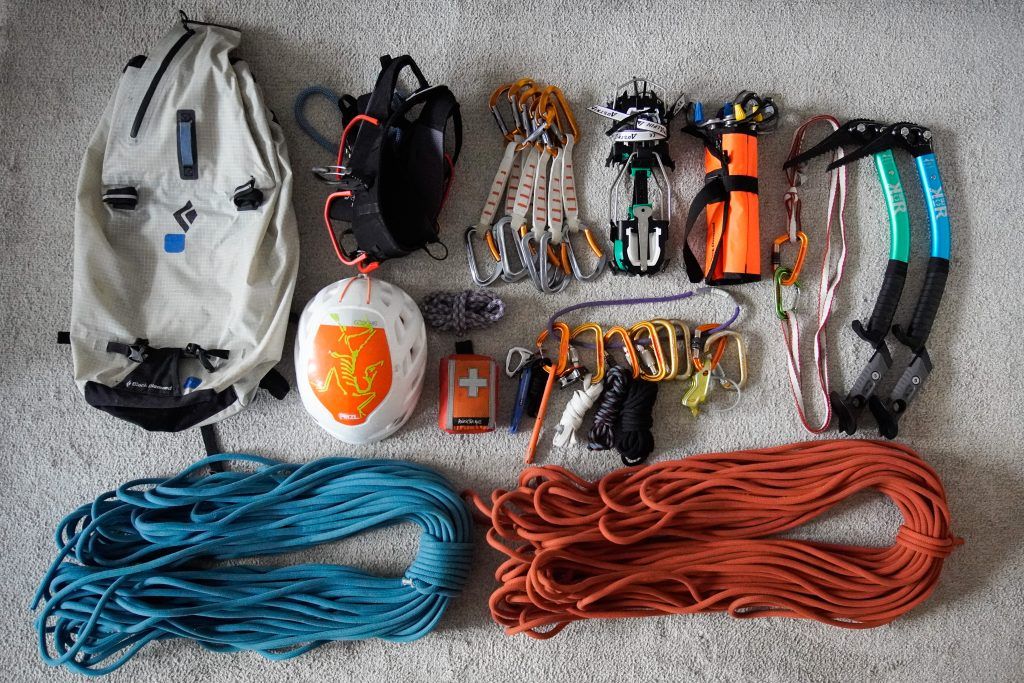
Hardware – The Packing List

  • Ice axes
  • Crampons
  • Ice screws (8–10)
  • Quickdraws
  • Half-ropes or single rope
  • Anchor sling, screw-lock carabiner
  • Belay/rappelling device
  • Rope material, lengths of half-rope (approx. 1.8 m) for ice hourglasses, hourglass threaders
  • Knife, harness, helmet, first-aid kit
  • 40-litre rucksack

Text & photos: Benjamin Zörer

Ice Climbing for beginners in Tirol

You might also be interested in these articles