Hahntennjoch: Sport climbing at 2,000 metres when it gets too hot in the valley

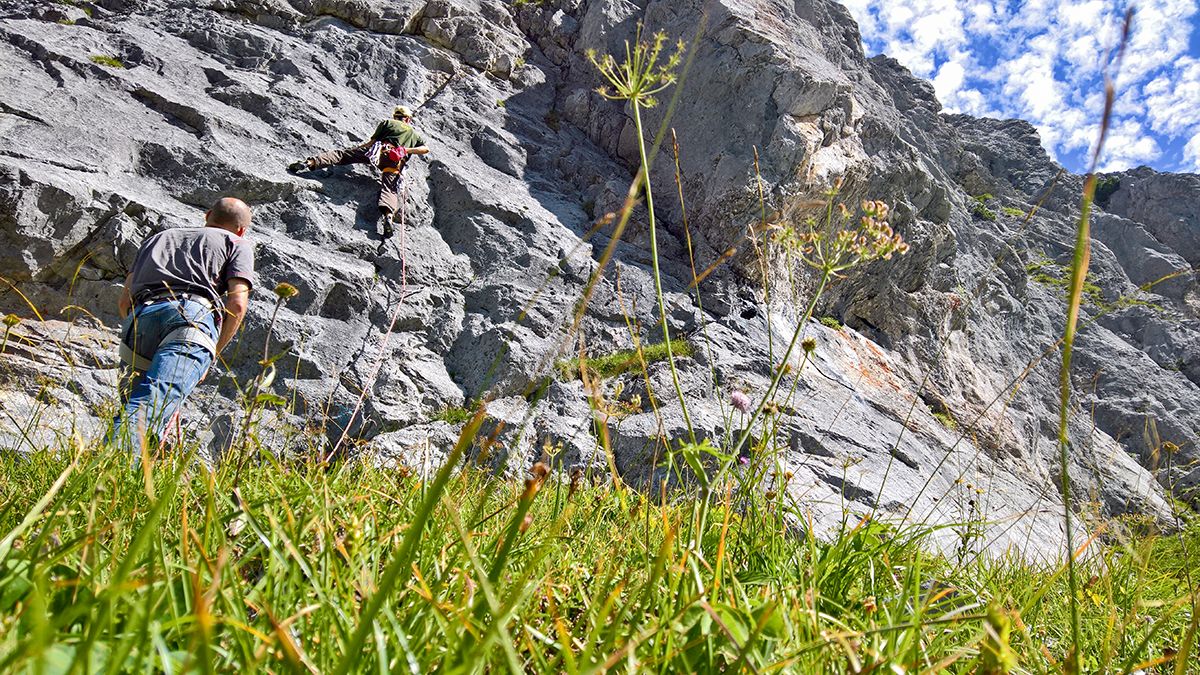
Compact grey limestone, green alpine meadows and panoramic mountain views: the crag at Hahntennjoch lies at an altitude of around 2,000 metres – the ideal spot when it gets too hot down in the valley.
Alpine meadow with a view of the climbing wall at Hahntennjoch under a blue sky

A summer retreat for sport climbers

The Hahntennjoch Road between Imst and the Lech Valley is one of Tirol’s most popular motorbike routes. Climbers, however, have a different goal in mind: the striking rock face above the top of the pass.

The crag is situated on the southern slopes of the Falscher Kogel in the Lechtal Alps, around 150 metres above the car park. Thanks to the altitude, it remains pleasant even in the height of summer – and the rock face dries out quickly after rain. You can find more climbing areas around Imst in Best of Ferienregion Imst.

Text: Patrick Trois

Getting there and the approach

Park at the small, free car park for walkers situated right at the top of the Hahntennjoch Pass (1,894 m). From there, follow the path towards the Anhalter Hütte (E4, 601) for about 400 metres, then head left across a steep mountain meadow, climbing around 150 metres of elevation to the clearly visible rock. Depending on your pace, the approach takes 15 to 30 minutes – with a heavy rucksack, it’s likely to take longer than it looks from the car park.

Good to know: There is a risk of rockfall below the face, so a helmet is essential. The Hahntennjoch road is closed in winter. During the summer months, a hiking bus runs from Imst to the Lech Valley. Due to the steep approach, the area is less suitable for young children.

Compact limestone in three sectors

The Hahntennjoch crag features 65 routes ranging from 10 to 50 metres in length, mostly on good-quality, south-facing limestone – spread across the Café sector, the Musikpfeiler and the Kamin sector. Some routes consist of several pitches. A 60-metre rope is sufficient.

Our tips: On the Musikpfeiler, ‘Preludium’ (6b+) awaits – a bit tricky in the lower section and featuring a final boulder move in the upper third – a particularly well-designed route. In the Café sector, ‘Amaretto’ (7a) demonstrates just how technical the grey, somewhat confusing rock can be: here, no route will forgive a single wrong move.

The area was developed by, amongst others, Wolfgang Mayr, Baldo Pazzaglia, Günter Durner, Hannes Boneberger, Wolfgang Hofer, Alfred Flür, Werner Nothdurfter, Rainer Krismer and Christian Winklmair.

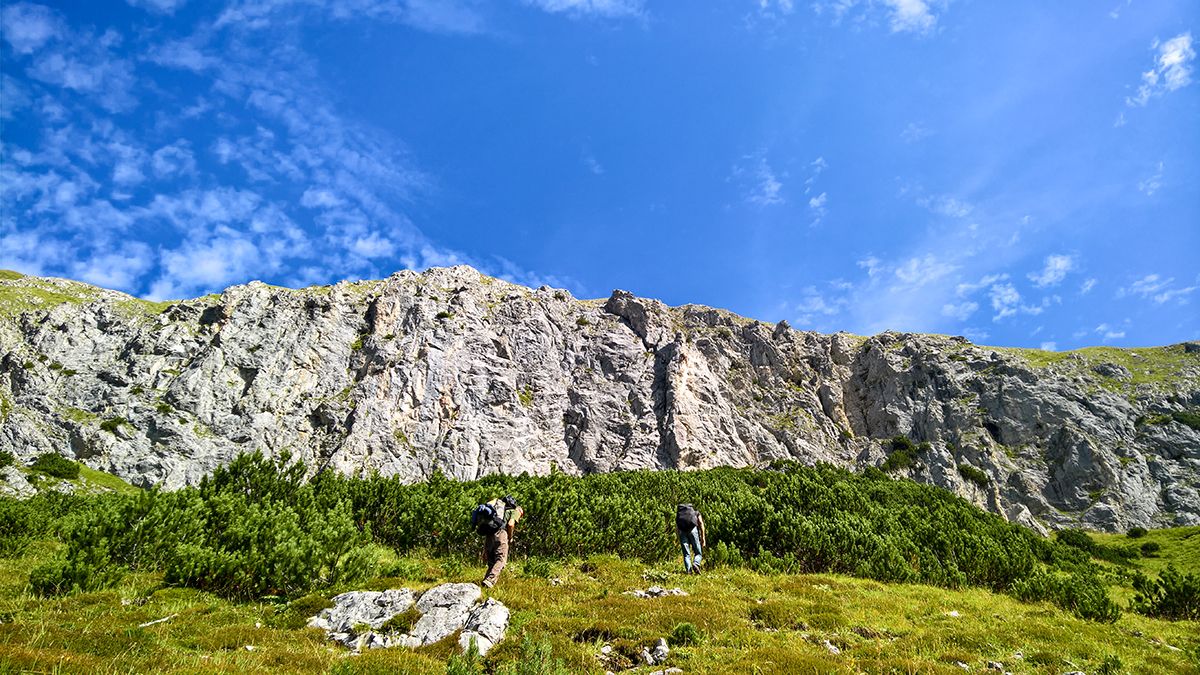
Climber on the grey limestone face at Hahntennjoch

After the climb

After a day’s climbing, the pass summit is the ideal spot for a refreshing drink whilst taking in the view of the rock face – the perfect place to go over the routes once more. For those who want to carry on climbing the next day: if the weather looks uncertain, the Götterwandl in Nassereith is a steep, rain-proof alternative.

Crags featured in this article

  • Hahntennjoch

    Difficulty:difficulty: 5 - 9Place:Imst / Outdoorregion Imstroutes:65 routes
  • Nassereith / Götterwandl

    Difficulty:difficulty: 5 - 9Place:Nassereith / Outdoorregion Imstroutes:36 routes

You might also be interested in these articles