
The ‘Aaaaah’ and ‘Oooooh’ of climbing
Free climbing or free solo? Onsight or flash? Lexically, the terms differ by just a few syllables – but on the rock, they can mean the difference between life and death. The ultimate vocabulary check.

We’ve covered the main disciplines and styles of climbing, spicing things up with some background information on their origins. That way, you’re guaranteed not to get it wrong – and you can impress people with a bit of background knowledge whilst you’re at it.
Text: Martina Scheichl
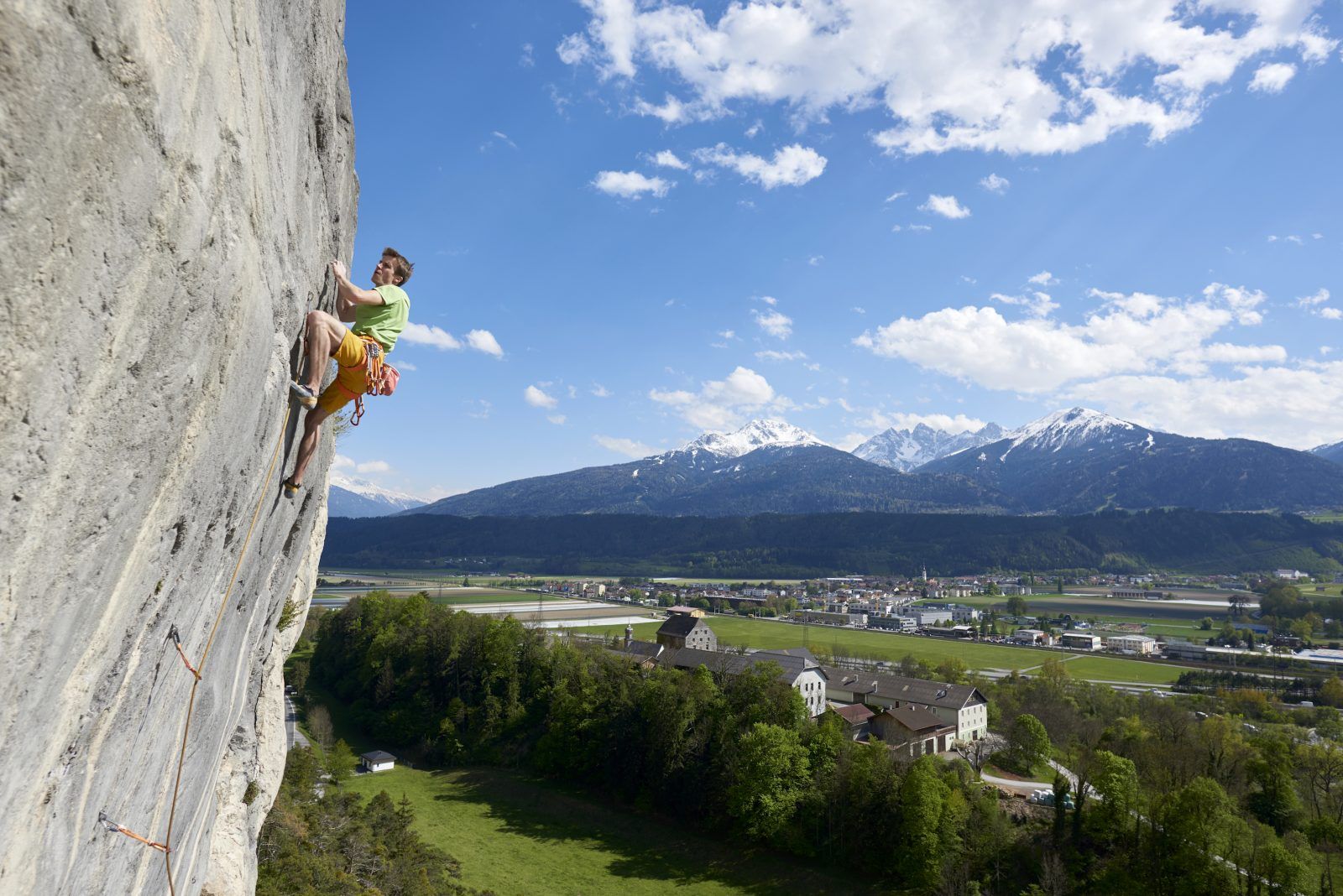
Lead climbing. Classic lead climbing involves ascending a route whilst being belayed from below and using fixed intermediate protection points. It requires nerves of steel, stamina and plenty of grip strength – not least because of the need to place intermediate protection, which is an additional step compared to top-roping. It also demands a great deal tactically and technically, particularly when attempting an onsight. Historically, lead climbing experienced a boom in the USA in the late 1960s and early 1970s: The world watched as the American rookies drilled their routes and quickly realised that this approach led to much faster progress in climbing than ‘clean’ climbing.
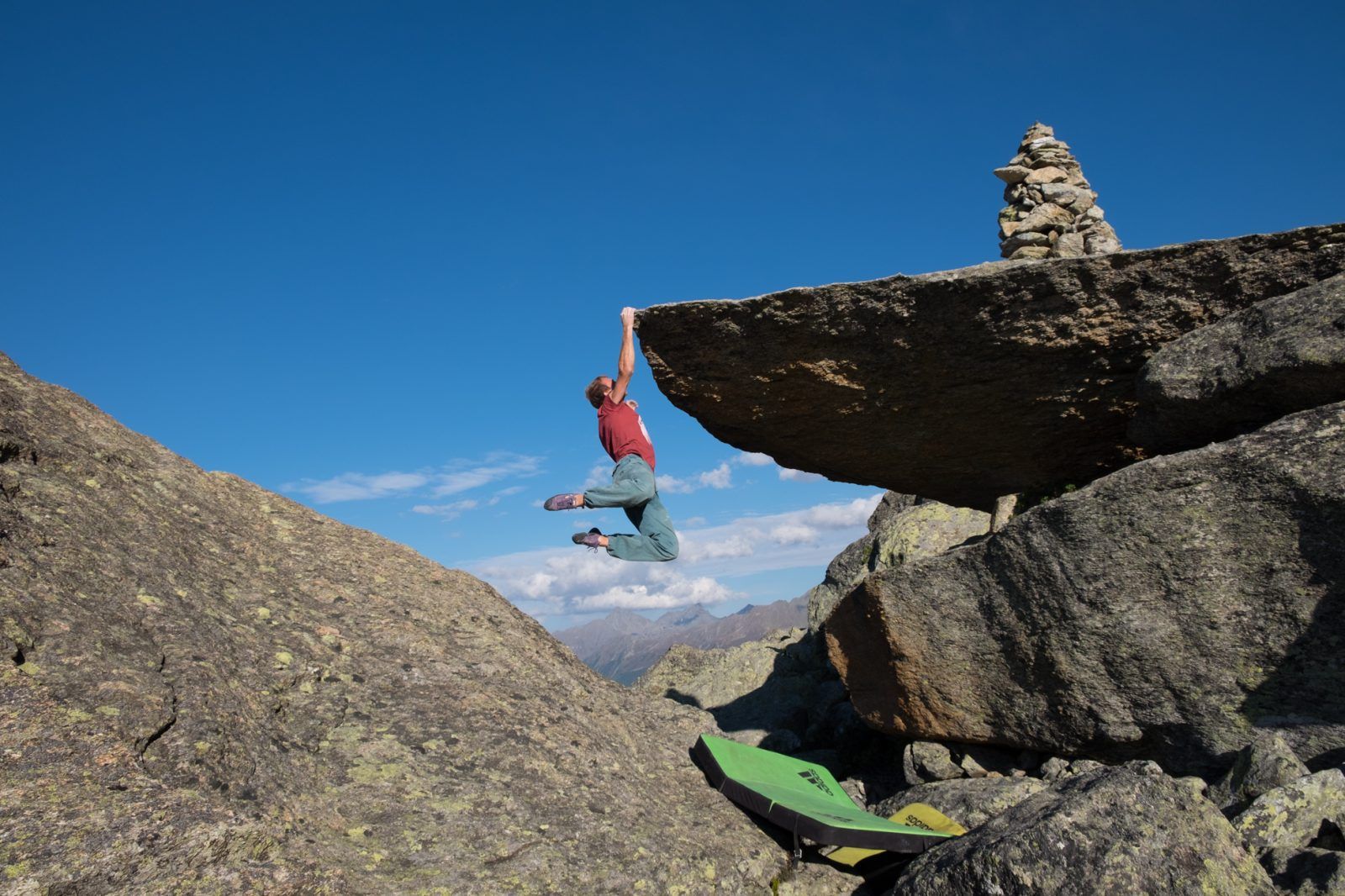
Bouldering. Probably the most popular form of climbing. Without a rope, you climb up to jumping height, with mats or crash pads serving as protection. True ‘Bleausards’ even do without these and engage in Bouldering in the woods of Fontainebleau using a small rug, which protects the rock rather than the climber. Without that French finesse, however, it can be quite painful. People have been climbing in Fontainebleau since the 1890s; John Gill played a key role in developing the discipline in the 1950s and 1960s – he introduced dynamic climbing and chalk. What a hero.
One way bouldering pushes the boundaries is through ‘highballs’: tall boulders (around 4–5 metres) where a fall is no longer possible without serious injury. From around seven metres, the transition to free soloing is seamless.
Top-rope climbing. The offspring of its parent sport, sport climbing. Its raison d’être lies primarily in the Beginner and children’s sectors. The development of the Toppas (mechanical rope brake) has made it even more socially acceptable – allowing climbers to belay and unclimb even without a climbing partner. Paraclimbing competitions also take place predominantly on top-rope.
Paraclimbing. Climbing for people with physical and intellectual disabilities. Depending on the nature and severity of their impairment, athletes are assigned to different categories, within which they compete against one another. The first IFSC Paraclimbing World Championships took place in Arco in 2011 – since then, the discipline has been steadily growing in popularity.
Speed climbing. This stands out from the rest in most respects: here, speed is the deciding factor. The speed route is standardised internationally – making speed the only discipline in which world records can be set. It requires explosive and maximum strength, the utmost precision in handholds and footholds, and the ability to memorise movement sequences exactly.
On the rock, there’s a different kind of speed: in 2018, Alex Honnold and Tommy Caldwell climbed the almost 1,000-metre-distance ‘Nose’ on El Capitan in 1 hour 58 minutes. And in 2019, Dani Arnold free-soloed the 550-metre-long Comici-Dimai route on the Große Zinne in 46 minutes and 30 seconds.
Combination. The format was developed for the 2020 Olympic Games (held in 2021). The disciplines are speed, followed by Bouldering, and finally Lead climbing – these are combined to produce an overall ranking. For the athletes, it is a challenge that demands everything, both physically and mentally.
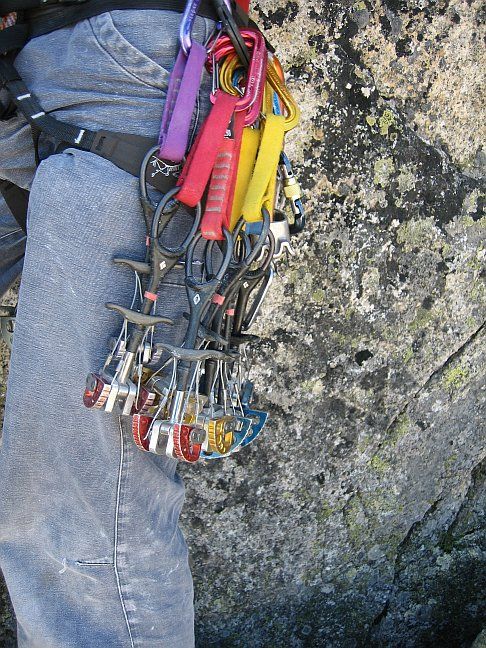
Alpine sport climbing. A combination of alpine and sport climbing: Multi-Pitch Climbing where easy sections are preferably secured using mobile protection such as Friends, nuts or slings, whilst difficult sections are bolted.
Drilling is usually carried out from below – in keeping with the ethos of the pioneers of this discipline. This has one consequence: difficult sections must be free-climbed. Imagine the first ascender, attempting a passage for the umpteenth time and still not knowing whether it is even climbable. He has one goal in mind: to keep going, right up to the next good hold, where he can set up a self-belay – perhaps on a skyhook that he has simply hooked onto a small ledge. There, he hooks himself in, pulls the drill upwards and sets a bolt, all the whilst hoping to keep his balance. Nowadays, however, you do come across the odd climber who seems rather unimpressed by this Tradition.
Multi-Pitch Climbing. If a route has a distance that is longer than a single pitch and belay stations need to be set up, it is referred to as Multi-Pitch Climbing. A distance of just 90 metres usually makes this necessary. It’s impossible to make any generalisations about the state of the belaying – this always depends on those setting it up. In any case, more planning is required than for a day at a sport climbing crag: coordinate rope teams, check the weather and the route in advance, and familiarise yourself with the descent and abseil route.
Plaisir. The same thing, but with everything scaled down: moderate Level of Difficulty (up to around UIAA Grade 7), good bolt protection, and a short, low-risk approach and descent. Simply put, climbing for pleasure.
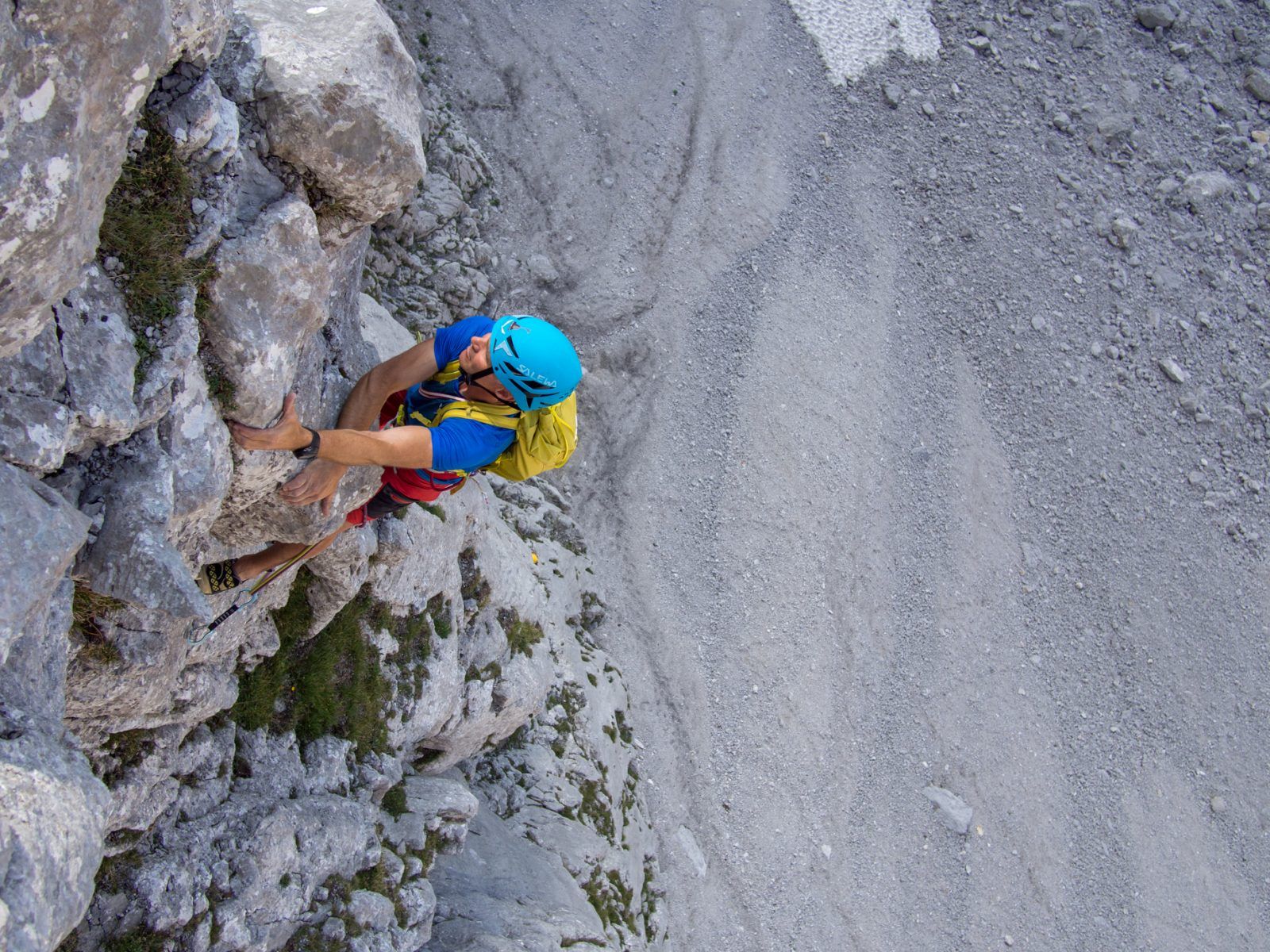
Alpine climbing. Here, the focus is on reaching the summit, not on overcoming a particular Level of Difficulty. Several pitches are strung together – so many that you sometimes have to bivouac on the rock face. This is known as big-wall climbing.
Often there are only a few bolts, so you have to place your own intermediate anchors. Some alpine routes are completely ‘clean’: not a single bolt, neither for protection nor for navigation. Anyone tackling these routes must be able to read the route lines, place protection and set up belay stations. Because of these factors, climbers often tackle alpine routes a few grades below their own redpoint level – deliberately, to avoid risks.
Ice Climbing. Also a form of alpine climbing: you place your own protection (ice screws), and the risk is generally high. Otherwise, it bears no resemblance whatsoever to rock climbing – you know, ice and ice axes and all that.
Trad or clean climbing. Mobile anchors are placed on the rock and removed once the route is completed. This method of securing the route was developed to avoid hammering in pitons: Yvon Chouinard, big-wall pioneer and founder of Patagonia, noted as early as the late 1950s that hammering in pitons leaves lasting damage to the rock – the so-called ‘pin scars’.
Free climbing. To move vertically, climbers rely solely on their own bodies, without any artificial aids. This means that anyone who pulls on a bolt to get past a section is no longer a free climber – at least not for that particular attempt.
Free Solo. Climbing a route without a belay and without a Partner. Anyone who climbs a route free solo exposes themselves to enormous danger. In most cases, the climbers have prepared meticulously and worked out the route precisely through bouldering, so that no mistakes are possible – in theory, at least. It requires an extremely strong mindset, the ability to focus completely on the here and now, and a deep-seated confidence in one’s own strengths. That is precisely where the appeal lies, say the ‘free soloists’.
Ever since Alex Honnold’s blockbuster film ‘Free Solo’, the discipline has become known even beyond climbing circles. That said, it must be noted that the film has distorted the image of the average climber – very few are actually that crazy.
Two related disciplines: in free solo base jumping, the climber carries a base jump parachute on their back, which they can deploy in the event of a fall – though this is only effective from a certain height; for the first ten metres, it serves no purpose. And in deep-water soloing, you also climb unsecured, but you fall into the water. There are even competitions for this, such as the American Psicobloc Masters.
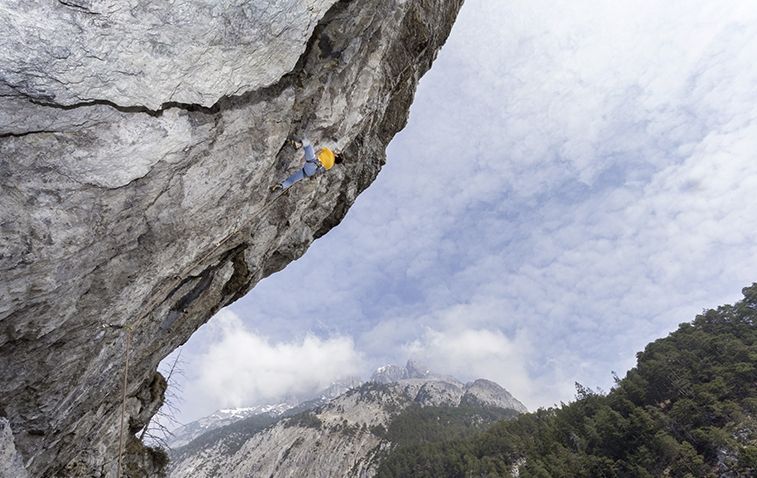
That brings us to the end of our vocabulary round-up. We hope it’s more or less complete – and if you’ve noticed a term missing: the climbing scene comes up with new styles faster than you can write them down. See ‘Brushpoint’.
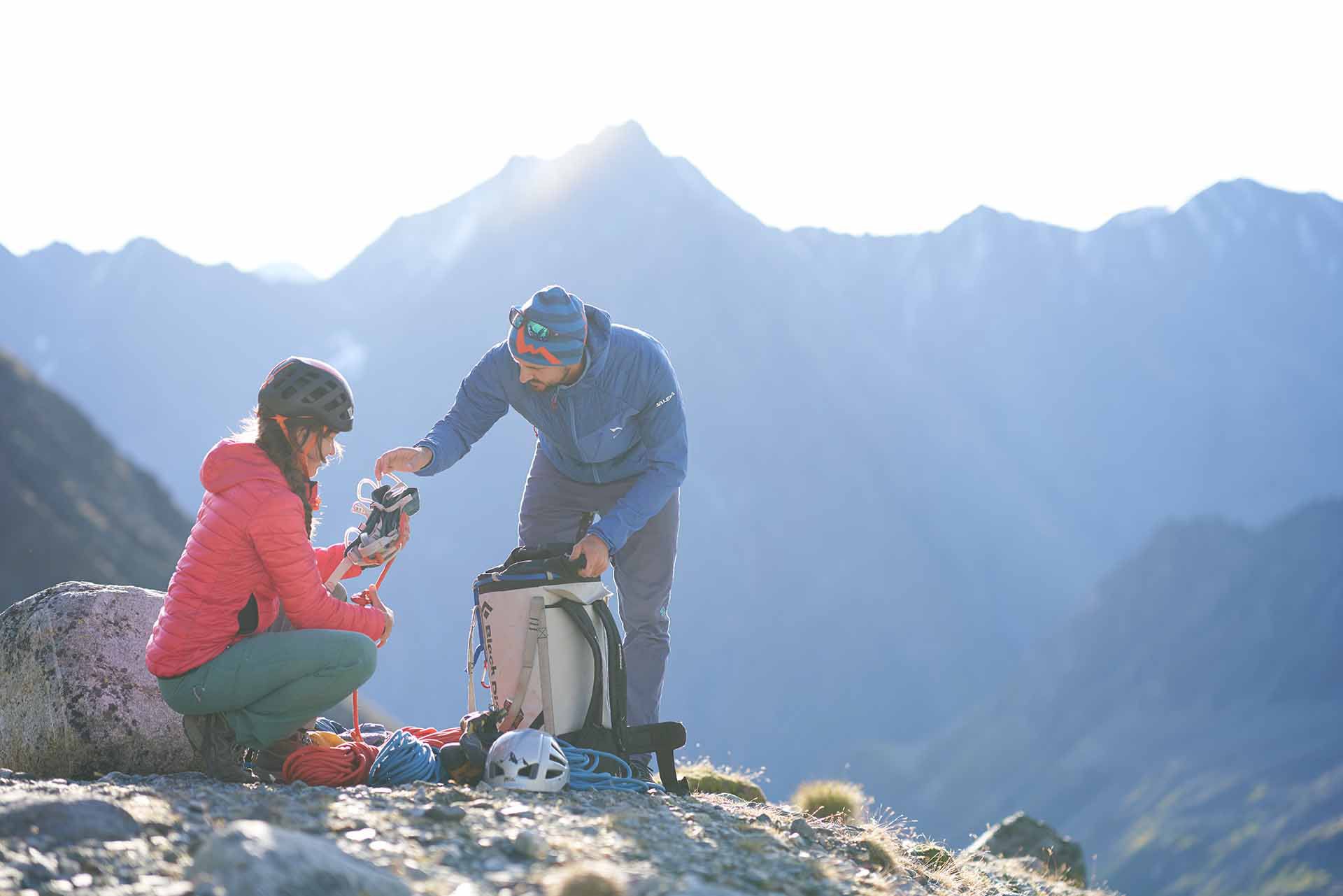
Tips & Safety
Would you like to know more about climbing safety? Click here for our safety tips.
