Via Ferrata/Iron Way Tutorial 02: The Via Ferrata/Iron Way Set

It doesn’t prevent you from falling, but it does stop you from tumbling all the way to the foot of the wall: how a via ferrata set is put together – and when it should be thrown away straight away.
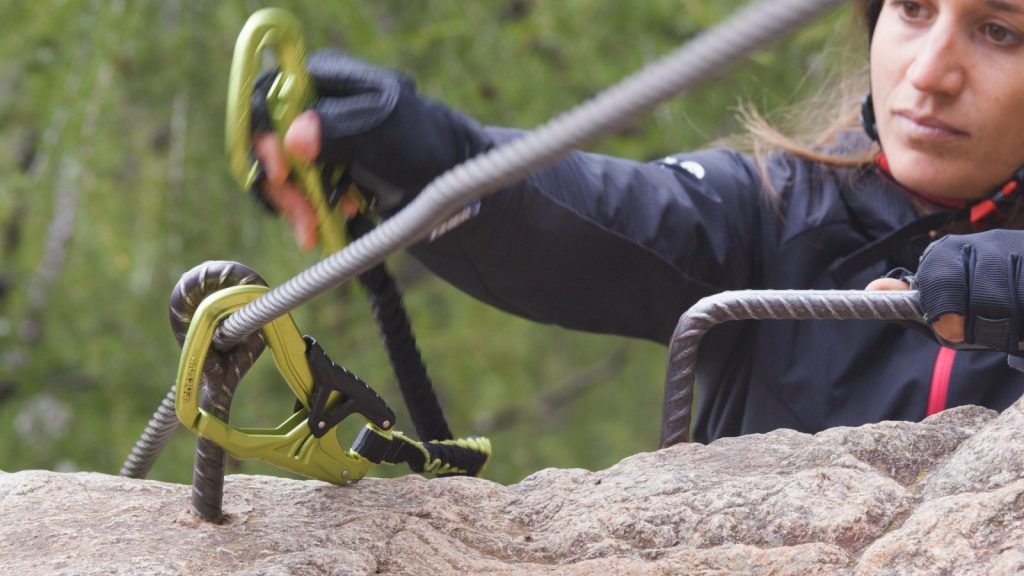
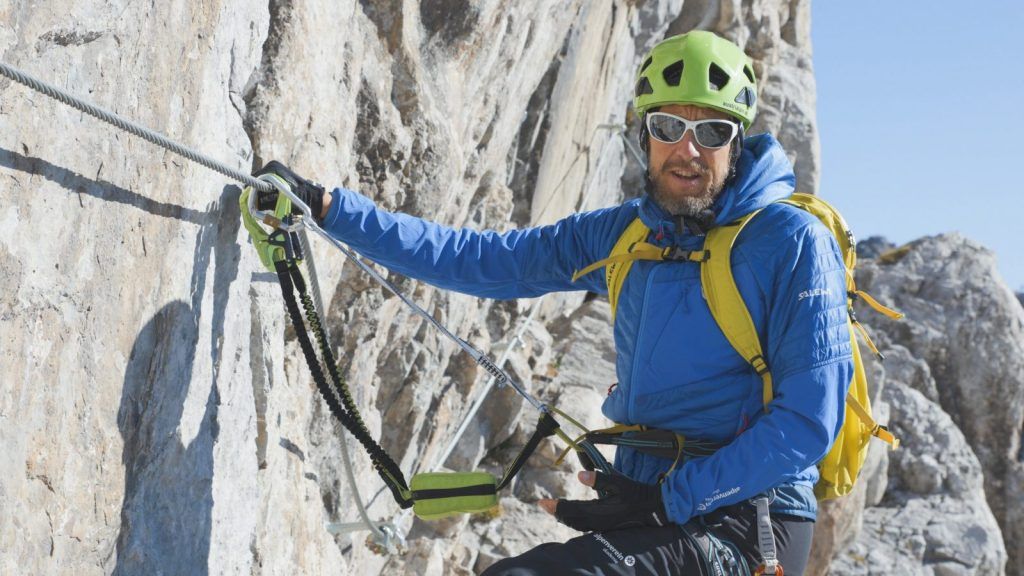
Via ferrata set with both load-bearing arms attached to the wire rope

Why the set is the deciding factor

A Via Ferrata/Iron Way set does not prevent a fall – but it does prevent you from falling all the way to the foot of the cliff. Falls on a Via Ferrata/Iron Way are not a calculable risk, as they are in sport climbing: Via Ferrata/Iron Ways offer the worst possible environment for a fall, and injuries are highly likely.

Part 2 of the video series ‘SicherAmBerg – Via Ferrata/Iron Way’ by the Austrian Alpine Club and Climbers Paradise.

Text and video: Austrian Alpine Club

Via Ferrata/Iron Way Tutorial 02: The Via Ferrata/Iron Way Set – Video: Austrian Alpine Club

The components of a modern via ferrata set

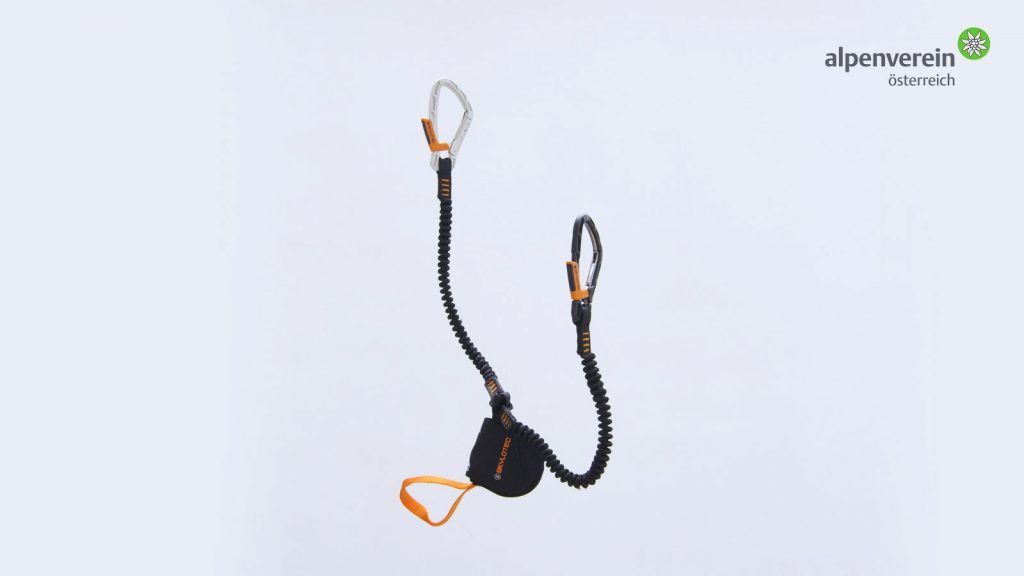
  • two load-bearing arms with permanently sewn-in via ferrata carabiners
  • the lanyard shock absorber
  • the attachment loop
A complete via ferrata set at a glance

Carabiners and load arms

Via ferrata carabiners are designed to meet the specific requirements of wire ropes:

  • Large carabiners with a wide gate opening make it easier to handle when re-routing the rope.
  • A locking mechanism prevents accidental unclipping.

A key quality feature is ease of use – these carabiners are clipped in and out hundreds of times. This is particularly well achieved in carabiners with a palm-operated locking mechanism, where the intuitive grip automatically unlocks the safety catch.

The load arms of modern sets consist of elastic webbing constructions. They appear shorter and neater and allow for handling close to the body. Some sets have a swivel joint at the base of the load arms, which prevents the arms from twisting when repositioning the set.

Another feature of some sets is the locking sling for attaching to the wire rope, which is also effective on traverses. Please note: the locking sling does not replace the need to attach the load arms.

A hand opens a via ferrata carabiner with a palm-lock mechanism

The strap shock absorber – the centrepiece

The fall arrest device is the centrepiece of the via ferrata set. The Alpine Club recommends only sets of this type.

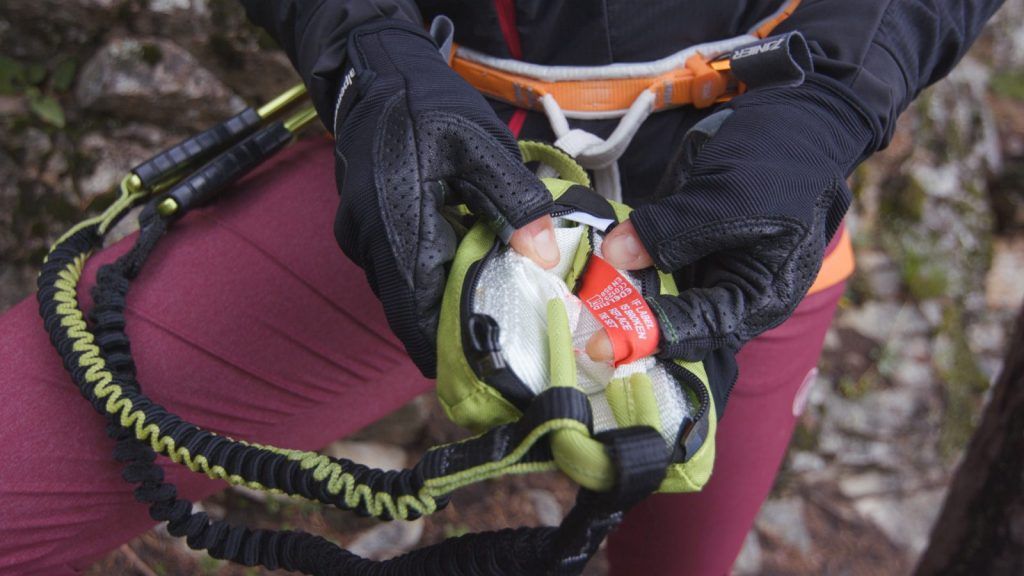
It consists of sewn-together webbing straps. If the via ferrata climber falls, the seam between the straps tears in a controlled manner, cushioning the fall. This energy-absorbing effect is crucial – a static braking effect would result in serious injury or equipment failure.

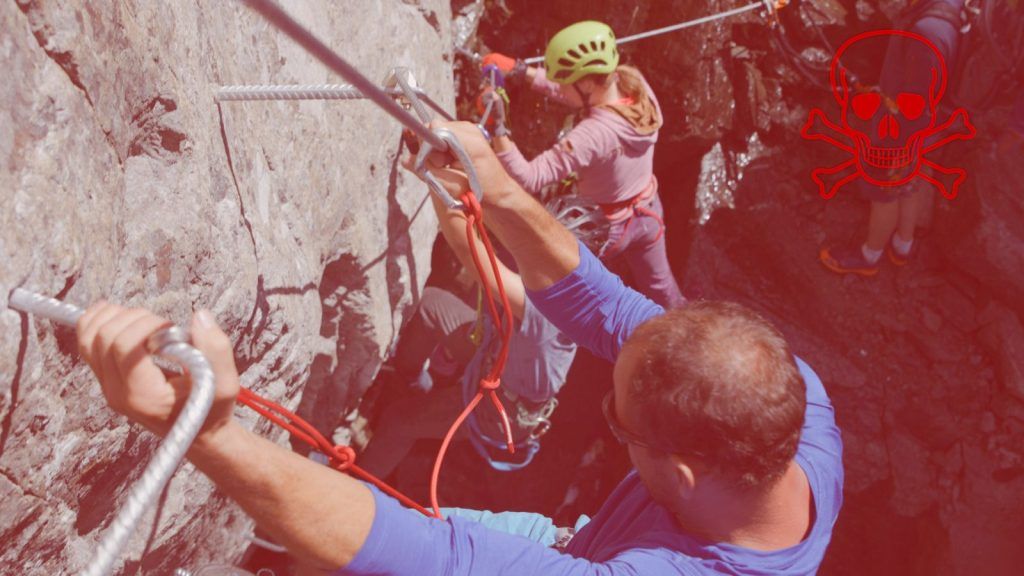
A makeshift belay using webbing slings, cord or lengths of rope is therefore life-threatening. Furthermore, once a webbing fall arrestor has been triggered, the set must be replaced without fail – even if the seam is only slightly torn.

Please note: According to the standard, the fall arrestor’s effectiveness is limited to body weights between 40 and 120 kg. Via ferrata sets are therefore only suitable for children to a limited extent.

A torn shock-absorbing lanyard on a via ferrata set

Attachment loop, service life and an alternative

At the lower end of the set is the attachment loop, which is tied directly into the rope loop of the climbing harness using a clove hitch.

The set has a limited servicelife: it must be taken out of service after ten years at the latest, significantly sooner if used frequently, and immediately if damaged. Details on care and storage can be found in the instructions for use.

The Skylotec via ferrata set takes a different approach to belaying: one of the two load arms is fitted with a rope clamp that is secured to the wire rope. When under load, the mechanism locks immediately, minimising the fall height and impact energy. The downside is that it is slightly more complicated to handle.

Everythingyou need to know about Via Ferrata/Iron Way at a glance:Via Ferrata/Iron Way – everything you need to know

Temporary securing with a cord attached to the wire rope

You might also be interested in these articles