Pinus cembra. That is the Latin name for the Swiss stone pine. In the Kaunertal valley, the Swiss stone pine is used to make all sorts of things: Swiss stone pine furniture, even entire rooms furnished with Swiss stone pine, and Swiss stone pine schnapps.
Swiss stone pine is said to have health-promoting properties. So it comes as no surprise that climbing holds made from Swiss stone pine have recently become available. These are not to be found in an indoor climbing centre, as one might expect, but out in the great outdoors.
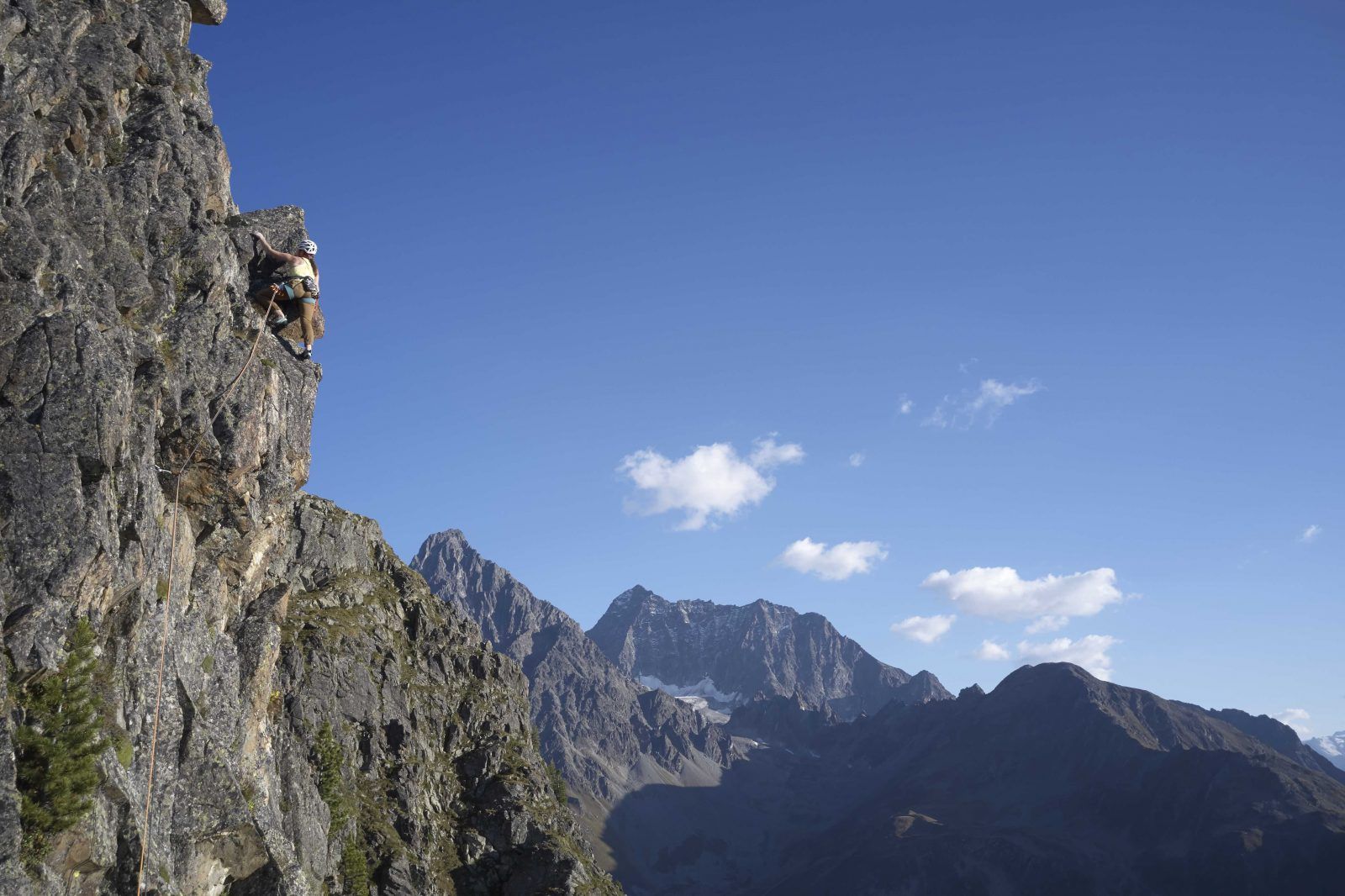
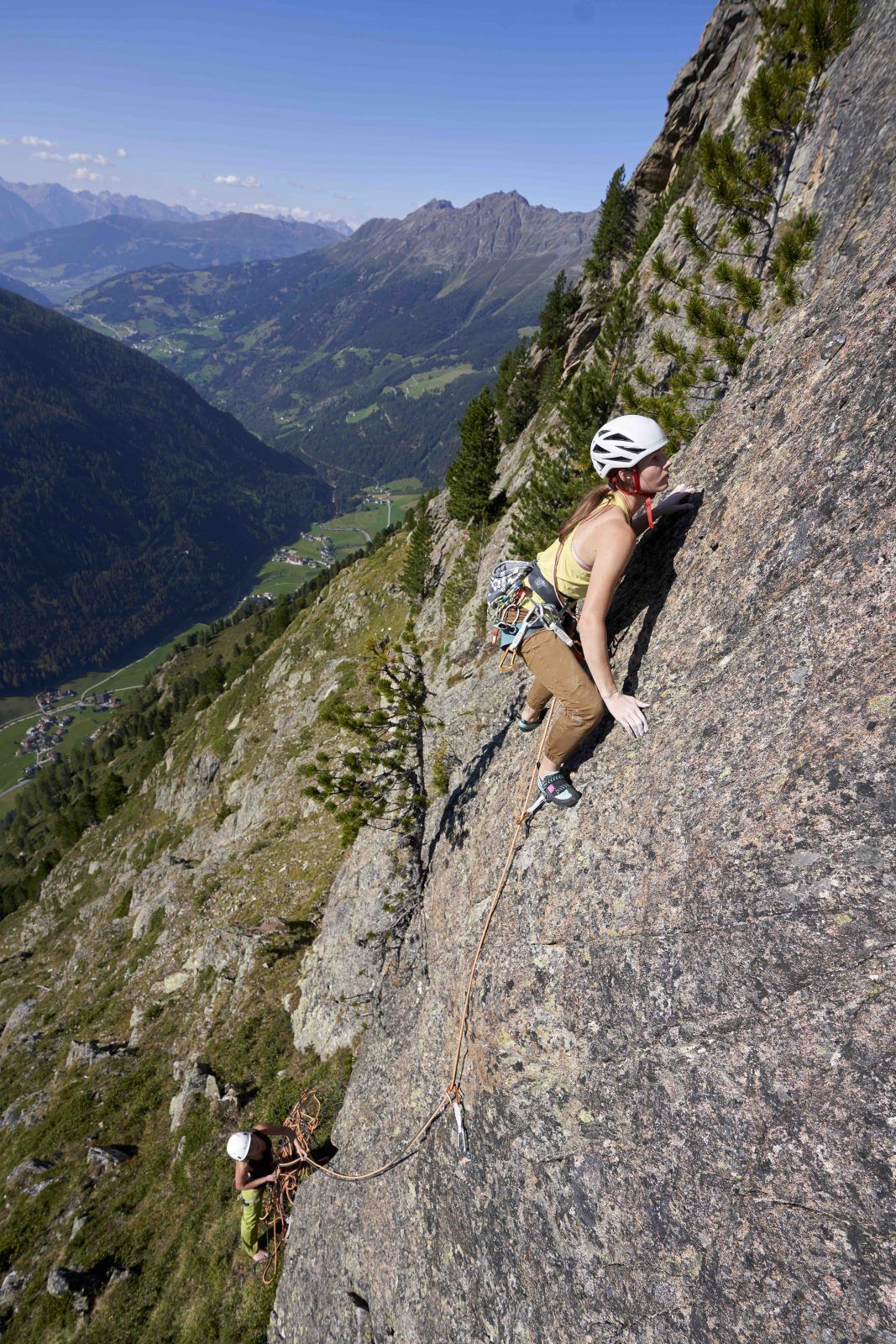
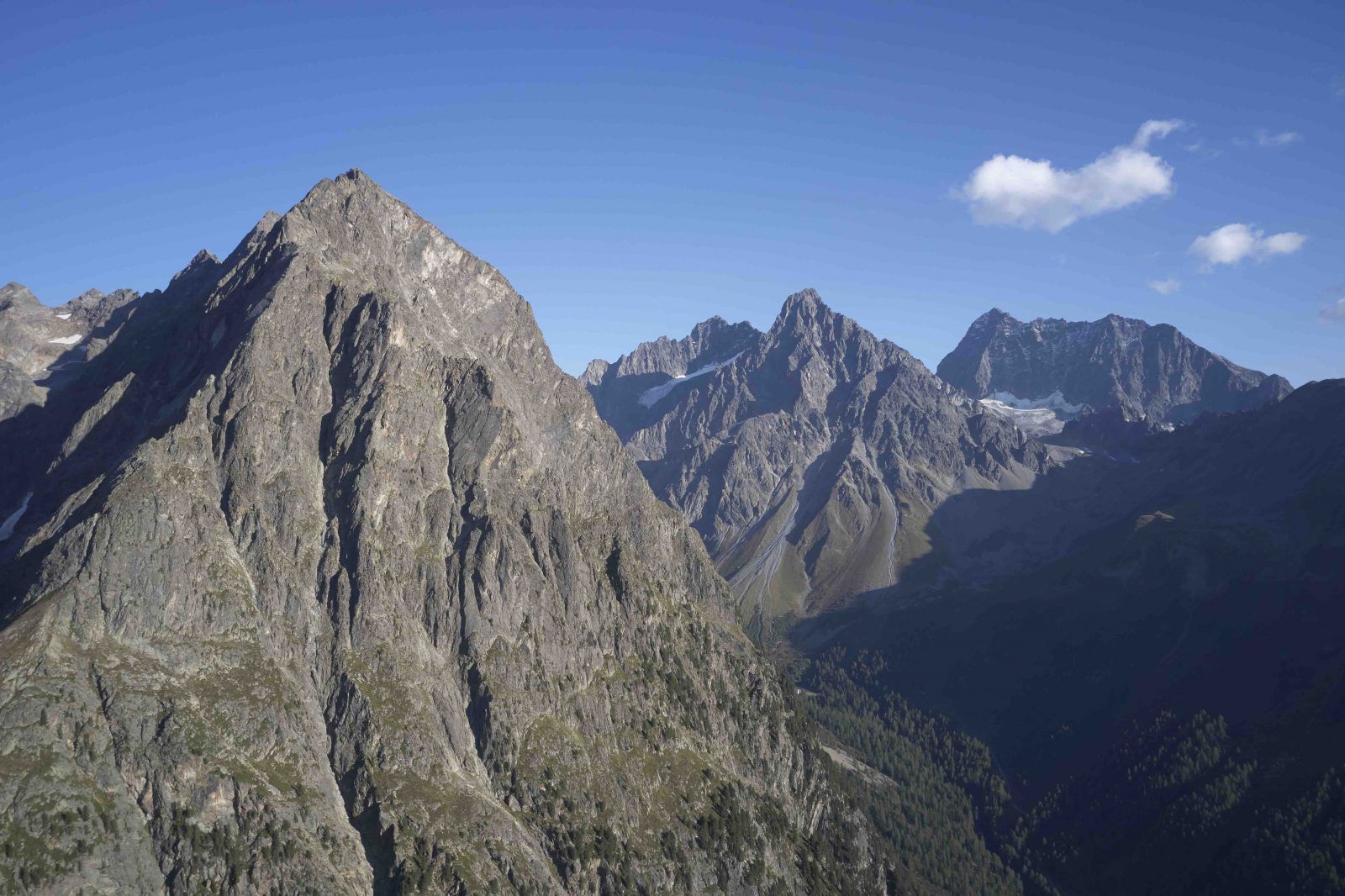
More specifically, on the Schweikert. This is a 2,879-metre-high colossus of primeval rock that towers high above the Kaunertal valley. There, you’ll find the Multi-Pitch Climbing route known as the ‘Wiesa-Jaggl’. Even the short access to the route feels like a walk through a herb garden. Juniper, blueberry and lingonberry bushes line the path. The autumn-coloured larch trees at the roadside sway in the valley wind blowing down from the Glacier Ski Resort. It smells wonderful. It smells of the Alps.
Text: Gebi Bendler | Photos: Michael Meisl
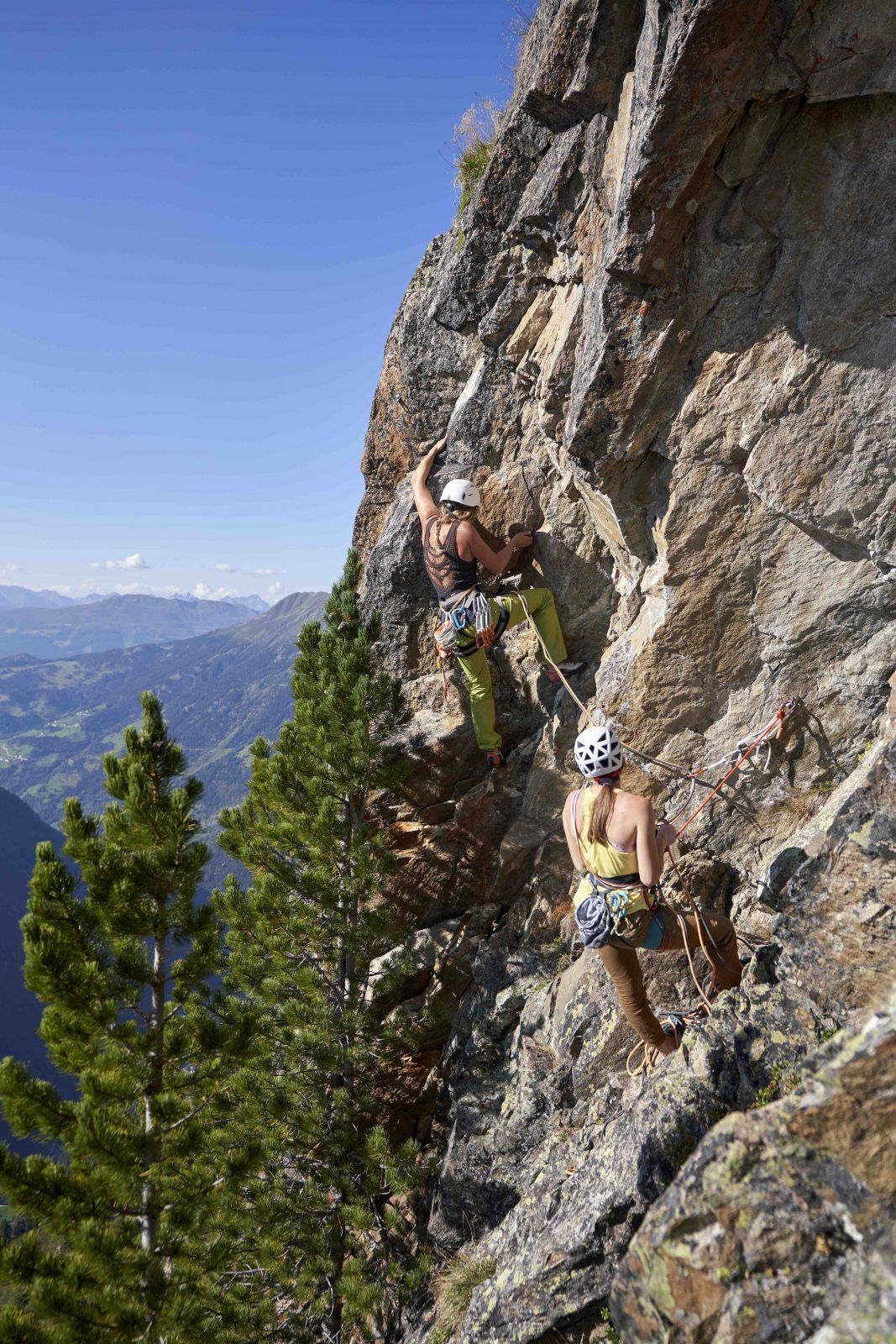
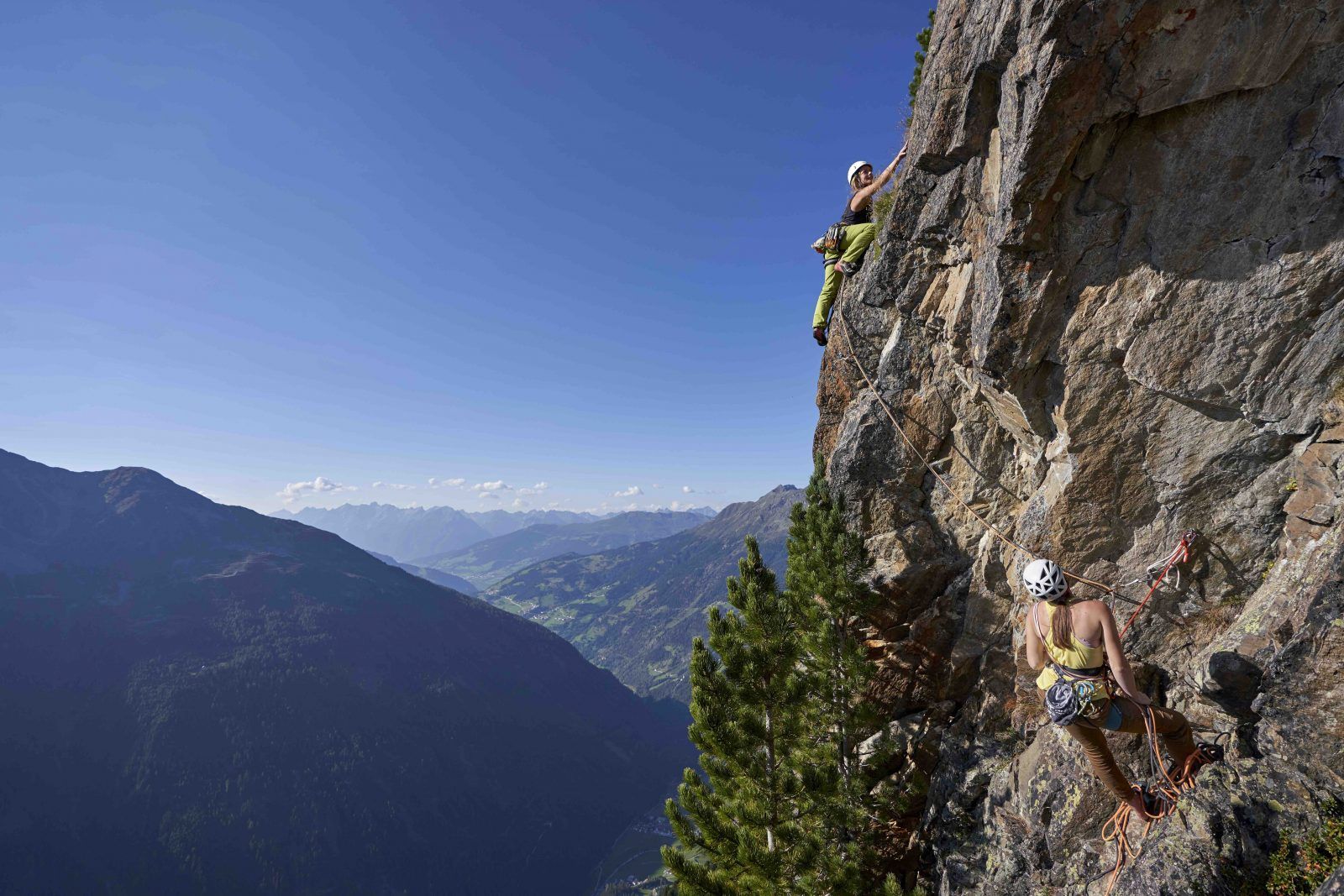
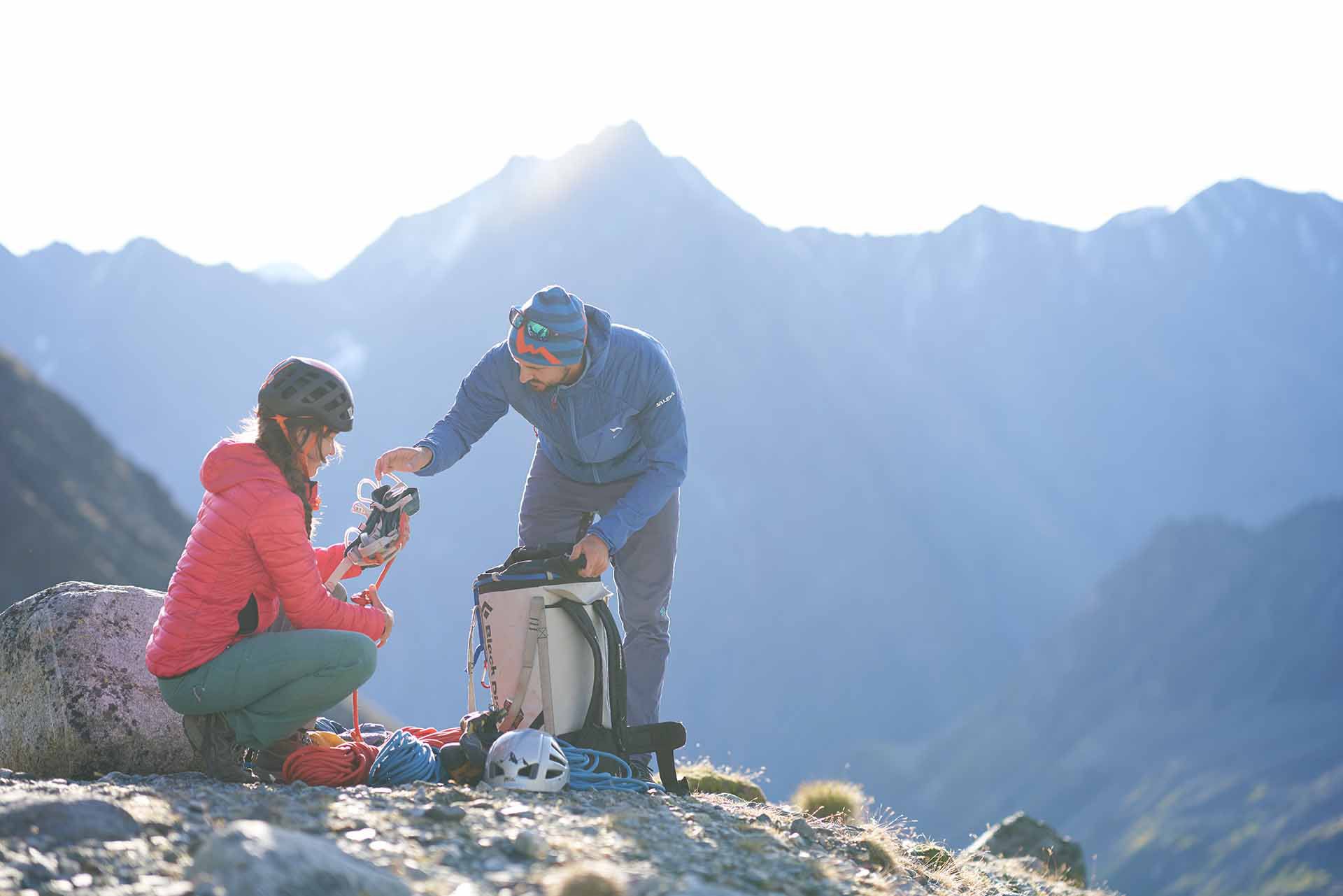
At first glance, the mountain doesn’t look as though it offers much in the way of climbing. Even the start of the route isn’t exactly easy for Chanti and Karo to find. The first few metres of rock are interspersed with bushes. Pine trees sprout from the ledges between the rocky sections. Karo grabs hold of a pine branch. A handhold! A quick rest.
„I thought we were going rock climbing, not forest bathing.“
Forest bathing is a new trend that involves immersing oneself in the pleasant atmosphere of the forest. It originates from Japan, where stressed-out managers go into the forest to relax. A seemingly mundane form of therapy that is becoming increasingly popular here too. Just a short while ago, the two of them were still making fun of it.
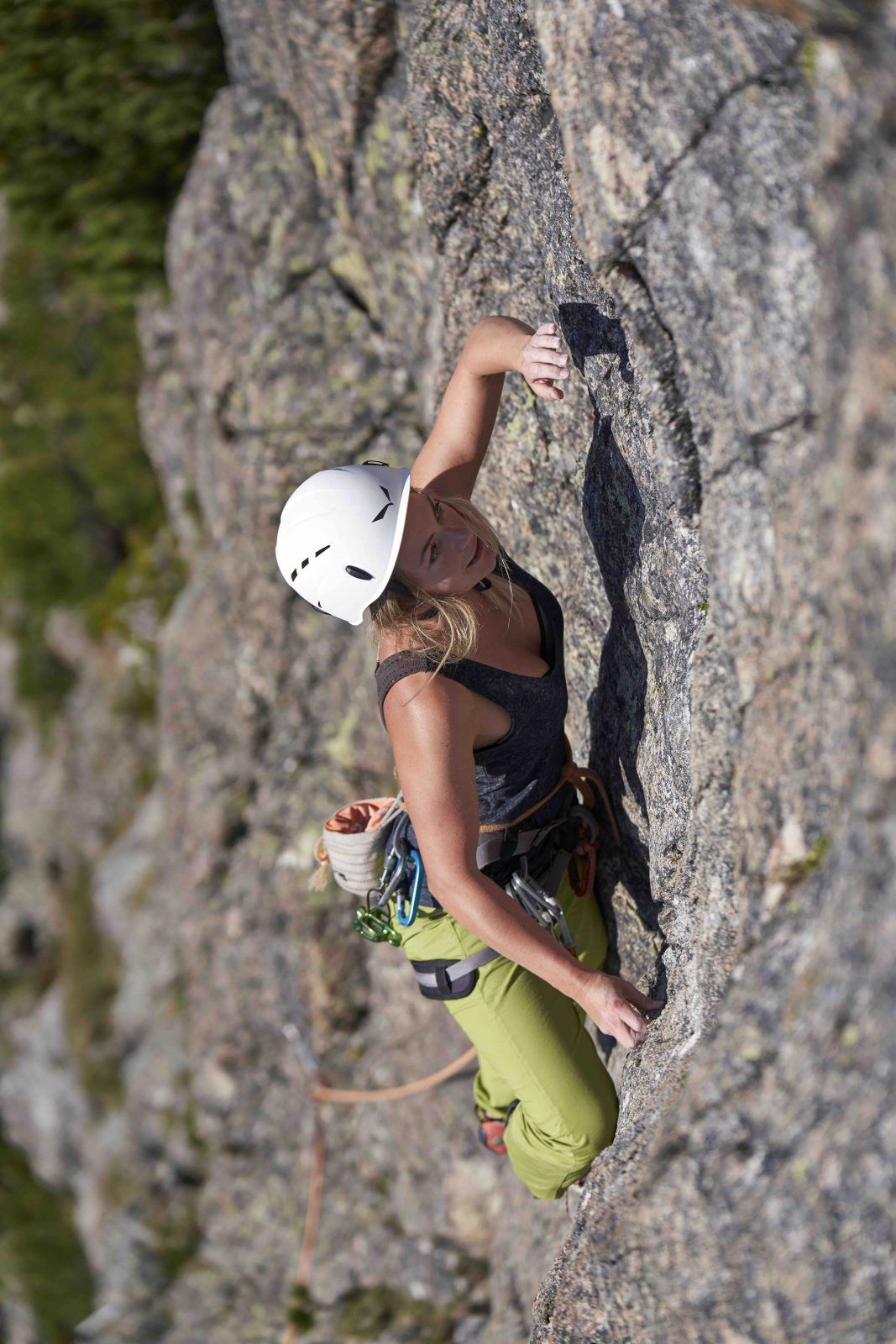
And now, just like those stressed-out managers, they’re hugging trees to recover from the tricky sections on the route. It smells lovely. Soothing. Chanti loops a sling around a pine tree: “Hold! Follow me!” After their forest bath at the start, the face opens up and beautiful pitches of varied climbing on solid rock await the pair.
“The slab sections were just as beautiful as those on the Grimsel Pass in Switzerland,” enthuses Karo as she reaches the belay station after the 11. pitch. But the route is far from over here. A high-alpine ridge leads to the summit. After another four hours of scrambling, which demands every ounce of their mountaineering experience, they stand on the summit and fall into each other’s arms.
“You can only find peace in the woods,” says Chanti ironically. “And in the mountains,” adds Karo.
In this issue, we’ve devoted ourselves entirely to alpine climbing in Tirol. Across 136 pages, we showcase Tirol’s impressive vertical diversity, with fascinating stories from 15 climbing spots that offer a deep insight into the history of alpine climbing in Tirol.
Schweikert Kaunertal / ‘Wiesa-Jaggl’ route
All climbing opportunities in the Kaunertal and the Tirolean Oberland
Tips & Safety
Would you like to know more about climbing safety? Click here for our safety tips.