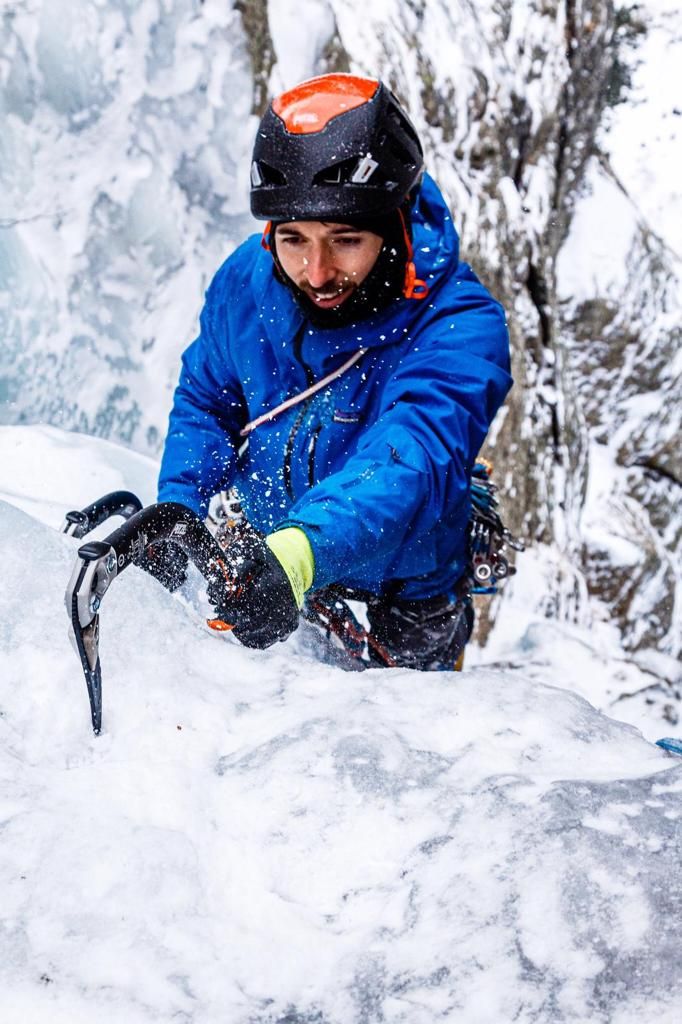
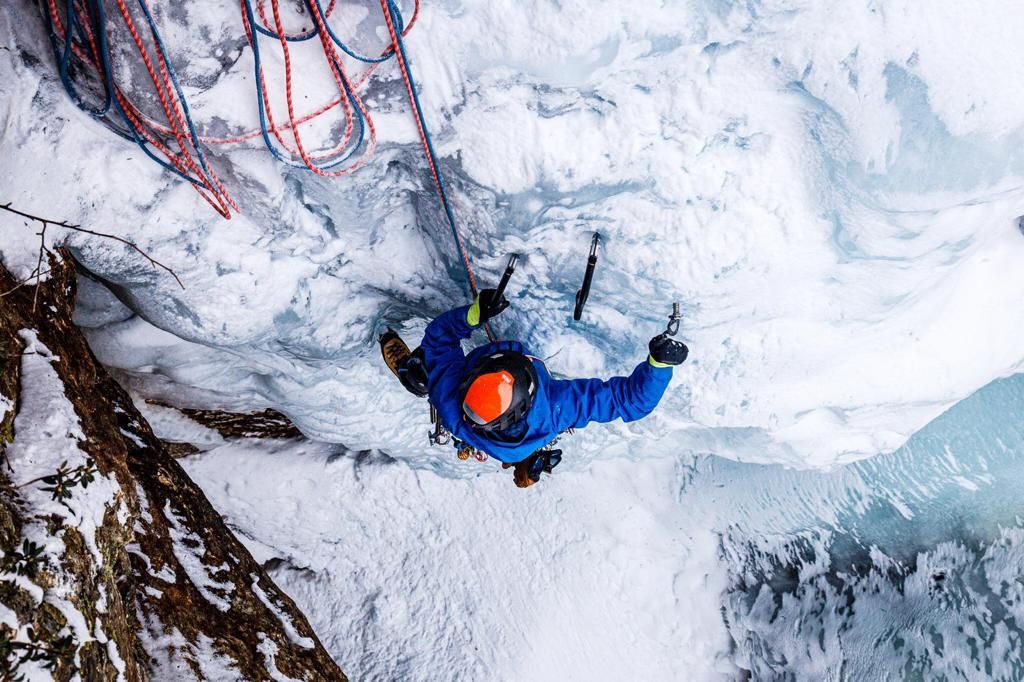
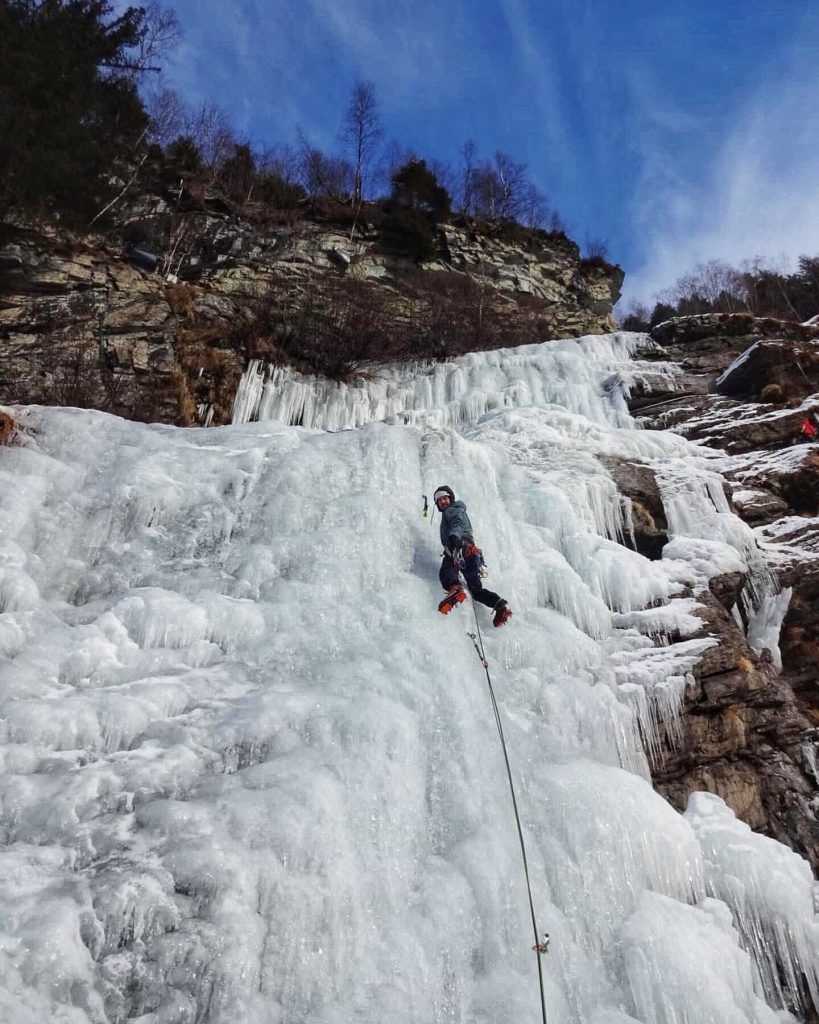
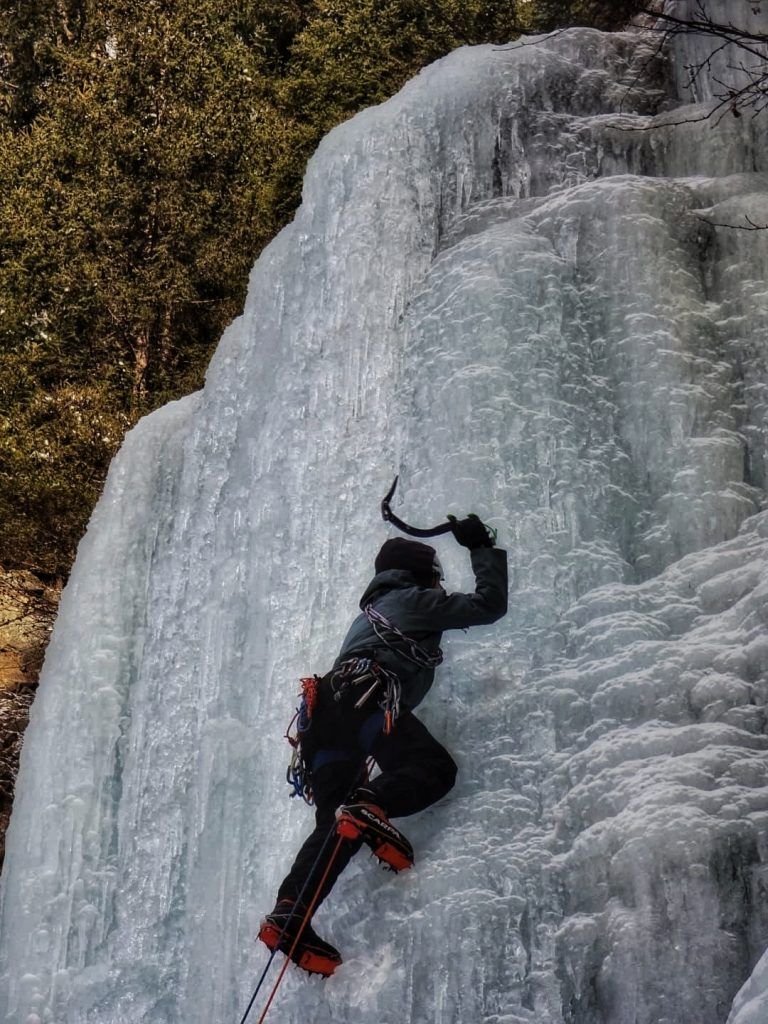
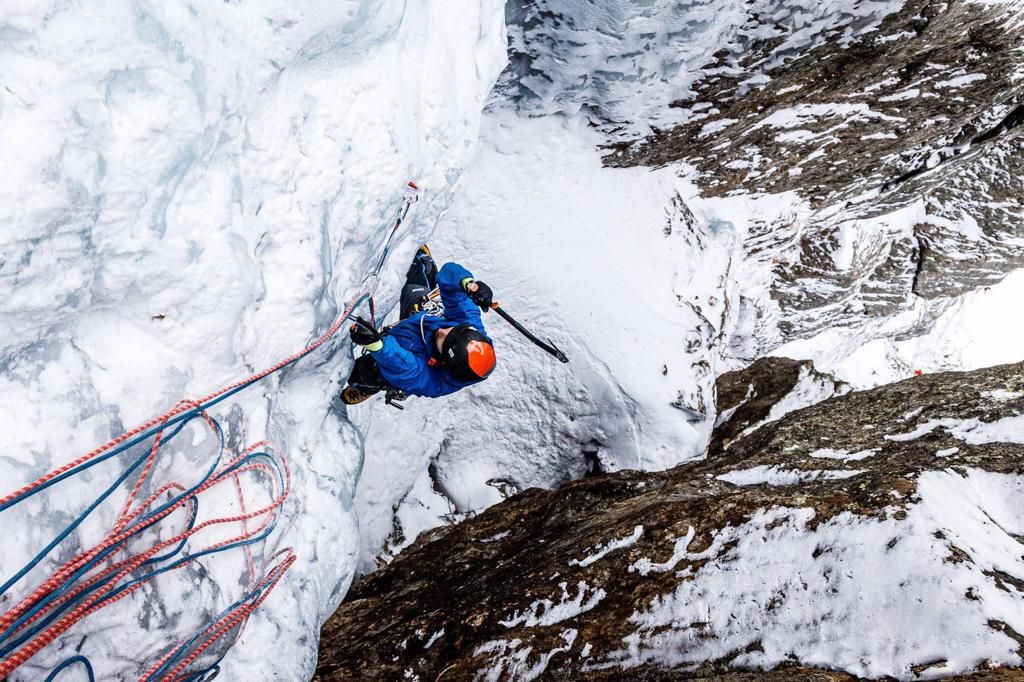
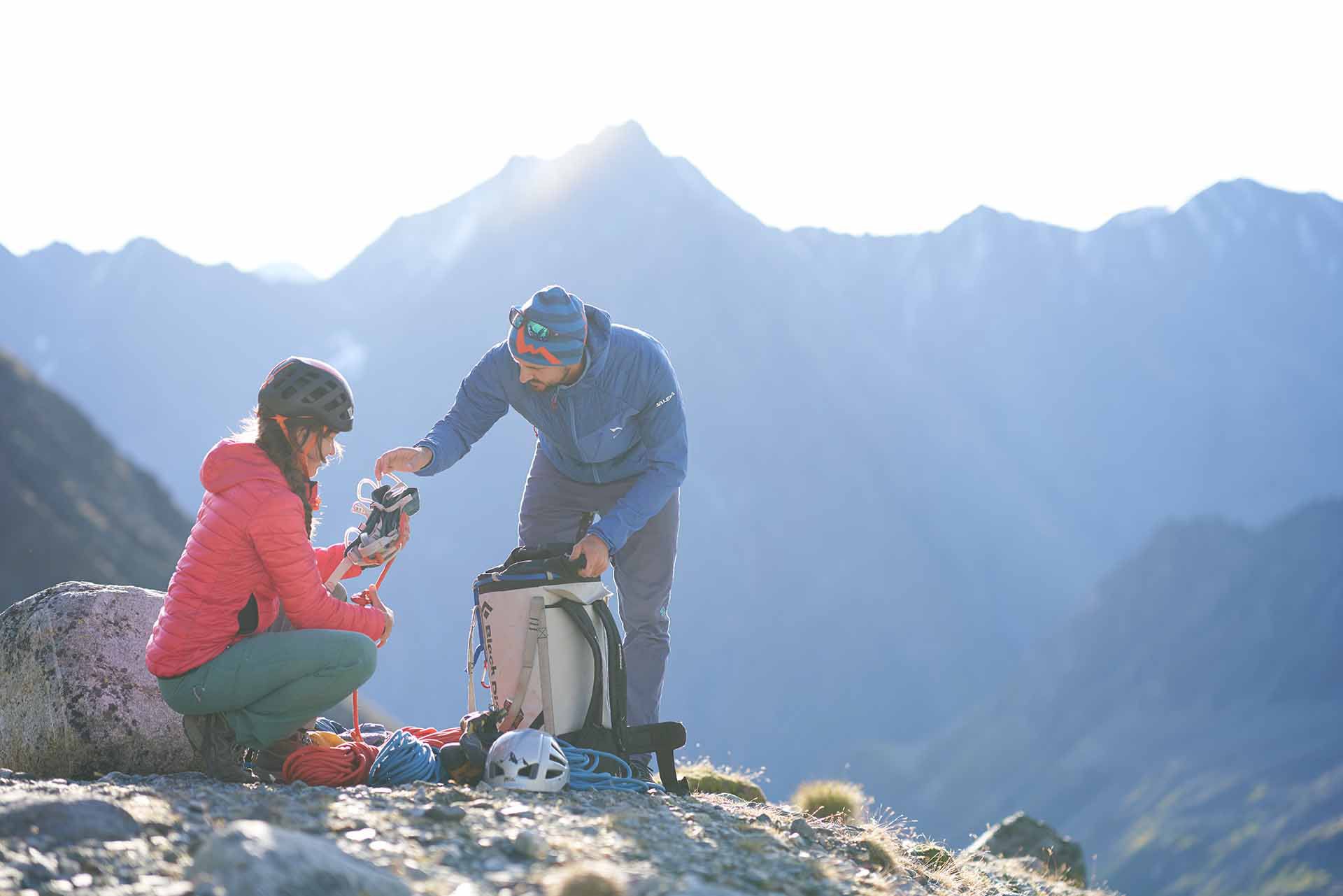
As well as ski touring and sport climbing, Ice Climbing has for some time now been one of the shared hobbies of Maximilian Gschaider (31) and Jakob Mitterhuber (31), friends who are originally from Berchtesgaden and Salzburg but now live in Tirol.
Together, they had their first go at Ice Climbing and have been a regular sight on Tirol’s frozen waterfalls ever since. We met up with them for an interview.
Jakob: “My interest in Ice Climbing has grown mainly through alpine ski touring, where you often have to overcome icy obstacles. Learning how to use the equipment for Ice Climbing also improves safety on alpine ski tours (as well as being fun, of course). To begin with, we climbed in beginner-friendly areas, where the most difficult route was around grade 3. The belay stations there had already been drilled.”
Max: “That was about three years ago at the Kühtaibacherl icefall. That’s where we climbed on ice together for the first time. We relied on our alpine knowledge and experience and just set off climbing. However, having climbed and gone on tours together, we were already a well-coordinated team, which of course helped.”
INFO: You can find another beginner-friendly spot in Sellrainhere!
Jakob: “I’d already had a few days’ ice climbing last year, but we often had to search for ‘good ice’. With Max, for example, I went to the Klaushoffall in the Zillertal and the Rumpelstilzchen icefall in Sellrain.”
Max:“Rumpelstilzchen (Sellrain) was really good fun. At this spot, you have to belay yourself and also manage with your ice axes on the rock, as it’s a mixed route (sections of ice and rock). You can learn a lot here, because you have to find the right spots for reliable anchors yourself. At Klaushoffall in the Zillergrund, the conditions were good, but there was another rope team ahead of us and there were frequent ice falls, which we managed to avoid quite well, though. Towards the end, the route also became quite steep and we didn’t choose the best route. All in all, it was an adventurous and rather strenuous climb.”
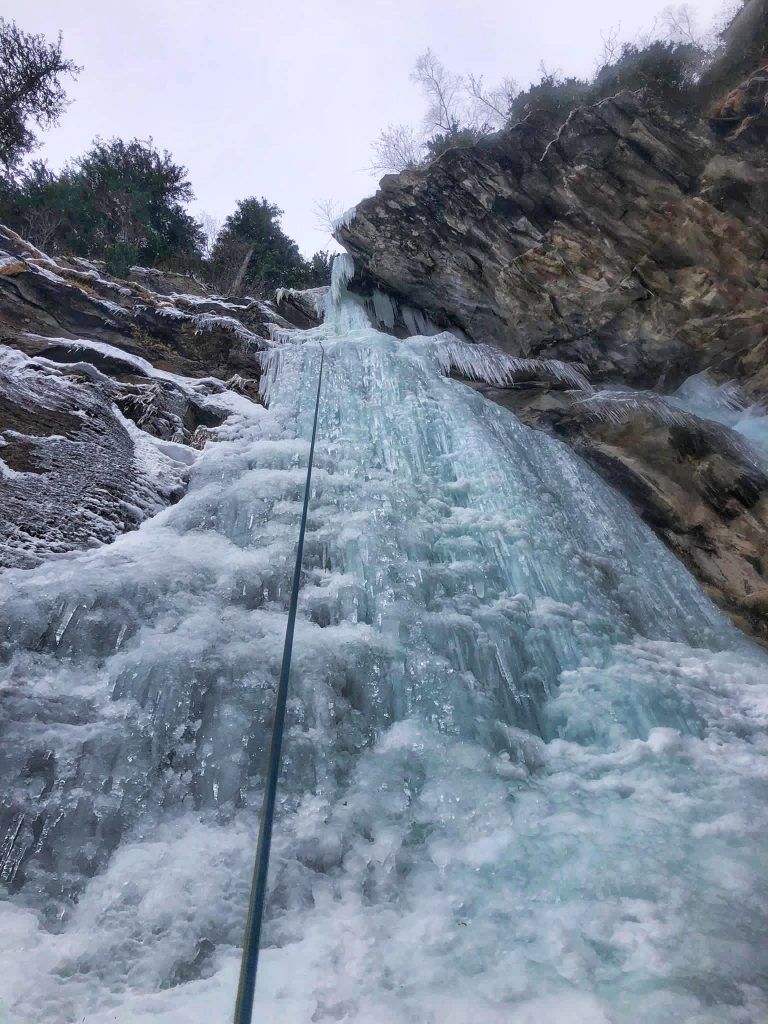
Jakob: “I recently visited the Renkfälle in the Kaunertal for the first time. Personally, I really like the spot because there are lots of steep and, above all, long climbs. The Levels of Difficulty start at WI 5, so (at least for me) it’s quite a challenging spot. The icefalls are at an altitude of 2,000 metres and have a distance of about 180 metres.”
Max: “For me, the Pitztal is a classic ice-climbing area, which I really like. There are loads of different spots there, and the conditions are often good.”
Max: “You should simply use the stated Levels of Difficulty as a guide, as the level of climbing required depends very much on the current ice conditions. Sometimes, for example, a grade 3 route is much harder than you’d expect based on the guideline. Generally speaking, I prefer climbing routes at Level of Difficulty 4; at Level of Difficulty 5 I’m already reaching my limits.”
Jakob: “Good question. As Max said, it varies from spot to spot depending on the natural conditions. For me, the most challenging level on ice is roughly WI 5. Ultimately, it’s about assessing your own line, because there’s a lot of leeway and there are often different ways to climb a route.”
Max: “Not exactly, but in the Valsertal we had to turn back on our way to the icefall because large sections of it had already collapsed due to changes in temperature. We were lucky, because that could have happened to us too.”
Jakob: “A few weeks later, I was back there and had an absolutely brilliant day. When Ice Climbing (whether as the climber or the belayer), you should always make sure you’re in a very safe position, as it’s easy for sections of ice above the rope team to break loose and fall. You have to bear in mind dangers that aren’t exactly obvious. Fortunately, there haven’t been any really tricky situations so far this season.”
Max: “At the start of winter, I’d recommend the ice park in the Taschachschlucht in the Pitztal valley. It’s an artificially watered spot where the ambient temperatures are very low, even at the start of the cold season. In the Ötztal (Oberried), you can even climb an artificially watered icefall at night, illuminated by spotlights. Perfect for the start of winter, as it gets dark early.”
Jakob: “If temperatures rise towards the end of the season, you should look for higher-altitude spots where the ice is thicker (for example, the Pitztal and Kaunertal valleys).”
Tips & Safety
Would you like to know more about climbing safety? Click here for our safety tips.