
Express Battle: 3 Austrialpin express slings put to the test
Three models from the Tirolean hardware manufacturer AustriAlpin go head-to-head in a practical test – carried out on the sunny Martinswand ridge. Who will come out on top?
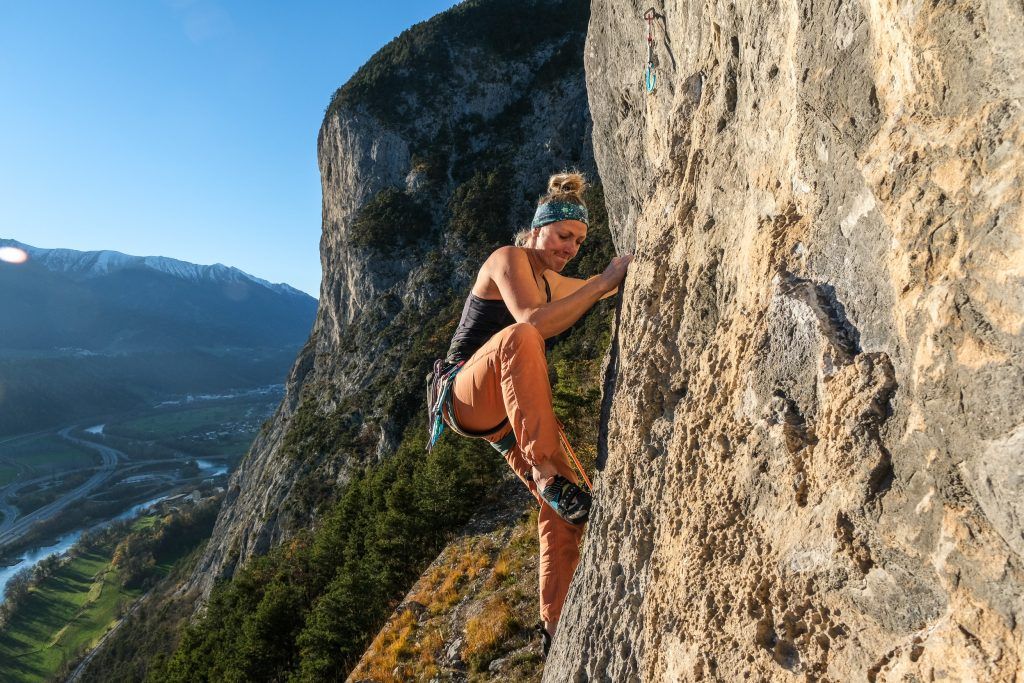

If we’re honest, the basic functions of quickdraws are fairly straightforward: a carabiner for the bolt, one for the rope, and a piece of webbing in between. Yet whilst their intended use is simple, the different ‘quickdraws’ vary considerably in how they handle. We’ve put three models from the Tirolean hardware manufacturer AustriAlpin through their paces in a practical test to see how they measure up against each other.
Text & photos: Simon Schöpf
We’re incredibly lucky that here in Climbers Paradise Tirol we have so many brilliant rock formations right on our doorstep – and that this very spot is also home to a top-quality hardware manufacturer, one of the few that still produce carabiners themselves. Our test area: the sunny Galerie on the Martinswand near Innsbruck.
Step into the Express Loops arena:
The lightweight: MICRO LIGHT Express Set 11 cm
The all-rounder: ROCKIT MIXED Express Set 11 cm (with tanga)
The Heavyweight: ELEVEN Express Set 12 cm
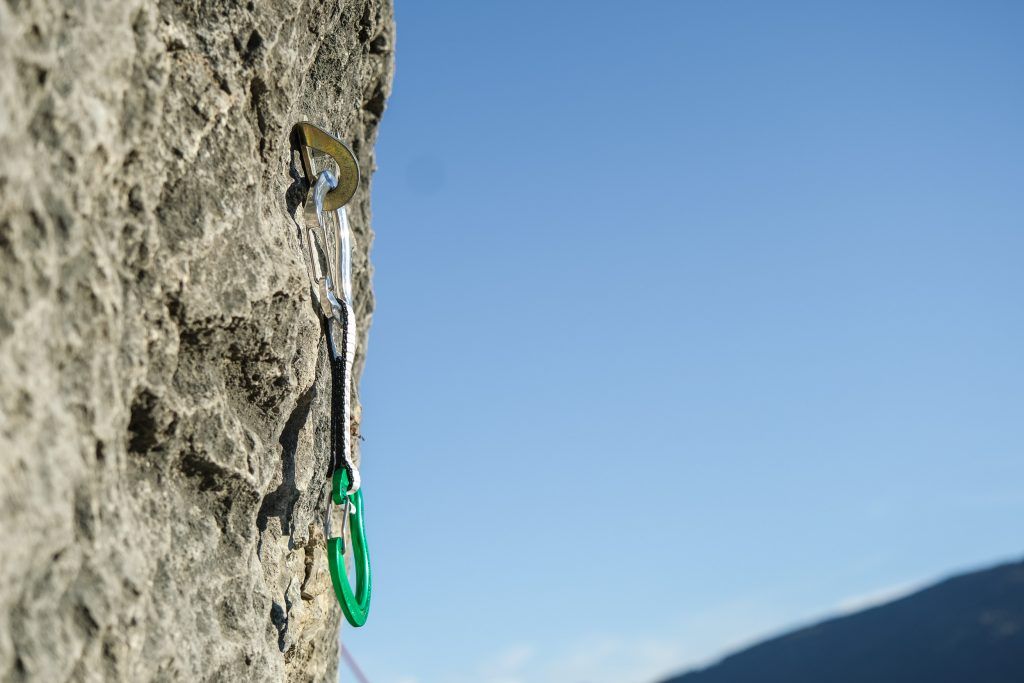
Battle #1: MICRO LIGHT vs. ELEVEN. As different as they come: two weight classes, 78 g vs. 117 g! Extrapolated to 15 carabiners on the harness, that’s a hefty 585 g more around the waist – you really notice this in alpine climbing, which is why the weight advantage goes to the MICRO LIGHT. On the other hand, you do tend to get caught on the MICRO’s strap-induced notches: 1:1! And the wide ELEVEN sling offers ideal grip width for pulling up or A0 climbing, whilst the thin MICRO has less grip: 1:2!
Battle #2: ELEVEN vs. ROCKIT MIXED. A more evenly matched contest: as an all-rounder, the ROCKIT performs strongly in all disciplines – neither too heavy nor too easy. It performs admirably in sport climbing, but loses out to the perfectly shaped ELEVEN due to the loop at the end of the rope: 0–1! Both feature a ‘thong’ in the ring (the sling attachment to prevent twisting) – a point for both: 1:2! On appearance (blue/red, a matter of taste): 3:3!
Battle #3: MICRO LIGHT vs. ROCKIT MIXED. In terms of weight, the MICRO is unbeatable: 1:0! In terms of handling in the Rock Climbing Area, both (wire-loop carabiners) are fairly similar, but with the MICRO the lower carabiner can become twisted – a point for the ROCKIT with its rubber fastening: 1:1! In the final round, the breaking strength with the carabiner open is the deciding factor (unlikely, but crucial in the event of a hard fall): 7 kN for the MICRO versus a whopping 11 kN for the ROCKIT: 1:2!
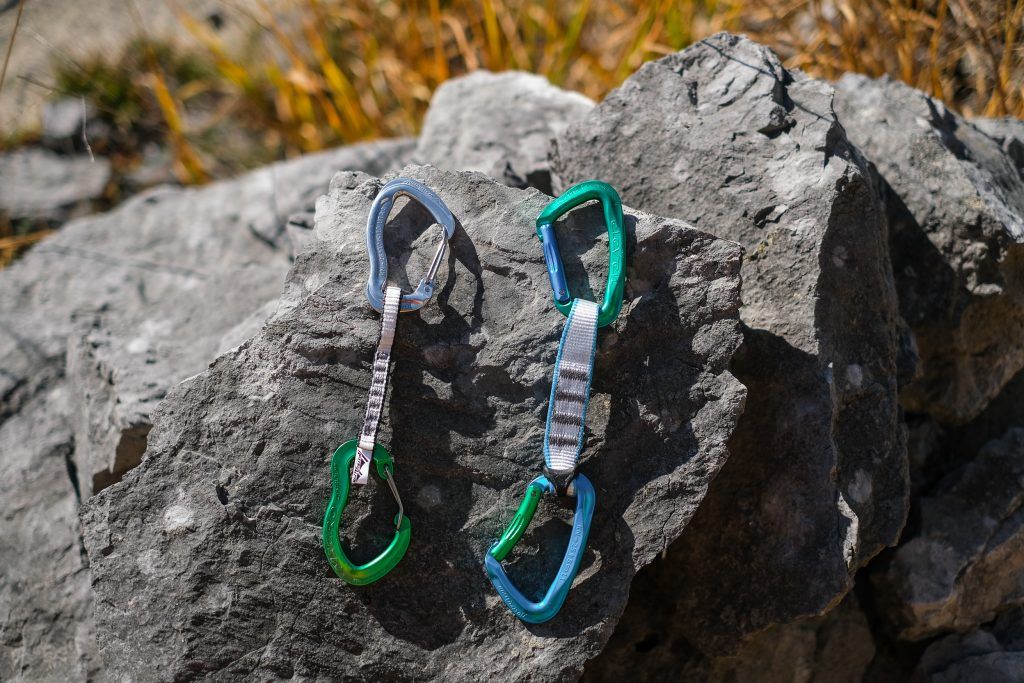
Of course, they’re all battles of unequal odds – but every quickdraw has its strengths and weaknesses. That’s why we recommend the following depending on the application:
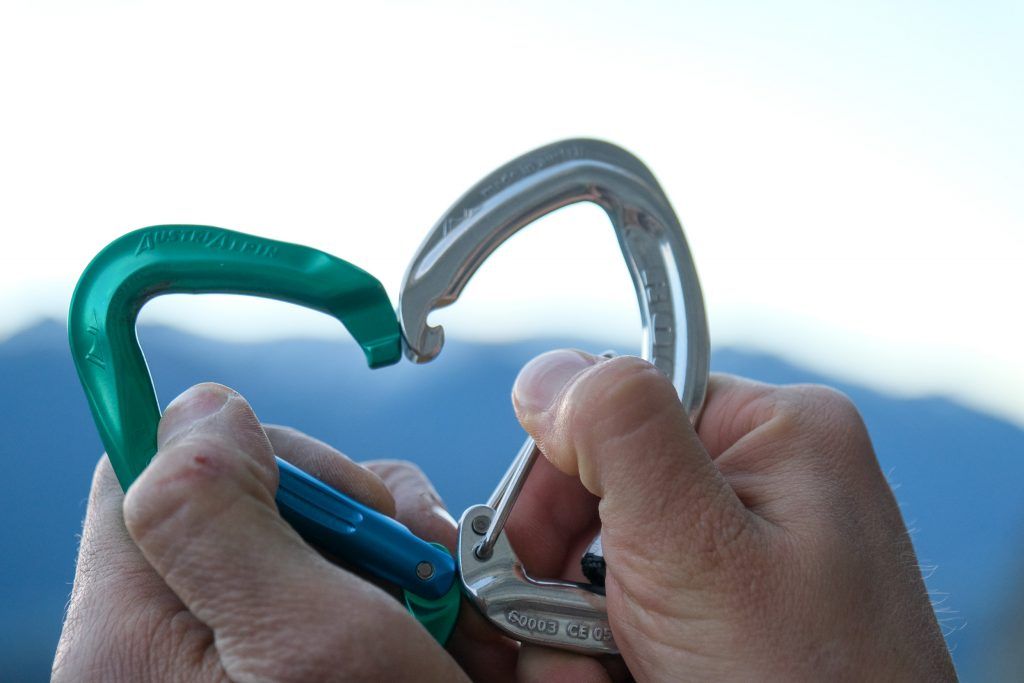
Bergwelten magazine visited AustriAlpin at its production facility in Fulpmes in the Stubai Valley and was shown how a carabiner is made.
The test equipment was provided by AustriAlpin.
Tips & Safety
Would you like to know more about climbing safety? Click here for our safety tips.
