
Arlberg Winter Via Ferrata: A tightrope walk in the snow
A Via Ferrata/Iron Way with skis on your back – and a freeride descent as a reward: the Arlberg Winter Via Ferrata/Iron Way is the only one of its kind in Tirol.
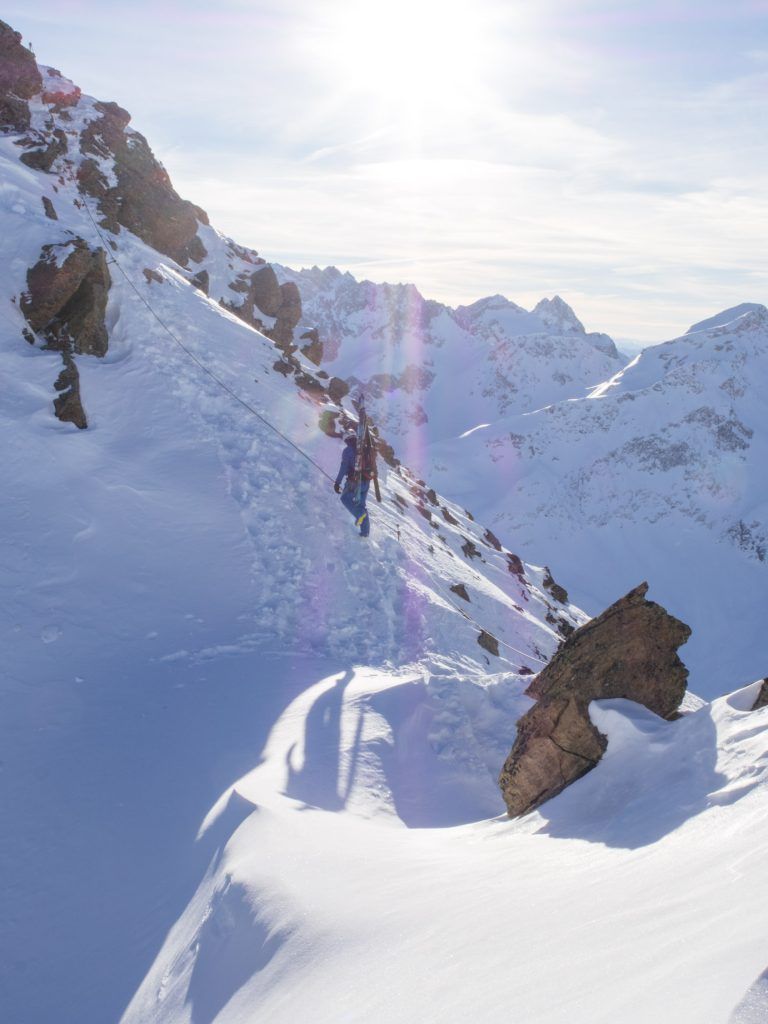

The Arlberg rarely leaves anything to be desired: even in winter, via ferrata enthusiasts will find what they’re looking for here. Admittedly, you’ll need to carry your skis on your back – but a fantastic freeride descent will make the effort well worth it. Welcome to the Arlberg Winter Via Ferrata.
Text & photos: Simon Schöpf
There are traditionally few limits to the sheer scale of theArlberg: 88 Uphill Facilities, over 300 km of slopes, around 200 different runs – there are countless ways to hurtle down into the valley on skis. But a wire rope as a Trail Marking for an untracked powder slope? That’s unique even in the Arlberg. The Arlberg Winter Via Ferrata is specially designed for the cold season – the only one of its kind in Tirol.
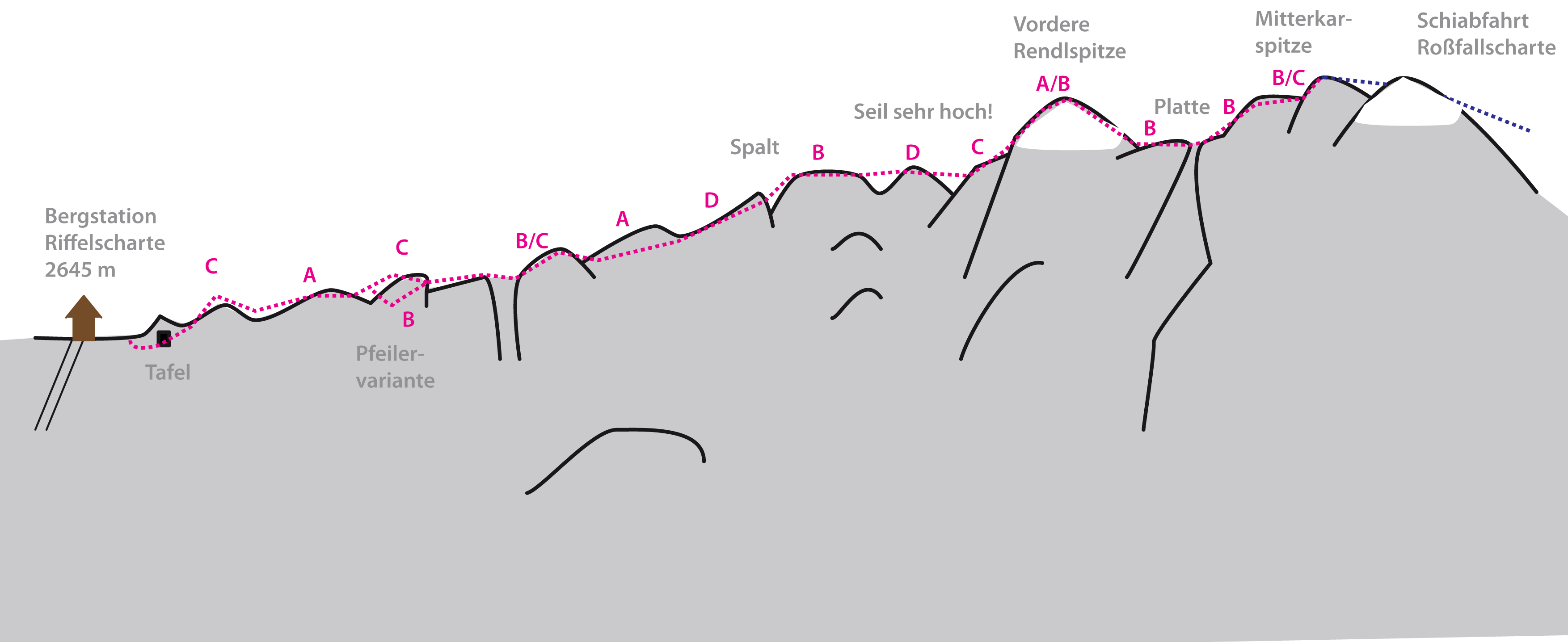
The wire rope stretches 850 metres across the Rendl area to the Rossfallscharte, a high-alpine ridge crossing that is secured throughout. A good quarter of the route involves climbing on rock; the rest involves trudging along the ridge. Anyone who wants to work out their arms as well as their legs will find the full package here – because on this wire rope, there’s no lift to haul us up; we have to do it ourselves.
“Right, now lean right forward, deeper, that’s it, half a turn and go,” says Mountain Guide Naggy, instructing us on the gymnastic exercises we need to do when tackling a Via Ferrata/Iron Way with skis on our backs. The steel cable can sometimes hang right over your head when the wind has blown the snow off the ridge. It’s a good thing that Naggy, with his well-honed routine, helps us through the key sections.
Naggy’s real name is Erich Schweiger and he’s a veteran among the Arlberg Mountain Guides. For more than 40 seasons, he has spent his working life roaming the mountains of his home village, St. Anton, which he calls “the most beautiful office in the world”. Leading the winter via ferrata is a welcome change for him from skiing on the slopes and freeriding.
Further along the Via Ferrata/Iron Way: a clattering ‘Rrrrrrtsch’ serves as a constant, stark reminder that ski tips and rock don’t usually mix very well. We’re climbing at an altitude of between 2,600 and 2,800 metres – sometimes uphill, sometimes downhill, but always along the ridge. The exposure is spectacular, with the terrain dropping steeply on both sides. This secluded Via Ferrata/Iron Way is probably the starkest contrast to the organised skiing on the slopes far below us.
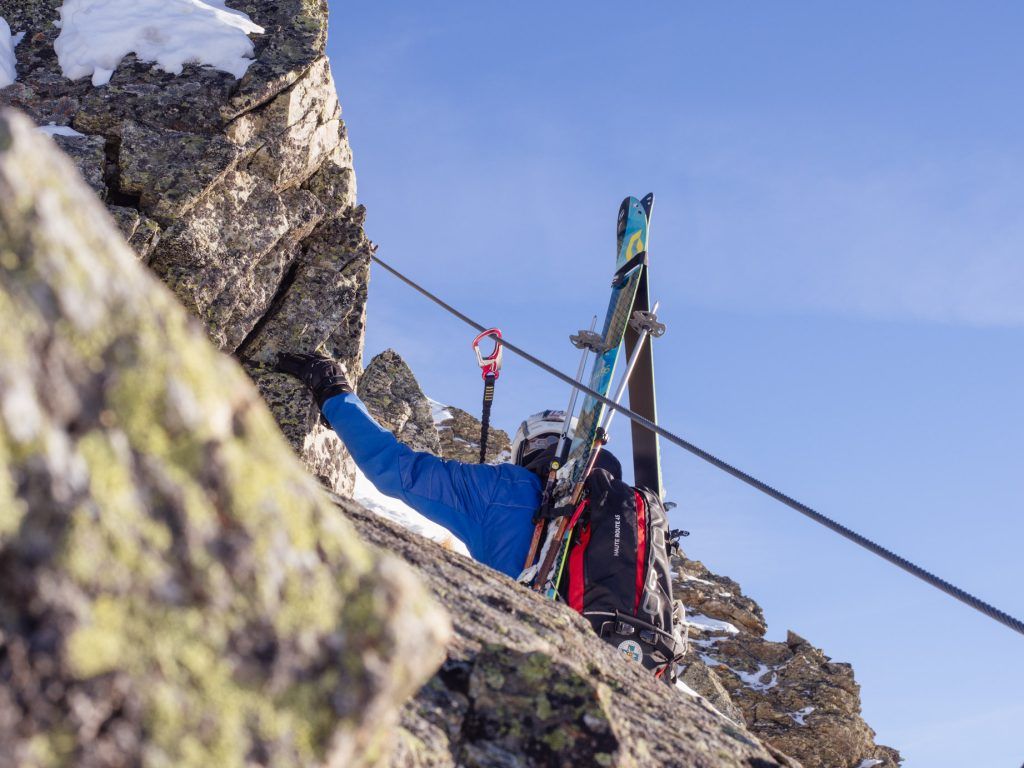
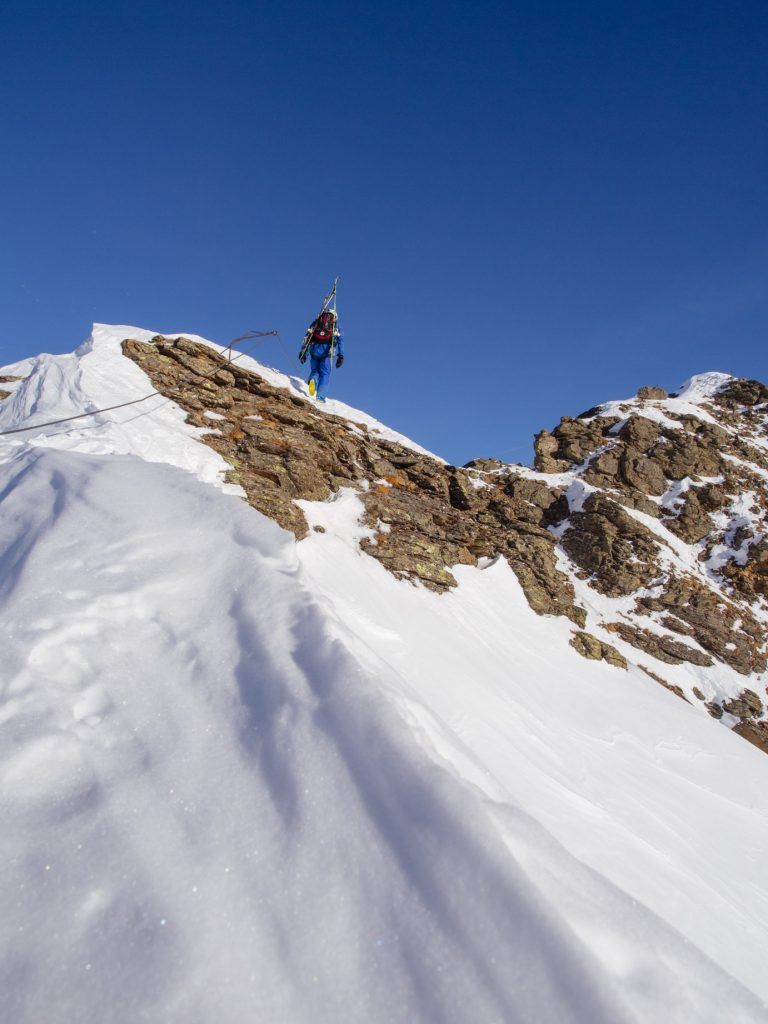
A biting wind spurs us on to keep climbing quickly. Click, clack – the ski tips against the rock. Climbing in ski boots takes some getting used to; the steel cable feels cold against my fingers; the rucksack, with the skis strapped to it, is heavy. But it’s still great fun – you feel a bit wild somehow. After a good two hours, we reach the Finishing Point, the Rossfallscharte. And as a reward, Naggy pulls a small hip flask out of his jacket: “Swiss stone pine – that always tastes best.”
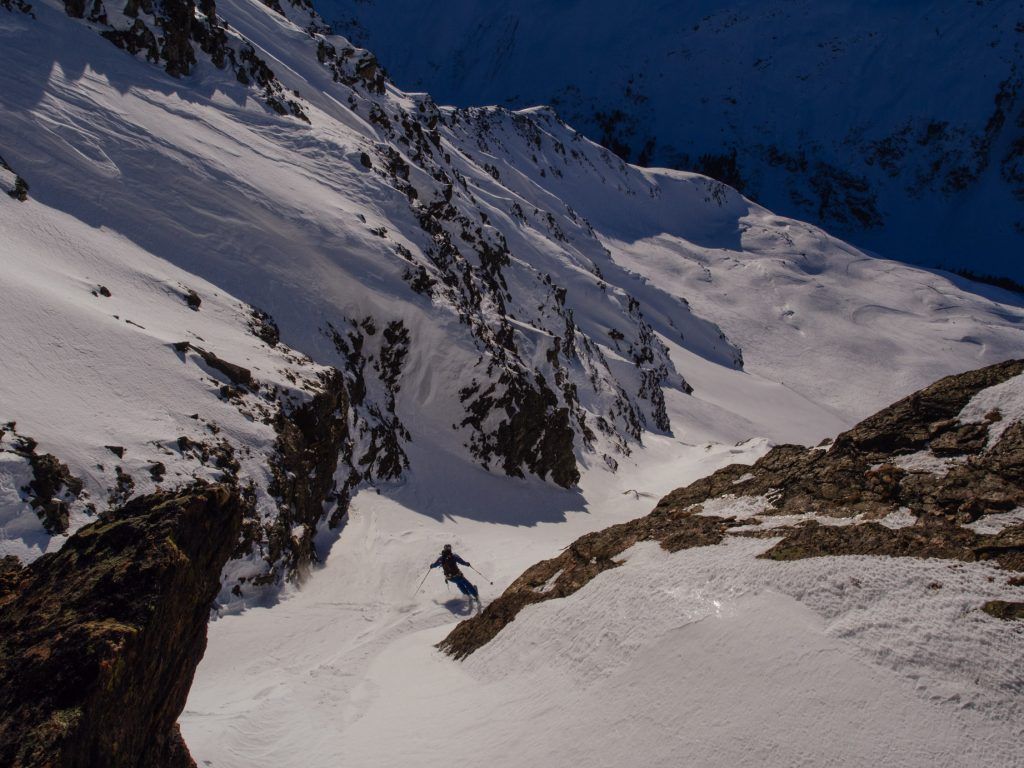
The Swiss stone pine does taste good – but the even more exhilarating reward comes only when the ski boots click into the bindings: a 1,500-metre descent through the unspoilt Malfon Valley lies ahead, all the way down to Pettneu. The Arlberg has delivered once again – the whole package. And we’re allowed to feel a little bit like heroes.
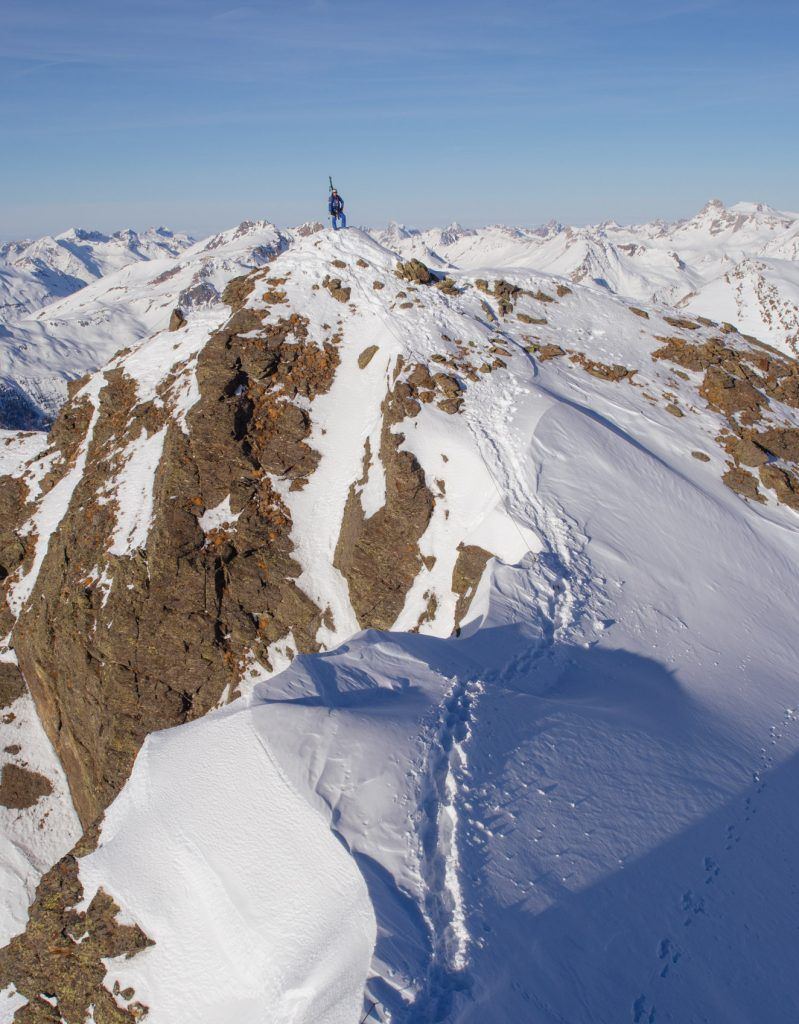
The Arlberg Winter Via Ferrata is a unique experience: with your skis on your back, the route takes you from the top station of the Riffel II cable car along a 850-metre-long ridge and past the Vordere Rendlspitze (2,816 m) to the Rossfallscharte. Your efforts are rewarded by the magnificent descent into the Malfon Valley.
Access: From St. Anton am Arlberg, take the Rendlbahn up, then follow piste no. 4 to the Valley station of the Riffelbahn I. Take the Riffelbahn I and II to the Top station (Riffelscharte, 2,645 m). The start is on the right behind the lift hut and is marked with a sign.
Descent: From the start of the route, head down to the Roßfallscharte. From there, either head east through the Malfon Valley or west via the Roßfallwinkel back to St. Anton.
Equipment: Winter sports equipment is essential for travel on the Riffelbahn I & II (pedestrians are not permitted on this cable car). You’ll also need via ferrata equipment including a harness; the Rendl is considered very difficult. Alpine experience is essential – otherwise, you must book a Mountain Guide!
Mountain and ski guides: The Arlberg ski instructors have achieved cult status worldwide – why not see for yourself? The Tourist Board provides a good overview of the region’s ski and snowboard schools.
More information on site: Staff at the tourist board can help with accommodation, activities and equipment hire. St. Anton am Arlberg Tourist Board, Dorfstraße 8, A-6580 St. Anton am Arlberg. Tel. +43 5446 22690, stantonamarlberg.com. Information on the winter via ferrata can be found on the Tourist Board’s website.
Tips & Safety
Would you like to know more about climbing safety? Click here for our safety tips.

