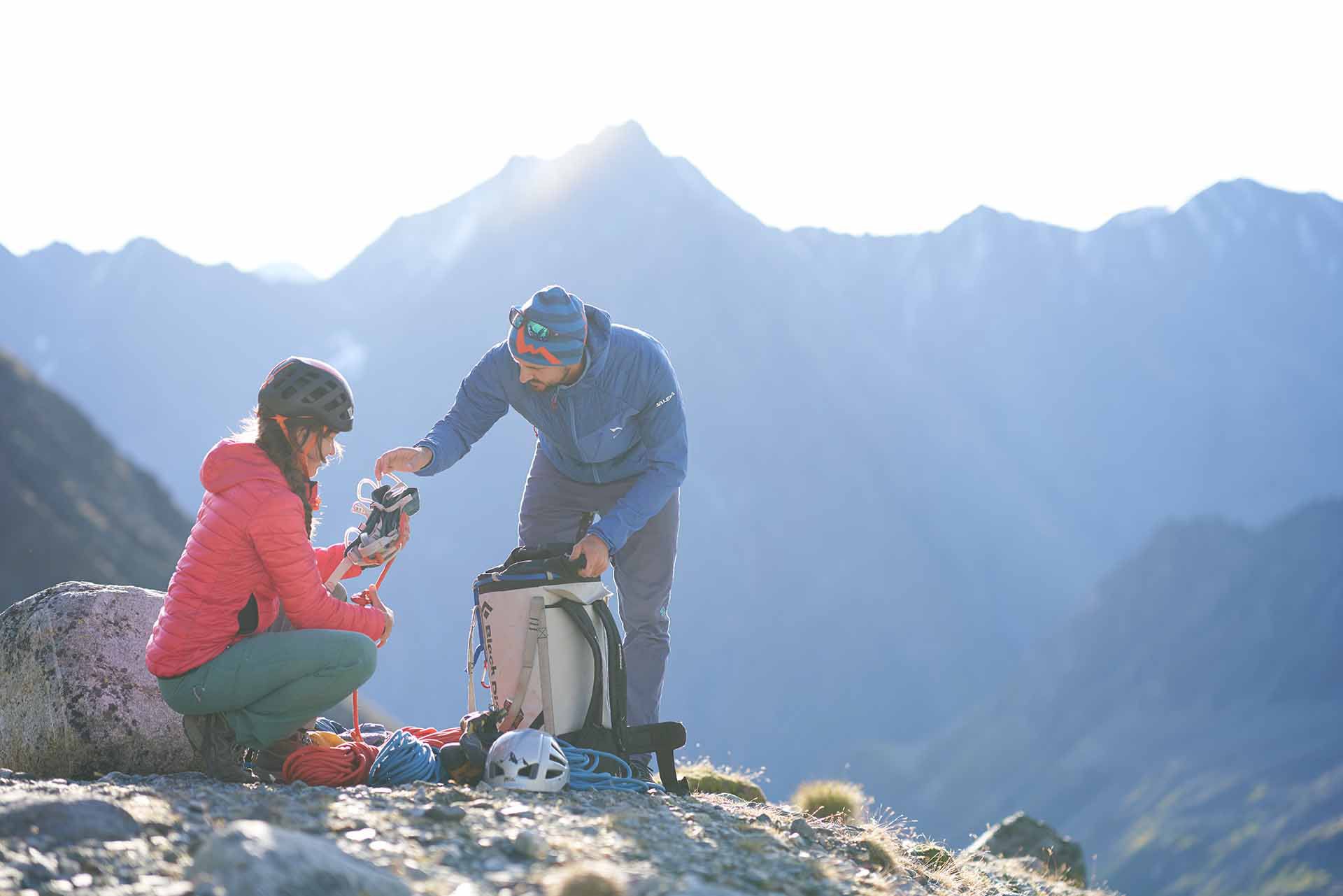
8 scenarios: First aid at a Rock Climbing Area

As climbers, we know that an accident can happen faster than you think. That’s why good preparation for a climb involves not only the right equipment, but also practising how to deal with emergency situations. This article is no substitute for a first-aid course – but it does provide a concise overview of the most common climbing injuries.
Klettern in Tirol
Klettern in Tirol

The right emergency kit

You should always carry a well-thought-out first-aid kit with you. The SAB First Aid Kit from the Austrian Alpine Club is specially designed for mountaineers – small, lightweight and waterproof:

  • Emergency dressing
  • 2× Steri-Strips (gaping wounds)
  • Emergency blanket + resuscitation mask
  • Disposable gloves, plasters, sterile wound dressings
  • Alcohol swabs, medical tape
  • Recommended: second emergency blanket, glucose tablets, bivouac bag

The following 8 scenarios show how to respond correctly in the most common emergency situations on the crag and in the Rock Climbing Area.

Scenarios 1–4

1. Safety & alpine emergency services

After an accident: take a deep breath and assess the situation. Do I need professional help? Emergency numbers:

  • Mountain rescue: 140 | Emergency services: 144 | EU emergency number: 112
  • SOS EU Alp App – automatically sends your location to the rescue control centre
  • From iPhone 14.1 onwards: emergency calls via satellite are possible
  • No signal: shout loudly for help, use the SOS Morse code (3 short – 3 long – 3 short)

2. Staying warm

Hypothermia prevents the body’s natural blood clotting process and consumes energy – particularly critical in an alpine setting. Place the emergency blanket over the innermost layer of clothing, cover your head, spread it over your torso and secure the end between your legs. Consume sugar and warm drinks.

3. Pressure bandage

In the event of heavy bleeding: press the Emergency Bandage dressing firmly onto the wound, thread it through the plastic pressure bar whilst applying tension, change direction (applying pressure to the wound), finish wrapping and secure with a plastic clip. If the person is bleeding through, do not open any existing dressing – apply a second pressure bandage on top.

4. Head injury

Head laceration: Place the Emergency Bandage pad over the wound, wrap loosely around the head, use the pressure pad as a guide around the chin, finish wrapping and secure. If there are signs of a head injury (dizziness, nausea, confusion): call the emergency services immediately; raise the upper body. If the person is unconscious: place them in the recovery position; check their airway.

Scenarios 5–8

5. Shoulder/arm injury

Immobilise the limb using a makeshift splint (e.g. a card as a mould + gauze bandage). In the event of an open wound or broken bone: cover with a sterile dressing. Use the Emergency Bandage to apply a stable sling that relieves pressure on the arm and supports a protective posture.

6. Cervical spine / spine

In the event of a fall onto the head or back and symptoms such as pain along the spine, numbness or tingling: move the person as little as possible and call the emergency services immediately. Stabilise the head with your hands and ensure the person stays warm.

7. Ankle injury – transport using a rescue blanket

For short distances (e.g. Rock Climbing Area → car): Tie two rescue blankets into rings using a weaver’s knot, thread one leg of the injured person through and carry them on your shoulders like a rucksack. Caution: do not use this method if there is a significant difference in weight or size, or for long distances over difficult terrain. Make a cold pack from a disposable glove filled with snow or cold water; elevate the foot.

8. Finger injury – buddy taping

Approx. 65% of climbing injuries affect the hand or fingers. Buddy taping technique: Apply Leukotape above the proximal interphalangeal joint around the injured finger, including the adjacent finger for splinting, and secure it above the middle interphalangeal joint. Do not tape too tightly – blood circulation must not be impeded. Cool the area and elevate the limb.

Text: Lara Novak, Rosa Schmidl | Photos: Lara Novak

You might also be interested in these articles